
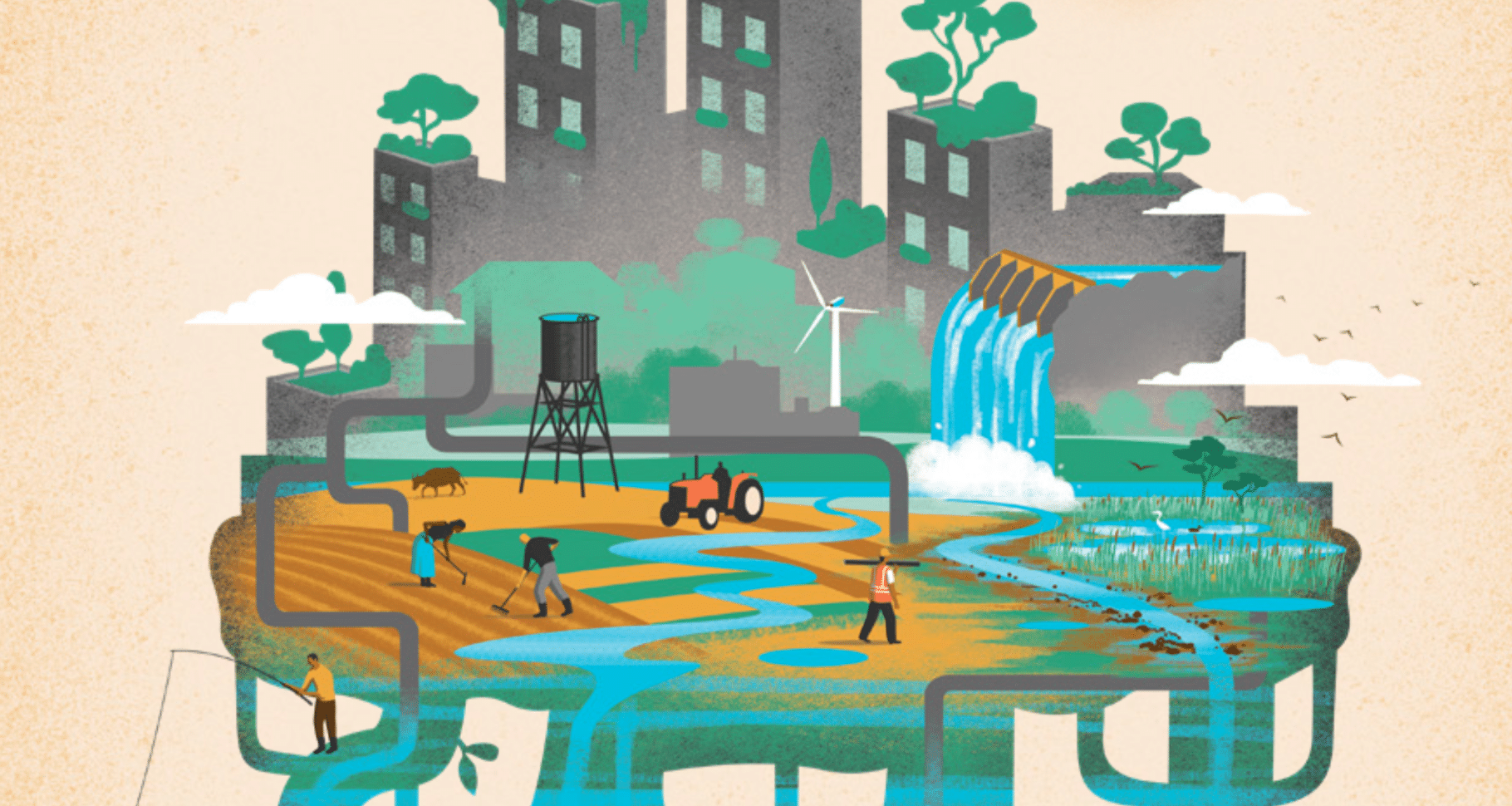
Around three billion people worldwide now face water shortages that are closely linked to climate‑change‑driven shifts in the hydrological cycle, creating urgent environmental, health, and economic challenges.
Quick Answer
Water scarcity affecting roughly three billion people is a consequence of rising global temperatures that intensify evaporation, alter precipitation patterns, and exacerbate droughts. The Intergovernmental Panel on Climate Change (IPCC) reports that these changes reduce freshwater availability in many regions, especially in the Global South. The most significant impact is reduced access to safe drinking water, which in turn threatens public health, food security, and socioeconomic stability. While the broad trend is well supported, uncertainties remain regarding the exact timing and regional intensity of future shortages.
Key Takeaways
- Climate‑induced shifts in evaporation and precipitation are the primary drivers of modern water scarcity.
- Three billion people—about 38% of the global population—are currently experiencing water stress, according to the UN World Water Development Report (2023).
- Health, agriculture, and economic productivity are the most exposed sectors.
- Adaptation measures such as rainwater harvesting, efficient irrigation, and integrated water‑resource management can reduce vulnerability but require substantial investment.
- Uncertainties persist around regional projections, groundwater depletion rates, and the effectiveness of large‑scale policy interventions.
What Is 3 Billion People Worldwide Now Affected by Water Shortages Due to Climate Change?
The phrase refers to the estimated number of individuals living in regions where climate‑related changes to the water cycle have already reduced reliable access to safe water for drinking, hygiene, or agriculture. It does not include people who face temporary supply interruptions unrelated to climate trends. The estimate combines national statistics on water stress with climate attribution studies that link those stresses to rising temperatures and altered precipitation patterns. Understanding this figure matters because it highlights the scale of a systemic risk that intersects with health, food security, and social stability.
How Does It Work?
Climate change modifies the water cycle through several interrelated mechanisms:
- Increased Evaporation: Higher air temperatures raise the rate at which water evaporates from soils, rivers, and reservoirs, reducing surface water storage.
- Shifted Precipitation: Global circulation models show a poleward shift of rain belts, leading to wetter conditions in some mid‑latitude regions and drier conditions in many tropical and subtropical zones.
- More Intense Extreme Events: Warmer oceans fuel stronger storms, which can cause flash flooding that rapidly depletes usable water while simultaneously damaging infrastructure.
- Groundwater Stress: Reduced recharge from rainfall and increased extraction for irrigation accelerate the depletion of aquifers, a process documented in the IPCC Sixth Assessment Report (2022).
These physical changes interact with human systems: agricultural demand rises with higher temperatures, urban populations expand, and many water‑management policies remain based on historic climate norms. The feedback loop—where water scarcity drives land‑use changes that further alter the local climate—can push vulnerable basins toward irreversible thresholds.
What Does the Evidence Show?
Multiple lines of evidence converge on the conclusion that climate change is a major contributor to expanding water scarcity:
- Long‑term Monitoring: Satellite‑based observations from NASA’s GRACE mission (2002‑2020) reveal a consistent decline in groundwater storage across major agricultural basins in India, China, and the United States.
- Assessment Reports: The IPCC (2022) states with high confidence that anthropogenic warming has increased the frequency of droughts in the Mediterranean, Southern Africa, and parts of South Asia.
- Attribution Studies: Peer‑reviewed analyses in *Nature Climate Change* (2021) attribute 30‑40% of the observed reduction in river flow in the Colorado River basin to climate‑driven temperature rise, after accounting for water use.
- Socio‑economic Data: The United Nations World Water Development Report (2023) estimates that 2.8 billion people live in areas with water stress, and climate‑related trends account for roughly half of the projected increase to three billion by 2030.
Main Causes or Drivers
Direct Climate Drivers
- Global temperature increase (≈1.1 °C above pre‑industrial levels in 2021, according to NOAA).
- Altered atmospheric circulation patterns that redistribute rainfall.
Human Amplifiers
- Unsustainable groundwater extraction for irrigation, especially in arid regions.
- Urban expansion that reduces natural infiltration and increases runoff.
- Deforestation and land‑cover change that diminish evapotranspiration regulation.
Environmental and Human Impacts
Environmental Impacts
Reduced river flow and shrinking lakes degrade aquatic habitats, lower biodiversity, and limit ecosystem services such as water purification. In the Aral Sea basin, for example, water‑level decline has caused the loss of over 30% of native fish species (UNEP, 2020).
Human Health and Social Impacts
Water scarcity heightens exposure to waterborne diseases; the WHO estimates that inadequate water and sanitation caused 1.8 million deaths in 2019, a number that rises in drought‑prone regions. Children under five are disproportionately affected, facing higher rates of diarrheal illness and stunted growth.
Economic and Infrastructure Impacts
Agricultural losses linked to drought cost the global economy an estimated US$ 322 billion annually (FAO, 2022). Energy production—particularly hydroelectric power—faces reduced capacity, prompting higher reliance on fossil‑fuel backup plants, which in turn increase greenhouse‑gas emissions.
Regional Differences
Water‑stress patterns are not uniform:
- South Asia: Monsoon variability combined with over‑extraction has pushed the Ganges‑Brahmaputra basin into chronic low‑flow conditions.
- Sub‑Saharan Africa: The Sahel region experiences lengthening dry seasons, making rain‑fed agriculture increasingly unreliable.
- Mediterranean Europe: Climate models project a 20‑30% reduction in summer precipitation by 2050, intensifying competition for water among agriculture, tourism, and domestic users.
- Western United States: Snowpack decline in the Sierra Nevada reduces spring melt, lowering water supplies for both cities and farms.
These examples illustrate that while the global figure is striking, the underlying drivers, exposure levels, and adaptive capacity differ markedly across regions.
What Scientists Know With High Confidence
- Human‑induced warming is increasing global evaporation rates.
- Precipitation patterns are shifting poleward, causing drying in many low‑latitude regions.
- Groundwater depletion is accelerating in major agricultural basins worldwide.
- Water scarcity directly threatens public health, food security, and economic productivity.
What Remains Uncertain
Key uncertainties include the exact timing of regional drought onset, the rate at which deep aquifers can be sustainably managed, and the effectiveness of large‑scale policy interventions under varying socioeconomic scenarios. Improved monitoring networks and integrated climate‑hydrology models are needed to narrow these gaps.
Common Misconceptions
Misconception: Water scarcity is only a problem in poor countries.
Reality: While low‑income regions bear the brunt, water stress also affects high‑income areas such as California and Southern Europe, where climate‑driven reductions in snowpack and river flow have triggered severe restrictions.
Misconception: A single drought event proves climate change.
Reality: Individual droughts are weather events; however, attribution studies show that the frequency and intensity of droughts have increased in line with rising greenhouse‑gas concentrations.
Misconception: Desalination solves water scarcity everywhere.
Reality: Desalination requires high energy input and can cause marine ecosystem impacts; it is viable only where energy is affordable and environmental safeguards are in place.
Solutions and Limitations
Effective responses combine mitigation of climate change with adaptation to reduced water availability:
- Efficient Irrigation: Drip systems can cut water use by 30‑50% compared with flood irrigation, yet adoption is limited by upfront costs and farmer training.
- Rainwater Harvesting: Community‑level catchment tanks improve supply during dry spells, but they depend on sufficient rainfall intensity and storage capacity.
- Integrated Water‑Resource Management (IWRM): Coordinated governance across sectors can optimize allocations, yet political fragmentation often hampers implementation.
- Renewable‑energy‑powered Desalination: Reduces carbon footprint, yet still faces high capital costs and brine‑disposal challenges.
- Groundwater Recharge Projects: Managed aquifer recharge restores depleted stores, but success varies with soil permeability and land‑use constraints.
What Individuals, Communities, and Governments Can Do
What Individuals Can Do
- Install water‑saving fixtures (e.g., low‑flow showerheads) to reduce household demand.
- Choose water‑efficient appliances and adopt mindful consumption habits, such as fixing leaks promptly.
- Support policies and organizations that fund water‑infrastructure upgrades and climate‑resilient agriculture.
What Communities and Organizations Can Do
- Develop local rainwater harvesting and grey‑water recycling systems.
- Promote climate‑smart agricultural practices, including crop diversification and soil‑moisture monitoring.
- Engage in participatory water‑governance to ensure equitable allocation.
What Governments Can Do
- Integrate climate projections into national water‑resource planning and infrastructure design.
- Provide subsidies or low‑interest loans for efficient irrigation and desalination technologies.
- Enforce regulations that limit over‑extraction of groundwater and protect critical watersheds.
- Invest in monitoring networks (satellite, river gauges) to improve data availability for early warning systems.
Synthesis
Climate change is reshaping the planet’s water cycle, pushing roughly three billion people into conditions of water scarcity. Robust evidence links rising temperatures to higher evaporation, altered rainfall, and accelerated groundwater depletion, which together threaten health, food security, and economies. While high‑confidence findings outline the core mechanisms, uncertainties remain around regional timelines and policy efficacy. A portfolio of solutions—ranging from efficient irrigation and rainwater capture to integrated governance and renewable‑energy desalination—offers pathways to reduce vulnerability, but each carries cost, technical, and equity trade‑offs. Coordinated action across individuals, communities, and governments is essential to safeguard water for current and future generations.
Frequently Asked Questions
How does climate change cause water shortages?
Climate change raises global temperatures, which speeds up evaporation and shifts precipitation patterns, leading to reduced river flow, shrinking snowpack, and faster groundwater depletion, all of which limit freshwater availability.
What evidence links the three‑billion‑person figure to climate change?
The UN World Water Development Report (2023) estimates 2.8 billion people live in water‑stress zones, and climate attribution studies indicate that warming trends could raise that number to three billion by 2030, supported by IPCC (2022) assessments and satellite observations of declining groundwater.
Which regions are most vulnerable to climate‑driven water scarcity?
Vulnerable regions include South Asia’s monsoon‑dependent basins, Sub‑Saharan Africa’s Sahel, the Mediterranean basin, and the western United States where snowpack loss reduces summer water supplies.
What are the most effective adaptation strategies?
Efficient irrigation (e.g., drip systems), rainwater harvesting, integrated water‑resource management, and renewable‑energy‑powered desalination have strong evidence of reducing demand or augmenting supply, though each requires investment and local suitability.
Can individuals really help address global water scarcity?
Individuals can lower household water use through low‑flow fixtures, fix leaks, and support water‑conserving policies. While personal actions alone cannot solve the systemic issue, they contribute to demand reduction and build public support for larger‑scale solutions.






Leave a Comment