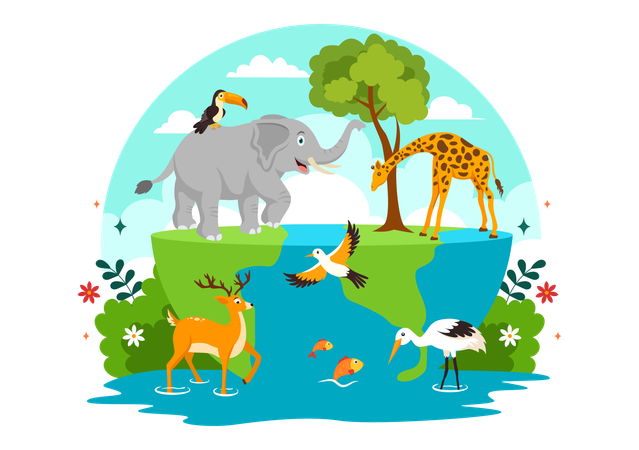
Every year, on May 22, the world pauses to acknowledge a profound yet often overlooked facet of our existence: biodiversity. This occasion, known as World Biodiversity Day, serves as a clarion call to recognize the multitude of life forms that inhabit our planet and the intricate web of relationships that sustain them. It’s a day dedicated to contemplation, education, and action, urging us to critically evaluate our relationship with the natural world.
The significance of World Biodiversity Day extends far beyond mere acknowledgment. It is a reminder of the fragility of ecosystems, the urgency of environmental conservation, and the interconnectedness of all living beings. As humanity continues to assert its dominion over nature, the consequences of this exploitation manifest in devastating ways—habitat loss, species extinction, and climate change. This day, thus, is not just a commemoration; it is an opportunity to recalibrate our perspective and engage in proactive measures for preservation.
To grasp the essence of biodiversity, one must understand its multi-dimensionality. Biodiversity encompasses all forms of life on Earth, from the microscopic organisms in our soil to the towering trees in our forests. It includes genetic diversity within species, species diversity within ecosystems, and the diversity of ecosystems themselves. Each component plays an indispensable role, contributing to the resilience of our environment against various stressors, including climate change and human encroachment.
However, the clock is ticking. According to scientists, an estimated one million species are at risk of extinction due to human activities, a crisis unprecedented in human history. The conflation of urbanization, pollution, and unsustainable agricultural practices has irrevocably altered landscapes that once thrived with life. In this context, World Biodiversity Day emerges as a poignant reminder that preserving biodiversity is not a choice, but rather an existential imperative.
But how did this day come into being? The origins of World Biodiversity Day trace back to the Convention on Biological Diversity, adopted at the Earth Summit in Rio de Janeiro in 1992. With 196 parties now committed to this treaty, the event serves as an annual focal point for raising awareness about biodiversity issues. The observance of this day prompts nations, organizations, communities, and individuals to engage in dialogues about the state of biodiversity, sparking innovation in conservation strategies through collaborative efforts.
What does this mean for the individual? The empowerment of the ordinary citizen cannot be overstated. Awareness is the first step toward action. Each person can contribute to biodiversity conservation in myriad ways. Simple acts, such as planting native species in gardens, reducing plastic use, or advocating for sustainable practices in local communities, all serve the greater goal of preserving the wealth of life around us. Curious minds can explore local flora and fauna, fostering a deeper appreciation that translates into action.
As we navigate the complexities surrounding biodiversity, we often encounter the concept of ecosystem services. This term encompasses the myriad benefits that humans derive from the natural world: clean air and water, pollination of crops, carbon sequestration, and even recreational opportunities. With these services severely threatened, it becomes increasingly clear that our well-being is inextricably linked to the health of our ecosystems. On World Biodiversity Day, this connection should resonate deeply, prompting reflection on our consumption patterns and lifestyle choices.
Engagement is crucial, and thus, World Biodiversity Day serves not only as a day of learning but also as a platform for mobilization. Governments and NGOs worldwide engage in campaigns that range from community clean-up days to educational workshops highlighting the importance of biodiversity. Virtual events have expanded the reach of these initiatives, allowing individuals from diverse backgrounds to connect over shared aspirations for ecological preservation. Social media campaigns, hashtags, and online challenges are powerful tools for spreading awareness, encouraging people to share their commitment to biodiversity.
Moreover, artistic expression plays an essential role in igniting curiosity and fostering empathy towards nature. Illustrators, photographers, and filmmakers convey powerful narratives through their work, elevating the discourse on biodiversity. Each image serves as a stark reminder of what’s at stake—the irreplaceable beauty of the natural world. Engaging with these works can open our eyes to the nuances of life that often go unnoticed, creating a ripple effect of awareness and action.
With the incessant march of urbanization and industrialization, there emerge glimmers of hope through innovative solutions that address biodiversity loss. Rewilding efforts, ecological restoration programs, and sustainable farming practices are gaining traction as communities mobilize to rethink land use and management. Ecologists and conservationists advocate for nature-based solutions, presenting them not as lofty ideals but as concrete actions that can rejuvenate ecosystems, benefit agriculture, and enhance human quality of life.
The holistic understanding of biodiversity as a dynamic, interwoven tapestry challenges us to rethink our role within that tapestry. While the statistics may be daunting, the narrative is one of resilience and opportunity. Each year, World Biodiversity Day reinforces that although the struggle against biodiversity loss is formidable, the collective efforts of inspired individuals can create meaningful change. The call to action is clear: whether through policy advocacy, grassroots initiatives, or personal lifestyle changes, everyone has a role in safeguarding the myriad forms of life on this planet.
As we commemorate World Biodiversity Day, let us embrace a profound promise—a shift in perspective that transcends mere acknowledgment to one of commitment. The kaleidoscope of life that surrounds us is both a privilege and a responsibility. By cultivating curiosity and a deeper understanding of biodiversity, we lay the groundwork for a sustainable future, nurturing the delicate balance of life on Earth. Together, let us become stewards of this extraordinary legacy, ensuring that future generations inherit a world rich in diversity and vitality.








Leave a Comment