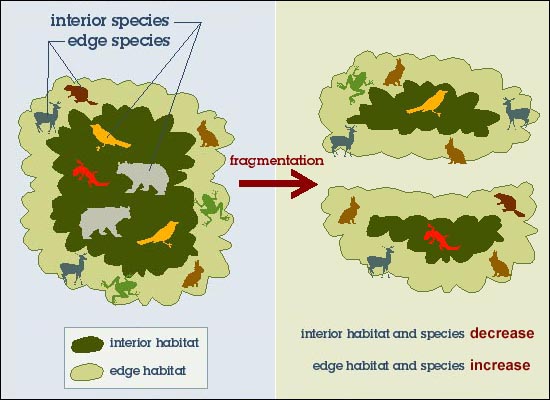
In the vibrant tapestry of nature, habitat fragmentation emerges as a formidable threat, casting shadows over biodiversity and ecological balance. As human aspirations stretch across landscapes, they unwittingly rend the very fabric of ecosystems, leading to dire consequences for countless species. Understanding habitat fragmentation is crucial, not just for scientists and policymakers, but for every individual who shares this planet. What precisely is habitat fragmentation? What are its intricate implications?
At its core, habitat fragmentation refers to the process whereby large expanses of habitat are divided into smaller, isolated patches. This phenomenon often results from anthropogenic activities, such as urban development, agriculture, and infrastructure projects. When we carve roads through forests or cultivate fields in previously untouched areas, we set off a chain reaction that can sever the connections among flora and fauna. Imagine a vast, thriving community being partitioned into isolated pockets; this metaphor succinctly encapsulates the essence of habitat fragmentation.
One cannot overlook the profound ramifications of fragmented habitats. Firstly, one must consider the impact on species diversity. When habitats are broken into fragments, many species—especially those with large territorial needs—struggle to survive. The once vibrant chorus of diverse species singing in harmony transforms into a mere whisper of existence, as some populations dwindle or vanish entirely. Each species plays a unique role in its ecosystem, contributing to a delicate equilibrium that sustains life. The loss of even a single species can create a domino effect, destabilizing entire ecological networks.
Moreover, habitat fragmentation disrupts the connectivity essential for migration, reproduction, and foraging. Many species rely on seasonal migrations to find food, mate, or escape harsh environmental conditions. When their pathways are obstructed, they may become trapped in their dwindling patches. This isolation not only diminishes genetic diversity but can also lead to inbreeding—an unfortunate twist of fate that compromises the resilience of populations. We often underestimate the complexity and interdependence of these natural processes until faced with the stark reality of extinction.
Indeed, the psychological implications for wildlife cannot be dismissed. Imagine an animal, instinctively seeking to traverse a landscape abundant with resources, suddenly confronted with an insurmountable barrier. The stress and disorientation that ensue can challenge survival. This predicament is particularly acute for larger mammals, which require expansive territories to thrive. The roadways and developments that encroach upon their habitats act as not just physical barriers but also psychological ones, fracturing their sense of place and security.
Yet, there exists a broader canvas to consider. Habitat fragmentation often exacerbates human-wildlife conflict. As wild animals are forced into closer proximity with urban environments, encounters become inevitable. A bear rummaging through trash bins or a coyote navigating suburban streets exemplifies this crisis. Instead of thriving in their natural habitats, these creatures find themselves in precarious and often dangerous situations, leading to increased risks for both humans and wildlife. We must ponder: is such a relationship sustainable? Or does it herald deeper, more troubling conflicts?
Furthermore, the ecological ramifications extend beyond immediate species survival. Fragmented habitats can disrupt critical ecosystem services. Pollination, seed dispersal, and pest control are just a few vital functions performed by diverse species. As these communities dwindle, the capacity of ecosystems to provide these services is severely compromised. Take, for example, the role of bees in pollination. A decline in bee populations due to habitat fragmentation can lead to a decline in plant reproduction, which in turn affects entire food chains. The intricate interconnectedness of life becomes increasingly apparent through the lens of ecosystem service disruption.
However, recognizing the challenges posed by habitat fragmentation can inspire hope. By shifting our perspective, we can envision solutions that bridge the divide between human development and ecological preservation. One notable approach involves creating wildlife corridors—designated pathways that enable species to traverse fragmented landscapes safely. These corridors can significantly enhance connectivity, allowing for animal migrations, gene flow, and overall population health. Furthermore, urban planners and conservationists are increasingly advocating for green infrastructure, integrating nature into human landscapes to create havens for wildlife.
Community engagement is paramount in these endeavors. Educational initiatives can galvanize local populations, urging them to participate in habitat restoration projects or to advocate for sustainable land-use practices. When individuals comprehend the direct connection between their actions and the health of ecosystems, they are more likely to become stewards of the environment. Such a cultural shift can yield prodigious rewards, fostering respect for the natural world and its multifaceted inhabitants.
As we traverse this pivotal juncture, it is imperative to embrace a narrative of coexistence. Habitat fragmentation is not merely an ecological concern; it is a clarion call for introspection and action. By cultivating awareness and fostering collaboration between conservationists, communities, and policymakers, we can weave a restorative narrative that embraces both human and non-human life. What we forge together today will influence the ecological legacy we leave for future generations. As we ponder the intricacies of habitat fragmentation, let it serve as an impetus for innovation, reform, and above all, a more profound respect for the planet we share.
In unveiling the complexities of habitat fragmentation, we come to understand its multifaceted layers and recognize our collective responsibility. What is the value of a thriving biodiversity, if not a reflection of our own choices? The journey toward ecological resilience begins, one conscious decision at a time.







Leave a Comment