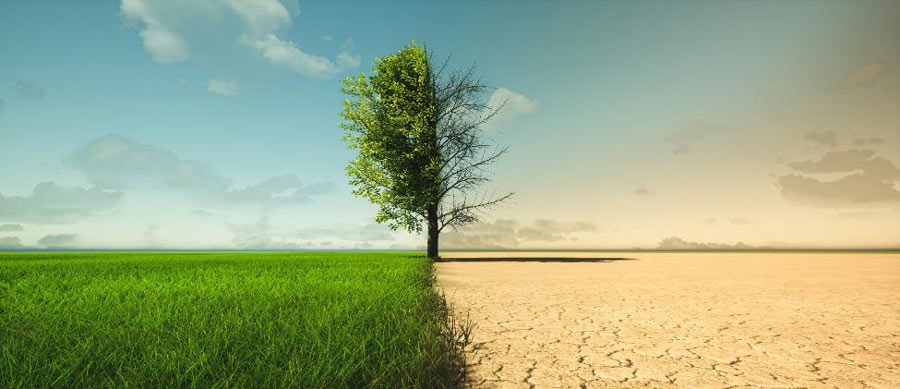
The Sahara Desert, often perceived as an unforgiving land of barren sand dunes and scorching temperatures, holds a paradoxical narrative within its vast expanse. Recent scientific inquiries suggest that the region may be undergoing a transformation characterized by a burgeoning greening phenomenon. This assertion ignites a kaleidoscope of questions surrounding the mechanisms of climate change, the resilience of ecosystems, and the intricate balance of our planet’s environmental symphony. Is this greening truly a herald of global warming, or is it merely a transient environmental anomaly?
To unravel the complexities of this situation, one must first delve into the historical context of the Sahara. Approximately 10,000 years ago, this arid region was not the vast empty space we recognize today. Instead, it was a verdant landscape adorned with lush vegetation and teeming waterways. Early human civilizations flourished, with evidence suggesting an abundance of wildlife and thriving communities. However, as the Earth’s climate slowly shifted, so too did the Sahara’s ecological narrative, transforming it into the parched landscape we are familiar with, largely due to natural climatic oscillations.
Fast forward to the present, climate scientists are increasingly observing a resurgence of green patches emerging within the Sahara. Is this a reassurance that nature can rejuvenate, or is it a symptom of distress? The latter is necessitated by the observations emerging from satellite imagery and climate models which illustrate that rising global temperatures facilitate increased vegetation growth in arid areas. This growth is often attributed to a combination of several factors: higher atmospheric carbon dioxide levels, altered precipitation patterns, and temperature fluctuations.
One paramount question that arises is whether this greening is directly related to anthropogenic climate change. The evidence indicates that as the globe warms, the Sahara is experiencing changes in rainfall distribution that favor sporadic periods of increased moisture. Consequently, areas once rendered inhospitable are becoming increasingly conducive to plant life. Soil rejuvenation processes are also crucial to this narrative, wherein conditions foster microbial activity that enhances soil fertility, creating a symbiotic relationship between vegetation and an enriched environment.
Yet all that glitters is not green. The greening of the Sahara raises concerns regarding ecological balance. Researchers have documented instances where the initial uptick in vegetation has led to unintended consequences. In some areas, such enhanced growth can result in increased competition for precious water resources between indigenous flora and newly establishing plant species. This competition can jeopardize the survival of endemic species that represent centuries of adaptation to the desert environment.
Moreover, this phenomenon is not homogenous. The Sahara covers an expanse of more than 9 million square kilometers, and the greening process is variable across its vast landscapes. Northern boundaries, where Mediterranean influences linger, may flourish more prominently than the southern reaches, which struggle under more persistent droughts. Additionally, the intricate interplay of local climate, soil types, and topographical factors culminate into a complex mosaic of ecological responses. Each area yields a unique output that reflects both resilience and vulnerability to changing environmental conditions.
Another intriguing aspect of this greening narrative is the connection between vegetation growth and carbon sequestration. As plants proliferate in the Sahara, they absorb carbon dioxide from the atmosphere, potentially acting as a partial mitigator of climate change. This phenomenon invites the corollary discussion on the legitimacy of utilizing afforestation as a climate change remedy. Nevertheless, critics caution against romanticizing this notion without acknowledging the underlying threats that rapid changes pose to established ecosystems and human communities.
Furthermore, it becomes imperative to consider the socio-economic implications of a greening Sahara. The prospect of arable land could energize local communities, leading to agricultural ventures that capitalize on new opportunities. Rain-fed agriculture could reinvigorate livelihoods, ensuring food security to regions long defined by scarcity. However, such transformations carry the risk of misunderstanding ecological dynamics, leading to exploitative practices that may further disrupt the fragile balance. Hence, any steps taken must be anchored in sustainable practices, ensuring that local ecosystems benefit as much as the human inhabitants.
Ultimately, the greening of the Sahara invites humility in the face of climate complexity. It serves as a poignant reminder that while certain effects of climate change appear beneficial, they are intricately woven into narratives of disruption and alteration. The Sahara’s potential resurgence can inspire a dual vision—one that acknowledges the agency of nature while also cementing the imperative for conservation. Harnessing knowledge of ecological resilience should guide our responses to climate sorrow while simultaneously galvanizing ambitions for rejuvenation.
In conclusion, the question remains: Is the Sahara greening because of global warming? The short answer is layered with nuance, encompassing both the blessings and burdens of a changing climate. This greening could indeed signify a shift—the Sahara, resilient in its evolution, adapting amidst adversity. As the scientific community continues to probe this transformative phenomenon, it is clear that the overarching narrative is not merely about the landscapes we see but the intricate interconnections between climate, ecology, and humanity. Embracing this complexity fuels our curiosity and compels action, fostering a deeper appreciation for the fragile beauty of our planet and the endless stories it tells.






Leave a Comment