
Carbon pricing assigns a monetary cost to greenhouse‑gas emissions; Canada’s federal carbon tax, introduced in 2019, raises fuel prices to encourage cleaner energy use, generating revenue that is largely returned to households and provinces.
Quick Answer
Carbon pricing is a policy that puts a price on carbon dioxide equivalents emitted by fossil‑fuel use. In Canada the federal carbon tax, started in 2019 at C$20 per tonne of CO₂e, is applied to gasoline, diesel, natural gas and other fuels. The tax is designed to make high‑carbon fuels more expensive, encouraging consumers and businesses to shift toward lower‑carbon alternatives. Evidence from national emissions inventories shows a modest reduction in fuel‑related emissions since the tax’s introduction, while the revenue is returned to Canadians through rebates and provincial programs. Uncertainty remains around long‑term behavioural change and the exact magnitude of emission reductions.
Key Takeaways
- Carbon pricing internalises the climate cost of fossil‑fuel use, influencing market decisions.
- The federal carbon tax began at C$20/tCO₂e in 2019 and is scheduled to rise to C$80/tCO₂e by 2024.
- Revenue‑neutral design returns most proceeds to households and provincial climate projects.
- National monitoring shows a measurable decline in gasoline‑related emissions, though overall national emissions remain above targets.
- Equity concerns are addressed through per‑capita rebates, but regional cost burdens differ.
- Complementary measures—energy efficiency, renewable incentives, and carbon‑capture research—enhance the tax’s effectiveness.
What Is Carbon Pricing and the Carbon Tax in Canada Explained?
Carbon pricing is an economic instrument that assigns a monetary value to each tonne of carbon dioxide equivalent (CO₂e) emitted. The two main forms are a carbon tax—a direct charge on the carbon content of fuels—and a cap‑and‑trade system, which sets an overall emissions limit and allows firms to buy or sell allowances. Canada employs both: a federal carbon tax on fuel and provincial cap‑and‑trade programs in Quebec and formerly in Ontario. The tax is a cornerstone of Canada’s climate strategy because it creates a predictable price signal that nudges producers and consumers toward lower‑carbon technologies.
How Does It Work?
Step‑by‑Step Mechanism of the Federal Carbon Tax
- Assessment of Carbon Content: Each litre of gasoline or cubic metre of natural gas is assigned a carbon‑content factor based on its CO₂e emissions per unit of energy.
- Application of the Tax Rate: The federal rate (e.g., C$20 / tCO₂e in 2019) is multiplied by the carbon content to calculate a per‑unit tax (approximately 4.4 ¢ / L of gasoline at the 2019 rate).
- Collection at the Wholesale Level: Fuel suppliers pay the tax to the Canada Revenue Agency, which passes the cost downstream to retailers and ultimately to consumers.
- Revenue Recycling: More than 90 % of the revenue is returned to individuals as a Climate Action Incentive payment and to provinces for clean‑energy projects, making the policy revenue‑neutral.
- Scheduled Rate Increases: The law mandates annual increases (C$10 / tCO₂e per year until 2022, then C$15 / tCO₂e per year), providing a clear price trajectory for long‑term planning.
Interaction with Provincial Policies
Provinces may implement their own carbon pricing mechanisms that meet the federal benchmark. Where a province’s system is less stringent, the federal tax applies on top of the provincial scheme, ensuring a minimum national price on carbon.
What Does the Evidence Show?
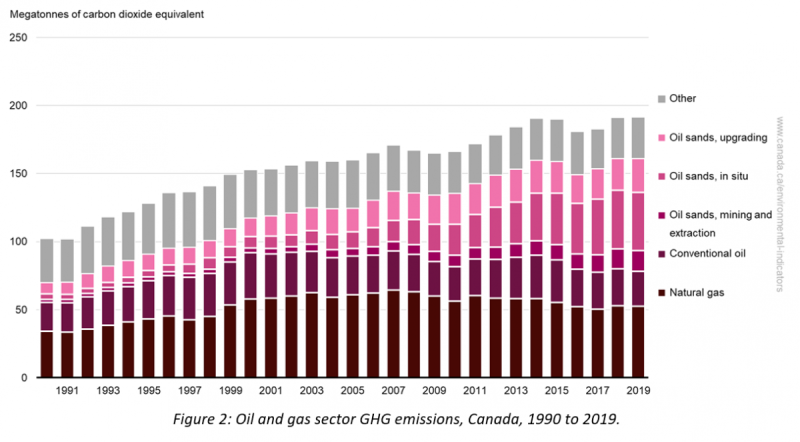
Data from Environment and Climate Change Canada indicate that fuel‑related CO₂ emissions fell by about 4 % between 2019 and 2022, a trend that aligns with the timing of the tax increase. A 2023 analysis by the International Monetary Fund notes that Canada’s carbon price is among the highest in the G7 and that the tax has contributed to a decoupling of GDP growth from emissions growth, suggesting a modest but positive impact. However, a systematic review of provincial carbon‑pricing outcomes (published in *Energy Policy* 2022) finds mixed results: emissions reductions are clearer in sectors directly taxed (transport, residential heating) but less evident in industrial processes that receive exemptions.
Main Causes or Drivers
Direct Causes
The tax directly raises the marginal cost of carbon‑intensive fuels, making low‑carbon alternatives comparatively cheaper.
Underlying Drivers
- Canada’s commitment under the Paris Agreement to reduce national emissions by 40–45 % below 2005 levels by 2030.
- Economic incentives to diversify away from fossil‑fuel‑dependent provinces (e.g., Alberta) toward renewable‑energy sectors.
- Public‑finance considerations: using carbon revenues to fund climate‑resilient infrastructure while avoiding new taxes.
Environmental and Human Impacts
Environmental Impacts
By discouraging gasoline and natural‑gas consumption, the tax reduces CO₂ emissions that contribute to global warming, air‑quality pollutants (NOₓ, PM₂.₅), and associated ecosystem stress. Modelling by the Intergovernmental Panel on Climate Change (IPCC 2021) suggests that each additional C$10 / tCO₂e could cut national emissions by roughly 0.5 % per year, assuming constant economic activity.
Human Health and Social Impacts
Lower combustion of fossil fuels improves urban air quality, which the Canadian Institute for Health Information links to reductions in asthma and cardiovascular incidents. The Climate Action Incentive rebates, which averaged C$300 per adult in 2022, offset the higher fuel costs for low‑ and middle‑income households, though critics argue the rebate may not fully compensate for regional price spikes in remote communities.
Economic and Infrastructure Impacts
Industries with high carbon intensity, such as oil‑sand extraction, face higher operating costs, prompting investments in efficiency and carbon‑capture technologies. Conversely, renewable‑energy firms benefit from a more favourable market environment, spurring job growth in solar and wind sectors.
Regional Differences
The tax’s impact varies across Canada’s provinces and territories. In Atlantic provinces, where heating relies heavily on natural gas, the tax represents a larger share of household energy bills, but the Climate Action Incentive is proportionally higher. In western provinces with strong oil and gas sectors, political opposition has been pronounced, leading to legal challenges and calls for exemptions. Indigenous communities in the North, where diesel is the primary fuel, experience higher per‑capita costs; some provincial agreements now direct a portion of tax revenue to community‑led renewable projects.
What Scientists Know With High Confidence
- Assigning a price to carbon emissions influences consumer and producer behaviour, as demonstrated by multiple international case studies.
- Canada’s federal carbon tax has contributed to a measurable decline in fuel‑related CO₂ emissions since 2019.
- Revenue‑neutral designs that return funds to households mitigate regressive cost impacts.
- Higher carbon prices are correlated with accelerated deployment of renewable energy and energy‑efficiency measures.
What Remains Uncertain
Key uncertainties include the long‑term elasticity of demand for fossil fuels under higher tax rates, the extent to which industry will adopt carbon‑capture technologies without additional policy support, and the net effect of the tax on employment in carbon‑intensive regions. Moreover, the interaction between the federal tax and future provincial policies could alter the overall price signal, making it difficult to isolate the tax’s pure effect on national emissions trajectories.
Common Misconceptions
Misconception: The carbon tax raises overall tax burden for everyone.
Reality: The federal system is revenue‑neutral; most of the collected tax is returned to individuals and provinces, often resulting in a net cash benefit for low‑income households.
Misconception: A carbon tax alone will meet Canada’s 2030 emissions targets.
Reality: While the tax is a critical tool, meeting the 2030 goal also requires complementary measures such as clean‑energy standards, infrastructure upgrades, and sector‑specific regulations.
Misconception: The tax only affects gasoline prices.
Reality: The tax applies to all fossil‑fuel sources, including diesel, jet fuel, natural gas, and coal, influencing a broad range of sectors from transportation to heating and industrial processes.
Solutions and Limitations
Carbon pricing works best when paired with other policies. Energy‑efficiency standards reduce the amount of fuel needed, amplifying the tax’s impact. Renewable‑energy subsidies lower the cost of low‑carbon alternatives, making the price differential more meaningful. However, limitations exist: high‑price spikes can strain low‑income households if rebates are insufficient; industry exemptions can erode the signal; and reliance on future technological breakthroughs (e.g., carbon‑capture) carries risk if they do not scale as expected.
What Individuals, Communities, and Governments Can Do
What Individuals Can Do
- Choose low‑carbon transportation options (public transit, car‑pooling, electric vehicles) to reduce fuel purchases.
- Improve home energy efficiency (insulation, programmable thermostats) to lower natural‑gas consumption.
- Claim the Climate Action Incentive rebate and allocate savings toward further energy‑saving upgrades.
What Communities and Organizations Can Do
- Develop local renewable‑energy projects that benefit from the higher cost of fossil fuels.
- Partner with municipalities to create bike‑share programs and expand transit networks.
- Advocate for transparent use of carbon‑tax revenues toward climate‑resilience projects.
What Governments Can Do
- Maintain the scheduled tax‑rate increases to preserve price predictability.
- Design targeted rebates for remote and Indigenous communities that face higher fuel costs.
- Invest carbon‑tax revenues in large‑scale renewable infrastructure, energy‑efficiency retrofits, and research into low‑carbon industrial processes.
Closing Synthesis
Canada’s carbon tax translates the climate cost of carbon emissions into a market price, encouraging a shift toward cleaner energy while returning most revenue to citizens. Evidence shows it has begun to curb fuel‑related emissions, but its ultimate effectiveness depends on complementary policies, equitable revenue recycling, and sustained political will. Understanding the tax’s mechanisms, proven impacts, and remaining uncertainties equips individuals, businesses, and policymakers to engage constructively in Canada’s transition to a low‑carbon future.
Frequently Asked Questions
What is a carbon tax and how does it differ from cap‑and‑trade?
A carbon tax is a fixed charge on the carbon content of fuels, applied directly at the point of sale. Cap‑and‑trade sets an overall emissions limit and lets firms trade allowances; the price of carbon emerges from the market. Both aim to internalise climate costs, but the tax provides price certainty while cap‑and‑trade offers emissions certainty.
How has Canada’s federal carbon tax rate changed since it was introduced?
The federal carbon tax started at C$20 per tonne of CO₂e in 2019. It increased by C$10 each year until 2022 (reaching C$50/t), then by C$15 per year, reaching C$80/t in 2024. The schedule is legislated, giving businesses a predictable price path.
What evidence shows the carbon tax reduces emissions in Canada?
Environment and Climate Change Canada reports a 4 % decline in fuel‑related CO₂ emissions between 2019 and 2022, coinciding with the tax’s rollout. International analyses also note that Canada’s high carbon price contributes to a decoupling of GDP growth from emissions growth, indicating a modest but measurable impact.
How does the carbon tax affect low‑income households?
Low‑income households face higher fuel costs, but the Climate Action Incentive rebate—averaging about C$300 per adult in 2022—returns most of the tax revenue directly to individuals. This design makes the policy largely revenue‑neutral, though regional price spikes can still pose challenges for some communities.
What actions can Canadians take to support the carbon tax’s goals?
Canadians can reduce personal fuel use by choosing public transit, car‑pooling, or electric vehicles, improve home energy efficiency, and claim the Climate Action Incentive rebate. Communities can invest in renewable projects and transit, while governments should maintain tax increases, target rebates for vulnerable regions, and fund clean‑energy infrastructure.






Leave a Comment