
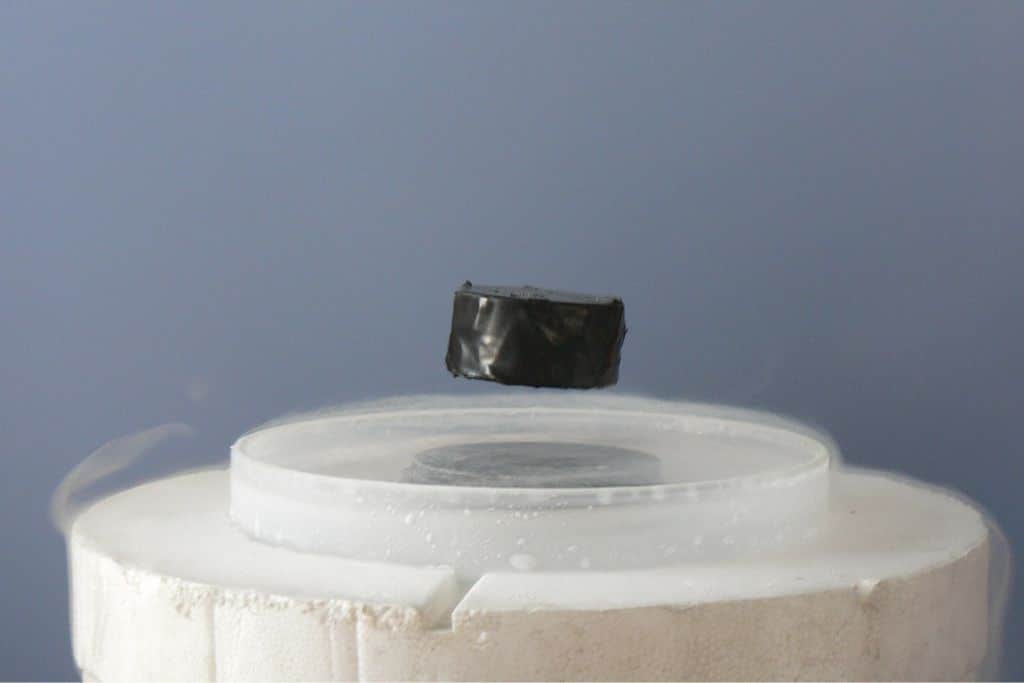
Room-temperature superconductors could eliminate electrical resistance in power grids, offering a potential climate benefit, but the technology remains speculative and its net impact depends on future scientific and manufacturing breakthroughs.
Quick Answer
A room‑temperature superconductor (RTS) is a material that conducts electricity with zero resistance at roughly 20 °C and ambient pressure, removing the need for costly cryogenic cooling. The phenomenon relies on electrons forming Cooper pairs that move through a crystal lattice without scattering. Laboratory reports have observed zero‑resistance signatures only under extreme pressures (>150 GPa); a reproducible, scalable RTS has not yet been demonstrated. If such a material becomes practical, loss‑free transmission could cut the ~8 % of global electricity lost in grids, modestly reducing CO₂ emissions, but uncertainties about material stability, manufacturing impacts, and deployment timelines temper this outlook.
Key Takeaways
- All confirmed superconductors require temperatures far below ambient, necessitating active cooling.
- High‑pressure hydrogen‑rich hydrides have shown room‑temperature signatures, but reproducibility is unproven.
- Loss‑free transmission could lower global CO₂ emissions by up to 0.5 Gt yr⁻¹ in optimistic IEA scenarios.
- Manufacturing RTS may involve rare‑earth mining and high‑energy synthesis, creating new environmental pressures.
- Policy support, infrastructure planning, and equitable technology transfer are essential for any large‑scale rollout.
What Is Breakthrough or Mirage? The Climate Implications of a Room-Temperature Superconductor?
A room‑temperature superconductor (RTS) is a material that exhibits zero electrical resistance at around 20 °C (293 K) and normal atmospheric pressure. By contrast, conventional superconductors need liquid‑helium (≈4 K) or liquid‑nitrogen (≈77 K) cooling. Research follows two main pathways: (1) high‑pressure hydrogen‑rich hydrides that become metallic under >150 GPa, and (2) engineered cuprate or iron‑based families modified to raise their critical temperature (Tc). The climate relevance lies in the potential to eliminate resistive losses in transmission lines, enable compact high‑current magnets for fusion or maglev, and improve the efficiency of large‑scale energy storage.
How Does It Work?
Superconductivity Basics
When a material is cooled below its Tc, electrons pair into Cooper pairs. These pairs move coherently through the crystal lattice without scattering, creating an energy gap that prevents electrical resistance. This quantum state is well‑established in low‑temperature superconductors and underpins MRI machines, particle accelerators, and magnetic levitation trains.
High‑Pressure Hydride Pathway
In a diamond‑anvil cell, hydrogen‑rich compounds are compressed to >150 GPa, forcing hydrogen atoms into a metallic lattice. Strong electron‑phonon coupling can raise Tc to or above 20 °C, as reported for a carbon‑sulfur‑hydrogen mixture at 267 GPa. The key challenge is to retain superconductivity when pressure is released, which would require novel synthesis routes or metastable phase stabilization.
From Lab to Grid
- Stabilise the material at ambient pressure while preserving zero resistance.
- Form long, flexible conductors capable of carrying hundreds of kilo‑amperes.
- Integrate the conductors into existing high‑voltage infrastructure, updating grid codes and protection schemes.
Each step demands advances in material science, scalable manufacturing, and economic feasibility.
What Does the Evidence Show?
Laboratory evidence for RTS consists mainly of zero‑resistance measurements under extreme pressure. A 2020 study reported a Tc of 15 °C at 267 GPa in a carbon‑sulfur‑hydrogen sample, but independent replication has not been achieved. The International Union of Pure and Applied Chemistry (IUPAC) classifies such results as “pre‑clinical.” A 2023 systematic review in Nature Reviews Materials concluded that theoretical models support possible ambient‑pressure superconductivity in certain hydrides, yet experimental confirmation remains “emergent” and highly sensitive to synthesis conditions.
Energy‑system modelling by the International Energy Agency (IEA, 2022) treats RTS as a low‑probability, high‑impact technology. In a best‑case scenario, RTS could reduce transmission losses by 5–10 % by 2050, equating to a CO₂ avoidance of up to 0.5 Gt yr⁻¹. However, the model flags large uncertainties in material scalability and life‑cycle emissions.
Main Causes or Drivers
Technical Drivers
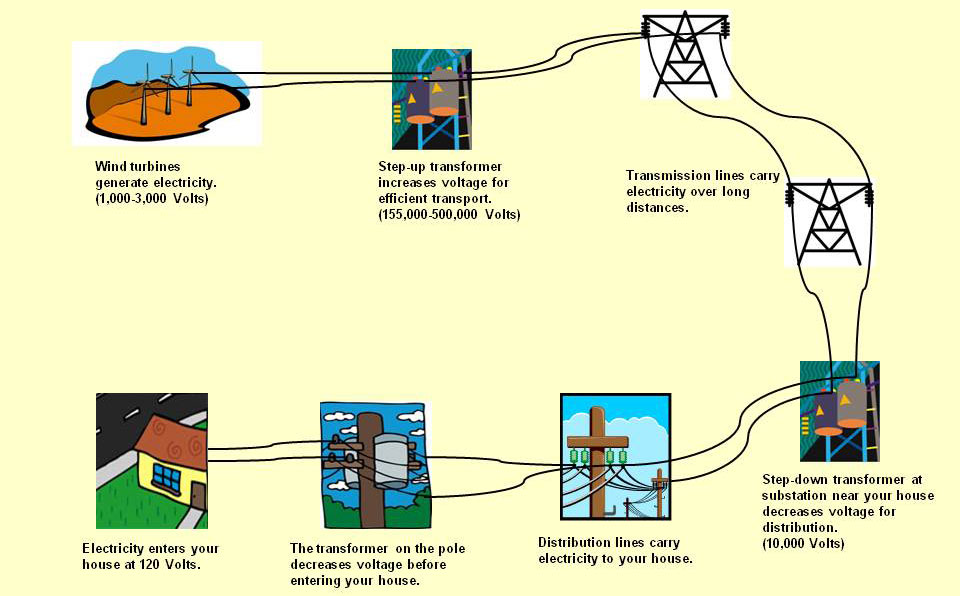
- Rising transmission losses in aging grids (≈8 % of generated electricity, IEA 2022).
- Demand for high‑current magnets in fusion research and maglev transport.
Climate Drivers
- Projected 30 % increase in global electricity demand by 2040 (IEA 2023).
- Need for long‑distance, low‑loss transmission to integrate variable renewable energy.
Economic Drivers
- High operating costs of cryogenic cooling for conventional superconductors ($10–30 per kW capacity).
- Potential savings from avoided generation and reduced heat‑island effects.
Environmental and Human Impacts
Environmental Impacts
Loss‑free transmission would lower the amount of fossil‑fuel generation needed to meet demand, reducing CO₂ emissions and air‑pollutant releases. Conversely, extracting rare‑earth elements (e.g., lanthanum, yttrium) often required for high‑Tc compounds can cause habitat loss, water contamination, and substantial carbon emissions, as documented by the United Nations Environment Programme (UNEP, 2021). A full life‑cycle assessment of RTS systems is not yet available, leaving the net climate benefit uncertain.
Human Health and Social Impacts
Reduced electricity losses could lower consumer prices, improving energy access in low‑income regions. However, mining for constituent elements may expose workers to toxic dust and increase occupational health risks, echoing concerns raised by the World Health Organization on mining communities.
Economic and Infrastructure Impacts
Replacing copper or conventional superconducting cables would require billions of dollars in capital investment and extensive grid upgrades. While the transition could create high‑skill manufacturing jobs, it may also widen the technology gap between high‑income nations (which can fund pilot projects) and lower‑income countries that lack capital for large‑scale retrofits.
Regional Differences
High‑income regions such as Europe, North America, and Japan possess the financial resources and research infrastructure to support RTS pilot projects and develop regulatory frameworks. In contrast, many low‑ and middle‑income countries face limited capital for grid overhaul, making immediate adoption unlikely. Regions with abundant renewable resources—e.g., the Sahara, the Australian Outback, or the Andes—could reap the greatest climate benefit from loss‑free transmission of solar or wind power over long distances, provided the technology becomes affordable.
What Scientists Know With High Confidence
- Electrical resistance accounts for roughly 8 % of global electricity generation losses (IEA, 2022).
- Cooper‑pair formation and the resulting zero‑resistance state are well‑established quantum phenomena.
- All experimentally verified superconductors to date require temperatures well below ambient, necessitating active cooling.
- Reducing transmission losses directly lowers fossil‑fuel generation and associated CO₂ emissions.
What Remains Uncertain
The principal uncertainties are (1) whether a material can exhibit stable, ambient‑pressure superconductivity at room temperature, (2) the environmental cost of extracting and processing the required elements at scale, and (3) the economic feasibility of retrofitting existing grids with RTS technology. Ongoing high‑pressure experiments, computational materials‑screening, and early life‑cycle assessments aim to resolve these questions, but robust evidence is still emerging.
Common Misconceptions
Misconception: Room‑temperature superconductors already exist and are ready for commercial use.
Reality: Laboratory reports show promising signatures only under extreme pressures; reproducible, ambient‑pressure materials have not yet been demonstrated.
Misconception: Superconductors eliminate all energy losses.
Reality: Electrical resistance disappears, but dielectric heating, conversion inefficiencies, and mechanical losses remain.
Misconception: Deploying RTS will instantly solve climate change.
Reality: Even perfect RTS would address only the transmission‑loss component; decarbonisation also requires clean generation, demand‑side efficiency, and sectoral reforms.
Misconception: The material will be cheap because it works at room temperature.
Reality: High‑performance superconductors often require rare or toxic elements; manufacturing costs could be high without breakthroughs in synthesis.
Solutions and Limitations
Four strategic pathways can harness the promise of RTS while mitigating risks:
- Research & Development: Continued high‑pressure experiments, computational screening, and low‑pressure synthesis are essential. Funding must balance optimism with rigorous peer review to avoid hype.
- Life‑Cycle Assessment (LCA): Parallel LCA studies should quantify mining, processing, and end‑of‑life impacts to ensure a net climate benefit.
- Infrastructure Planning: Pilot projects in low‑loss corridors can test integration challenges without massive upfront investment. Grid codes will need updates to accommodate superconducting cables.
- Equity‑Focused Policies: International climate‑finance mechanisms can support technology transfer to developing regions, preventing a widening energy‑technology divide.
Each pathway faces trade‑offs: R&D is costly and uncertain; LCAs may reveal hidden environmental burdens; pilot projects risk stranded assets if the technology stalls; equity policies require sustained political commitment.
What Individuals, Communities, and Governments Can Do
What Individuals Can Do
- Support policies that fund clean‑energy and superconductivity research through voting or advocacy.
- Reduce personal electricity consumption to lower overall demand, amplifying any future efficiency gains.
What Communities and Organizations Can Do
- Partner with universities to host demonstration projects, providing local data on grid performance.
- Promote energy‑efficiency programs that reduce baseline loads, making loss‑free transmission more impactful.
What Governments Can Do
- Allocate targeted research grants for ambient‑pressure superconductors and for LCA studies of candidate materials.
- Develop regulatory frameworks that address safety, recycling, and equitable access to superconducting infrastructure.
- Integrate superconductivity scenarios into national energy‑transition roadmaps to align investments with climate targets.
Closing Synthesis
Room‑temperature superconductors sit at the intersection of frontier physics and urgent climate needs. Scientists agree that eliminating electrical resistance would be a game‑changer for energy efficiency, yet the path from high‑pressure laboratory observations to a market‑ready, environmentally sound technology remains steep. High‑confidence knowledge confirms that transmission losses are a sizable emissions source and that superconductivity is a real, reproducible phenomenon under specific conditions. Uncertainties dominate the timeline, scalability, and lifecycle impacts of any RTS solution. By investing wisely in research, rigorously evaluating environmental trade‑offs, and designing equitable policies, societies can turn the promise of loss‑free power into a genuine climate benefit—if, and only if, a reproducible room‑temperature material is achieved.
Frequently Asked Questions
What exactly is a room‑temperature superconductor?
A room‑temperature superconductor is a material that can conduct electricity with zero resistance at about 20 °C and normal atmospheric pressure, eliminating the need for cryogenic cooling.
How could a room‑temperature superconductor affect climate change?
By removing resistive losses in power grids—currently about 8 % of generated electricity—RTS could lower the amount of fossil‑fuel generation needed, potentially reducing global CO₂ emissions by up to 0.5 Gt per year in optimistic scenarios.
What is the current scientific evidence for room‑temperature superconductivity?
Laboratory experiments have observed zero‑resistance behavior under extreme pressures (>150 GPa), but no reproducible, ambient‑pressure material has been confirmed, and independent replication of reported results is still lacking.
What are the main uncertainties surrounding RTS technology?
Key uncertainties include whether a stable, ambient‑pressure material can be produced, the environmental impact of mining and processing required elements, and the economic feasibility of retrofitting existing grids.
What actions can governments take to prepare for potential RTS deployment?
Governments can fund targeted research, develop safety and recycling regulations, integrate superconductivity scenarios into energy‑transition plans, and create climate‑finance mechanisms to support technology transfer to lower‑income regions.




Leave a Comment