
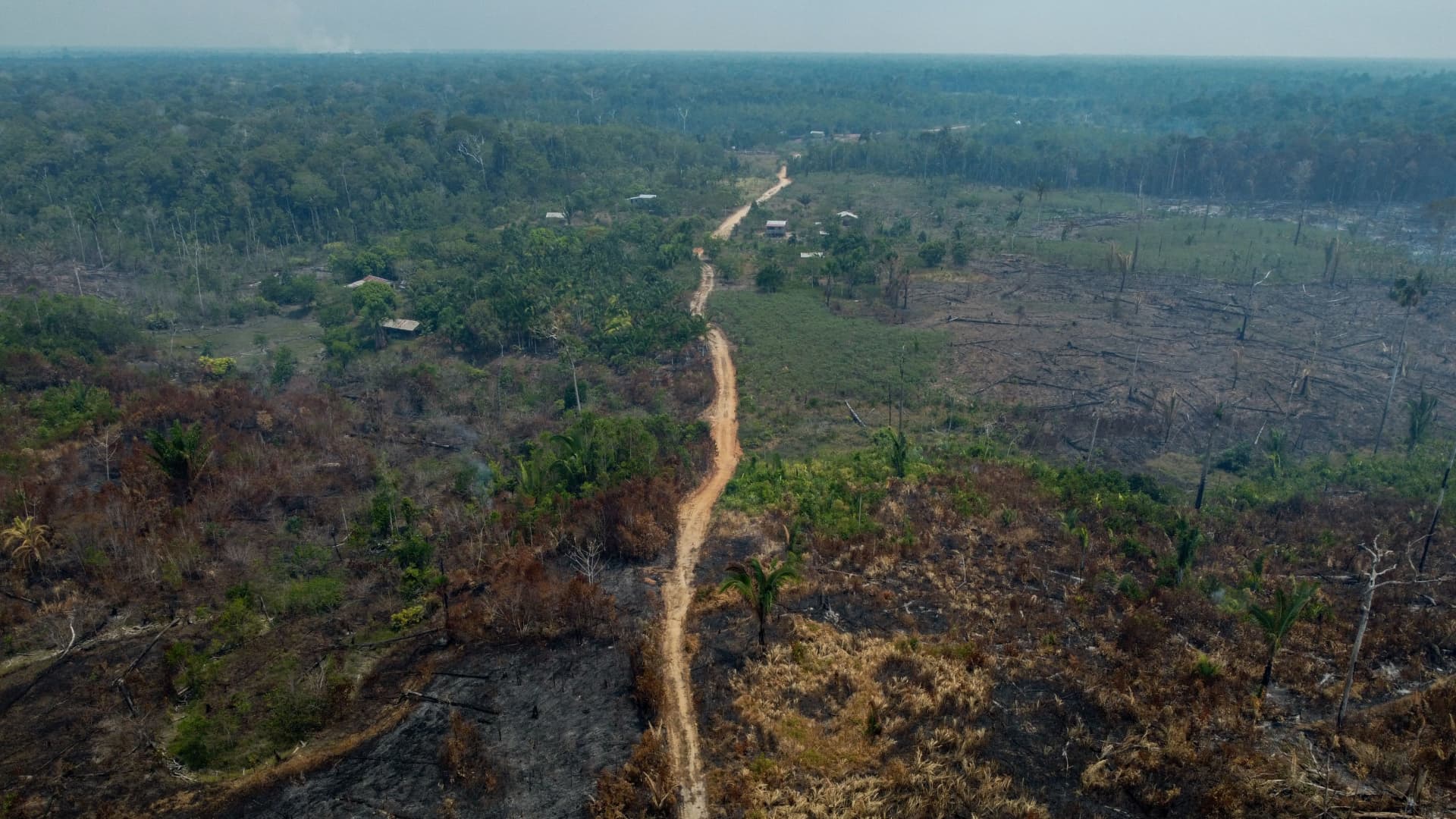
Brazil’s recent rollbacks of environmental regulations threaten the Amazon’s climate‑stabilising functions, raising concerns about deforestation, biodiversity loss, and global carbon balance.
Quick Answer
Brazil has enacted a series of legal changes that relax land‑use permits, reduce penalties for illegal logging, and limit the authority of environmental agencies. These measures accelerate forest clearing, which diminishes the Amazon’s capacity to absorb carbon dioxide and disrupts regional rainfall patterns. Scientific assessments indicate that continued weakening of protections could add up to 0.5 °C of global warming by 2050 if deforestation rates rise sharply. However, uncertainties remain regarding the exact magnitude of future emissions because projected policy paths and enforcement levels vary.
Key Takeaways
- The Amazon stores roughly 100 billion metric tons of carbon; reduced protection speeds its release.
- Legal changes in Brazil lower barriers for agribusiness, mining, and infrastructure projects.
- Deforestation rates have risen after 2020, with satellite data showing an increase of about 20 % in cleared area.
- Indigenous territories and protected areas face higher encroachment risk, affecting local livelihoods.
- International financing mechanisms and civil‑society monitoring can help counterbalance policy rollbacks.
What Is Brazil Weakens Environmental Laws Despite Amazon Climate Risks?
The phrase refers to Brazil’s legislative and regulatory actions that dilute existing environmental safeguards—such as the Forest Code, licensing requirements, and the authority of the Brazilian Institute of Environment and Renewable Natural Resources (IBAMA)—while the country’s Amazon basin continues to experience climate‑related stress. The scope includes federal decrees, executive orders, and amendments that lower fines, shorten environmental impact assessments, and expand permissible land conversion. Unlike temporary budget cuts, these changes alter the legal framework governing forest protection, making them distinct from short‑term enforcement lapses.
How Does It Work?
Step‑by‑step policy pathway
- Legislative amendment: Congress revises the Forest Code to increase the allowable proportion of native vegetation on private lands.
- Executive decree: The president issues orders that streamline licensing for mining and agribusiness, often delegating oversight to state agencies with limited capacity.
- Enforcement dilution: Penalties for illegal clearing are reduced, and IBAMA’s budget is cut, limiting field inspections.
- Land‑use change: Companies obtain permits more quickly, leading to accelerated road building, soy expansion, and cattle ranching.
- Deforestation feedback: Forest loss reduces evapotranspiration, altering regional precipitation and increasing fire susceptibility, which further accelerates carbon release.
What Does the Evidence Show?
Long‑term satellite monitoring by Brazil’s National Institute for Space Research (INPE) demonstrates a clear uptick in cleared area after the 2019 legal adjustments, with an estimated 7,000 km² of forest lost between 2020 and 2022—a rate 20 % higher than the previous decade’s average (INPE, 2023). The Intergovernmental Panel on Climate Change (IPCC, 2023) notes that each percent of Amazon deforestation corresponds to roughly 0.02 °C of global warming when accounting for carbon feedbacks. Peer‑reviewed meta‑analyses of field studies indicate that forest fragmentation reduces biodiversity by 15–30 % within 50 km of cleared edges (Science Advances, 2022). Together, these lines of evidence link Brazil’s regulatory weakening to measurable environmental change.
Main Causes or Drivers
Direct causes
- Amendments to the Forest Code that increase allowable deforestation.
- Executive orders that shorten environmental impact assessments.
Underlying drivers
- Demand for soy and beef in global markets, driving agribusiness expansion.
- Mining concessions attracted by rising commodity prices.
- Political lobbying by powerful rural and industrial lobbies.
Amplifying factors
- Reduced budget for IBAMA, limiting on‑the‑ground enforcement.
- Weakening of indigenous land‑rights recognition, making territories more vulnerable.
Environmental and Human Impacts
Environmental Impacts
Deforestation directly releases stored carbon, contributing an additional 0.1–0.3 Gt CO₂ yr⁻¹ according to the Global Carbon Project (2022). Loss of canopy cover disrupts the water cycle, decreasing regional rainfall by up to 15 % in heavily cleared basins (World Meteorological Organization, 2021). Biodiversity suffers as habitat fragmentation isolates populations of iconic species such as the jaguar (Panthera onca) and numerous amphibians, raising extinction risk.
Human Health and Social Impacts
Air quality deteriorates from increased smoke during forest fires, elevating respiratory illness rates in nearby communities. Indigenous peoples experience displacement, loss of traditional food sources, and cultural erosion when their territories are opened for commercial use. Economic benefits from short‑term job creation are unevenly distributed, often favouring large corporations over smallholder farmers.
Economic and Infrastructure Impacts
While agribusiness gains from expanded arable land, the long‑term cost of reduced ecosystem services—such as water regulation, pollination, and climate mitigation—can outweigh immediate profits. Infrastructure projects (roads, dams) facilitate market access but also fragment habitats and increase illegal logging opportunities.
Regional Differences
Deforestation hotspots differ across the Amazon basin. In Brazil’s southern Amazon (states of Mato Grosso and Pará), soy and cattle dominate land‑use change, whereas in the northern sector (Roraima, Amapá) mining and small‑scale gold extraction are more prevalent. Indigenous territories in the western Amazon have shown slower forest loss due to community monitoring, highlighting the protective effect of local stewardship.
What Scientists Know With High Confidence
What Scientists Know With High Confidence
- The Amazon stores a critical amount of global carbon and acts as a major moisture source for South America.
- Deforestation reduces carbon sequestration capacity and alters regional precipitation patterns.
- Legal protections correlate with lower rates of forest loss; weakening those protections is associated with increased clearing.
- Indigenous land management practices generally sustain higher forest cover than adjacent non‑protected areas.
What Remains Uncertain
What Remains Uncertain
Key uncertainties include the exact magnitude of future carbon emissions under different policy scenarios, the long‑term resilience of Amazon rainfall under combined deforestation and climate change, and the effectiveness of international financing mechanisms in reversing recent legal trends. Improved ground‑based monitoring and transparent reporting of enforcement actions would reduce these gaps.
Common Misconceptions
Common Misconceptions
Misconception: Deforestation only affects local biodiversity.
Reality: The Amazon’s carbon storage influences global climate; loss of forest area contributes to worldwide greenhouse‑gas concentrations.
Misconception: Brazil’s climate‑action pledges guarantee forest protection.
Reality: International commitments are voluntary; domestic policy changes can undermine pledged targets if enforcement weakens.
Misconception: Individual consumer choices can stop Amazon deforestation.
Reality: While demand‑side shifts matter, systemic change requires policy reform, corporate accountability, and large‑scale financing.
Solutions and Limitations
Effective responses combine regulatory, financial, and community‑based approaches. Strengthening the Forest Code and reinstating robust penalties can curb illegal clearing, but political resistance may limit legislative progress. Payments for ecosystem services (PES) provide economic incentives to keep forests intact; however, funding streams are often short‑term and may not reach all vulnerable landholders. Satellite‑based monitoring improves transparency but requires sustained investment in data infrastructure and local enforcement capacity. International climate finance, such as the Green Climate Fund, can support sustainable agriculture, yet disbursement delays and conditionalities sometimes reduce effectiveness.
What Individuals, Communities, and Governments Can Do
What Individuals Can Do
- Support certified sustainable products (e.g., RSPO‑certified palm oil, Fair Trade beef).
- Advocate for transparent supply chains by contacting retailers and policymakers.
- Donate to reputable NGOs that fund indigenous land‑rights and forest monitoring.
What Communities and Organizations Can Do
- Implement community‑based forest monitoring using low‑cost drones and mobile apps.
- Develop alternative livelihoods such as agroforestry, which maintain canopy cover while providing income.
- Form coalitions to demand enforcement of existing environmental statutes.
What Governments Can Do
- Reinstate and enforce the 2012 Forest Code provisions that protect 80 % of native vegetation on private lands.
- Allocate sufficient budget to IBAMA and state environmental agencies for inspections and prosecutions.
- Integrate indigenous land‑title recognition into national land‑registry systems.
- Channel international climate finance into results‑based programs that link payments to verified emission reductions.
Closing Synthesis
Brazil’s weakening of environmental laws creates a clear pathway for accelerated Amazon deforestation, which in turn threatens global climate stability, regional water cycles, and biodiversity. High‑confidence science confirms the Amazon’s role as a carbon sink and moisture generator, while uncertainties revolve around the scale of future emissions under varying policy trajectories. Solutions exist—stronger regulations, financial incentives, and community stewardship—but each carries trade‑offs that require coordinated action across scales. By aligning political will with scientific evidence, Brazil can reconcile economic development with the imperative to preserve the Amazon for the planet’s health.
Frequently Asked Questions
What specific legal changes have weakened Brazil's environmental protections?
Brazil has amended the Forest Code to allow more land conversion, issued executive orders that shorten environmental impact assessments, and reduced fines for illegal logging, all of which lower barriers for agribusiness and mining.
How does Amazon deforestation affect global climate?
The Amazon stores about 100 billion metric tons of carbon; when forests are cleared, this carbon is released as CO₂, contributing to global warming and reducing the continent’s capacity to absorb future emissions.
What evidence links policy rollbacks to increased deforestation?
Satellite monitoring by INPE shows a 20 % rise in cleared area between 2020‑2022 after legal changes, and peer‑reviewed studies link reduced enforcement to higher rates of forest loss.
Are indigenous territories more protected from deforestation?
Yes, research indicates that indigenous-managed lands retain higher forest cover than adjacent non‑protected areas, demonstrating the protective effect of community stewardship.
What actions can governments take to reverse the trend?
Governments can reinstate stricter Forest Code provisions, increase funding for environmental agencies, recognize indigenous land titles, and direct international climate finance toward results‑based forest conservation programs.





Leave a Comment