
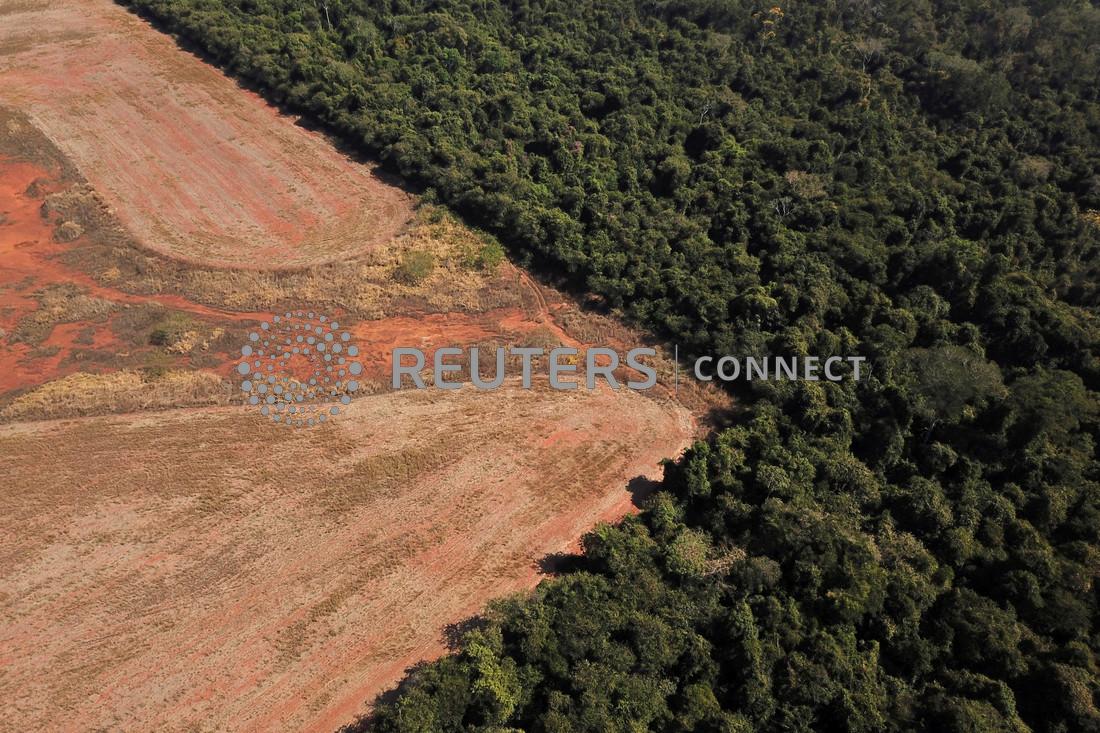
Deforestation in Brazil’s Cerrado savanna has surged to a six‑year peak, driven by expanding agriculture and cattle ranching, threatening biodiversity, water resources, and climate regulation.
Quick Answer
Deforestation in the Cerrado – Brazil’s extensive tropical savanna – refers to the conversion of native grasslands, scrub‑woodlands, and wetlands into agriculture, pasture, or urban land. Satellite data from the National Institute for Space Research (INPE) show that annual forest‑loss rates climbed to their highest level in six years during the 2022–2023 monitoring cycle. The primary mechanism is land‑clearing for soybeans and cattle, which removes vegetation that stores carbon and regulates regional rainfall. The most significant impact is a combined loss of species diversity and a reduction in the biome’s capacity to sustain water supplies for downstream populations. While the trend is clear, precise future trajectories remain uncertain because they depend on policy enforcement and commodity market dynamics.
Key Takeaways
- The Cerrado stores roughly 5 billion metric tons of carbon in its deep root systems, making its loss a notable climate‑change contributor.
- Between 2017 and 2018, deforestation rose by more than 13%, equating to about 8,000 km² of native habitat cleared.
- Soybean expansion and cattle ranching account for roughly 70% of recent land‑clearance, according to the Brazilian Institute of Geography and Statistics (IBGE).
- Deforestation reduces water infiltration, threatening the headwaters of the Paraná and São Francisco rivers that supply millions of people.
- High‑confidence science links the loss of Cerrado vegetation to higher regional temperatures and altered precipitation patterns.
What Is Deforestation in Brazil’s Cerrado Savanna?
The term refers to the permanent removal of native vegetation in the Cerrado biome, which covers about 2 million km² (≈22% of Brazil’s land area). Unlike the Amazon rainforest, the Cerrado is a mosaic of savanna, gallery forests, and seasonally flooded wetlands. Its ecological boundaries are defined by a distinct climate regime (wet summer, dry winter) and by the presence of fire‑adapted plant communities. Deforestation here differs from “forest loss” in the Amazon because much of the cleared area is grass‑dominated savanna that is converted to mechanised agriculture or extensive cattle pasture.
How Does It Work?
Step‑by‑step conversion process
- Land‑use planning and market signals: International demand for soy protein and beef creates financial incentives for landowners to expand production.
- Legal and illegal clearing: Farmers obtain (or sometimes bypass) environmental licences, then use bulldozers and controlled burns to remove native vegetation.
- Soil preparation: After clearing, soil is limed and fertilised to suit high‑yield crops, which further alters nutrient cycles.
- Crop or pasture establishment: Soybeans are typically planted in a rotation with corn; cattle are introduced to graze on the newly created pastures.
- Feedback loops: Reduced canopy cover lowers evapotranspiration, decreasing local rainfall and making the land more prone to fire, which in turn accelerates further clearing.
Key ecological processes affected
Removing deep‑rooted grasses and woody plants disrupts carbon sequestration, soil moisture retention, and habitat connectivity. The Cerrado’s fire‑dependent species lose their regenerative niche, while invasive grasses can dominate, further suppressing native biodiversity.
What Does the Evidence Show?
Long‑term satellite monitoring by INPE, corroborated by the Food and Agriculture Organization’s Global Forest Resources Assessment (2020), indicates a net loss of about 1.2 % of native cover per year in the most recent five‑year window. Field surveys published in the journal *Ecology and Society* (2021) report a 44 % decline in endemic plant species richness in heavily cleared municipalities. Hydrological models from the Brazilian Ministry of the Environment (2022) estimate a 5‑10 % reduction in runoff to the Paraná basin attributable to recent land‑use change. These independent lines of evidence – remote sensing, biodiversity inventories, and water‑balance modelling – converge on the conclusion that deforestation is accelerating ecosystem degradation.
Main Causes or Drivers
Direct causes
- Expansion of soybeans for export markets, especially to China and the European Union.
- Growth of extensive cattle ranching, driven by global beef demand.
- Infrastructure development (roads, hydro‑electric projects) that opens previously inaccessible areas.
Underlying drivers
- Commodity price incentives – high soy and beef prices increase profitability of land conversion.
- Policy gaps – weak enforcement of the Brazilian Forest Code’s “Legal Reserve” requirements in the Cerrado.
- Land tenure insecurity – ambiguous property rights encourage short‑term exploitation.
Environmental and Human Impacts
Environmental Impacts
- Carbon emissions: Deforestation releases stored carbon, contributing an estimated 0.3 Gt CO₂ yr⁻¹, according to the IPCC’s regional carbon budget (2021).
- Loss of biodiversity: The Cerrado hosts ~5,000 plant species, of which 44 % are endemic; many are now classified as threatened by the IUCN.
- Hydrological alteration: Reduced infiltration lowers base‑flow in rivers, increasing water‑stress for agriculture downstream.
- Fire regime change: Fragmented landscapes experience more frequent and intense fires, further degrading remaining habitats.
Human Health and Social Impacts
- Air‑quality deterioration from smoke and particulate matter during clearing fires, linked to respiratory issues in nearby communities.
- Displacement of Indigenous peoples and traditional smallholder farmers whose cultural identity is tied to the savanna.
- Water‑security challenges for urban centers such as Brasília, which rely on Cerrado headwaters.
Economic and Infrastructure Impacts
- Short‑term gains from agricultural expansion are offset by long‑term costs associated with soil degradation and reduced ecosystem services.
- Infrastructure built on unstable, deforested soils can suffer increased erosion and maintenance demands.
Regional Differences
The Cerrado spans five Brazilian states; deforestation intensity varies. Mato Grosso do Sul and Goiás record the highest clearing rates, driven by large‑scale soy farms, while Minas Gerais shows more fragmented loss associated with cattle ranches. In the southern portion, cooler temperatures modestly reduce fire frequency, but water‑stress remains acute because of extensive irrigation for sugarcane. These patterns illustrate that while the overarching drivers are national, local economies and climate nuances shape the exact impact.
What Scientists Know With High Confidence
- The Cerrado stores significant carbon below ground, and its conversion releases measurable CO₂ to the atmosphere.
- Agricultural expansion – especially soy and cattle – is the primary proximate cause of recent deforestation spikes.
- Deforestation reduces regional rainfall and streamflow, affecting water availability for downstream populations.
- Loss of native habitat leads to measurable declines in endemic plant and animal populations.
What Remains Uncertain
Key knowledge gaps include the precise magnitude of carbon released from deep soil layers after clearing, the long‑term resilience of remnant forest patches under a warming climate, and how future policy reforms (e.g., stricter enforcement of the Forest Code) will alter land‑use trajectories. Improved ground‑based monitoring and higher‑resolution satellite imagery are needed to resolve these uncertainties.
Common Misconceptions
Misconception: Deforestation only occurs in the Amazon.
Reality: The Cerrado experiences one of the fastest rates of native‑vegetation loss in Brazil, driven by different economic pressures and ecological characteristics.
Misconception: All cleared land becomes productive farmland.
Reality: Much of the cleared area suffers from soil degradation and water‑stress, leading to lower yields over time and sometimes abandonment.
Misconception: Reforestation alone can offset Cerrado emissions.
Reality: Restoring native savanna requires re‑establishing deep‑rooted grasses and fire‑adapted species, a process that can take decades; carbon sequestration gains are therefore gradual and limited.
Solutions and Limitations
Effective responses combine policy, market, and on‑the‑ground actions:
- Strengthening enforcement of the Forest Code: Requires political will and adequate funding for monitoring; limited by corruption risks.
- Supply‑chain certifications (e.g., RTRS for soy): Can shift producer behavior, but effectiveness depends on buyer compliance and verification rigor.
- Payments for ecosystem services (PES): Incentivise landowners to preserve water‑regulating habitats, yet scaling PES programs is financially challenging.
- Restoration of native savanna: Uses native seed mixes and controlled fire regimes; success is constrained by invasive species and land‑owner participation.
- Promoting agroecological practices: Diversified cropping and silvopastoral systems reduce pressure on new land, but may require technical training and market access.
What Individuals, Communities, and Governments Can Do
What Individuals Can Do
- Choose certified soy and beef products that trace back to deforestation‑free supply chains.
- Support NGOs that fund Cerrado conservation projects through donations or volunteer work.
- Raise awareness in local networks about the water‑security link between the savanna and urban centres.
What Communities and Organizations Can Do
- Develop community‑led monitoring using low‑cost drones to report illegal clearing.
- Form cooperatives that adopt sustainable agroforestry, sharing knowledge and market access.
- Engage in participatory land‑use planning that respects Indigenous territories.
What Governments Can Do
- Allocate budget for satellite‑based enforcement and impose fines that reflect true environmental costs.
- Expand the Legal Reserve requirement to cover a larger proportion of private land in the Cerrado.
- Invest in water‑infrastructure that captures runoff from intact headwaters, reducing pressure to clear more land.
- Promote research on native seed banks and fire‑management practices.
Closing Synthesis
Deforestation in Brazil’s Cerrado savanna has reached a six‑year peak, driven primarily by soy and cattle expansion. Robust satellite records, biodiversity surveys, and hydrological models provide high confidence that the loss erodes carbon storage, water regulation, and species richness. Uncertainties remain around deep‑soil carbon dynamics and the effectiveness of future policy measures. Solutions that combine stricter law enforcement, market‑based incentives, and community‑led restoration offer the most realistic pathway to stem the loss, but each carries trade‑offs that must be managed carefully. Collective action—spanning consumers, producers, and policymakers—is essential to preserve the Cerrado’s ecological functions for generations to come.
Frequently Asked Questions
What defines deforestation in the Cerrado savanna?
Deforestation in the Cerrado refers to the permanent removal of native savanna vegetation—grasslands, scrub‑woodlands, and wetlands—to create agricultural fields, cattle pastures, or urban areas.
Why has deforestation in the Cerrado reached a six‑year high?
The recent peak is mainly driven by expanding soy production and cattle ranching, which are incentivised by high global commodity prices and limited enforcement of Brazil’s Forest Code.
How does Cerrado deforestation affect water resources?
Clearing reduces soil infiltration and evapotranspiration, lowering runoff to major rivers such as the Paraná and São Francisco, which supply water to millions of people downstream.
What high‑confidence findings exist about the impacts of Cerrado loss?
Scientists are confident that Cerrado conversion releases stored carbon, reduces regional rainfall, and leads to measurable declines in endemic plant and animal species.
What actions can individuals take to help protect the Cerrado?
Individuals can choose certified soy and beef products, support conservation NGOs, and raise awareness about the savanna’s role in water security and biodiversity.







Leave a Comment