
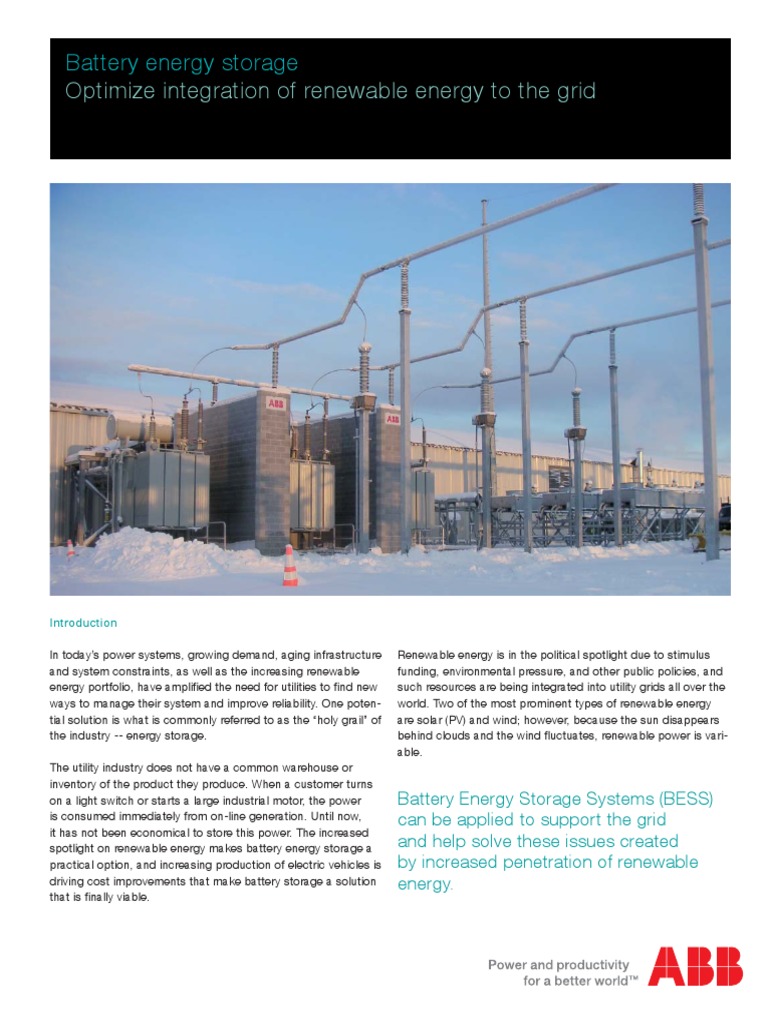
Battery storage is rapidly expanding, capturing excess renewable power and releasing it when needed, thus smoothing supply, reducing reliance on fossil backups, and accelerating the shift to clean energy.
Quick Answer
Battery storage refers to technologies—most commonly lithium‑ion systems—that store electrical energy for later use. By converting surplus electricity from wind or solar into chemical energy, batteries can discharge power during demand peaks, helping to balance the grid. The scientific consensus is that widespread storage improves renewable integration, cuts emissions, and enhances grid resilience, although uncertainties remain around raw‑material supply chains and end‑of‑life recycling.
Key Takeaways
- Battery costs have fallen roughly 90% since 2010, making large‑scale storage economically viable.
- Storage mitigates the intermittency of wind and solar, reducing the need for fossil‑fuel peaker plants.
- Environmental benefits are offset by mining impacts for lithium, cobalt, and nickel, highlighting the need for responsible sourcing and recycling.
- Policy incentives and corporate investment are driving utility‑scale projects from a few megawatts to gigawatt‑scale installations.
- Future chemistries—solid‑state, flow, and organic batteries—could further improve safety and resource sustainability.
What Is Battery Storage Is Booming—and Powering the Renewable Energy Transition?
Battery storage encompasses devices that capture electrical energy and release it later, typically through reversible electrochemical reactions. The term covers a spectrum from small residential units (often paired with rooftop solar) to utility‑scale facilities that can store hundreds of megawatt‑hours (MWh) of power. The most prevalent chemistry today is lithium‑ion, but alternatives such as sodium‑ion, lead‑acid, and emerging flow batteries also play roles. Battery storage differs from other energy‑buffering methods—like pumped hydro or compressed air—by offering rapid response times, modular deployment, and the ability to locate storage close to load centers.
How Does It Work?
Electrochemical Charging
During periods of excess generation, an external power source drives electrons into the battery’s anode, causing a chemical transformation that stores energy. Simultaneously, ions migrate through the electrolyte to maintain charge balance.
Discharging to the Grid
When demand exceeds supply, the chemical reaction reverses: electrons flow back to the external circuit, delivering electricity, while ions return to their original positions. This process occurs within seconds, enabling grid operators to respond instantly to fluctuations.
System Integration
- Power from wind or solar farms is routed to a power‑electronics interface.
- The interface monitors grid frequency and voltage, deciding when to charge or discharge.
- Stored energy is released during peak demand, during outages, or to provide ancillary services such as frequency regulation.
What Does the Evidence Show?
Long‑term monitoring by the International Energy Agency (IEA) indicates that global installed battery storage capacity grew from about 1 GW in 2010 to over 30 GW by the end of 2022, a compound annual growth rate of roughly 30% (IEA, 2023). Peer‑reviewed assessments confirm that the cost of lithium‑ion storage fell from US$1,200 per kilowatt‑hour (kWh) in 2010 to under US$150 per kWh in 2022, making storage competitive with new natural‑gas peaker plants (Lazard’s Levelized Cost of Storage 2022). Field trials in California and Germany demonstrate that battery‑enabled grids can reduce curtailment of solar power by 20–30% and cut carbon intensity of electricity by 5–10% on an annual basis.
Main Causes or Drivers
Policy and Market Incentives
Many jurisdictions have introduced subsidies, tax credits, or capacity‑market payments that improve the financial case for storage. For example, the U.S. Investment Tax Credit (ITC) was extended to storage projects in 2022, while the European Union’s Clean Energy Package mandates a minimum share of storage in national energy plans.
Technological Advancement
Improvements in cell chemistry, manufacturing scale, and power‑electronics control have increased round‑trip efficiency (often >85%) and reduced degradation rates, extending useful lifetimes to 10–15 years for utility‑scale installations.
Renewable Energy Growth
The rapid expansion of wind and solar capacity creates a larger pool of surplus electricity that would otherwise be curtailed. Storage provides a practical solution to capture this otherwise wasted energy.
Environmental and Human Impacts
Environmental Impacts
Battery production requires mining of lithium, cobalt, and nickel, activities that can cause habitat loss, water contamination, and greenhouse‑gas emissions. A 2021 life‑cycle analysis by the University of Michigan estimated that producing a 1‑MWh lithium‑ion system emits about 150 tonnes of CO₂‑equivalent, roughly 30% of the emissions avoided over a ten‑year operating period when paired with solar.
Human Health and Social Impacts
Communities near mining sites may face exposure to dust and chemicals, while workers in battery factories encounter occupational hazards such as fire risk and exposure to toxic electrolytes. Conversely, local deployment of storage can improve energy access, reduce outage frequency, and support electric‑vehicle (EV) charging infrastructure, delivering socioeconomic benefits.
Economic and Infrastructure Impacts
Utility‑scale storage can defer or avoid costly upgrades to transmission lines by providing local balancing services. In Texas, the 2021 “grid‑edge” battery project helped shave peak demand by 100 MW, saving an estimated US$10 million in avoided generation costs.
Regional Differences
In North America and Europe, policy support and mature markets have spurred gigawatt‑scale projects, often co‑located with wind farms. In contrast, emerging economies in Asia and Africa face constraints such as limited financing, less developed grid codes, and higher reliance on coal, which slows storage adoption. However, pilot projects in Kenya and India demonstrate that modular battery systems can provide micro‑grid stability in off‑grid or weak‑grid settings, highlighting a different pathway for impact.
What Scientists Know With High Confidence
- Battery storage reduces the need for fossil‑fuel peaker plants by providing fast‑response capacity.
- Cost reductions in lithium‑ion technology have been sustained over the past decade, making storage economically viable in many markets.
- Integrating storage with variable renewables improves overall grid efficiency and reduces carbon intensity.
- Life‑cycle assessments consistently show that, despite extraction impacts, batteries deliver a net climate benefit when paired with low‑carbon generation over their operational lifetime.
What Remains Uncertain
Key uncertainties include the long‑term availability and price trajectories of critical minerals, the scalability of recycling infrastructure, and the performance of next‑generation chemistries under real‑world conditions. Additionally, the extent to which large‑scale storage can replace existing natural‑gas capacity in high‑load regions remains an active area of modelling research.
Common Misconceptions
Misconception: Battery storage can store unlimited energy.
Reality: All storage technologies have finite capacity measured in kilowatt‑hours (kWh) and are constrained by cost, space, and material availability.
Misconception: Batteries are always greener than fossil fuels.
Reality: While batteries enable renewable integration, their environmental footprint depends on manufacturing practices, electricity mix used for charging, and end‑of‑life management.
Misconception: All lithium‑ion batteries are the same.
Reality: Different chemistries (e.g., NMC, LFP) vary in energy density, lifespan, safety, and reliance on scarce minerals, influencing suitability for specific applications.
Solutions and Limitations
Key response strategies include:
- Policy incentives: Tax credits and capacity markets encourage investment but may create market distortions if not carefully designed.
- Recycling programs: Recovering lithium, cobalt, and nickel can reduce mining pressure, yet current recycling rates are below 10% globally, limiting impact.
- Research into alternative chemistries: Solid‑state and flow batteries promise higher safety and lower material intensity, but commercial scale‑up is still years away.
- Grid modernization: Advanced forecasting and demand‑response tools improve the value of storage but require significant digital infrastructure upgrades.
What Individuals, Communities, and Governments Can Do
What Individuals Can Do
Homeowners can install residential battery systems paired with rooftop solar to lower electricity bills and increase resilience. Choosing EV models that support vehicle‑to‑grid (V2G) functionality can further provide grid services.
What Communities and Organizations Can Do
Community energy cooperatives can pool resources to finance shared storage, improving energy equity in low‑income neighborhoods. Local governments can streamline permitting for small‑scale storage projects.
What Governments Can Do
Policymakers should develop clear standards for battery safety, incentivize domestic recycling facilities, and integrate storage targets into national renewable energy plans. Supporting research into low‑impact chemistries can diversify supply chains.
Closing Synthesis
Battery storage is a cornerstone of the renewable energy transition, offering a practical means to smooth the variability of wind and solar, reduce reliance on fossil‑fuel peakers, and enhance grid resilience. Strong evidence confirms its climate benefits, yet challenges around mineral extraction, recycling, and technology scaling remain. By pairing supportive policies with responsible sourcing and continued innovation, societies can harness storage’s potential while safeguarding environmental and social outcomes.
Frequently Asked Questions
What is battery storage and how does it work?
Battery storage captures excess electricity—usually from wind or solar—and holds it as chemical energy in electrochemical cells. When demand rises, the stored energy is released back to the grid within seconds, providing power and stabilizing supply.
Why is battery storage important for renewable energy?
Renewables like wind and solar are intermittent; batteries smooth out these fluctuations by storing surplus power and delivering it during low‑generation periods. This reduces the need for fossil‑fuel backup plants and lowers overall carbon emissions.
What are the main environmental concerns associated with batteries?
Battery production requires mining of lithium, cobalt, and nickel, which can cause habitat loss, water contamination, and greenhouse‑gas emissions. End‑of‑life disposal also poses waste challenges unless recycling systems are expanded.
How fast is the battery storage market growing?
According to the International Energy Agency, global installed battery capacity rose from about 1 GW in 2010 to over 30 GW by the end of 2022, reflecting an average annual growth rate of roughly 30 percent.
What actions can individuals take to support battery storage adoption?
Individuals can install residential battery systems paired with rooftop solar, choose electric vehicles that support vehicle‑to‑grid services, and support policies that promote recycling and responsible sourcing of battery materials.




Leave a Comment