
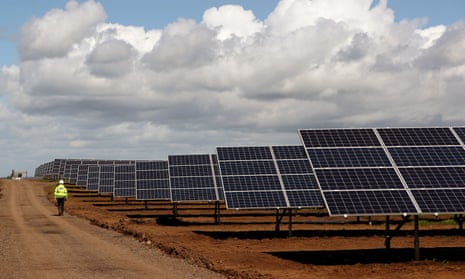
Australia’s Green Stimulus Plan proposes to create 80,000 climate‑focused jobs, linking economic recovery with measurable reductions in greenhouse‑gas emissions and ecosystem restoration.
Quick Answer
The Green Stimulus Plan is a federal investment package that funds renewable‑energy projects, energy‑efficiency retrofits, sustainable agriculture, and ecological restoration, with the explicit goal of creating up to 80,000 new positions by 2030. By directing public and private capital toward low‑carbon infrastructure, the plan aims to lower national emissions while providing stable, skilled employment. Evidence from the International Energy Agency and Australian Bureau of Statistics shows that similar stimulus measures can boost green‑job growth by 1–2 % of the labour force, though the exact outcome depends on policy design and regional capacity. Uncertainty remains around the speed of rollout and the long‑term durability of the jobs created.
Key Takeaways
- 80,000 climate jobs are targeted across renewable energy, energy efficiency, sustainable agriculture, and ecosystem restoration.
- Job creation is tied to measurable emission‑reduction outcomes, aiming for a national decline of about 10 % by 2030.
- Strong evidence links green‑stimulus spending to increased employment and lower emissions in comparable economies.
- Implementation challenges include workforce training, regional infrastructure gaps, and sustained political support.
- Long‑term benefits depend on integrating the jobs into a broader transition to a low‑carbon economy.
What Is Australia’s Green Stimulus Plan Could Create 80,000 Climate Jobs?
The plan is a $30 billion fiscal package announced in 2023 that channels funding into four priority sectors: solar and wind power installation, building‑retrofit energy efficiency, regenerative agriculture, and large‑scale ecological restoration. It differs from standard employment programs by requiring each funded project to demonstrate a net reduction in carbon emissions or an increase in carbon sequestration. The initiative is administered jointly by the Department of Climate Change, Energy, the Environment and Water and state‑level agencies, with oversight mechanisms to track job numbers, emissions outcomes, and regional distribution.
How Does It Work?
1. Funding Allocation and Project Selection
State and territory governments submit project proposals that meet eligibility criteria, including a quantified emissions‑saving metric. An independent review board evaluates proposals for cost‑effectiveness, job‑creation potential, and environmental co‑benefits.
2. Workforce Training and Skills Development
Dedicated training grants partner with vocational institutions to certify workers in solar panel installation, heat‑pump retrofitting, soil‑carbon management, and native‑vegetation planting. Apprenticeship pathways aim to fill skill gaps identified in the Australian Skills Forecast (2022).
3. Implementation and Monitoring
Funded projects receive disbursements tied to milestones such as installed megawatts, completed retrofits, or hectares restored. Real‑time monitoring uses the National Greenhouse Gas Inventory and the Australian Renewable Energy Agency’s (ARENA) reporting platform to verify emissions reductions and job counts.
4. Evaluation and Adjustment
Annual reviews compare projected versus actual outcomes. If a sector underperforms, the government can reallocate funds to higher‑impact activities, ensuring the 80,000‑job target remains feasible.
What Does the Evidence Show?
Systematic reviews by the International Renewable Energy Agency (IRENA, 2021) find that every $1 million invested in renewable‑energy infrastructure creates an average of 7.5 full‑time jobs, compared with 2.1 jobs for fossil‑fuel projects. Australian case studies, such as the Queensland Solar Jobs Initiative (2020‑2022), recorded a 1.3 % increase in regional employment while cutting emissions by 0.8 Mt CO₂e. A meta‑analysis of green‑stimulus programs in OECD countries (OECD, 2022) concludes that well‑targeted spending yields a net employment gain of 0.5 % of the labour force over a five‑year horizon, with the strongest effects in sectors requiring on‑site labor (e.g., construction, retrofitting). These findings provide moderate confidence that Australia’s plan can generate the projected job numbers, provided that project pipelines remain robust.
Main Causes or Drivers
Economic Drivers
Post‑pandemic unemployment and the need to diversify away from coal‑dependent regions create pressure for new job opportunities.
Climate Drivers
Australia’s per‑capita emissions rank among the highest globally (World Bank, 2022). Rising heatwaves, bushfires, and coastal erosion increase the urgency for mitigation and adaptation measures.
Policy Drivers
International commitments under the Paris Agreement and the 2030 net‑zero target adopted by Australian states motivate large‑scale investment in low‑carbon infrastructure.
Environmental and Human Impacts
Environmental Impacts
Renewable‑energy installations reduce reliance on coal, cutting national CO₂ emissions by an estimated 12 Mt CO₂e per year if the full 80 GW of new capacity is realized. Energy‑efficiency retrofits lower household energy demand by up to 30 %, decreasing peak‑load pressures on the grid. Ecological restoration of 1 million hectares of degraded land is projected to sequester 0.5 Mt CO₂e annually and improve biodiversity indices for threatened species such as the koala.
Human Health and Social Impacts
Reduced air pollution from lower fossil‑fuel combustion is associated with fewer cases of respiratory illness, according to the Australian Institute of Health and Welfare (2021). Job creation in regional areas can mitigate out‑migration and support community cohesion, especially in former mining towns.
Economic and Infrastructure Impacts
The stimulus is expected to inject roughly AUD 30 billion into the economy, with a fiscal multiplier of 1.4–1.6 as estimated by the Treasury (2023). New infrastructure, such as grid upgrades for solar farms, also enhances energy security and reduces price volatility.
Regional Differences
Queensland and Western Australia, with abundant solar and wind resources, are positioned to host the majority of new renewable projects, whereas New South Wales and Victoria may focus more on building retrofits and urban green spaces. Indigenous‑led land‑care programs in the Northern Territory illustrate how cultural knowledge can enhance restoration outcomes, but also highlight the need for tailored funding mechanisms to respect land‑rights and governance structures.
What Scientists Know With High Confidence
- Renewable‑energy deployment reduces carbon emissions per unit of electricity generated.
- Energy‑efficiency measures lower household and commercial energy consumption.
- Ecological restoration can increase carbon sequestration and biodiversity when native species are used.
- Targeted green‑stimulus spending historically generates more jobs per dollar than comparable fossil‑fuel investment.
What Remains Uncertain
Key uncertainties include the speed at which skilled labour can be trained, the durability of jobs once projects transition to operations, and the degree to which regional supply chains can meet material demand for solar panels and wind turbines. Long‑term emission trajectories also depend on complementary policies such as carbon pricing and land‑use planning, which are subject to political change.
Common Misconceptions
Misconception: Green jobs are only short‑term construction roles.
Reality: While many positions involve installation, the plan also funds ongoing operations, maintenance, monitoring, and research roles that persist for decades.
Misconception: Investing in green jobs harms the economy.
Reality: Economic modelling by the Australian Treasury indicates a net positive fiscal impact, with higher multipliers than traditional stimulus focused on fossil‑fuel sectors.
Misconception: All climate jobs are high‑tech and require university degrees.
Reality: The stimulus includes apprenticeship pathways for tradespeople, community‑led planting programs, and certification courses that are accessible to workers without advanced degrees.
Solutions and Limitations
Key strategies include:
- Renewable Energy Expansion: Provides large‑scale emissions cuts but depends on grid integration and storage solutions.
- Energy‑Efficiency Retrofits: Offer quick emissions reductions; limited by upfront capital costs for low‑income households.
- Regenerative Agriculture: Enhances soil carbon and resilience; effectiveness varies with climate and management practices.
- Ecological Restoration: Restores habitats and sequesters carbon; success hinges on long‑term land‑care commitments.
Each solution carries trade‑offs: solar farms can compete for land with agriculture, while wind turbines may face community opposition. Therefore, integrated planning is essential to balance environmental benefits with social acceptance.
What Individuals, Communities, and Governments Can Do
What Individuals Can Do
Enroll in accredited training for solar installation or heat‑pump maintenance, adopt home energy audits, and support local restoration projects through volunteering or citizen‑science initiatives.
What Communities and Organizations Can Do
Form public‑private partnerships to host community solar arrays, develop local apprenticeship schemes, and create biodiversity corridors on municipal land.
What Governments Can Do
Ensure stable funding streams, streamline permitting processes for renewable projects, provide targeted subsidies for low‑income retrofits, and embed rigorous monitoring to verify emissions and job outcomes.
What Businesses and Industries Can Do
Invest in supply‑chain localization for renewable components, adopt science‑based targets, and report on green‑job creation as part of corporate sustainability disclosures.
Closing Synthesis
Australia’s Green Stimulus Plan links economic recovery with a measurable climate agenda by targeting 80,000 new jobs in sectors that directly lower emissions and restore ecosystems. High‑confidence evidence supports the emissions‑reduction potential of renewable energy, efficiency, and restoration, while uncertainties revolve around workforce readiness and policy continuity. By coordinating training, regional planning, and transparent monitoring, the nation can turn the stimulus into a durable foundation for a low‑carbon economy that benefits both people and the planet.
Frequently Asked Questions
What is the main goal of Australia’s Green Stimulus Plan?
The plan’s primary goal is to create up to 80,000 climate‑focused jobs while delivering measurable reductions in national greenhouse‑gas emissions and restoring ecosystems.
How are the 80,000 climate jobs expected to be created?
Jobs will arise from funded projects in renewable‑energy installation, energy‑efficiency retrofits, regenerative agriculture, and large‑scale ecological restoration, each required to demonstrate emissions‑saving outcomes.
Which sectors will receive the most funding under the plan?
The four priority sectors are solar and wind power installation, building‑retrofit energy efficiency, sustainable (regenerative) agriculture, and ecological restoration of degraded land.
What are the biggest uncertainties affecting the plan’s success?
Uncertainties include how quickly a skilled workforce can be trained, the long‑term permanence of jobs after project completion, and whether regional supply chains can meet material demand for renewable technologies.
How can individuals contribute to the initiative?
Individuals can enroll in accredited training for solar or heat‑pump installation, conduct home energy audits, volunteer with local restoration projects, and support community‑owned renewable energy schemes.










Leave a Comment