
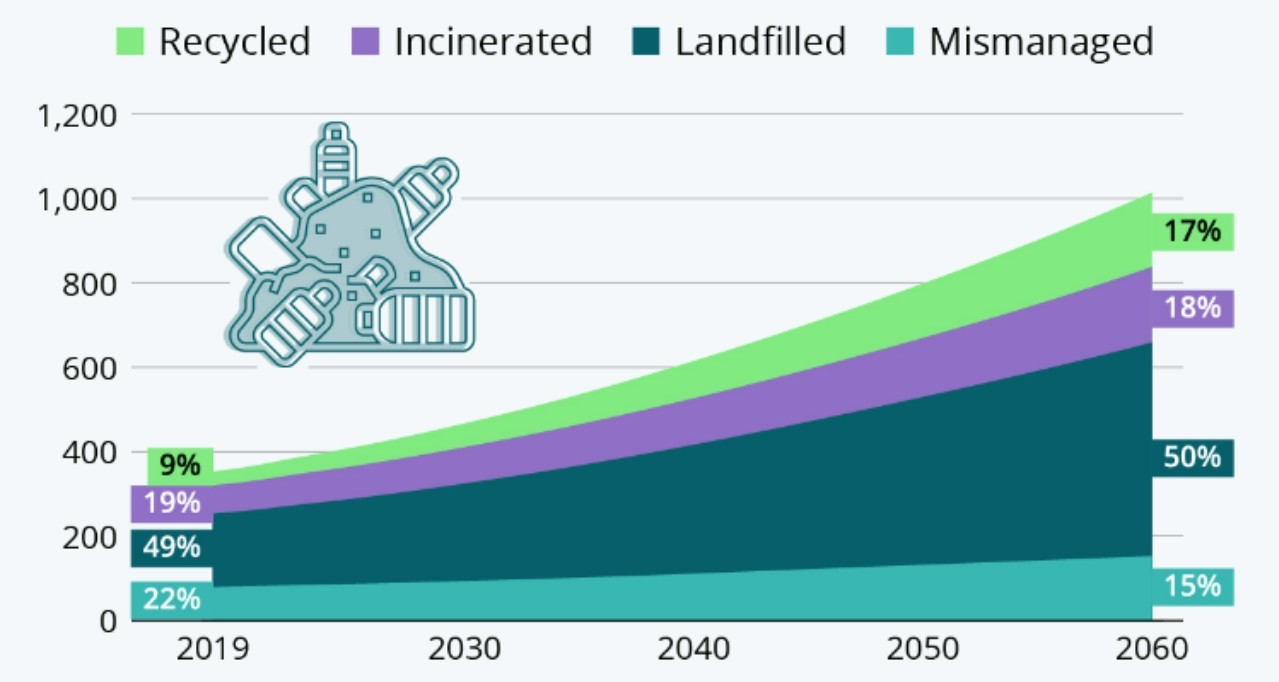
America generates tens of millions of tons of plastic each year, but only a single‑digit percent is actually recycled, leaving a persistent waste stream that harms ecosystems, human health, and the climate.
Quick Answer
Plastic waste in the United States exceeds 35 million metric tons annually, yet about 91% of that material ends up in landfills, incinerators, or the environment because most plastics are not economically recyclable. The problem stems from the chemistry of polymers, mixed‑material packaging, and a market that values virgin plastic over recycled feedstock. Evidence from the U.S. Environmental Protection Agency and peer‑reviewed studies shows that recycling alone cannot curb the flow of plastic; systemic reductions in production and redesign of products are required to achieve meaningful environmental benefits.
Key Takeaways
- Only ~9% of post‑consumer plastic is recycled in the United States (EPA, 2022).
- Mixed‑resin and contaminated plastics are technically unrecyclable with current municipal infrastructure.
- Plastic persists for centuries, fragmenting into microplastics that infiltrate soil, water, air, and food chains.
- Health research links microplastic exposure to inflammation and endocrine disruption, though causal pathways remain under study.
- Effective solutions combine reduction, redesign, extended producer responsibility, and targeted recycling upgrades.
What Is America’s Plastic Waste Problem: Why Recycling Isn’t Enough?
The term refers to the cumulative flow of disposable and durable plastic products that are produced, used, and discarded across the United States, overwhelming the capacity of existing waste‑management systems. It includes single‑use packaging, consumer goods, construction materials, and microplastic fragments that result from degradation. The problem differs from general municipal solid waste because plastics are synthetic polymers with long degradation times, and many types cannot be economically recovered through conventional recycling streams.
How Does It Work?
1. Production and Consumption
Petroleum‑derived monomers are polymerized into a variety of plastics (e.g., PET, HDPE, PP, PS, PVC). In 2022 the United States produced roughly 140 million metric tons of plastic, with a large share destined for packaging and single‑use items. High consumer demand drives continuous manufacturing, creating a steady input of new plastic waste.
2. Collection and Sorting
Household curbside programs collect plastics marked with recycling symbols 1–7. Automated optical sorters can separate PET (#1) and HDPE (#2) relatively well, but polymers such as polycarbonate (#7) or mixed‑material films often escape detection. Food residue, adhesives, and labels further contaminate the stream, rendering many bales unsuitable for reprocessing.
3. Recycling Process
Recyclable plastics are shredded, washed, melted, and re‑extruded into pellets. These pellets can replace virgin resin in low‑value applications (e.g., park benches). However, market volatility—particularly the low price of oil‑derived resin—means recycled pellets are frequently cheaper to discard than to sell, leading to stockpiles that are ultimately landfilled.
4. End‑of‑Life Pathways
When recycling fails, plastics are either incinerated for energy recovery (producing CO₂ and potentially toxic emissions) or placed in landfills where they persist for centuries. Over time, UV radiation and mechanical abrasion break plastics into micro‑ and nanoplastics that migrate into soils, waterways, and the atmosphere.
What Does the Evidence Show?
Long‑term monitoring by the U.S. EPA indicates that the national recycling rate for plastic has hovered around 9% for the past decade, while the total waste generation has risen modestly (<1% per year). Peer‑reviewed meta‑analyses of marine debris surveys consistently find that plastic fragments constitute the majority of litter on U.S. coastlines. Laboratory and field studies demonstrate that microplastics are taken up by filter‑feeding organisms and can be transferred up the food web, supporting the hypothesis of widespread ecological exposure.
Main Causes or Drivers
Direct Causes
- High production of single‑use packaging driven by convenience culture.
- Inadequate collection infrastructure, especially in low‑income and rural communities.
- Economic preference for virgin polymer due to low oil prices.
Underlying Drivers
- Global demand for cheap, lightweight materials in food, e‑commerce, and construction.
- Lack of legally binding extended producer responsibility (EPR) policies at the federal level.
- Consumer behavior that prioritizes convenience over durability or reuse.
Environmental and Human Impacts
Environmental Impacts
Plastics contribute to habitat loss when debris entangles wildlife or smothers benthic habitats. Persistent polymer fragments increase the carbon footprint of ecosystems by altering soil structure and reducing microbial activity. In marine environments, plastic ingestion leads to reduced feeding efficiency and mortality in species ranging from zooplankton to sea turtles.
Human Health and Social Impacts
Microplastics have been detected in drinking water, table salt, and a variety of foods. Toxicological studies suggest that additives such as bisphenol A and phthalates can leach from particles, potentially disrupting endocrine function. Epidemiological evidence is still emerging, but associations have been reported between high microplastic exposure and inflammatory biomarkers. Communities situated near waste‑processing facilities—often low‑income or minority neighborhoods—experience higher rates of respiratory irritation and reduced property values.
Regional Differences
Coastal states such as California and Florida report higher concentrations of marine debris due to larger shoreline lengths and tourism‑related litter. In the Midwest, limited access to advanced recycling facilities often results in greater reliance on landfilling. Rural Appalachia illustrates how sparse collection routes lead to increased illegal dumping. These patterns reflect variations in infrastructure investment, population density, and state‑level policies.
What Scientists Know With High Confidence
- Plastic polymers can persist for centuries in the environment without fully degrading.
- Current municipal recycling systems in the United States recycle less than one‑tenth of post‑consumer plastic.
- Microplastic particles are ubiquitous in marine, freshwater, terrestrial, and atmospheric compartments.
- Reducing the volume of single‑use plastic entering the waste stream yields measurable declines in environmental litter.
What Remains Uncertain
Key gaps include the long‑term health effects of chronic microplastic ingestion in humans, the exact degradation rates of different polymers under varied environmental conditions, and the economic viability of large‑scale chemical recycling technologies. Improved monitoring networks and longitudinal cohort studies are needed to resolve these uncertainties.
Common Misconceptions
Misconception: Recycling eliminates plastic waste.
Reality: Because only a small fraction of plastic is actually recycled, the majority still ends up in landfills or the environment.
Misconception: All plastics are recyclable if they have a recycling symbol.
Reality: The symbol indicates the type of polymer, not the economic or technical feasibility of recycling that material in a given community.
Misconception: Biodegradable plastics solve the problem.
Reality: Many “biodegradable” plastics require industrial composting conditions that are rarely met in municipal waste streams, so they often behave like conventional plastics.
Solutions and Limitations
- Source reduction: Bans on single‑use bags and straws reduce the amount of plastic entering waste streams, but exemptions for certain industries limit total impact.
- Extended Producer Responsibility (EPR): Holding manufacturers accountable can drive design changes, yet implementation varies widely across states.
- Advanced recycling (chemical recycling): Can theoretically handle mixed polymers, but commercial scale is limited, energy use is high, and life‑cycle analyses show mixed environmental outcomes.
- Improved collection and sorting: Investing in optical sorters and decentralized drop‑off sites increases recovery rates, but requires substantial capital and ongoing operational costs.
What Individuals, Communities, and Governments Can Do
What Individuals Can Do
- Choose reusable containers and bags over single‑use alternatives.
- Purchase products with minimal or mono‑material packaging.
- Support brands that have committed to recyclable or compostable packaging.
What Communities and Organizations Can Do
- Establish local repair cafés and sharing libraries to extend product lifespans.
- Run targeted clean‑up events in parks and waterways to remove existing debris.
- Advocate for municipal investment in high‑efficiency sorting equipment.
What Governments Can Do
- Enact statewide EPR legislation that sets clear collection and recycling targets for manufacturers.
- Provide subsidies or tax incentives for companies developing circular‑design packaging.
- Implement minimum‑content recycled‑plastic standards for public procurement.
What Businesses and Industries Can Do
- Redesign products for monomaterial construction to simplify recycling.
- Invest in take‑back programs that close the loop for durable goods.
- Report plastic‑footprint metrics publicly to encourage transparency.
Closing Synthesis
The United States faces a plastic waste challenge that cannot be solved by recycling alone; the low recovery rate, technical barriers, and market dynamics keep most plastic out of the circular loop. High‑confidence science confirms the persistence of plastic and its broad ecological reach, while uncertainties remain around long‑term health effects and the scalability of emerging technologies. A balanced portfolio of source reduction, producer responsibility, infrastructure upgrades, and consumer behavior change offers the most realistic path toward a sustainable future.
Frequently Asked Questions
What percentage of plastic waste is actually recycled in the United States?
Only about 9% of post‑consumer plastic is recycled in the United States, according to the U.S. Environmental Protection Agency’s 2022 waste‑generation report.
Why can’t most mixed‑resin plastics be recycled with current municipal systems?
Mixed‑resin plastics contain several polymer types and additives that confound optical sorters, and contaminants like food residue make the material unsuitable for standard mechanical recycling, leading to low recovery rates.
How do microplastics affect human health?
Microplastics have been found in drinking water and food, and laboratory studies suggest they can carry additives such as bisphenol A that may disrupt endocrine function, though definitive causal links in humans are still under investigation.
What is Extended Producer Responsibility and how does it help?
Extended Producer Responsibility (EPR) is a policy approach that holds manufacturers accountable for the end‑of‑life management of their products, encouraging redesign for recyclability and funding of collection programs.
What actions can individuals take to reduce plastic waste?
Individuals can lower plastic waste by using reusable bags and containers, choosing products with minimal or single‑material packaging, and supporting brands that commit to sustainable packaging practices.







Leave a Comment