
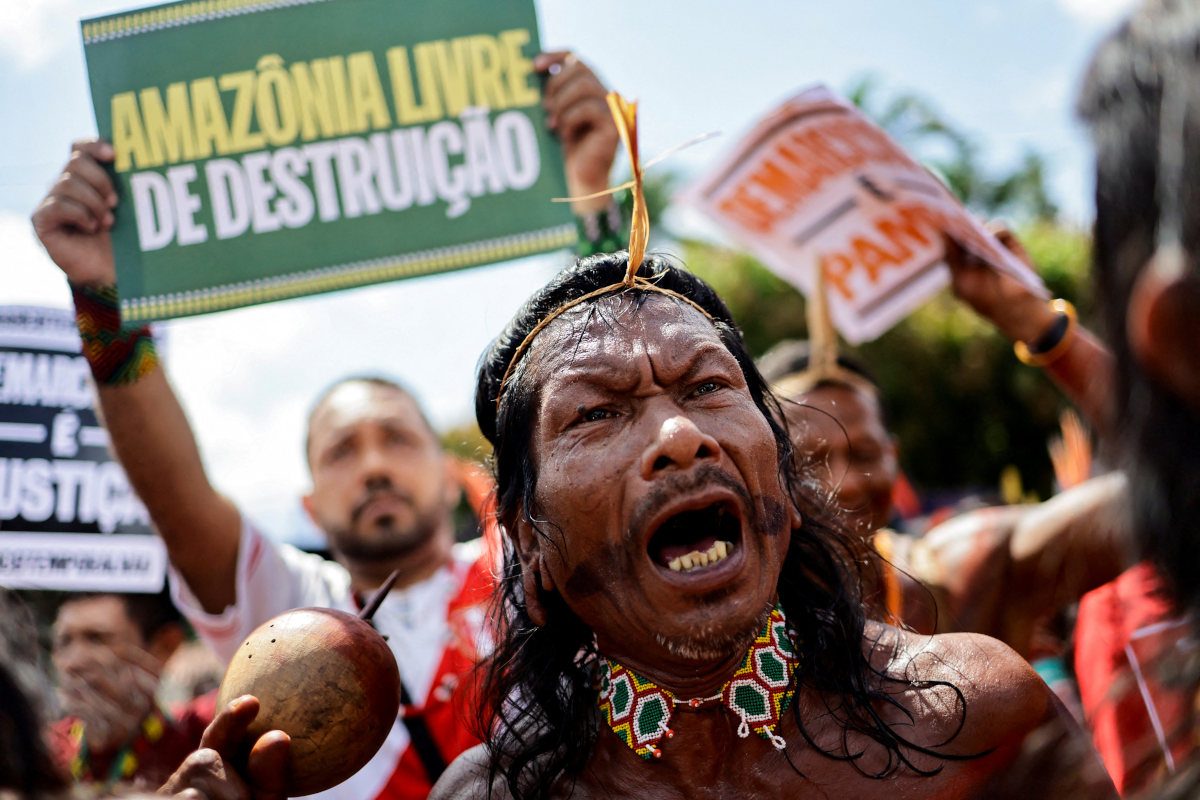
The Belém Summit of Amazonian leaders ended without a unified deforestation target, highlighting political, economic, and governance challenges that keep the rainforest vulnerable to ongoing loss.
Quick Answer
At the 2024 Belém Summit, eight Amazon‑bordering countries failed to adopt a common deforestation‑reduction goal because national development priorities, differing fiscal incentives, and limited cross‑border enforcement mechanisms outweighed consensus building. The scientific consensus is that continued forest loss undermines carbon sequestration, biodiversity, and Indigenous livelihoods, but the summit’s impasse leaves the region on a trajectory of incremental loss, with uncertainty around future mitigation pathways.
Key Takeaways
- All eight Amazon nations entered the summit with pledged climate commitments, yet no binding deforestation target was agreed.
- Deforestation is driven by agriculture expansion, illegal logging, infrastructure projects, and weak governance.
- Long‑term monitoring by Brazil’s INPE and the Amazon Conservation Association shows a 9% rise in forest loss from 2022‑2023.
- High‑confidence science links Amazon forest loss to increased atmospheric CO₂ and regional climate disruption.
- Solutions require coordinated policy, financing for sustainable livelihoods, and stronger Indigenous land rights.
What Is Amazon Nations Fail to Agree on Deforestation Goals at Belém Summit?
The phrase refers to the 2024 diplomatic gathering in Belém, Brazil, where the eight countries that share the Amazon basin – Brazil, Bolivia, Colombia, Ecuador, Guyana, Peru, Suriname and Venezuela – attempted to set a joint quantitative target for reducing forest clearing. The summit was intended to translate the Amazon’s global climate importance into a concrete, region‑wide policy framework, but negotiations stalled and no collective commitment emerged.
How Does It Work?
Negotiation Process
- Each country presented its national forest‑monitoring data and existing legal frameworks.
- Delegates discussed potential quantitative targets (e.g., a 30% reduction in annual loss by 2030).
- Disagreements surfaced over the economic cost of restricting soy, cattle, and mining expansion.
- Attempts to link financing mechanisms – such as the Amazon Fund – to compliance were rejected by nations lacking fiscal space.
- The final session closed without a signed declaration, leaving only a non‑binding statement of intent.
Policy Mechanisms Discussed
- Strengthening satellite‑based monitoring (e.g., Brazil’s INPE DETER system).
- Creating trans‑national enforcement task forces.
- Linking international climate finance to verified forest‑preservation outcomes.
- Recognising Indigenous territories as a legal basis for protection.
What Does the Evidence Show?
Multiple long‑term data sets converge on a clear picture of accelerating loss. Satellite analyses from the European Space Agency (2023) indicate an average annual deforestation rate of 0.53% for the Amazon basin between 2020‑2023, up from 0.42% in the previous decade. Ground‑based inventories by the Amazon Conservation Association (2022) confirm that illegal logging now accounts for roughly 30% of total forest removal, a share that has risen steadily since 2015. The Intergovernmental Panel on Climate Change (IPCC) 2022 assessment notes that the basin stores about 100 billion metric tons of carbon; each percent of forest loss releases roughly 0.5 billion tons of CO₂, reinforcing the climate feedback loop.
Main Causes or Drivers
Direct Causes
- Conversion of forest to soy and cattle pasture, driven by global commodity demand.
- Illegal timber extraction, often facilitated by weak law enforcement.
- Infrastructure projects (roads, hydroelectric dams) that open previously inaccessible forest.
Underlying Drivers
- Fiscal incentives for agricultural expansion in national development plans.
- Limited alternative livelihoods for rural and Indigenous communities.
- Fragmented land tenure systems that leave large swaths without clear ownership.
Environmental and Human Impacts
Environmental Impacts
Deforestation reduces the Amazon’s capacity to act as a carbon sink, contributing to global warming. It also disrupts the hydrological cycle, decreasing rainfall in the basin and in downstream agricultural regions of South America. Biodiversity loss is severe: the IUCN reports that over 2,200 plant and animal species are threatened, with many endemic species facing habitat fragmentation.
Human Health and Social Impacts
Indigenous peoples, who manage an estimated 30% of intact forest, experience loss of cultural sites and food security when forest resources disappear. Increased exposure to smoke from forest fires raises respiratory illness rates, especially among children and the elderly in nearby settlements.
Regional Differences
Deforestation pressure is highest in Brazil’s southern Amazon, where large‑scale soy farms dominate, while the Guiana Shield (Guyana, Suriname, French Guiana) experiences lower rates but faces threats from mining concessions. Bolivia and Peru report higher rates of illegal logging in remote areas due to limited state presence. These patterns reflect divergent economic structures, governance capacity, and the extent of protected‑area networks.
What Scientists Know With High Confidence
- The Amazon stores more than 100 billion metric tons of carbon, making it a critical component of the global carbon budget.
- Forest loss directly reduces regional precipitation and contributes to higher temperatures.
- Indigenous land tenure is strongly correlated with lower deforestation rates.
- Satellite monitoring provides reliable, near‑real‑time detection of forest change across the basin.
What Remains Uncertain
Key uncertainties include the exact magnitude of carbon released from forest degradation (as opposed to clear‑cutting), the long‑term socioeconomic outcomes of shifting from extractive to sustainable economies, and the effectiveness of cross‑border enforcement mechanisms under varying political conditions. Improved ground‑based verification and transparent financing reporting could reduce these gaps.
Common Misconceptions
Misconception: The Amazon can regrow quickly once logging stops.
Reality: Primary tropical forest regrowth takes centuries; secondary regrowth does not replace the biodiversity or carbon storage of old‑growth stands.
Misconception: Deforestation is driven only by local farmers.
Reality: Global commodity markets, multinational agribusiness, and infrastructure financing play major roles alongside local actors.
Misconception: All Amazon countries have the same level of forest loss.
Reality: Loss rates vary widely; Brazil accounts for roughly 70% of total basin deforestation, while the Guianas experience rates below 0.1% per year.
Misconception: Climate finance automatically guarantees forest protection.
Reality: Funding must be tied to transparent, verifiable outcomes and respect Indigenous land rights to be effective.
Solutions and Limitations
Effective responses combine policy, finance, and community engagement. Strengthening legal frameworks can curb illegal logging, but enforcement costs are high and corruption can undermine outcomes. Payments for ecosystem services (PES) provide incentives for forest stewardship; however, scaling PES requires sustained donor commitments and clear land‑tenure documentation. Agro‑ecological practices reduce pressure on forest land but may lower short‑term yields, requiring market premiums to be viable. Finally, expanding protected areas safeguards biodiversity but can conflict with local development aspirations if not co‑designed with communities.
What Individuals, Communities, and Governments Can Do
What Individuals Can Do
- Support NGOs that fund Indigenous land‑rights projects.
- Choose certified sustainable products (e.g., RSPO‑certified palm oil, Rainforest Alliance beef).
- Advocate for transparent climate‑finance reporting in national elections.
What Communities and Organizations Can Do
- Develop community‑led forest monitoring using low‑cost drones and open‑source satellite tools.
- Form cooperatives that market agroforestry products at fair prices.
- Partner with universities to conduct participatory research on sustainable land use.
What Governments Can Do
- Integrate deforestation targets into Nationally Determined Contributions (NDCs) and tie them to climate‑finance disbursements.
- Recognise and legally protect Indigenous territories, ensuring free, prior, and informed consent for any development.
- Invest in cross‑border law‑enforcement task forces and share real‑time satellite alerts.
Closing Synthesis
The Belém Summit’s failure to secure a common deforestation goal reflects deep‑seated economic and governance divergences among Amazon nations. Scientific evidence unequivocally shows that continued forest loss amplifies climate change, reduces biodiversity, and harms Indigenous peoples. While high‑confidence findings guide policy, uncertainties around financing mechanisms and long‑term socioeconomic transitions remain. Real progress will depend on coordinated, equity‑focused policies, robust monitoring, and sustained international support that respects the rights of those who have protected the forest for millennia.
Frequently Asked Questions
What was the main purpose of the Belém Summit?
The Belém Summit gathered leaders from the eight Amazon‑bordering countries to negotiate a joint, measurable target for reducing forest loss across the basin and to align national climate commitments with regional conservation goals.
Why did Amazonian nations fail to agree on deforestation targets at the summit?
Negotiations broke down because each country prioritized different economic interests, such as agriculture expansion or mining, and there was no consensus on how to finance or enforce a common target, leading to a non‑binding statement instead of a concrete agreement.
How does deforestation in the Amazon affect the global climate?
The Amazon stores over 100 billion metric tons of carbon; when forest is cleared, that carbon is released as CO₂, contributing to global warming. Deforestation also disrupts the regional water cycle, reducing rainfall both locally and in distant agricultural zones.
What evidence shows that deforestation rates are rising despite pledges?
Satellite data from the European Space Agency (2023) reveal an average annual loss of 0.53% between 2020‑2023, up from 0.42% in the previous decade, while ground surveys by the Amazon Conservation Association confirm a growing share of illegal logging, now about 30% of total forest removal.
What actions can individuals take to support Amazon conservation?
Individuals can back NGOs protecting Indigenous land rights, purchase certified sustainable products such as Rainforest Alliance beef, and pressure policymakers for transparent climate‑finance reporting and stronger enforcement of deforestation laws.







Leave a Comment