
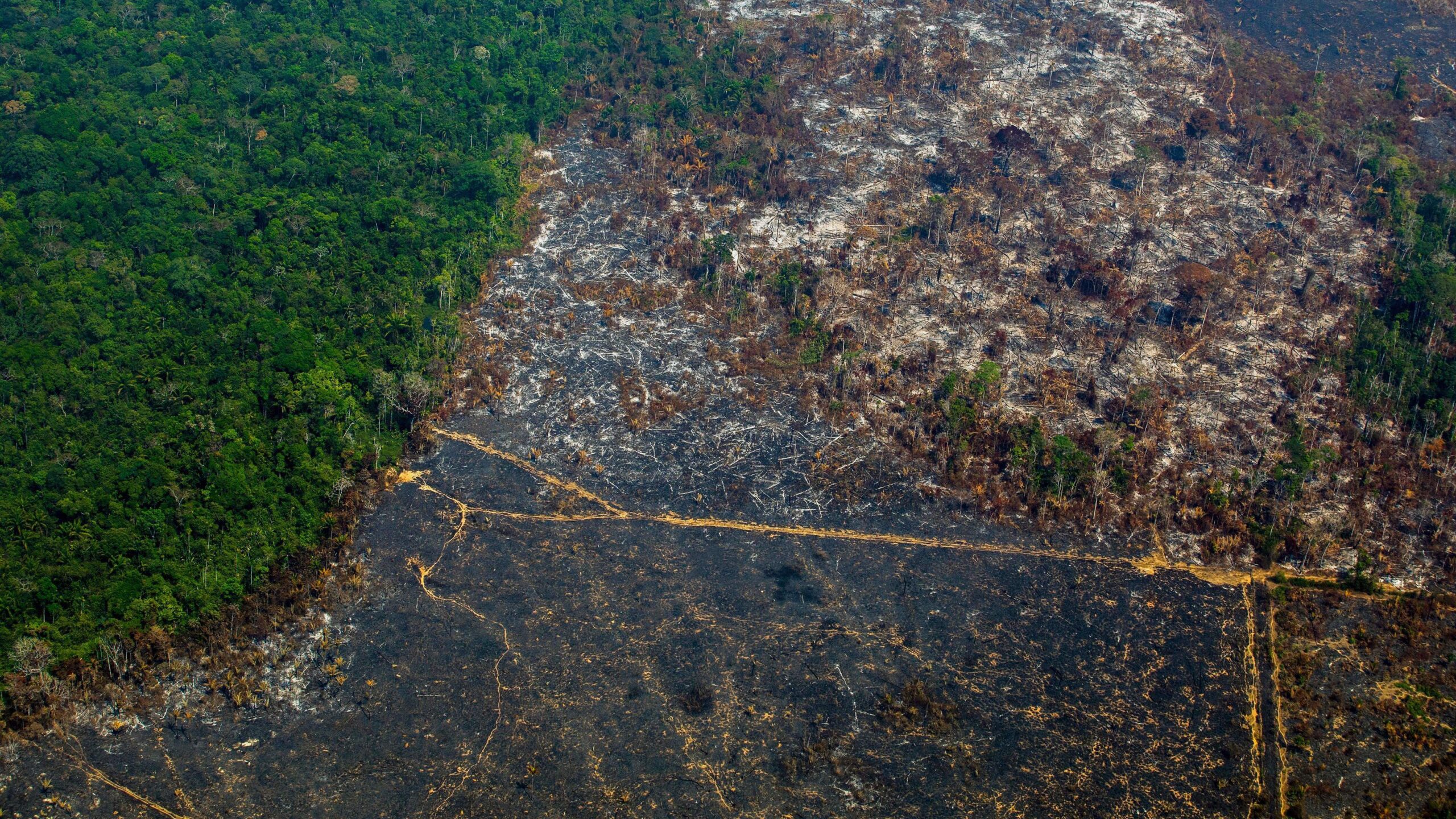
In April, Amazon deforestation spiked to its highest level in 15 years, erasing recent progress and highlighting the urgent need to address the drivers behind this resurgence.
Quick Answer
Amazon deforestation refers to the permanent removal of forest cover in the Amazon basin, primarily for agriculture, cattle ranching, logging, and infrastructure. In April 2023, Brazil’s National Institute for Space Research (INPE) recorded 1,037 km² of forest loss, a 173% increase from the previous month, marking the steepest rise since 2008. This surge threatens carbon storage, biodiversity, and Indigenous livelihoods, though uncertainties remain about the precise future trajectory and the effectiveness of policy responses.
Key Takeaways
- April 2023 saw a 173% month‑on‑month rise in Amazon deforestation, reaching over 1,000 km².
- Primary drivers include expanding soy and cattle production, weakened environmental enforcement, and illegal land grabbing.
- Deforestation reduces carbon sequestration, disrupts water cycles, and endangers Indigenous communities.
- High‑confidence findings confirm that forest loss directly contributes to global greenhouse‑gas emissions.
- Effective solutions combine stronger monitoring, Indigenous land rights, and market incentives for sustainable supply chains.
What Is Amazon Deforestation Surges in April Reversing Recent Gains?
Deforestation in the Amazon basin denotes the conversion of forested land to non‑forest uses that persist for decades or longer. The recent surge refers specifically to the sharp increase measured in April 2023, which reversed a modest downward trend observed from 2019 to early 2022. The phenomenon is bounded by the legal Amazon region of Brazil—approximately 5.5 million km²—though similar patterns occur in adjoining countries.
Unlike seasonal forest loss from natural disturbances, this surge is driven largely by human economic activity and policy shifts.
How Does It Work?
Step‑by‑step process of deforestation
- Land‑use decision: Agribusiness firms or smallholders plan to clear forest for soy, cattle, or timber.
- Infrastructure preparation: Roads and waterways are built or expanded, providing access to previously remote forest.
- Clearing: Trees are felled using chainsaws or bulldozers; fire is often employed to remove debris.
- Conversion: The cleared area is planted with crops, pastures, or left fallow.
- Feedback loops: Deforestation reduces regional rainfall, which can limit forest regeneration and encourage further clearing.
These steps interact with climate systems: forest loss releases stored carbon (approximately 0.5 t CO₂ per hectare per year) and diminishes evapotranspiration, altering precipitation patterns across South America.
What Does the Evidence Show?
Long‑term satellite monitoring by INPE and the European Space Agency (ESA) provides a consistent record of forest cover loss since the early 2000s. A 2022 assessment by the Intergovernmental Panel on Climate Change (IPCC) cites Amazon deforestation as a major source of anthropogenic CO₂ emissions, contributing roughly 0.5 Gt CO₂ yr⁻¹. Peer‑reviewed studies (e.g., by the World Resources Institute, 2021) link increased cattle ranching to 60–70% of recent clearing. The 2023 April spike aligns with a documented relaxation of Brazil’s Forest Code enforcement, as reported by the Brazilian Institute of Environment and Renewable Natural Resources (IBAMA).
Main Causes or Drivers
Direct causes
- Expansion of soybean farms for export markets.
- Growth of cattle pastures, which require large tracts of cleared land.
- Illegal logging targeting high‑value timber species.
- Use of fire to clear debris, often escaping control.
Underlying drivers
- Economic incentives: high commodity prices and credit availability encourage land conversion.
- Policy environment: recent deregulatory measures have reduced penalties for illegal clearing.
- Weak enforcement: budget cuts to IBAMA limit satellite‑based detection and on‑ground patrols.
- Post‑COVID‑19 market dynamics: demand for agricultural products surged, increasing pressure on forest frontiers.
Environmental and Human Impacts
Environmental Impacts
- Carbon emissions: Each hectare cleared releases 150–200 t CO₂, accelerating global warming.
- Loss of biodiversity: The Amazon hosts ~10% of known species; deforestation fragments habitats and raises extinction risk.
- Hydrological changes: Reduced evapotranspiration lowers regional rainfall, affecting agriculture far beyond the forest edge.
Human Health and Social Impacts
- Indigenous peoples lose territory, cultural heritage, and food security.
- Air quality declines from fire smoke, increasing respiratory problems in nearby communities.
- Land‑conflict incidents rise as illegal actors confront traditional landholders.
Regional Differences
Deforestation rates vary across Brazil’s Amazon states. In the state of Pará, INPE data show that April 2023 clearing reached 480 km², while in Mato Grosso the figure was 210 km². These differences reflect distinct economic structures: Pará’s frontier is dominated by timber extraction, whereas Mato Grosso’s clearing is more closely linked to soy expansion. Neighboring countries such as Peru and Colombia have reported lower recent rates, partly due to stronger protected‑area networks, but they still experience localized hotspots linked to illegal gold mining.
What Scientists Know With High Confidence
- Deforestation directly reduces the Amazon’s capacity to absorb carbon, contributing to net greenhouse‑gas emissions.
- Conversion to cattle pasture is the single largest driver of forest loss in the Brazilian Amazon.
- Satellite‑based monitoring reliably detects changes in forest cover at a resolution of 30 m or better.
- Indigenous territories experience significantly lower rates of deforestation than adjacent unprotected lands.
What Remains Uncertain
Key uncertainties include the exact magnitude of future deforestation under different policy scenarios, the long‑term carbon balance of degraded forest that may regrow, and the extent to which climate‑induced droughts will amplify fire risk. Data gaps persist in remote regions where cloud cover limits optical satellite observations, requiring radar‑based validation. Improved ground‑truthing would reduce these uncertainties.
Common Misconceptions
Misconception: The Amazon produces most of the world’s oxygen.
Reality: While the forest generates a large share of regional oxygen, atmospheric oxygen is a well‑mixed reservoir; human respiration has negligible impact on global levels.
Misconception: All Amazon deforestation is illegal.
Reality: Some clearing follows legal permits for agriculture, though many permits are granted in ways that undermine conservation goals.
Misconception: Reforestation alone can offset current emissions.
Reality: Young forests sequester carbon at a slower rate than mature trees; immediate emission reductions from avoiding deforestation are more effective.
Solutions and Limitations
Effective responses combine several approaches:
- Strengthened enforcement: Increasing IBAMA’s budget improves satellite‑ground integration, but corruption and limited personnel can blunt impact.
- Indigenous land rights: Recognizing Indigenous territories lowers deforestation rates by up to 80%, yet political resistance can delay demarcation.
- Supply‑chain certifications: Programs such as the soy “Trê‑e” standard incentivize zero‑deforestation sourcing, though verification costs may be prohibitive for small producers.
- Payments for ecosystem services (PES): Financial incentives for forest preservation have shown success in Brazil’s Acre state, yet scaling PES requires sustained funding.
- Alternative livelihoods: Promoting agroforestry reduces pressure on pristine forest, but market access for diversified products remains a challenge.
What Individuals, Communities, and Governments Can Do
What Individuals Can Do
- Choose products certified as deforestation‑free (e.g., soy, beef, palm oil).
- Support NGOs that fund Indigenous land‑rights initiatives.
- Advocate for transparent corporate supply chains through consumer petitions.
What Communities and Organizations Can Do
- Develop community‑based monitoring using low‑cost drones and mobile apps.
- Form cooperatives that market sustainably produced forest‑friendly goods.
- Engage in participatory land‑use planning with local authorities.
What Governments Can Do
- Reinstate and enforce the 2012 Forest Code provisions that protect native vegetation.
- Allocate dedicated funding for real‑time satellite monitoring and rapid response teams.
- Integrate climate‑finance mechanisms that reward avoided deforestation (e.g., REDD+).
- Promote agro‑ecological policies that reduce reliance on extensive cattle ranching.
Closing Synthesis
The April surge in Amazon deforestation demonstrates how quickly progress can be undone when economic incentives, policy relaxations, and weak enforcement converge. High‑confidence evidence links forest loss to increased carbon emissions, biodiversity decline, and threats to Indigenous peoples. While uncertainties remain about future trajectories, the evidence base clearly supports a portfolio of solutions that blend stronger governance, market incentives, and community empowerment. Immediate, coordinated action—rather than isolated consumer choices—offers the best chance to halt the reversal and safeguard the Amazon’s global climate role.
Frequently Asked Questions
What caused the sudden increase in Amazon deforestation in April 2023?
The April 2023 spike was driven mainly by expanded soy cultivation, cattle pasture growth, weakened enforcement of Brazil's Forest Code, and increased illegal logging, all of which accelerated forest clearing after a period of modest decline.
How does deforestation affect global carbon emissions?
When forest trees are cut or burned, the carbon stored in their biomass is released as CO₂. Each hectare cleared can emit 150–200 tonnes of CO₂, reducing the Amazon’s capacity to absorb atmospheric carbon and contributing to net global greenhouse‑gas emissions.
Why are Indigenous territories important for forest conservation?
Indigenous lands have been shown to experience up to 80% lower deforestation rates than surrounding areas because traditional stewardship practices protect forest cover and limit commercial clearing.
What are the main uncertainties about future Amazon deforestation?
Key uncertainties include how policy changes will influence future clearing rates, the carbon balance of degraded forests that may regrow, and how climate‑driven droughts will interact with fire risk, especially in regions with limited satellite monitoring.
What practical steps can consumers take to help reduce Amazon deforestation?
Consumers can choose certified deforestation‑free products such as soy, beef, and palm oil, support organizations that protect Indigenous land rights, and pressure companies to adopt transparent, zero‑deforestation supply chains.







Leave a Comment