
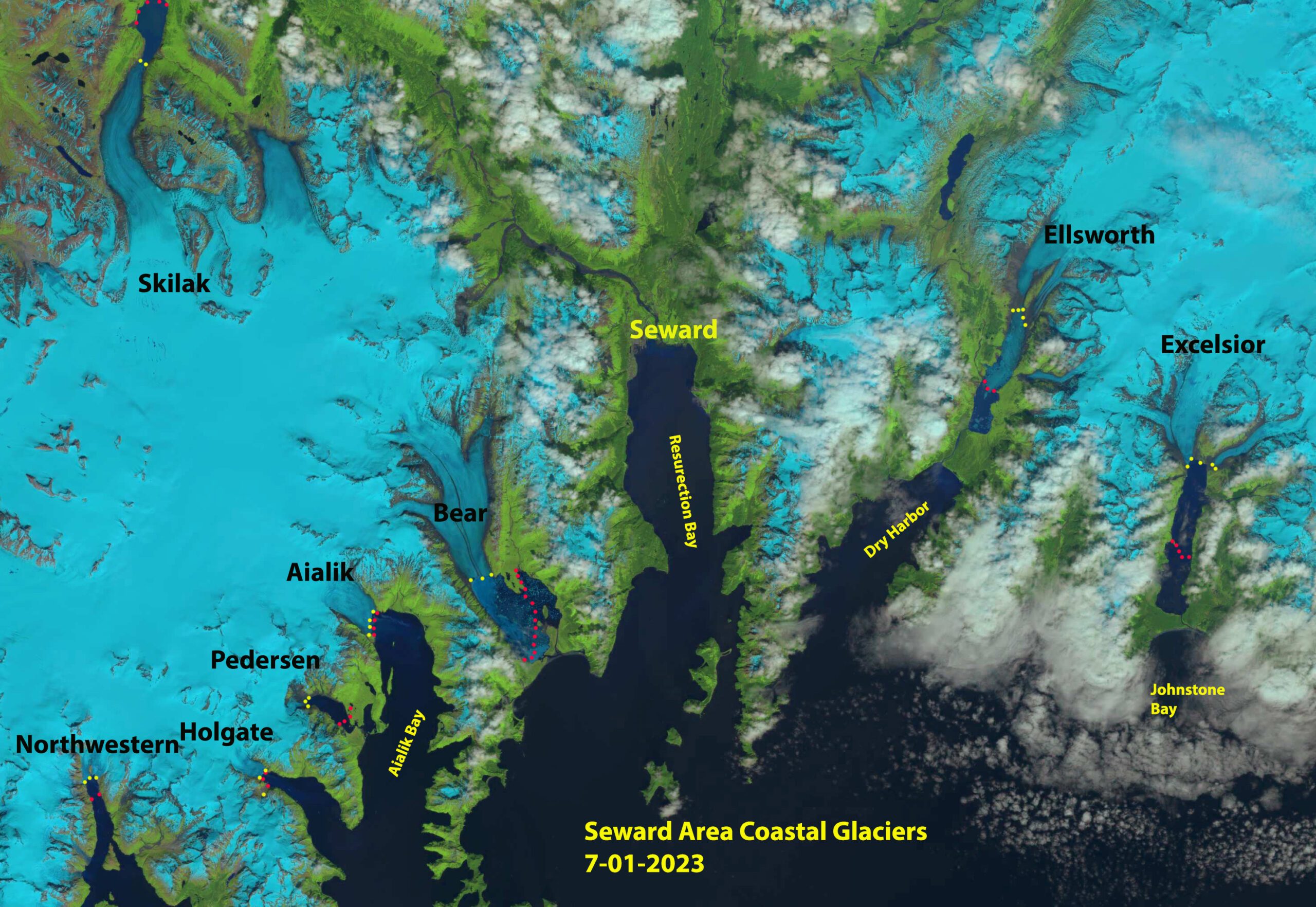
Glacier melt in Alaska reshapes freshwater delivery, salinity gradients, and habitat availability, creating cascading effects on coastal ecosystems, wildlife, and Indigenous communities.
Quick Answer
Glacier change refers to the accelerated retreat and thinning of Alaska’s ice‑filled mountains caused mainly by rising air temperatures. As glaciers melt, they release large volumes of cold freshwater into rivers and the near‑shore ocean, lowering salinity and altering temperature regimes. This drives shifts in species distribution, especially for salmon and marine mammals, and can destabilize shoreline habitats. Scientific monitoring shows consistent trends of glacier loss across the state, but uncertainties remain about the exact timing of ecological thresholds and how local communities will adapt.
Key Takeaways
- Alaska’s glaciers have retreated several kilometers since the 1980s, delivering more freshwater to coastal zones.
- Freshwater influx reduces coastal salinity, affecting species that rely on specific salinity ranges, such as salmon.
- Habitat loss for ice‑dependent fauna (sea otters, seals) and altered nutrient cycles can reshape food webs.
- Indigenous peoples experience cultural and livelihood changes linked to shifting hunting and fishing grounds.
- Long‑term monitoring by NASA, USGS, and NOAA provides the strongest evidence base, while future impacts depend on greenhouse‑gas trajectories.
- Adaptation strategies combine ecosystem restoration, traditional knowledge, and climate‑mitigation policies.
What Is How Glacier Change Impacts Alaska’s Coastal Ecosystems?
The phrase describes the chain of physical and ecological responses that follow the accelerated melting, thinning, and retreat of glaciers that border Alaska’s coastline. It encompasses the altered hydrology of rivers, the dilution of seawater, the reshaping of intertidal zones, and the social consequences for communities that depend on these resources. Unlike seasonal melt, which is part of a natural cycle, glacier change refers to a persistent, human‑driven shift in the mass balance of ice that has observable impacts beyond the immediate ice field.
How Does It Work?
1. Temperature‑Driven Ice Loss
Rising atmospheric temperatures increase surface melt and promote basal melting where ocean water contacts glacier fronts. The Intergovernmental Panel on Climate Change (IPCC) 2021 assessment links a global mean temperature rise of 1.1 °C since pre‑industrial times to accelerated glacier mass loss worldwide, with Alaska experiencing some of the fastest rates.
2. Freshwater Discharge Increases
When meltwater reaches the sea, it adds to river flow and directly enters fjords. US Geological Survey observations indicate that many tidewater glaciers now contribute up to 30 % more runoff during summer months than they did in the 1970s.
3. Salinity and Temperature Shifts
The influx of cold, low‑salinity water creates a brackish surface layer that can extend several kilometers offshore. This stratification reduces the mixing of oceanic nutrients and modifies the thermal habitat for fish and invertebrates.
4. Habitat Reconfiguration
Lower salinity and altered sediment transport reshape estuarine marshes, kelp forests, and intertidal zones. Species with narrow tolerance ranges either relocate, adapt, or decline, leading to altered predator‑prey dynamics.
5. Socio‑Cultural Feedbacks
Indigenous hunters and fishers rely on predictable seasonal cues. Changes in melt timing disturb traditional travel routes and the availability of key species, prompting adjustments in cultural practices and food security.
What Does the Evidence Show?
Long‑term remote‑sensing data from NASA’s Landsat program (1972‑present) reveal that Alaska’s glacier area has decreased by roughly 15 % over the past five decades. Ground‑based mass‑balance studies, such as those compiled by the USGS National Climate Assessment, confirm that the average annual mass loss for Alaskan glaciers between 2000 and 2020 was about 0.5 m water equivalent per year.
Ecological monitoring by NOAA’s Alaska Fisheries Science Center demonstrates that salmon smolt survival rates have declined in rivers with the greatest freshwater dilution, a pattern consistent across multiple watersheds. Similarly, a peer‑reviewed synthesis in *Marine Ecology Progress Series* (2020) links reduced sea‑ice cover to declining haul‑out rates of Pacific walrus in the Bering Sea.
These independent lines of observation—satellite imagery, glacier mass‑balance records, and biological monitoring—converge on a coherent picture: glacier change is reshaping coastal physical conditions and, consequently, biological communities.
Main Causes or Drivers
Direct Causes
- Increasing atmospheric temperatures due to anthropogenic greenhouse‑gas emissions.
- Enhanced oceanic heat transport that melts glacier termini that terminate in seawater.
Underlying Drivers
- Global fossil‑fuel combustion raising CO₂ concentrations above 415 ppm (NOAA, 2023).
- Land‑use changes that affect albedo, such as expanding infrastructure near glacier forefields.
Amplifying Factors
- Positive feedbacks from reduced surface albedo as ice retreats, accelerating local warming.
- Increased precipitation as rain rather than snow, which speeds surface melt.
Environmental and Human Impacts
Environmental Impacts
- Salinity gradients: Lower salinity can inhibit the development of certain plankton species that form the base of the marine food web.
- Species distribution: Cold‑water fish such as chum salmon may move upstream, while warm‑water species expand their range.
- Coastal erosion: Reduced sediment supply from glacier melt can accelerate shoreline loss in some fjords.
Human Health and Social Impacts
- Changes in fish abundance affect nutrition and cultural practices of Indigenous communities.
- Altered river flow can increase the risk of flood events, impacting settlements and infrastructure.
Economic and Infrastructure Impacts
- Commercial fisheries may face reduced catches for species sensitive to salinity changes.
- Tourism that relies on glacier vistas may decline as iconic ice masses shrink.
Regional Differences
The magnitude of glacier‑driven change varies across Alaska’s coastline. In the Prince William Sound region, rapid glacier retreat has produced noticeable freshening of surface waters, while in the western Gulf of Alaska, slower glacier loss means salinity shifts are less pronounced. The Bering Sea coastline, characterized by fewer large tidewater glaciers, experiences indirect effects mainly through altered river discharge patterns rather than direct glacial meltwater input.
What Scientists Know With High Confidence
What Scientists Know With High Confidence
- Atmospheric warming is the primary driver of accelerated glacier loss in Alaska.
- Glacier retreat has increased the volume of freshwater entering coastal marine systems.
- Salinity reductions linked to meltwater affect the distribution of several key fish species, including salmon.
- Indigenous peoples observe and rely on these ecological changes, providing valuable on‑the‑ground indicators.
What Remains Uncertain
What Remains Uncertain
Key uncertainties include the precise timing of ecological thresholds—such as the salinity level at which salmon spawning success declines—and how combined stressors (e.g., ocean acidification, overfishing) may interact with glacier‑driven changes. Limited long‑term data on deep‑water nutrient fluxes also hampers predictions of broader oceanic impacts. Continued high‑resolution monitoring and integrated modeling are needed to narrow these knowledge gaps.
Common Misconceptions
Common Misconceptions
Misconception: Glacier melt only raises sea level.
Reality: While melt contributes to global sea‑level rise, the immediate local effect in Alaska is the addition of fresh water that changes salinity and temperature in coastal ecosystems.
Misconception: All marine life benefits from colder meltwater.
Reality: Some cold‑adapted species may find temporary refuge, but many organisms depend on stable salinity and nutrient regimes; abrupt changes can be detrimental.
Misconception: Glacier loss is a distant problem for people.
Reality: Indigenous hunters, commercial fishers, and coastal towns experience direct impacts on food security, livelihoods, and cultural practices.
Solutions and Limitations
Effective responses combine mitigation of global warming with local adaptation. Mitigation—reducing greenhouse‑gas emissions—addresses the root cause but requires coordinated international policy and long‑term commitment. Adaptation measures include restoring riverine habitats to improve salmon resilience, implementing flexible fisheries management that accounts for salinity shifts, and supporting Indigenous co‑management frameworks. Limitations involve high costs, uncertainty about future climate pathways, and potential trade‑offs such as altered water allocation for hydroelectric projects.
What Individuals, Communities, and Governments Can Do
What Individuals Can Do
- Support organizations that advocate for strong climate policies.
- Reduce personal carbon footprints through energy efficiency and sustainable transportation.
- Donate to or volunteer with Indigenous stewardship programs that monitor glacier‑related changes.
What Communities and Organizations Can Do
- Partner with scientific agencies to establish local water‑quality monitoring stations.
- Develop adaptive fisheries plans that incorporate real‑time salinity data.
- Promote education programs that integrate traditional ecological knowledge with modern science.
What Governments Can Do
- Invest in long‑term satellite and field monitoring networks (e.g., NASA’s ICESat‑2, USGS glacier surveys).
- Implement climate‑resilient coastal infrastructure that accounts for changing erosion patterns.
- Enact policies that protect critical habitats, such as estuarine wetlands, from development pressures.
Synthesis
Glacier change in Alaska is a well‑documented, temperature‑driven phenomenon that injects fresh, cold water into coastal systems, reshaping salinity, temperature, and habitat structure. High‑confidence evidence links these physical shifts to ecological responses—most notably for salmon, marine mammals, and intertidal communities—and to cultural and economic impacts on Indigenous peoples and coastal residents. Uncertainties remain around the pace of ecological thresholds and the interaction with other stressors, highlighting the need for continued monitoring. Mitigation of global warming, paired with locally tailored adaptation and restoration, offers the most robust pathway to safeguard Alaska’s coastal ecosystems for future generations.
Frequently Asked Questions
What are the main causes of accelerated glacier melt in Alaska?
The primary cause is rising atmospheric temperatures driven by increased greenhouse‑gas concentrations from global fossil‑fuel use. Warmer ocean currents also melt glacier fronts that end in seawater, and reduced surface albedo from ice loss creates a feedback that further speeds warming.
How does increased freshwater from melting glaciers affect salmon populations?
Meltwater lowers coastal and river salinity and can cool water temperatures, which may shift optimal spawning habitats upstream. Studies by NOAA show reduced smolt survival in rivers with the greatest freshening, indicating that salmon may face lower recruitment where meltwater impact is strongest.
Are there any short‑term benefits of glacier melt for coastal communities?
In the short term, increased freshwater can improve water availability for drinking and small‑scale irrigation, and may temporarily boost certain fish runs. However, these benefits are outweighed by longer‑term ecological disruptions, cultural challenges, and heightened flood risk.
Which programs monitor glacier change and its coastal impacts in Alaska?
NASA’s Landsat and ICESat‑2 satellite missions provide high‑resolution ice‑cover data, while the US Geological Survey conducts ground‑based mass‑balance surveys. NOAA’s Alaska Fisheries Science Center tracks salinity and species responses, and the Alaska Climate Research Center integrates these datasets for regional assessments.
What actions can individuals take to support the resilience of Alaska’s coastal ecosystems?
Individuals can reduce personal carbon emissions, support climate‑policy advocacy groups, and contribute to Indigenous stewardship initiatives that monitor glacier and coastal health. Donating to or volunteering with scientific monitoring programs also helps expand the data needed for effective adaptation.




Leave a Comment