
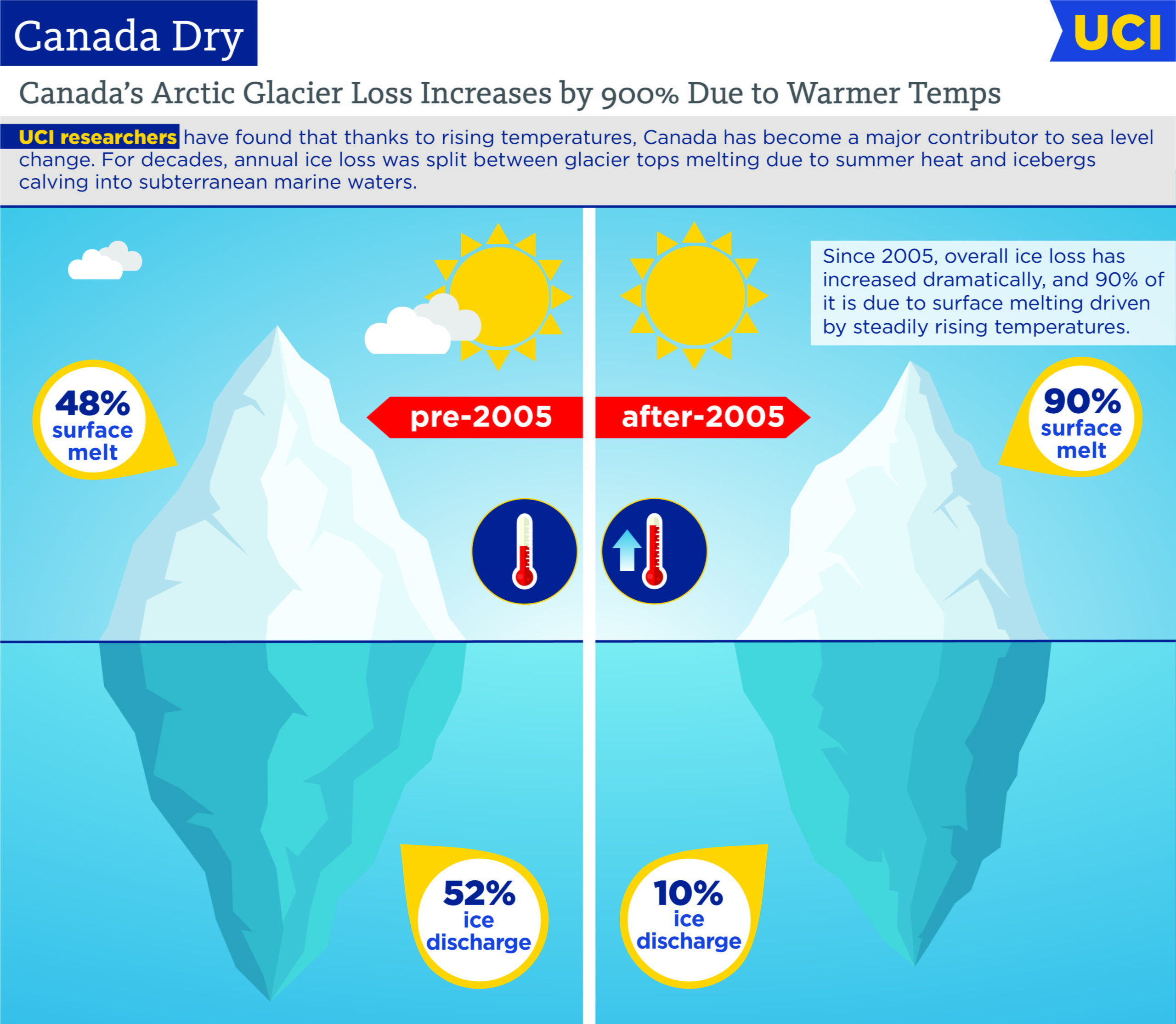
Mountain glaciers are rapidly losing ice due to climate‑driven warming, reshaping water supplies, ecosystems, and sea‑level trends worldwide.
Quick Answer
Climate change—primarily the rise in atmospheric greenhouse gases from fossil‑fuel combustion—raises regional air temperatures, which accelerates the melt of mountain glaciers. The melt contributes to sea‑level rise and alters downstream water availability. Evidence from the Intergovernmental Panel on Climate Change (IPCC) and long‑term monitoring shows a consistent global retreat of glaciers, though the exact timing of complete loss varies by region. Uncertainty remains about the precise future contribution of individual glaciers under different emission scenarios.
Key Takeaways
- Global mean temperatures have risen about 1.1 °C since pre‑industrial times, driving widespread glacier retreat.
- Glacier melt accounts for roughly 25 % of observed sea‑level rise since 1993 (IPCC 2021).
- Millions of people depend on glacier‑fed rivers for drinking water, agriculture, and hydropower.
- High‑altitude regions experience faster melt rates than lower‑latitude mountain ranges.
- Mitigation of greenhouse‑gas emissions and targeted adaptation are both essential to reduce future impacts.
What Is Climate Change and Mountain Glaciers: What’s Happening Now?
Mountain glaciers are persistent bodies of ice that form where snowfall exceeds melt over many decades. They occupy high‑altitude and high‑latitude regions such as the Himalayas, the Andes, the Rockies, and the European Alps. Climate change refers to long‑term shifts in temperature, precipitation, and atmospheric composition driven largely by human‑generated greenhouse gases. The phrase “what’s happening now” captures the observable, measured retreat of glaciers during the past few decades, as opposed to speculative future scenarios.
How Does It Work?
Energy Balance and Ice Melt
Glaciers exist where the annual net energy balance is negative: the amount of solar and longwave radiation absorbed is less than the energy lost through longwave emission, convection, and melt. Rising air temperatures increase the melt energy term, while changes in cloud cover and albedo (surface reflectivity) can either amplify or dampen melt. Darker surfaces—caused by soot deposition or surface melt‑water pooling—lower albedo, accelerating melt (NASA 2020).
Hydrological Cycle Interaction
When glaciers melt, the water enters downstream river basins, contributing to seasonal flow. In the melt season, glacier runoff can increase river discharge by 10–30 % in many basins (NOAA 2022). However, as glacier volume shrinks, the buffering capacity during dry periods diminishes, leading to more pronounced low‑flow conditions later in the century.
What Does the Evidence Show?
Multiple lines of evidence converge on the conclusion that mountain glaciers are losing mass worldwide:
- Direct observations: The World Glacier Monitoring Service (WGMS) reports that, between 2000 and 2020, the average glacier area declined by 21 % globally.
- Satellite gravimetry: GRACE satellite data indicate a net loss of 0.7 mm of sea‑level equivalent per year from glacier melt (IPCC 2021).
- Ice‑core records: Ice cores from the Alps show a sharp increase in isotopic markers of temperature after the mid‑20th century, consistent with instrumental warming.
- Model‑data synthesis: Coupled climate‑glacier models reproduce observed retreat when forced with observed greenhouse‑gas concentrations, reinforcing the causal link.
Main Causes or Drivers
Direct Human Emissions
Burning coal, oil, and gas raises atmospheric CO₂ concentrations to over 420 ppm in 2023, enhancing the greenhouse effect. The resulting radiative forcing is the primary driver of the global temperature rise documented by the IPCC.
Regional Climate Variability
Monsoon intensity, El Niño–Southern Oscillation (ENSO) phases, and regional aerosol loading modify local temperature and precipitation patterns, influencing melt rates. For example, the Indian Himalaya experienced a 15 % acceleration in glacier retreat during strong El Niño years (Journal of Glaciology 2019).
Environmental and Human Impacts
Environmental Impacts
Glacier loss reduces the supply of cold meltwater, warming downstream rivers and altering habitat suitability for cold‑water species such as salmon and trout. Reduced sediment trapping can increase downstream turbidity, affecting aquatic plants and invertebrates.
Human Health and Social Impacts
Approximately 300 million people rely on glacier‑fed rivers for drinking water. Seasonal water shortages can increase the risk of water‑borne diseases and exacerbate food insecurity where irrigation depends on glacier melt.
Economic and Infrastructure Impacts
Hydropower plants in the Andes and the Himalaya generate up to 30 % of regional electricity; declining glacier runoff threatens generation capacity, potentially increasing reliance on fossil‑fuel plants.
Regional Differences
Glacier response varies with latitude, altitude, and local climate:
- High‑latitude Arctic: Glaciers in Greenland and the Canadian Rockies have lost mass at rates exceeding 0.5 m w.e. yr⁻¹ (World Glacier Monitoring Service 2021).
- Tropical Andes: Small, debris‑covered glaciers retreat rapidly, with some disappearing within decades (UNEP 2020).
- European Alps: Well‑monitored glaciers show a 60 % area loss since 1850, yet a few high‑altitude glaciers persist due to local microclimates.
What Scientists Know With High Confidence
- Global warming from anthropogenic greenhouse gases drives the majority of observed glacier retreat.
- Glacier melt contributes measurably to global sea‑level rise.
- Downstream water availability is increasingly dependent on seasonal melt, making many basins more vulnerable to drought.
- Ice cores from glaciers provide reliable records of past atmospheric composition.
What Remains Uncertain
Key uncertainties include the precise timing of complete loss for individual glaciers under different emission pathways, the magnitude of feedbacks between meltwater and regional climate (e.g., changes in albedo), and the socioeconomic adaptation capacity of vulnerable communities. Improved high‑resolution monitoring and integrated climate‑glacier models are needed to reduce these gaps.
Common Misconceptions
Misconception: Glaciers only affect mountain scenery.
Reality: Glaciers regulate downstream water supplies, influence sea level, and store climate records; their loss has cascading ecological and societal effects.
Misconception: All glaciers are melting at the same rate.
Reality: Melt rates differ widely due to altitude, latitude, local weather patterns, and debris cover; some high‑altitude glaciers retreat more slowly than low‑lying ones.
Misconception: Reducing carbon emissions will instantly stop glacier retreat.
Reality: Even with rapid emissions cuts, glaciers will continue to lose mass for decades because of thermal inertia in the climate system.
Solutions and Limitations
Addressing glacier loss requires both mitigation of global warming and adaptation to changing water regimes:
- Mitigation: Rapid decarbonisation of energy, industry, and transport can limit temperature rise to <2 °C, reducing future melt rates. The limitation is that mitigation alone cannot reverse past loss.
- Adaptation: Improved water‑storage infrastructure (e.g., reservoirs, managed aquifer recharge) can buffer seasonal variability. However, construction costs and ecological impacts must be weighed.
- Glacier monitoring: Expanding satellite and ground‑based observations improves early‑warning capacity but does not prevent melt.
- Nature‑based solutions: Protecting upstream catchments reduces sediment load and preserves albedo, yet effectiveness varies with local conditions.
What Individuals, Communities, and Governments Can Do
What Individuals Can Do
Support policies that accelerate renewable‑energy deployment, reduce personal carbon footprints (e.g., lower‑carbon travel, energy‑efficient homes), and advocate for transparent water‑management planning in glacier‑dependent regions.
What Communities and Organizations Can Do
Invest in local water‑conservation measures such as rain‑water harvesting, develop climate‑resilient agricultural practices, and participate in citizen‑science glacier monitoring programs.
What Governments Can Do
Implement and strengthen nationally determined contributions (NDCs) aligned with the Paris Agreement, fund high‑resolution glacier monitoring networks, and create integrated water‑resource plans that account for decreasing glacier contributions.
Synthesis
Mountain glaciers are sensitive indicators of a warming planet. Robust observations and model evidence confirm that human‑driven climate change is the primary cause of their accelerated retreat, with far‑reaching impacts on sea level, ecosystems, and water security. While uncertainties remain about the exact future trajectory of individual glaciers, the high‑confidence findings provide a clear mandate: rapid mitigation of greenhouse‑gas emissions combined with strategic adaptation can lessen the most severe consequences for both nature and society.
Frequently Asked Questions
What defines a mountain glacier?
A mountain glacier is a persistent body of ice that forms in high‑altitude or high‑latitude regions where annual snowfall exceeds melt, creating a flowing mass of compacted snow and ice.
How does climate change cause glaciers to melt?
Rising atmospheric greenhouse‑gas concentrations increase global temperatures, which raise the energy balance at glacier surfaces, leading to faster melt and reduced snowfall accumulation in many mountain regions.
What are the main impacts of glacier loss on people?
Glacier retreat reduces meltwater that supplies drinking water, irrigation, and hydropower for millions of people, increasing the risk of water scarcity, food insecurity, and energy shortfalls.
Which regions are experiencing the fastest glacier retreat?
Tropical Andes glaciers, many Himalayan icefields, and low‑latitude Arctic glaciers have shown some of the fastest retreat rates, while high‑altitude European Alps glaciers retreat more slowly but still lose significant ice.
Can individual actions stop glaciers from disappearing?
Individual actions such as reducing personal carbon footprints help lower overall emissions, but stopping glacier loss also requires large‑scale mitigation policies and coordinated adaptation efforts.




Leave a Comment