
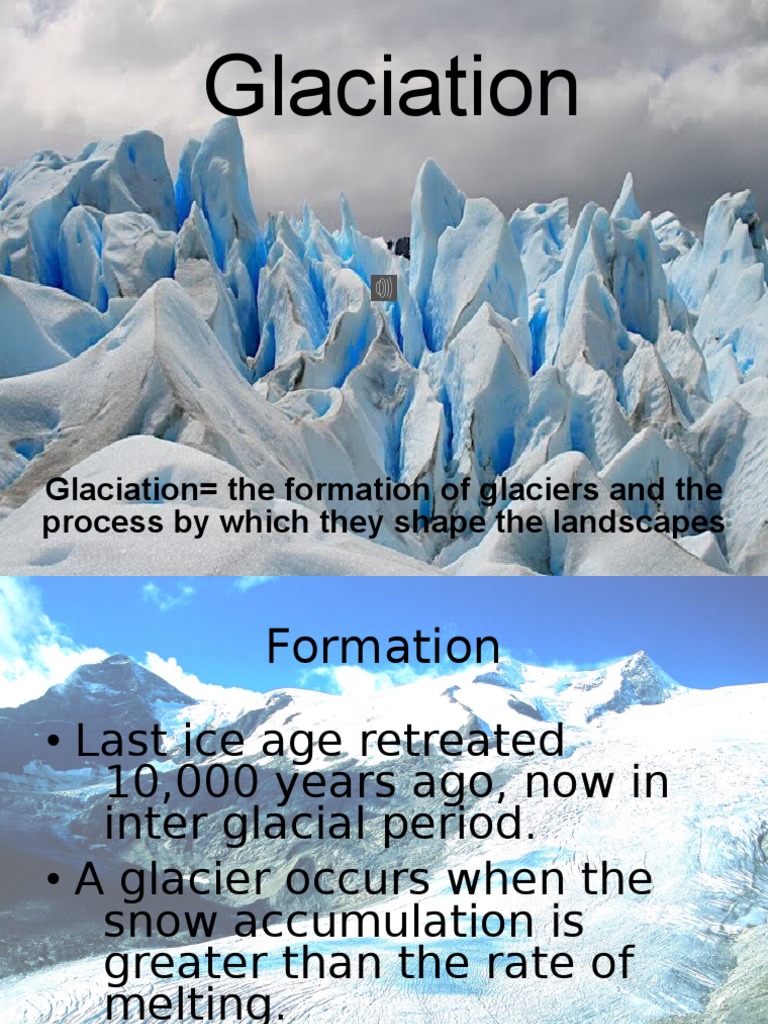
Glaciers form when snow accumulates, compacts, and transforms into ice, and they eventually melt as rising temperatures and energy imbalances trigger ice loss, affecting water resources, sea level, and ecosystems.
Quick Answer
Glaciers begin as layers of snowfall that, over many years, are buried, compressed, and recrystallized into dense glacial ice. When atmospheric and oceanic temperatures rise above the freezing point for sustained periods, surface melt, basal melt, and iceberg calving accelerate, leading to net ice loss. The most important implication is that melting glaciers contribute to sea‑level rise and alter freshwater availability, while scientific confidence remains high that human‑driven warming is the dominant driver of recent accelerated melt.
Key Takeaways
- Glacier formation requires long‑term snow accumulation, compression, and metamorphism into firn and then ice.
- Melting occurs through surface melt, basal melt, and calving, all intensified by rising temperatures.
- Glaciers store about 69% of the world’s fresh water; their loss impacts sea level and downstream water supplies.
- Human‑generated greenhouse gases are the primary driver of accelerated glacier retreat worldwide.
- Adaptation (water management) and mitigation (emissions cuts) are both needed, but mitigation addresses the root cause.
What Is Why Glaciers Form—and Why They Eventually Melt?
The phrase describes the complete life‑cycle of glaciers: from the initial accumulation of snow in cold, high‑altitude or polar environments, through the physical transformation into compact ice, to the eventual loss of that ice when climatic conditions become warm enough to exceed the glacier’s mass‑balance. Glaciers differ from seasonal snowfields in that they persist year after year, gaining mass in winter and losing it in summer. Understanding this cycle matters because glaciers act as natural water reservoirs, influence sea level, and serve as sensitive indicators of climate change.
How Does It Work?
1. Snow Accumulation
Snowfall must exceed melt over many consecutive years. In polar regions and high mountains, average annual temperatures stay below 0 °C, allowing snow to survive the summer melt season.
2. Compaction to Firn
Successive snow layers exert pressure on older layers. The weight expels air, transforms delicate snow crystals into granular firn—a porous, intermediate form of ice. This process can take decades depending on snowfall rate and temperature.
3. Formation of Glacial Ice
Continued burial forces firn grains to recrystallize, eliminating pores and creating dense, low‑porosity glacial ice with a typical density of 0.9 g cm⁻³. The resulting ice can flow under its own weight, behaving as a viscous fluid over timescales of years to centuries.
4. Melt Processes
- Surface melt: Solar radiation and warm air melt the glacier’s upper layers, producing meltwater that can percolate down or run off.
- Basal melt: Heat transferred from the ground or ocean (for tidewater glaciers) melts ice at the glacier’s base, reducing friction and often accelerating flow.
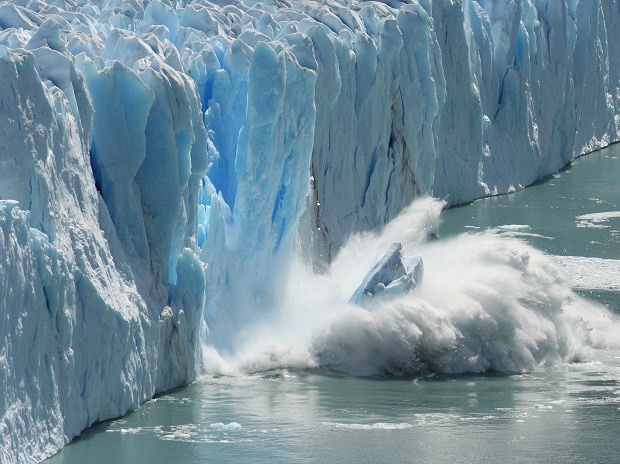
- Calving: Ice that reaches a lake or the sea can break off as icebergs, directly removing mass.
When melt exceeds accumulation, the glacier has a negative mass balance and retreats.
What Does the Evidence Show?
Long‑term monitoring by national agencies (e.g., NOAA, USGS) and satellite programs such as GRACE and Sentinel‑1 reveal that the world’s glaciers have lost roughly 30 % of their volume since the 1990s (IPCC AR6, 2021). Field measurements in the Himalaya, Andes, and Alps corroborate remote‑sensing trends, showing average retreat rates of 10–30 m yr⁻¹ in many regions. Attribution studies using climate models consistently identify anthropogenic greenhouse‑gas forcing as the dominant factor behind observed acceleration since the mid‑20th century.
Main Causes or Drivers
Direct Causes
- Increased air temperature leading to higher surface melt.
- Warmer ocean water causing basal melt of tidewater glaciers.
Underlying Drivers
- Rising concentrations of CO₂, CH₄, and N₂O from fossil‑fuel combustion and land‑use change (IPCC, 2021).
- Reduced surface albedo from dust, soot, or melt‑water ponds, which amplifies solar absorption.
Natural Influences
- Solar‑radiation variability on decadal scales.
- Volcanic aerosols that can temporarily cool regions, modestly slowing melt.
Environmental and Human Impacts
Environmental Impacts
- Sea‑level rise: Melting of the Greenland and Antarctic ice sheets contributes roughly 0.7 mm yr⁻¹ to global sea level (IPCC, 2021).
- Freshwater supply: Seasonal melt provides up to 70 % of river flow in the Indus, Ganges, and many Andean basins.
- Ecological change: Retreat creates new alpine habitats but also threatens cold‑adapted species such as the glacier bear (Ursus maritimus) and specialized alpine flora.
Human Health and Social Impacts
- Water security: Communities downstream of glacier‑fed rivers may face shortages during prolonged dry seasons.
- Hydropower: Reduced glacier melt can lower electricity generation in regions that rely on glacier‑fed reservoirs.
- Natural hazards: Increased melt can trigger glacial lake outburst floods (GLOFs), endangering settlements in mountainous areas.
Regional Differences
Glacier response varies with geography:
- Polar regions: The West Antarctic Ice Sheet is losing mass rapidly, while parts of East Antarctica remain relatively stable.
- High‑latitude mountains: The European Alps have lost ~50 % of their glacier area since 1850, with many small glaciers now disappearing.
- Tropical mountains: Glaciers on Kilimanjaro and the Andes are retreating despite being near the equator, illustrating that altitude can offset latitude but not rising temperatures.
- Mid‑latitude ranges: The Rocky Mountains show mixed trends; some glaciers are stable, others retreating, reflecting local climate variability.
What Scientists Know With High Confidence
What Scientists Know With High Confidence
- Glaciers form through long‑term snow accumulation, compaction, and recrystallization into ice.
- Global average glacier mass has been decreasing since at least the early 20th century.
- Human‑induced greenhouse‑gas emissions are the primary driver of the accelerating melt observed since the 1970s.
- Glacier melt contributes measurably to global sea‑level rise and to seasonal river discharge in many basins.
What Remains Uncertain
What Remains Uncertain
Key gaps include the precise timing of potential irreversible collapse of the West Antarctic Ice Sheet, the future contribution of debris‑covered glaciers to sea level, and the regional variability of melt under different climate‑scenario pathways. Improved high‑resolution satellite monitoring and expanded in‑situ observations are needed to narrow these uncertainties.
Common Misconceptions
Common Misconceptions
Misconception: Glaciers only melt during hot summer days.
Reality: While summer surface melt is visible, basal melt driven by warm groundwater or ocean water can occur year‑round and often dominates mass loss in tidewater glaciers.
Misconception: All glaciers are disappearing at the same rate.
Reality: Retreat rates differ widely; some high‑altitude glaciers in the Himalaya are losing mass rapidly, whereas certain cold‑based glaciers in the interior of Antarctica remain relatively stable.
Misconception: Glacier melt is a purely local issue.
Reality: Meltwater contributes to global sea level and influences freshwater availability for millions of people far downstream, linking local changes to worldwide impacts.
Solutions and Limitations
Addressing glacier loss requires both mitigation of climate change and adaptation to its effects:
- Mitigation: Rapid reductions in CO₂ emissions (e.g., achieving net‑zero by mid‑century) can limit future temperature rise, but the climate system’s inertia means some melt will continue for centuries.
- Adaptation: Developing diversified water‑storage infrastructure, early‑warning systems for GLOFs, and flexible hydropower operations can reduce vulnerability, yet these measures cannot restore lost ice.
- Conservation: Protecting glacier catchments from pollution and unsustainable tourism preserves albedo and water quality, though it does not address the primary temperature driver.
- Monitoring: Expanding satellite gravimetry and ground‑based GPS networks improves detection of changes, supporting better policy decisions, but monitoring alone does not halt melt.
What Individuals, Communities, and Governments Can Do
What Individuals Can Do
- Support policies and companies that commit to net‑zero emissions.
- Reduce personal carbon footprints through energy efficiency, low‑carbon travel, and sustainable consumption.
- Participate in citizen‑science projects that track local snowpack and glacier changes.
What Communities and Organizations Can Do
- Implement integrated water‑resource management that accounts for declining glacier contributions.
- Develop early‑warning systems for glacial lake outburst floods.
- Promote sustainable tourism that minimizes surface darkening from soot and litter.
What Governments Can Do
- Adopt and enforce ambitious greenhouse‑gas reduction targets aligned with the Paris Agreement.
- Invest in high‑resolution climate and cryosphere monitoring networks.
- Provide financial and technical assistance to downstream regions that rely on glacier melt for drinking water and agriculture.
Synthesis
Glaciers form through a slow, natural process of snow accumulation and compression, yet their eventual melt is now driven chiefly by human‑induced warming. Robust observations confirm widespread mass loss, with clear consequences for sea level, freshwater supplies, and mountain ecosystems. While uncertainties remain regarding the exact timing of large‑scale ice‑sheet collapse, the high‑confidence evidence underscores the urgency of reducing greenhouse‑gas emissions and preparing water‑resource systems for a future with fewer glaciers.
Frequently Asked Questions
How does snow turn into glacier ice?
Snow accumulates over years, and the weight of newer layers compresses older snow into granular firn. Continued pressure recrystallizes firn into dense glacial ice, a process that can take decades to centuries.
Why are glaciers melting faster now than in the past?
Multiple lines of evidence, including satellite data and long‑term field measurements, show that rising atmospheric and oceanic temperatures—driven primarily by human greenhouse‑gas emissions—increase surface and basal melt, leading to accelerated glacier loss.
What role do glaciers play in sea‑level rise?
When glaciers melt, the water they release flows into the oceans, adding to global sea level. The IPCC reports that glacier and ice‑sheet melt contributed about 0.7 mm per year to sea‑level rise in the early 2000s.
How does glacier melt affect people who live downstream?
Glacier melt supplies freshwater to many rivers that support drinking water, irrigation, and hydropower. Reduced melt can lead to water shortages, lower electricity generation, and increased flood risk from glacial lake outburst floods.
What actions can help slow glacier loss?
The most effective action is to reduce greenhouse‑gas emissions to limit global warming. Complementary measures include improving water‑resource management, protecting glacier catchments, and expanding monitoring to inform adaptation strategies.




Leave a Comment