
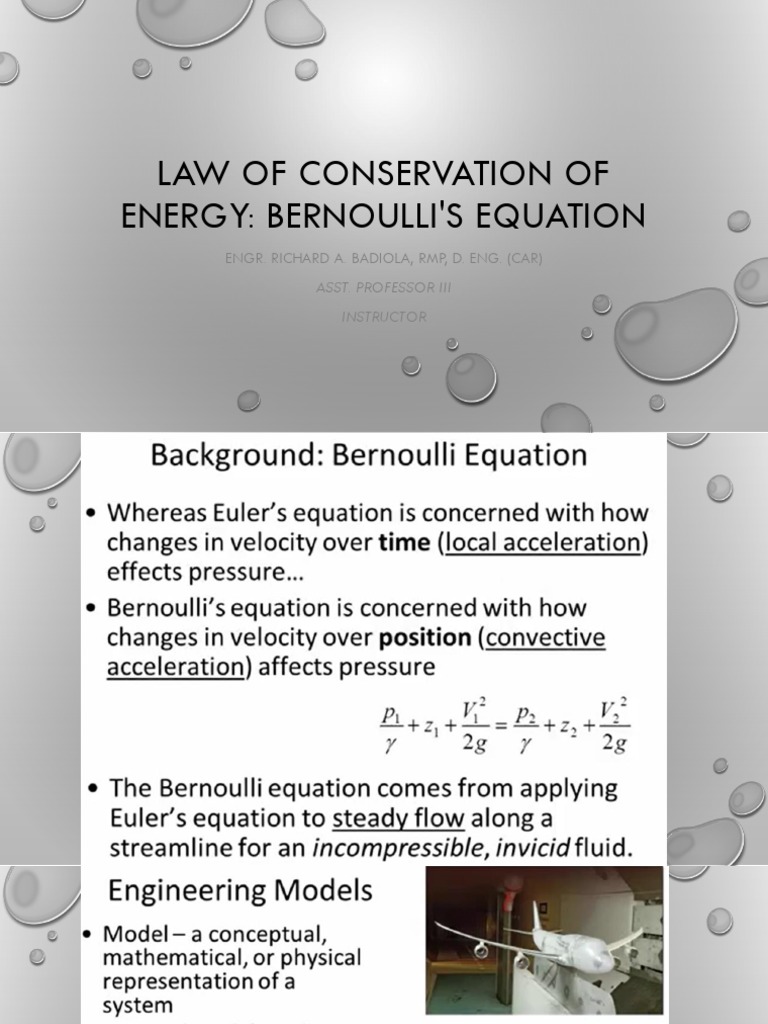
The law of conservation of energy states that energy cannot be created or destroyed, only transformed, a principle that underpins physics, ecology, and sustainable energy practices.
Quick Answer
Conservation of energy means the total amount of energy in an isolated system remains constant; it merely changes form—kinetic to potential, chemical to thermal, etc. This principle is derived from Noether’s theorem linking symmetry and conservation, and it is confirmed by countless laboratory and field observations. While the total energy stays the same, the second law of thermodynamics shows that usable energy degrades over time, limiting efficiency. Understanding this balance is crucial for evaluating energy use, ecosystem productivity, and the feasibility of renewable technologies.
Key Takeaways
- Energy is neither created nor destroyed, only converted between forms.
- The principle is grounded in fundamental symmetries of physics and verified across scales.
- Ecological processes—photosynthesis, food webs, and metabolic cycles—are expressions of energy conservation.
- Entropy increases in real transformations, reducing the fraction of energy available for work.
- Renewable energy systems align with conservation by harnessing existing energy flows rather than depleting stored reserves.
What Is The Scientific Basis of the Law of Conservation of Energy?
The law originates from the 19th‑century work of James Joule and Hermann von Helmholtz, later formalised by Emmy Noether’s theorem (1918) which proves that time‑translation symmetry of physical laws mandates energy conservation. It applies to mechanical, electromagnetic, chemical, and nuclear processes, provided the system is closed—no net exchange of energy with the surroundings. In practice, scientists treat large‑scale natural systems (e.g., the Earth‑atmosphere) as approximately closed over short periods, allowing the law to be a reliable accounting tool for energy budgets.
How Does It Work?
Mechanical and Physical Transformations
When a pendulum swings, gravitational potential energy at the apex converts to kinetic energy at the lowest point and back again. The sum of kinetic and potential energy remains constant, neglecting air resistance. This simple example scales to planetary motion, where orbital kinetic and gravitational potential energies trade while total mechanical energy stays fixed.
Chemical and Biological Processes
Photosynthesis captures solar photons and stores their energy in chemical bonds of glucose. Herbivores ingest glucose, releasing part of that energy as heat and ATP during metabolism. Throughout the food web, energy is transferred with about 10 % efficiency at each trophic level, the rest dissipating as low‑grade heat, consistent with the second law.
Thermodynamic Constraints
No real process is perfectly reversible. The second law states that entropy—a measure of disorder—tends to increase, meaning some energy becomes unavailable for work. This does not violate conservation; total energy stays constant, but the quality of that energy degrades.
Human Energy Systems
Fossil‑fuel combustion releases stored chemical energy rapidly, converting it to heat, mechanical work, and electricity. Renewable technologies such as solar panels or wind turbines tap ongoing energy flows (sunlight, wind) without depleting a finite reservoir, thereby respecting the conservation principle while acknowledging entropy losses in conversion.
What Does the Evidence Show?
Multiple independent lines of evidence confirm energy conservation:
- Laboratory experiments measuring heat and work in closed calorimeters consistently show no net loss of energy (e.g., Joule’s paddle‑wheel experiment, replicated in modern physics labs).
- Space‑craft telemetry verifies that the total energy of onboard systems, accounting for fuel consumption and solar input, matches predictions based on conservation equations.
- Global energy‑budget assessments by the Intergovernmental Panel on Climate Change (IPCC Sixth Assessment Report, 2021) balance incoming solar radiation, reflected energy, and outgoing terrestrial radiation, demonstrating a net zero change over the Earth system within measurement uncertainties.
- Ecological studies quantifying primary productivity, respiration, and detrital fluxes in ecosystems (e.g., the FLUXNET network) close the carbon‑energy budget, confirming that energy entering an ecosystem equals energy leaving plus storage.
These observations span scales from sub‑microscopic particle interactions to planetary energy flows, reinforcing the universality of the law.
Main Causes or Drivers
Energy transformations are driven by gradients—differences in temperature, chemical potential, or pressure. Natural drivers include solar radiation, geothermal heat, and tidal forces. Human drivers are the extraction and combustion of fossil fuels, which accelerate the conversion of stored chemical energy into heat and work, often with low efficiency and high entropy production.
Environmental and Human Impacts
Environmental Impacts
Because energy cannot disappear, the way we convert it determines environmental outcomes. Inefficient combustion releases excess heat, contributing to local warming and altering atmospheric circulation. Moreover, the by‑products of energy conversion—greenhouse gases, pollutants, and waste heat—affect air quality, water bodies, and soil chemistry.
Human Health and Social Impacts
Air pollutants from low‑efficiency energy use (e.g., particulate matter from coal plants) are linked to respiratory diseases, as documented by the World Health Organization. Energy‑related heat stress disproportionately affects vulnerable populations in hot climates, illustrating how entropy‑driven losses translate into health risks.
Regional Differences
Energy‑flow patterns vary by climate zone and development level. Tropical regions receive higher solar flux, supporting abundant solar and biomass energy, while high‑latitude areas rely more on stored fossil fuels. Developed economies often have higher per‑capita energy consumption but also greater capacity for efficiency improvements, whereas low‑income regions may face energy access challenges that shape how conservation principles are applied locally.
What Scientists Know With High Confidence
- Energy is conserved in isolated physical systems; this is a foundational law of physics.
- Entropy increases in real processes, limiting the fraction of energy that can do useful work.
- Global energy budgets close within the uncertainties of satellite and ground‑based measurements.
- Photosynthetic energy capture and trophic transfer efficiencies are consistently around 1‑10 % across ecosystems.
What Remains Uncertain
Key uncertainties include the precise quantification of anthropogenic waste heat at regional scales, the long‑term feedbacks between energy use, climate dynamics, and ecosystem resilience, and the ultimate efficiency limits of emerging renewable technologies under real‑world conditions. Improved high‑resolution monitoring and integrated modelling are needed to reduce these gaps.
Common Misconceptions
Misconception: Energy can be created from nothing.
Reality: No credible experiment has ever produced net energy without an external source; apparent “free energy” devices violate the conservation principle and are unsupported by peer‑reviewed research.
Misconception: The second law of thermodynamics disproves energy conservation.
Reality: The second law describes the direction of energy flow and quality loss, not the total amount of energy, which remains constant.
Misconception: Renewable energy “creates” energy.
Reality: Solar panels and wind turbines convert existing solar or kinetic energy into electricity; they do not generate new energy, they merely harness flows that are already present.
Solutions and Limitations
Addressing energy‑related environmental challenges involves several strategies:
- Efficiency improvements: Upgrading appliances, industrial processes, and building envelopes reduces the fraction of energy lost as waste heat. However, rebound effects can offset gains if consumption rises.
- Renewable energy deployment: Solar, wind, and geothermal systems align with conservation by tapping ongoing energy flows. Intermittency, land use, and material intensity are trade‑offs that require careful planning.
- Carbon capture and storage (CCS): CCS can retain CO₂ that would otherwise add to atmospheric energy imbalance, but it adds complexity, cost, and does not eliminate entropy losses.
- Demand‑side management: Time‑based pricing and smart grids shift usage to periods of high renewable generation, yet equitable access and consumer acceptance remain challenges.
What Individuals, Communities, and Governments Can Do
What Individuals Can Do
Choose energy‑efficient appliances, seal home envelopes, and prioritize public transport or active travel. Simple behavior changes lower personal energy demand, reducing the total amount that must be transformed and thus the associated entropy loss.
What Communities and Organizations Can Do
Implement community solar projects, adopt district‑heating systems that recycle waste heat, and develop local energy‑audit programs. Collective action amplifies the impact of efficiency measures beyond single households.
What Governments Can Do
Set and enforce building‑code efficiency standards, subsidize renewable‑energy infrastructure, and invest in high‑resolution energy‑monitoring networks. Policy frameworks that internalise the cost of waste heat and emissions guide markets toward lower‑entropy energy pathways.
Closing Synthesis
The law of conservation of energy, underpinned by fundamental symmetries and confirmed by diverse experiments, provides a universal accounting framework for physical, biological, and human systems. While total energy remains constant, the inevitable rise in entropy limits how much can be used for work, shaping the efficiency of ecosystems and our technologies. High‑confidence evidence affirms the law’s validity; uncertainties lie in quantifying waste heat and forecasting technology performance. By improving efficiency, expanding renewables, and crafting policies that respect both conservation and entropy, societies can manage energy flows sustainably while acknowledging the limits imposed by thermodynamic principles.
Frequently Asked Questions
What is the law of conservation of energy?
The law states that energy cannot be created or destroyed, only transformed from one form to another, so the total energy of an isolated system remains constant.
How does energy conservation affect ecosystems?
Ecosystems obey the same principle: solar energy captured by photosynthesis is transferred through food webs, with each step converting energy and releasing heat, ensuring that total energy is conserved while usable energy diminishes.
Does the second law of thermodynamics contradict the conservation of energy?
No; the second law describes the direction of energy flow and the increase of entropy, indicating that usable energy degrades, but it does not change the total amount of energy, which stays constant.
What evidence supports the law of conservation of energy?
Laboratory calorimetry, spacecraft energy accounting, IPCC global energy‑budget analyses, and ecosystem flux measurements all consistently show that the sum of incoming and outgoing energy balances within measurement uncertainty.
What actions can individuals take to respect energy conservation?
Individuals can improve household energy efficiency, choose low‑energy appliances, use public transport, and support community renewable projects, thereby reducing the total amount of energy that must be transformed and limiting waste heat.








Leave a Comment