
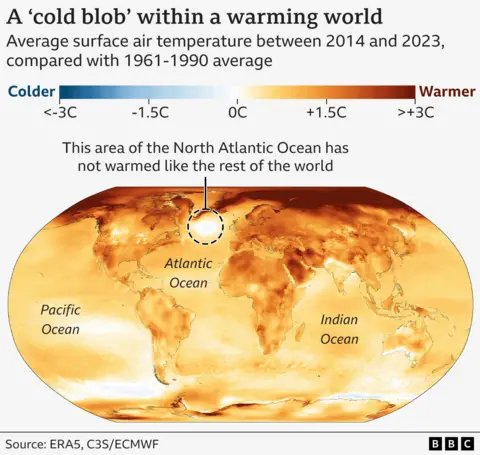
Global warming raises Earth’s average temperature, yet the complex climate system can produce regional cooling events such as cold snaps, driven by changes in atmospheric circulation, ocean dynamics, and feedback loops.
Quick Answer
Global warming refers to the long‑term increase in Earth’s average surface temperature caused mainly by greenhouse‑gas emissions. While the global mean rises, the climate system’s interconnected components can shift wind patterns, jet streams, and ocean currents, sometimes delivering colder air to mid‑latitude regions. Scientists therefore conclude that warming does not guarantee uniformly hotter weather; instead, it increases the likelihood of both extreme heat and unexpected cold events, with uncertainty mainly in the exact timing and location of such cold spells.
Key Takeaways
- Global warming raises the planet’s average temperature, but regional weather can become both hotter and colder.
- Arctic amplification weakens the polar vortex, allowing frigid air to move southward.
- Changes in sea‑surface temperatures and jet‑stream dynamics create “blocking” patterns that can lock in cold or warm conditions.
- Observed cold extremes in North America and Europe are consistent with climate‑model projections of increased variability.
- Adaptation strategies must address a broader range of extreme‑weather risks, not just heat.
What Is Does Global Warming Mean Hotter Everywhere—or Can It Also Mean Colder?
The phrase asks whether the overall rise in Earth’s mean temperature inevitably translates to warmer conditions everywhere, or if some places can experience cooling. Global warming is defined by the Intergovernmental Panel on Climate Change (IPCC) as the long‑term increase in average surface temperature driven primarily by anthropogenic greenhouse gases. The question highlights the distinction between climate (long‑term statistical patterns) and weather (short‑term conditions). Because climate is a product of many interacting subsystems—atmosphere, oceans, cryosphere, and land surface—its response to warming can manifest as both temperature rises and altered circulation that brings colder air to certain regions.
How Does It Work?
1. Arctic Amplification and the Polar Vortex
The Arctic is warming 2–3 times faster than the global average, a phenomenon called Arctic amplification. Reduced sea‑ice cover lowers the surface albedo, causing more solar energy to be absorbed by the ocean. This extra heat weakens the temperature gradient between the Arctic and mid‑latitudes, which in turn destabilizes the polar vortex—a fast‑moving westerly wind stream that normally confines cold air to the poles. When the vortex weakens or splits, lobes of Arctic air can plunge southward, producing sudden cold snaps in regions such as the United States, Europe, and East Asia.
2. Jet‑Stream Meandering and Blocking
The jet stream is a narrow band of strong winds near the tropopause that guides weather systems. Warming of the troposphere reduces the temperature contrast that sustains a straight, fast jet stream, causing it to become wavier. Large‑scale “blocking” highs can become stationary, trapping cold air masses on one side and warm air on the other for days to weeks. This mechanism explains prolonged cold spells that appear contradictory to a warming climate.
3. Ocean‑Surface Temperature Shifts
Warmer oceans store and redistribute heat through currents such as the Gulf Stream and the Kuroshio. Changes in these currents can alter the location of storm tracks and the timing of cold‑air outbreaks. For example, a slowdown of the Atlantic Meridional Overturning Circulation (AMOC) could lead to cooler sea‑surface temperatures in the North Atlantic, reinforcing cold conditions over adjacent land areas.
4. Feedback Loops and Extreme‑Weather “Weirding”
Multiple feedbacks—such as increased water‑vapour greenhouse forcing, altered cloud patterns, and permafrost melt—can amplify variability. The IPCC describes this as “global weirding,” where the statistical spread of temperature and precipitation extremes widens, making both heatwaves and cold snaps more likely.
What Does the Evidence Show?
Long‑term instrumental records compiled by the World Meteorological Organization show a global mean surface temperature rise of about 1.1 °C since the pre‑industrial era (1850‑1900). Simultaneously, the frequency of extreme cold events in the northern mid‑latitudes has not declined; in some regions it has increased, as documented in a 2021 systematic review of North‑American winter extremes (NOAA). Climate‑model ensembles from the Coupled Model Intercomparison Project Phase 6 (CMIP6) consistently reproduce a weakening of the polar vortex under high‑emission scenarios, matching observed cold‑air outbreaks in the 2010s. Satellite observations of sea‑ice extent confirm rapid Arctic loss, a key driver of the circulation changes described above.
Main Causes or Drivers
Anthropogenic Greenhouse‑Gas Emissions
Burning of fossil fuels, cement production, and deforestation raise atmospheric concentrations of carbon dioxide, methane, and nitrous oxide, trapping infrared radiation and warming the planet.
Arctic Sea‑Ice Decline
Reduced ice cover diminishes the Earth’s albedo, leading to more solar absorption and further warming—a positive feedback that accelerates Arctic amplification.
Altered Atmospheric Circulation
The weakened temperature gradient between equator and pole changes the dynamics of the jet stream and polar vortex, enabling more frequent meridional (north‑south) flow.
Ocean‑Current Variability
Changes in major currents, especially a potential slowdown of the AMOC, can modulate regional sea‑surface temperatures and thus influence nearby land climates.
Environmental and Human Impacts
Environmental Impacts
- Cold snaps can increase frost damage to crops, affecting agricultural yields in temperate zones.
- Altered precipitation patterns may intensify snowfall in some regions while reducing rain elsewhere.
- Shifts in ocean temperature affect marine ecosystems, influencing species distribution and fisheries.
Human Health and Social Impacts
- Sudden cold spells raise the risk of hypothermia, cardiovascular events, and respiratory illnesses, especially among vulnerable populations.
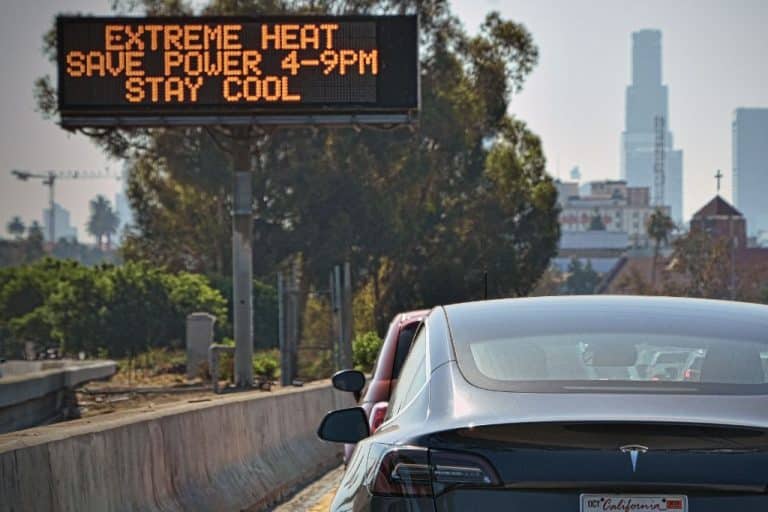
- Energy demand for heating spikes during unexpected freezes, stressing electricity grids already coping with heat‑wave loads.
- Disruption of transportation and supply chains can occur when snow and ice accumulate rapidly after a warm period.
Economic and Infrastructure Impacts
- Increased insurance claims for winter damage offset gains from reduced heat‑related losses.
- Infrastructure designed for a narrower temperature range may experience accelerated wear, raising maintenance costs.
Regional Differences
In the Arctic and sub‑Arctic, warming is most pronounced, leading to permafrost thaw and ecosystem shifts. Mid‑latitude regions such as the United States, Canada, and Europe experience the greatest variability in winter temperatures because they sit at the edge of the polar vortex’s influence. Meanwhile, parts of the Southern Hemisphere, especially southern South America and New Zealand, have reported occasional cold anomalies linked to Southern Ocean circulation changes, though the evidence is less robust than in the north.
What Scientists Know With High Confidence
- The global mean surface temperature has risen by about 1.1 °C since the late 19th century (IPCC, 2021).
- Arctic sea‑ice extent is declining at a rate of roughly 13 % per decade (NSIDC, 2020).
- Warming reduces the equator‑to‑pole temperature gradient, which can weaken the polar vortex (IPCC, 2021).
- Both heatwaves and cold‑air outbreaks are becoming more frequent and intense in many mid‑latitude regions (NOAA, 2021).
What Remains Uncertain
Key uncertainties revolve around the magnitude and timing of jet‑stream waviness, the future strength of the AMOC, and how regional land‑use changes may interact with atmospheric circulation. Model spread for cold‑air outbreak frequency under high‑emission scenarios remains wide, reflecting limited observational records and the challenge of simulating small‑scale dynamics. Improved satellite monitoring and longer climate‑model ensembles are needed to narrow these gaps.
Common Misconceptions
Misconception: A cold day disproves global warming.
Reality: Weather is short‑term variability; climate is the statistical average over decades. A single cold event does not negate the long‑term warming trend, and in fact, increased variability can make such events more likely.
Misconception: Global warming only causes heatwaves.
Reality: The same greenhouse‑gas forcing that raises average temperatures also alters atmospheric circulation, leading to both extreme heat and extreme cold in different places.
Misconception: Only the Arctic is affected by warming.
Reality: While Arctic amplification is a major driver, its ripple effects influence weather patterns worldwide, affecting regions far from the poles.
Solutions and Limitations
Mitigation—rapidly cutting greenhouse‑gas emissions—addresses the root cause of warming and therefore reduces the likelihood of extreme circulation changes. Adaptation measures include strengthening building codes for both heat and cold resilience, expanding early‑warning systems for winter storms, and diversifying energy sources to handle fluctuating demand. Nature‑based solutions such as restoring wetlands can buffer temperature extremes, but they do not replace the need for emission reductions. Each strategy carries trade‑offs: for example, large‑scale geoengineering proposals may affect precipitation patterns, and rapid deployment of renewable energy requires substantial upfront investment and grid upgrades.
What Individuals, Communities, and Governments Can Do
What Individuals Can Do
- Improve home insulation to reduce heating needs during unexpected cold spells.
- Support policies that accelerate renewable‑energy deployment and carbon pricing.
- Stay informed about local extreme‑weather forecasts and maintain emergency kits.
What Communities and Organizations Can Do
- Develop climate‑resilient infrastructure that can withstand both heat and cold stresses.
- Implement community‑wide early‑warning and shelter programs for winter emergencies.
- Promote green spaces that moderate temperature extremes.
What Governments Can Do
- Set ambitious nationally determined contributions (NDCs) to cut emissions in line with the Paris Agreement.
- Fund research on jet‑stream dynamics and improve observational networks in the Arctic.
- Incorporate climate‑extreme scenarios into urban planning, building codes, and energy‑grid design.
Synthesis
Global warming raises Earth’s average temperature, yet the climate system’s complexity means that some regions can experience colder weather, especially when Arctic amplification weakens the polar vortex or when jet‑stream patterns become more meridional. High‑confidence evidence confirms the warming trend, Arctic sea‑ice loss, and increased frequency of temperature extremes. Uncertainties remain in the precise regional timing of cold outbreaks and the future behavior of ocean currents. Effective responses combine rapid emissions cuts with adaptation measures that prepare societies for a broader spectrum of extreme weather, ensuring resilience against both heat and unexpected cold.
Frequently Asked Questions
Does global warming cause colder winters?
Global warming does not directly cause colder winters, but it can increase the likelihood of cold snaps by weakening the polar vortex and altering jet‑stream patterns, which can bring Arctic air southward.
What is Arctic amplification?
Arctic amplification is the faster warming of the Arctic compared to the global average, driven by sea‑ice loss and reduced albedo, which intensifies heat absorption and impacts atmospheric circulation.
How does a weakened polar vortex affect mid‑latitude weather?
When the polar vortex weakens, it can split or wobble, allowing frigid polar air to spill into mid‑latitude regions, leading to sudden cold spells and snow events that seem at odds with overall warming.
Are cold‑air outbreaks expected to become more common?
Scientific assessments indicate that as the climate warms, the variability of temperature extremes grows, making both heatwaves and cold‑air outbreaks more frequent in many mid‑latitude areas.
What actions can reduce the risk of unexpected cold events?
Reducing greenhouse‑gas emissions limits the underlying warming, while adaptation measures—such as better building insulation, robust early‑warning systems, and resilient infrastructure—help societies cope with sudden cold periods.






Leave a Comment