
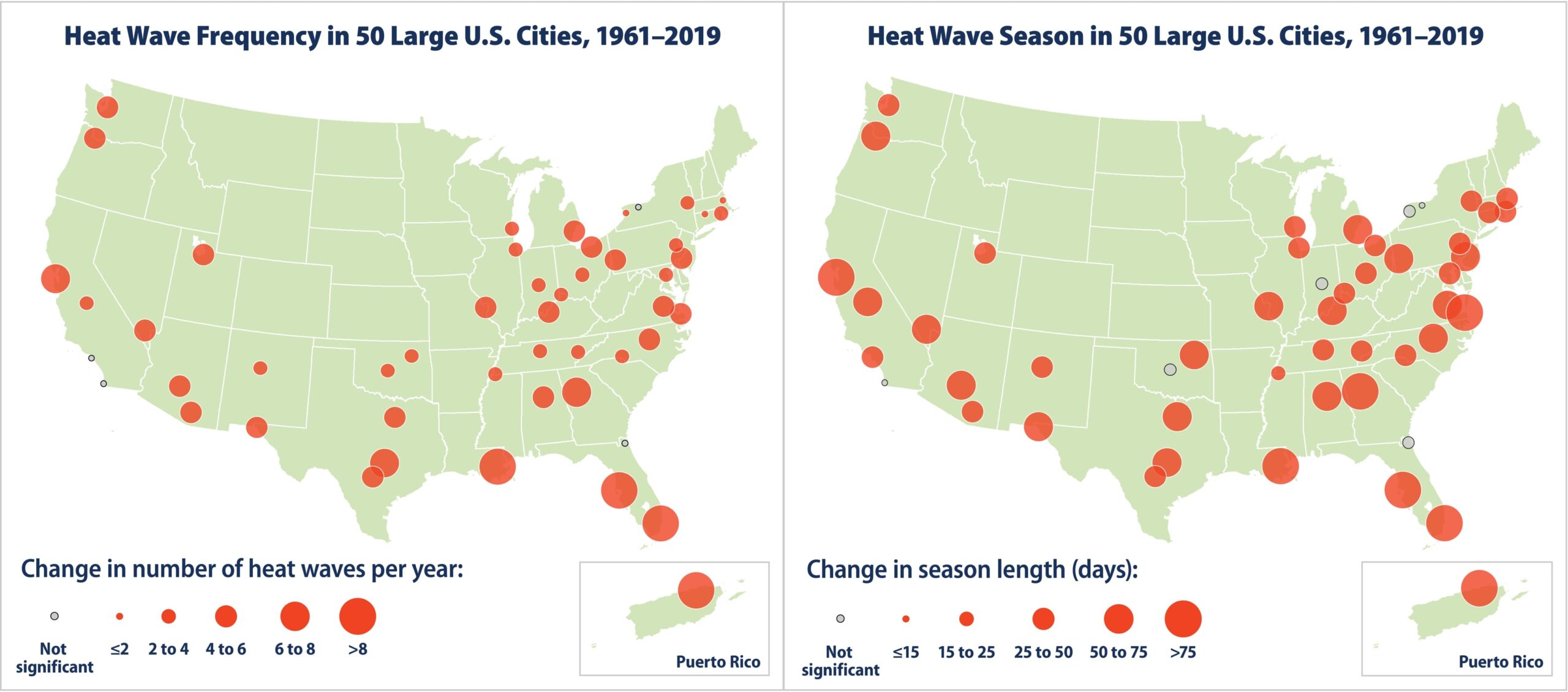
Urban heat islands (UHIs) are localized temperature increases in cities caused by built‑up surfaces and human activities, amplifying climate‑change impacts on health, energy demand, and ecosystems.
Quick Answer
A urban heat island is a metropolitan area that records higher temperatures than its surrounding rural landscape because concrete, asphalt, and other heat‑absorbing materials store solar energy and release it slowly, especially at night. The main mechanism involves reduced evapotranspiration, altered surface albedo, and waste‑heat from buildings and transportation. Scientific assessments, such as the Intergovernmental Panel on Climate Change (IPCC) reports, consistently find that UHIs exacerbate heat‑wave intensity, increase electricity consumption for cooling, and raise health risks. While the magnitude varies by city size, climate zone, and mitigation actions, the overall consensus is that UHIs constitute a significant feedback that intensifies local climate change, though precise future projections remain uncertain.
Key Takeaways
- UHIs arise from heat‑absorbing surfaces, limited vegetation, and anthropogenic waste heat.
- Observed temperature differences range from 1 °C in temperate suburbs to >5 °C in dense tropical megacities.
- Higher urban temperatures raise heat‑related mortality, strain power grids, and increase greenhouse‑gas emissions.
- Green roofs, reflective materials, and expanded tree canopy can reduce UHI intensity by 0.5–2 °C, but effectiveness depends on scale and maintenance.
- Equitable planning is essential because low‑income neighborhoods often experience the strongest heat exposure.
What Is Urban Heat Islands Explained: How Cities Intensify Climate Change?
The term “urban heat island” (UHI) describes the phenomenon where urban areas experience noticeably higher air temperatures than adjacent rural lands. The effect is most pronounced during clear, calm nights when heat stored in buildings and pavement cannot escape. UHIs are not a separate type of climate change; they are a localized amplification of the broader warming trend caused by the same greenhouse gases that drive global temperature rise.
UHIs are measured using a network of weather stations, satellite‑derived land‑surface temperature, or mobile transects. The spatial extent can cover an entire metropolitan basin or be confined to a single neighborhood, depending on land‑use patterns. Sub‑types include daytime (or “surface”) UHIs, driven mainly by solar absorption, and nighttime (or “atmospheric”) UHIs, driven by reduced cooling.
Understanding UHIs matters because they intersect with public‑health outcomes, energy systems, and climate‑mitigation goals. By intensifying local temperatures, UHIs can turn a moderate heat wave into a deadly event, especially in cities with limited cooling infrastructure.
How Does It Work?
1. Solar Radiation Absorption
Materials such as concrete, asphalt, and metal have low albedo, meaning they absorb a large fraction of incoming solar radiation. According to a review by the U.S. Environmental Protection Agency (EPA, 2022), typical urban surfaces can retain 30–70 % more heat than vegetated surfaces.
2. Reduced Evapotranspiration
Vegetation cools air through evapotranspiration – the combined process of water evaporation and plant transpiration. Urban areas often replace trees and grass with impermeable surfaces, cutting this natural cooling pathway. Studies from the World Meteorological Organization (WMO, 2021) show that each 10 % increase in tree cover can lower daytime temperatures by up to 0.3 °C.
3. Waste‑Heat Emissions
Vehicles, air‑conditioning units, industrial processes, and other energy‑using activities release waste heat directly into the atmosphere. The International Energy Agency (IEA, 2023) estimates that waste‑heat from buildings alone contributes roughly 5 % of total urban heat flux in major cities.
4. Nighttime Heat Release
Urban materials have high heat capacity and low thermal emissivity, causing them to release stored heat slowly after sunset. This creates a nocturnal temperature lag that can keep city nights several degrees warmer than surrounding countryside.
5. Feedback Loops
Higher temperatures increase demand for air‑conditioning, which in turn raises electricity generation and waste‑heat output – a reinforcing loop that can amplify the original UHI effect.
What Does the Evidence Show?
Long‑term monitoring by national meteorological agencies in the United States, Europe, and Asia consistently records urban–rural temperature differentials of 1–3 °C on average (NOAA, 2020). Satellite analyses over the past three decades reveal that UHI intensity has grown in tandem with urban expansion (NASA, 2022). A systematic review of 45 peer‑reviewed field studies (Journal of Applied Meteorology, 2021) concludes that the evidence for UHI‑driven increases in heat‑wave mortality is strong, particularly for vulnerable populations.
Model simulations using the Weather Research and Forecasting (WRF) model show that incorporating realistic urban canopy parameters can improve heat‑wave forecasts by up to 15 % (University of California, Berkeley, 2020). However, uncertainties remain regarding how future changes in building materials and energy efficiency will modify UHI intensity under different climate scenarios.
Main Causes or Drivers
Direct Physical Causes
- High‑albedo surfaces (concrete, asphalt).
- Limited green space and water bodies.
- Anthropogenic waste heat from transportation and buildings.
Underlying Drivers
- Rapid urban population growth and land‑use change.
- Economic incentives that prioritize dense, low‑cost construction over green infrastructure.
- Regulatory gaps in building codes regarding heat‑reflective materials.
Amplifying Factors
- Climatic context – hot, arid, or tropical cities experience stronger UHIs.
- Topography – valleys can trap heat, intensifying nighttime temperatures.
- Socio‑economic inequality – low‑income districts often lack tree canopy and cooling access.
Environmental and Human Impacts
Environmental Impacts
Elevated urban temperatures accelerate ozone formation, worsen air‑quality episodes, and increase water demand for irrigation. Higher heat also shortens the lifespan of pavement, leading to higher maintenance emissions.
Human Health and Social Impacts
Heat‑related mortality rises by an estimated 2–5 % for each additional degree Celsius of nighttime temperature (WHO, 2021). Elderly residents, children, and outdoor workers are disproportionately affected. Heat stress also reduces labor productivity, with the International Labour Organization estimating a potential loss of 2 % of global GDP by 2030 if UHIs are not mitigated.
Economic and Infrastructure Impacts
Peak electricity demand for cooling can increase by 10–30 % in cities with strong UHIs, stressing grid reliability. In 2020, the California Independent System Operator reported that heat‑related demand contributed to three rolling blackouts during a record heat wave.
Regional Differences
UHI intensity varies with climate zone and urban form. In temperate Europe, typical night‑time differences are 1–2 °C, while in tropical megacities such as Delhi or Lagos, differences can exceed 5 °C (UN‑Habitat, 2022). Coastal cities may experience moderated UHIs due to sea breezes, whereas inland cities lack this cooling influence. High‑income regions often have more resources for mitigation (e.g., green roofs in Vancouver), whereas rapidly urbanizing low‑income regions may see faster UHI growth because of informal settlements with minimal vegetation.
What Scientists Know With High Confidence
- Urban surfaces absorb and re‑emit solar energy, leading to higher local air temperatures.
- Reduced vegetation and water bodies diminish natural cooling via evapotranspiration.
- UHIs increase heat‑related morbidity and mortality, especially among vulnerable groups.
- Mitigation measures such as increased tree canopy, reflective roofing, and cool pavements can lower urban temperatures by measurable amounts.
What Remains Uncertain
Key uncertainties include the magnitude of future UHI growth under varying building‑material innovations, the interaction between UHIs and extreme‑weather events in different climate zones, and the long‑term effectiveness of large‑scale nature‑based solutions under water‑stress conditions. Improved high‑resolution monitoring networks and integrated climate‑urban models are needed to narrow these gaps.
Common Misconceptions
Misconception: UHIs are the same as global warming.
Reality: UHIs are a local amplification of temperature caused by urban design; they add to, but do not replace, the global warming trend driven by greenhouse gases.
Misconception: Planting a few trees will eliminate the UHI.
Reality: Tree planting helps, but effectiveness depends on scale, species selection, and maintenance; comprehensive strategies are required for substantial cooling.
Misconception: Only hot climates suffer from UHIs.
Reality: Even temperate cities experience measurable night‑time heat islands, which can still affect health and energy use.
Misconception: Cool roofs are a silver‑bullet solution.
Reality: Reflective materials reduce surface temperatures, but their impact on ambient air temperature is modest unless combined with other measures.
Solutions and Limitations
Effective UHI mitigation blends nature‑based and engineered approaches.
- Green roofs and walls: Provide insulation and evaporative cooling; limited by structural load capacity and maintenance costs.
- Urban tree canopy expansion: Lowers surface temperature and improves air quality; requires water, space, and long‑term care, especially in drought‑prone regions.
- Cool or reflective pavements: Increase surface albedo; may increase glare and can be more expensive to install.
- District cooling and efficient HVAC: Reduces waste‑heat emissions; high capital investment and requires supportive policy frameworks.
- Zoning and building code reforms: Mandate green space ratios and reflective material use; effectiveness depends on enforcement and political will.
Each strategy carries trade‑offs. For example, large‑scale tree planting may compete with urban water supply, and reflective surfaces can affect local microclimates by altering wind patterns. A mixed‑method portfolio, adapted to local conditions, offers the most resilient pathway.
What Individuals, Communities, and Governments Can Do
What Individuals Can Do
- Install shading devices (e.g., awnings, pergolas) to reduce solar gain on homes.
- Choose cool‑roof paints or reflective exterior finishes where possible.
- Participate in neighborhood tree‑planting events and maintain existing vegetation.
- Reduce reliance on personal air‑conditioning by using fans, natural ventilation, and energy‑efficient appliances.
What Communities and Organizations Can Do
- Develop community gardens and pocket parks that increase local evapotranspiration.
- Advocate for municipal green‑infrastructure budgets and equitable tree‑planting programs.
- Conduct local heat‑vulnerability mapping to prioritize interventions in high‑risk neighborhoods.
- Partner with schools and NGOs to educate residents about heat‑risk mitigation.
What Governments Can Do
- Incorporate UHI metrics into urban planning codes and require minimum tree‑canopy percentages.
- Provide incentives (tax credits, grants) for cool‑roof installations and green‑roof retrofits.
- Invest in high‑resolution temperature monitoring networks to guide adaptive actions.
- Integrate UHI mitigation into climate‑action plans, ensuring equity considerations for low‑income districts.
- Regulate waste‑heat emissions from large commercial and industrial facilities.
Closing Synthesis
Urban heat islands arise from the physical properties of built environments and the waste heat generated by human activity, creating a feedback that intensifies local climate change impacts. Robust evidence confirms that UHIs raise health risks, increase energy demand, and strain infrastructure, especially in vulnerable neighborhoods. While uncertainties remain about future trajectories under novel building technologies, the scientific community agrees on the effectiveness of combined nature‑based and engineered solutions, albeit with context‑specific trade‑offs. By aligning individual actions, community initiatives, and policy frameworks, cities can reduce UHI intensity, improve resilience, and contribute to broader climate‑change mitigation goals.
Frequently Asked Questions
What exactly is an urban heat island?
An urban heat island (UHI) is a localized area within a city where air temperatures are consistently higher than those of surrounding rural regions, primarily due to heat‑absorbing surfaces, reduced vegetation, and waste‑heat from human activities.
How do UHIs affect public health?
UHIs raise nighttime temperatures, which can increase heat‑related illnesses and mortality, especially among the elderly, children, and outdoor workers; the World Health Organization notes a 2–5 % rise in heat‑related deaths for each additional degree Celsius of nighttime heat.
Can planting trees eliminate the heat‑island effect?
Tree planting helps cool cities through evapotranspiration, but its impact depends on scale, species, and maintenance; alone it cannot fully eliminate UHIs, but combined with other measures it can lower temperatures by up to 0.3 °C per 10 % increase in canopy cover.
What are the most effective mitigation strategies for UHIs?
Evidence‑based strategies include expanding urban tree canopy, installing green roofs and walls, using cool or reflective paving materials, improving building energy efficiency, and revising zoning codes to require green infrastructure; each works best when applied together.
Why do low‑income neighborhoods often experience stronger heat islands?
Low‑income areas typically have less tree cover, higher density of heat‑absorbing surfaces, and limited access to air‑conditioning, making them more vulnerable to elevated temperatures and associated health risks.










Leave a Comment