
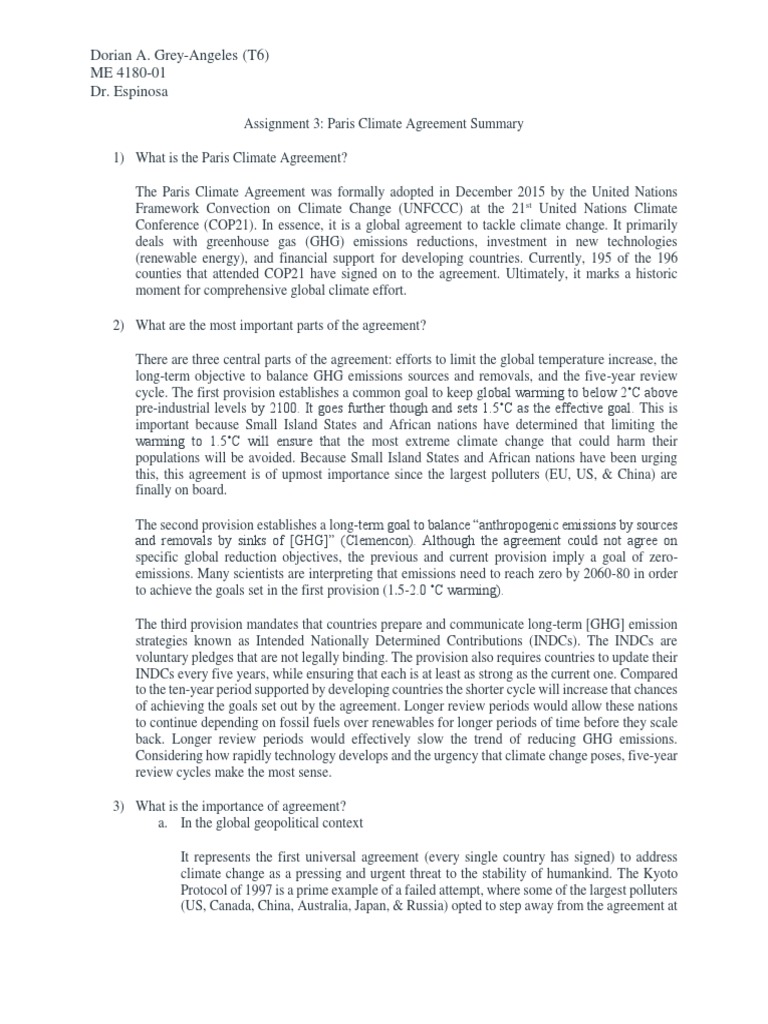
The Paris Climate Agreement’s three core goals—temperature limitation, nationally determined contributions, and climate finance—provide a global framework for limiting warming, guiding emissions cuts, and supporting vulnerable nations.
Quick Answer
The Paris Agreement, adopted in 2015, sets three interlinked goals: (1) keep global temperature rise well below 2 °C above pre‑industrial levels and pursue efforts to limit it to 1.5 °C; (2) require each country to submit and regularly upgrade Nationally Determined Contributions (NDCs) that outline how they will reduce greenhouse‑gas emissions; and (3) mobilise climate finance, technology transfer, and capacity‑building to help developing nations meet their mitigation and adaptation needs. Strong scientific consensus supports the temperature targets, while the NDC and finance mechanisms create a dynamic, cooperative system, though uncertainties remain around future ambition levels and funding adequacy.
Key Takeaways
- Limiting warming to 1.5 °C–2 °C is essential to avoid the most severe climate impacts.
- NDCs are nationally crafted, regularly reviewed, and must become progressively more ambitious.
- Climate finance aims to channel at least US$100 billion annually to developing countries, supporting green transitions and resilience.
- High‑confidence evidence links the Agreement’s goals to measurable emission reductions and reduced risk for vulnerable populations.
- Uncertainties involve future political will, technology deployment rates, and the adequacy of finance.
What Is The Core Goals of the Paris Climate Agreement Explained Clearly?
The Paris Agreement is an international treaty under the United Nations Framework Convention on Climate Change (UNFCCC). Its core goals are three‑fold: a temperature‑stability target, a system of nationally determined contributions, and a global finance framework. Together they form a roadmap for limiting anthropogenic warming, guiding emissions reductions, and ensuring that all nations—especially those most vulnerable—receive support to adapt and transition to low‑carbon economies.
How Does It Work?
1. Temperature Limitation Target
All Parties agree to keep the rise in global average temperature to well below 2 °C above pre‑industrial levels, while pursuing efforts to limit the increase to 1.5 °C. This target is based on extensive assessments by the Intergovernmental Panel on Climate Change (IPCC) that show a 1.5 °C limit dramatically reduces the likelihood of extreme heat, sea‑level rise, and ecosystem collapse.
2. Nationally Determined Contributions (NDCs)
Each country submits an NDC outlining its planned emissions‑reduction actions, adaptation measures, and any support it will provide or receive. NDCs are not static; the Agreement mandates a “global stocktake” every five years, after which Parties are expected to submit more ambitious NDCs. This iterative process creates a feedback loop that aligns national policies with the collective temperature goal.
3. Climate Finance and Technology Transfer
Developed nations pledged to mobilise at least US$100 billion per year by 2020 to assist developing countries. The finance is earmarked for renewable‑energy projects, resilient infrastructure, and capacity‑building. A complementary technology‑transfer mechanism facilitates the sharing of low‑carbon technologies, helping less‑resourced nations implement their NDCs.
What Does the Evidence Show?
Multiple lines of evidence confirm that the temperature target is scientifically grounded. Long‑term temperature records, satellite observations, and climate‑model ensembles consistently indicate that limiting warming to 1.5 °C would avoid crossing several critical thresholds identified in IPCC assessment reports (AR6, 2021). Monitoring of NDC implementation shows that, as of 2023, pledged actions would achieve roughly 12 % of the emissions reductions needed for the 2 °C pathway, highlighting a gap that must be closed through stronger future NDCs. Financial flows tracked by the UNFCCC reveal that annual climate‑finance commitments have risen, yet a shortfall remains relative to the US$100 billion goal, particularly for adaptation funding.
Main Causes or Drivers
The Agreement’s goals respond to three primary drivers of climate change:
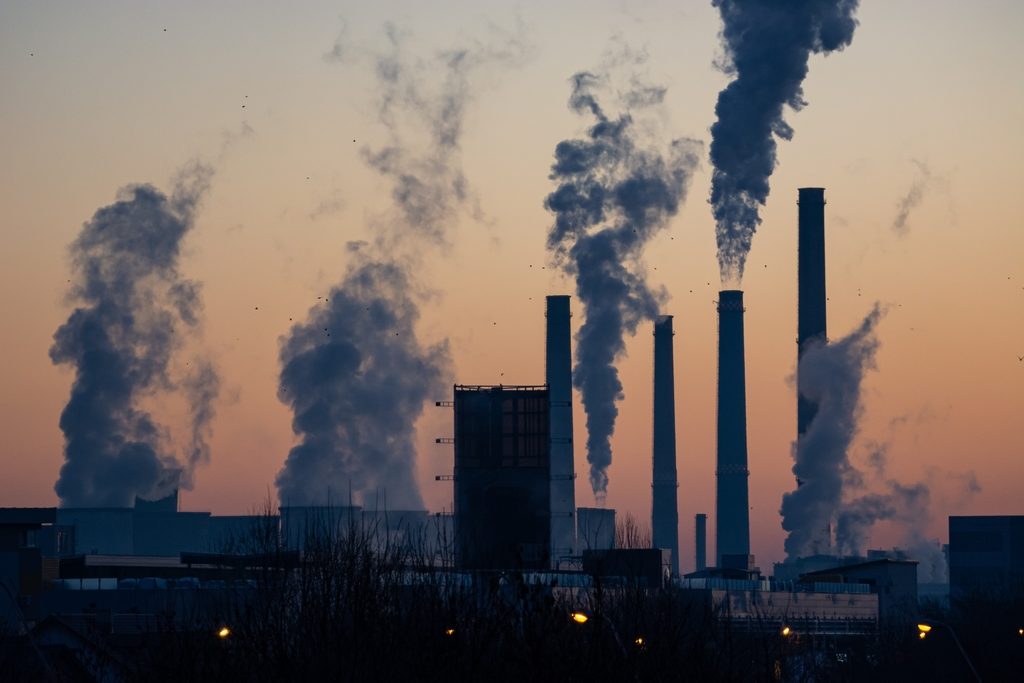
- Anthropogenic greenhouse‑gas emissions from fossil‑fuel combustion, industrial processes, and land‑use change, which increase atmospheric concentrations of CO₂, CH₄, and N₂O.
- Historical responsibility where developed nations have contributed the majority of cumulative emissions, creating a moral and practical basis for differentiated obligations.
- Vulnerability of low‑income and coastal regions to sea‑level rise, extreme weather, and food‑security shocks, which drives the finance and adaptation components of the Agreement.
Environmental and Human Impacts
Environmental Impacts
Keeping warming below 2 °C reduces the projected rise in global mean sea level to about 0.6 m by 2100 (IPCC, 2021), limiting coastal erosion and habitat loss. It also curtails the frequency of extreme heatwaves, protecting biodiversity hotspots and reducing the risk of coral‑reef bleaching.
Human Health and Social Impacts
Lower temperature trajectories are linked to fewer heat‑related deaths, reduced incidence of vector‑borne diseases, and lower air‑pollution exposure. Vulnerable populations—children, the elderly, and low‑income communities—benefit most from reduced climate‑related stressors.
Economic and Infrastructure Impacts
Limiting warming helps avoid costly damages to infrastructure, agriculture, and water systems. The World Bank estimates that a 2 °C‑compatible pathway could reduce global climate‑related economic losses by up to 30 % compared with a 3 °C scenario.
Regional Differences
Impact severity varies by region. Small Island Developing States face existential threats from sea‑level rise, while Sub‑Saharan Africa confronts heightened drought risk affecting agriculture. Conversely, high‑latitude regions may experience some short‑term gains in growing seasons, but still face ecosystem disruptions. NDC ambition levels also differ: the European Union has pledged a 55 % emissions reduction by 2030 (relative to 1990), whereas many low‑income countries have set modest mitigation targets due to development constraints.
What Scientists Know With High Confidence
- Human activities are the dominant cause of observed warming since the mid‑20th century (IPCC AR6, 2021).
- Limiting warming to 1.5 °C versus 2 °C substantially reduces risks to ecosystems, health, and economies.
- Renewable‑energy deployment and energy‑efficiency improvements are proven pathways to achieve deep emissions cuts.
- Climate finance is essential for enabling mitigation and adaptation in developing nations.
What Remains Uncertain
Key uncertainties include the exact trajectory of future emissions under varying policy scenarios, the speed and scale of technology diffusion (e.g., carbon capture, advanced storage), and the adequacy of adaptation finance to meet the needs of the most vulnerable regions. These gaps do not undermine the overall temperature goal but affect the timeline and effort required to achieve it.
Common Misconceptions
Misconception: The Paris Agreement sets legally binding emission caps for every country.
Reality: The Agreement requires countries to submit NDCs and to report progress, but the specific emission levels are self‑determined and not enforceable by penalties.
Misconception: Climate finance is only about mitigation.
Reality: The finance framework supports both mitigation (e.g., renewable‑energy projects) and adaptation (e.g., flood‑defense infrastructure), with a growing emphasis on the latter.
Misconception: Achieving the 1.5 °C target is impossible.
Reality: While challenging, integrated pathways that combine rapid decarbonisation, negative‑emission technologies, and robust finance show that the target remains technically feasible, according to IPCC scenario analyses.
Solutions and Limitations
Effective responses fall into mitigation, adaptation, and support categories:
- Mitigation: Accelerating renewable‑energy capacity, improving energy efficiency, and phasing out coal. Limitations include intermittency of some renewables, upfront capital costs, and the need for grid upgrades.
- Adaptation: Building resilient infrastructure, restoring mangroves, and developing drought‑tolerant crops. Trade‑offs involve land‑use conflicts and the potential for maladaptation if measures are poorly designed.
- Support mechanisms: Climate finance, technology transfer, and capacity‑building programmes. Effectiveness depends on transparent governance, adequate monitoring, and alignment with local priorities.
What Individuals, Communities, and Governments Can Do
What Individuals Can Do
Choose low‑carbon transportation (public transit, cycling), reduce household energy consumption, support policies that expand renewable energy, and engage in local climate‑action groups. While personal actions alone cannot achieve the Agreement’s goals, they build demand for systemic change.
What Communities and Organizations Can Do
Implement community energy projects, develop local climate‑resilience plans, and partner with NGOs to access climate‑finance mechanisms. Collective actions amplify impact and can attract larger funding streams.
What Governments Can Do
Set ambitious, transparent NDCs, create carbon‑pricing mechanisms, invest in public‑sector renewable infrastructure, and ensure that climate finance commitments are met and tracked. Strong governance and inclusive planning are essential for equitable outcomes.
Closing Synthesis
The Paris Agreement’s three core goals—temperature limitation, nationally determined contributions, and climate finance—form a coherent, evidence‑based framework for confronting climate change. Scientific consensus affirms that staying below 1.5 °C to 2 °C markedly reduces environmental and human risks. While uncertainties persist around future ambition levels and financing adequacy, the Agreement provides a dynamic, collaborative pathway. Realising its vision requires coordinated mitigation, adaptation, and support actions across all scales of society, guided by robust science and equitable policy.
Frequently Asked Questions
What temperature targets does the Paris Agreement set?
The Paris Agreement aims to keep global temperature rise well below 2 °C above pre‑industrial levels and to pursue efforts to limit the increase to 1.5 °C, a target supported by IPCC assessments.
What are Nationally Determined Contributions (NDCs)?
NDCs are country‑specific plans submitted under the Paris Agreement that outline how each nation will reduce emissions, adapt to climate impacts, and, if applicable, provide support to others.
How does climate finance support developing countries under the Paris Agreement?
Developed nations pledged to mobilise at least US$100 billion annually to help developing countries fund renewable‑energy projects, resilient infrastructure, and capacity‑building for mitigation and adaptation.
Why is limiting warming to 1.5 °C considered important?
Limiting warming to 1.5 °C reduces the risk of extreme heat, sea‑level rise, and biodiversity loss compared with a 2 °C pathway, offering substantial health, economic, and ecological benefits.
What can individuals do to support the Paris Agreement goals?
Individuals can lower personal carbon footprints by using public transport, improving home energy efficiency, supporting clean‑energy policies, and joining local climate‑action initiatives.







Leave a Comment