
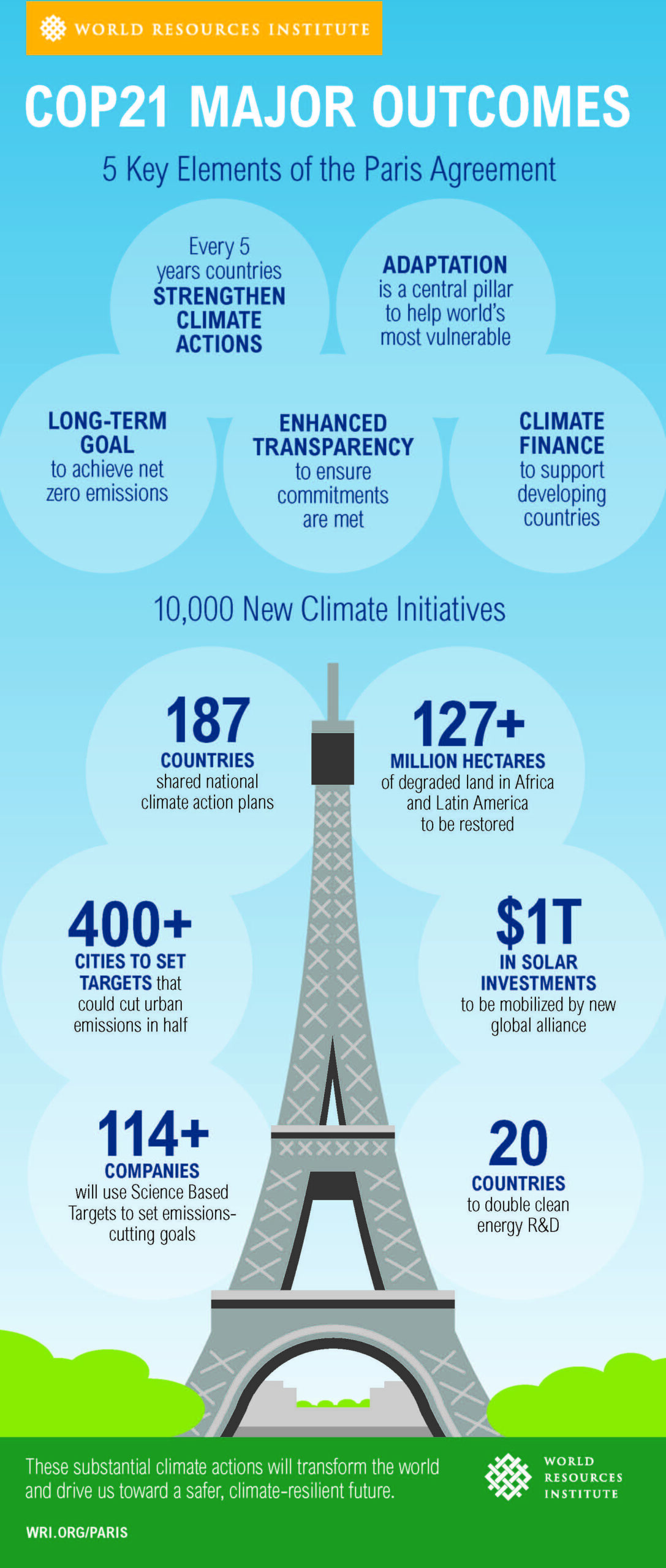
The Paris Climate Agreement is a global pact adopted in 2015 that sets a framework for countries to limit warming to well below 2 °C, using nationally determined contributions, climate finance, and transparent reporting to drive mitigation and adaptation.
Quick Answer
The Paris Climate Agreement, adopted by 196 parties in 2015 and entered into force in 2016, is an international treaty that asks each nation to outline its own emissions‑reduction plan (a Nationally Determined Contribution, or NDC) and to revisit those plans every five years. Its central scientific goal is to keep global temperature rise to well below 2 °C above pre‑industrial levels, aiming for 1.5 °C. The agreement also creates a system for climate finance, transparency, and a global stock‑take to raise ambition over time. While the framework is robust, actual emissions outcomes depend on how fully countries implement and strengthen their NDCs, an area of ongoing uncertainty.
Key Takeaways
- The Paris Agreement sets a long‑term temperature goal of well below 2 °C, with a 1.5 °C aspirational target.
- Countries submit Nationally Determined Contributions (NDCs) that outline national mitigation and adaptation actions.
- A transparent five‑year review cycle and a global stock‑take aim to raise ambition over time.
- Wealthier nations pledged $100 billion per year in climate finance for developing countries, starting in 2020.
- Implementation gaps and political realities mean the agreement’s success rests on sustained domestic policies and international cooperation.
What Is The Paris Climate Agreement for Dummies: A Plain‑English Guide?
The Paris Climate Agreement is a legally binding international treaty under the United Nations Framework Convention on Climate Change (UNFCCC). Its purpose is to coordinate global action on climate change by limiting the average increase in Earth’s surface temperature. Unlike earlier accords, the Paris deal does not prescribe a single emissions pathway; instead, each nation decides its own contribution—its NDC—based on national circumstances, capabilities, and development goals. The agreement also establishes mechanisms for climate finance, technology transfer, and capacity‑building, recognizing that historic emissions place a larger responsibility on industrialized nations.
How Does It Work?
1. Setting the Global Temperature Goal
Scientific assessments, most notably the Intergovernmental Panel on Climate Change (IPCC) Special Report on Global Warming of 1.5 °C (2021), identified the 2 °C threshold as a critical limit to avoid the most severe climate impacts. The Paris Agreement codifies this limit and adds a more ambitious 1.5 °C target for the highest possible level of ambition.
2. Nationally Determined Contributions (NDCs)
Each party submits an NDC that details:
- Baseline emissions and projected pathways.
- Mitigation measures such as renewable‑energy targets, energy‑efficiency standards, or land‑use changes.
- Adaptation actions to increase resilience to climate impacts.
- Metrics for measuring progress.
The NDCs are self‑determined but must be transparent, measurable, and regularly updated.
3. Five‑Year Cycle and Global Stock‑Take
Every five years, parties submit updated NDCs and a transparent report on implementation. A global stock‑take, conducted in the seventh year of each cycle, evaluates collective progress toward the temperature goal. The outcome is intended to inform and encourage nations to increase ambition in subsequent NDCs.
4. Climate Finance and Support
Recognizing differentiated responsibilities, the agreement asks developed countries to mobilize at least $100 billion per year by 2020 for mitigation and adaptation in developing nations. Finance is delivered through public funds, private‑sector investment, and multilateral mechanisms such as the Green Climate Fund.
5. Transparency and Accountability
Parties must report emissions inventories, NDC implementation, and support provided or received. An expert review panel evaluates these reports, ensuring comparability and credibility across nations.
What Does the Evidence Show?
Multiple lines of evidence confirm that coordinated mitigation can limit warming. Long‑term atmospheric CO₂ observations (NOAA, 2023) show a steady rise of ~50 % since pre‑industrial levels. Climate‑model intercomparisons (CMIP6, 2020) indicate that if all current NDCs are fully implemented, global warming would still exceed 2 °C by 2100, highlighting an ambition gap. However, scenario analyses from the IPCC (2021) demonstrate that aligning NDCs with the 1.5 °C pathway would require rapid decarbonisation of energy, transport, and industry, and substantial reforestation—feasible but demanding.
Main Causes or Drivers
Direct Human Drivers
- Fossil‑fuel combustion for electricity, heat, and transport, accounting for ~73 % of global CO₂ emissions (IEA, 2022).
- Deforestation and land‑use change, responsible for ~11 % of emissions.
Underlying Drivers
- Economic growth models that prioritize short‑term cost over long‑term climate risk.
- Policy environments that lack carbon pricing or enforceable emissions caps.
- Technological lock‑in to high‑carbon infrastructure.
Environmental and Human Impacts
Environmental Impacts
Rising temperatures intensify heatwaves, alter precipitation patterns, and accelerate sea‑level rise. The IPCC (2021) attributes increased frequency of extreme heat events to a >95 % probability of human influence. Ocean acidification, driven by higher CO₂ uptake, threatens coral reefs and marine food webs.
Human Health and Social Impacts
Heat stress raises mortality risk, especially among older adults and outdoor workers. Changes in vector‑borne disease distributions (e.g., malaria) are linked to warming climates. Climate‑related displacement is projected to affect up to 200 million people by 2050 under moderate emission scenarios.
Economic and Infrastructure Impacts
Climate‑related damages to infrastructure (flooding, storms) cost an estimated $2.5 trillion annually worldwide (World Bank, 2022). Agricultural yields in tropical regions are projected to decline by 10–20 % under a 2 °C warming scenario, affecting food security.
Regional Differences
Impact severity varies by geography. Low‑lying island nations face existential sea‑level threats, while high‑latitude regions experience faster warming (Arctic amplification of ~2–3 °C per decade). Developing economies often have lower adaptive capacity, making climate finance a critical equity component.
What Scientists Know With High Confidence
- Human activities, especially fossil‑fuel combustion, are the dominant driver of observed global warming since the mid‑20th century.
- Limiting warming to 1.5 °C requires net‑zero CO₂ emissions around 2050 for most developed economies.
- Transparent, regularly updated NDCs and a global stock‑take improve collective ambition.
What Remains Uncertain
Key uncertainties include the exact pace of technological deployment (e.g., large‑scale carbon capture), the future trajectory of climate finance flows, and how socio‑economic pathways will interact with mitigation efforts. These gaps affect confidence in whether the 1.5 °C goal can be achieved without unforeseen policy shifts.
Common Misconceptions
Misconception: The Paris Agreement sets legally binding emission caps for every country.
Reality: The treaty requires countries to submit NDCs and report progress, but the specific emission levels are self‑determined, not imposed by a central authority.
Misconception: Climate finance is optional for developed nations.
Reality: The $100 billion annual commitment is a legally recognized obligation under the agreement, though the exact delivery mechanisms are still being refined.
Misconception: Individual lifestyle changes alone can meet the Paris targets.
Reality: Personal actions contribute to demand‑side pressure, but systemic policy, infrastructure, and industrial transformation are essential for the scale of emissions reductions required.
Solutions and Limitations
Effective responses combine mitigation, adaptation, and support mechanisms.
- Renewable‑energy transition: Solar and wind technologies have become cost‑competitive, yet grid integration and storage remain challenges in some regions.
- Energy efficiency: Building codes and appliance standards can cut demand, but enforcement varies widely.
- Nature‑based solutions: Reforestation and wetland restoration store carbon and enhance resilience, though land‑competition and permanence concerns limit scale.
- Carbon pricing: Carbon taxes or cap‑and‑trade create market incentives, but political resistance can hinder implementation.
- Adaptation planning: Early‑warning systems and resilient infrastructure reduce exposure, yet financing gaps persist for vulnerable communities.
What Individuals, Communities, and Governments Can Do
What Individuals Can Do
- Reduce personal energy use (e.g., efficient appliances, home insulation).
- Choose low‑carbon transport options (public transit, cycling, electric vehicles where available).
- Support policies and candidates that prioritize climate action.
What Communities and Organizations Can Do
- Develop local climate action plans aligned with national NDCs.
- Invest in community renewable projects and micro‑grids.
- Facilitate climate‑finance access for local NGOs and small businesses.
What Governments Can Do
- Set ambitious, enforceable NDCs and regularly update them with stronger targets.
- Deploy carbon‑pricing mechanisms and phase out fossil‑fuel subsidies.
- Allocate and disburse climate finance transparently, prioritizing adaptation in vulnerable regions.
- Strengthen monitoring, reporting, and verification (MRV) systems to ensure accountability.
Synthesis
The Paris Climate Agreement provides a flexible yet accountable framework for limiting global warming. Strong scientific consensus underpins its temperature goal, while the NDC process allows each country to chart a path suited to its circumstances. Evidence shows that current commitments fall short of the 1.5 °C ambition, but the agreement’s review cycles and finance mechanisms create pathways for increased effort. Uncertainties remain around technology deployment and financing flows, underscoring the need for continual monitoring. By combining systemic policy action with informed individual and community choices, the world can move toward the agreement’s shared vision of a safer climate.
Frequently Asked Questions
What is the main temperature goal of the Paris Climate Agreement?
The agreement aims to keep global warming well below 2 °C above pre‑industrial levels, with an aspirational target of limiting the rise to 1.5 °C.
How do countries demonstrate their climate commitments under the Paris Agreement?
Each nation submits a Nationally Determined Contribution (NDC) outlining its emissions‑reduction and adaptation plans, which are reviewed and updated every five years.
What is the $100 billion climate‑finance pledge about?
Developed countries pledged to mobilize $100 billion per year by 2020 to support mitigation and adaptation projects in developing nations, reflecting differentiated responsibilities.
Why are current NDCs considered insufficient for the 1.5 °C target?
Modelling by the IPCC shows that if all existing NDCs are fully implemented, global temperatures would still exceed 2 °C by 2100, leaving a significant ambition gap for the 1.5 °C pathway.
What actions can individuals take to support the Paris Agreement goals?
Individuals can lower household energy use, choose low‑carbon transport, and advocate for climate‑friendly policies, which together help increase demand for systemic change.








Leave a Comment