What if I told you that the fate of countless species resting precariously on the precipice of extinction largely hinges on an organization founded in the aftermath of World War II? The International Union for Conservation of Nature, or IUCN, stands as a stalwart guardian of biodiversity, tirelessly melding science, policy, and public engagement in its mission to protect nature. But what does this enigmatic entity actually do, and how does it navigate the complex web of global conservation efforts? Let’s embark on a journey to unravel the multifaceted role that the IUCN plays in safeguarding our planet’s irreplaceable resources.
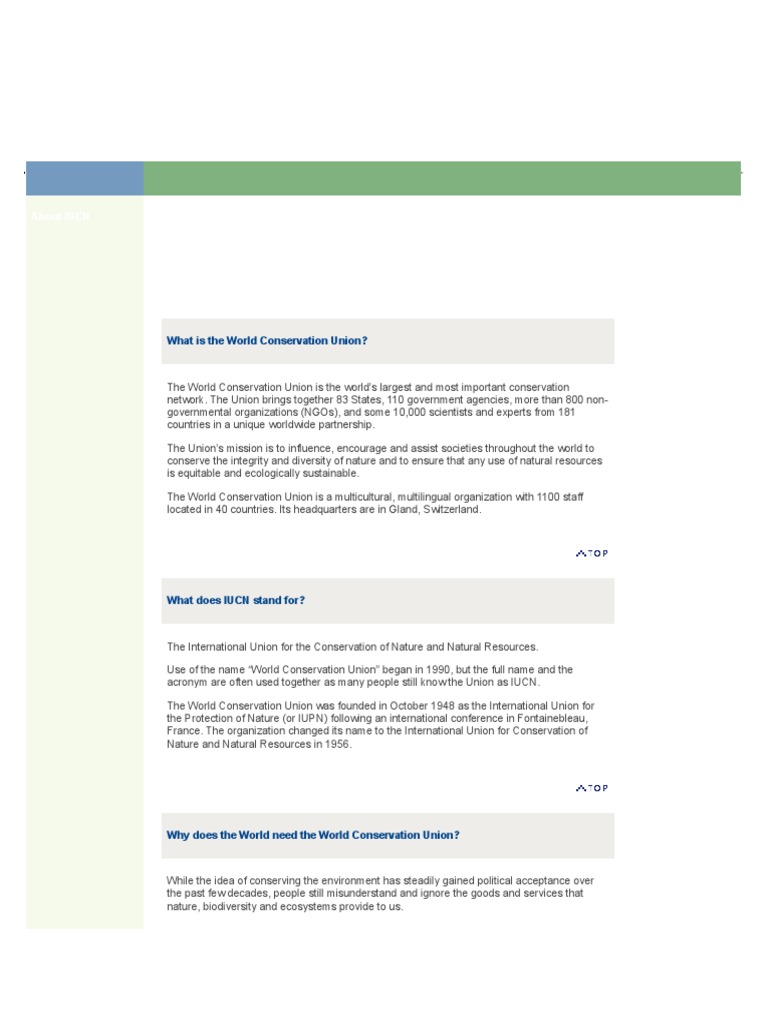
Established in 1948, the IUCN is a global authority on the status of the natural world. It convenes a coalition of government, non-governmental organizations, and experts across diverse fields, fostering a collaborative atmosphere to tackle pressing ecological challenges. With over 1,400 member organizations, the IUCN harnesses the power of collective knowledge and experience. Its headquarters in Gland, Switzerland, provides a beacon of hope and a strategic command center for the plethora of conservation initiatives it undertakes.
At the heart of the IUCN lies its core mission: to influence, encourage, and assist societies to conserve the integrity and diversity of nature, ensuring that any use of natural resources is equitable and ecologically sustainable. This mission encapsulates an ambitious vision—one that intertwines human progress with the preservation of our natural heritage. In an era where the biodiversity crisis looms large, the importance of the IUCN’s work cannot be overstated.
A significant cornerstone of the IUCN’s impact is its Red List of Threatened Species. This extensive inventory evaluates and categorizes species based on their risk of extinction, employing a rigorous set of criteria that ensures precise assessments. The Red List is more than a mere catalog—it acts as a valuable tool for conservationists, policymakers, and researchers, guiding resource allocation and prioritizing efforts towards the most endangered species globally. By shedding light on the plight of vulnerable wildlife, the IUCN galvanizes action, compelling stakeholders to recognize and confront the looming threats these species face.
In addition to its Red List, the IUCN serves as a facilitator for global conservation policies. It plays a pivotal role in the formulation and implementation of international environmental agreements. The organization is instrumental in negotiations surrounding treaties like the Convention on Biological Diversity (CBD) and the Convention on International Trade in Endangered Species of Wild Fauna and Flora (CITES). Herein lies another layer of complexity: how does one balance the diverse interests of economic development with the urgent need for environmental stewardship? This dichotomy poses an ongoing challenge, and the IUCN strives to navigate this terrain by bringing diverse stakeholders to the table.
Further enriching its portfolio, the IUCN promotes the establishment of protected areas, which are vital for conserving biodiversity. The IUCN’s World Commission on Protected Areas (WCPA) works vigorously to identify, design, and manage protected areas globally, collaborating with nations to develop frameworks that are synergistic with local and indigenous governance systems. This integrative approach acknowledges that solutions are most effective when they respect the rights and traditional knowledge of local communities, reinforcing conservation’s social dimensions.
Moreover, the IUCN is deeply involved in capacity building and empowering local conservation leaders. Recognizing that the frontline defenders of nature often operate within the most vulnerable communities, the IUCN champions education and training initiatives aimed at bolstering local expertise. Such empowerment not only fortifies conservation efforts but fosters a sense of ownership and stewardship among communities who depend on natural resources for their livelihoods.
Yet even as the IUCN forges ahead in its mission, it must confront formidable adversities that arise from stark realities. Climate change, habitat destruction, and the encroachment of invasive species present relentless challenges that threaten both ecosystems and human societies. Adaptation and resilience become crucial; the IUCN envisions nature not as a static treasure but a dynamic system capable of adaptation. The organization promotes nature-based solutions that incorporate ecosystem health into climate strategies, deftly blending conservation and sustainable development.
How does the IUCN quantify its impact amid such complexities? The use of scientific research and data collection is paramount. The organization’s initiatives often rely on meticulously gathered data, which informs everything from habitat restoration projects to species management plans. By fostering the use of evidence-based approaches, the IUCN enhances its credibility and effectiveness, reinforcing the case for nature’s intrinsic value.
If you ponder the future, consider the remarkable yet daunting challenge that lies ahead for the IUCN and the global community. How can we collectively galvanize action to avert the precipice of mass extinction? The solution lies within each of us—an amalgamation of localized actions and global commitments driving concerted efforts toward conservation. With the IUCN leading the charge, there exists potential for transformative change.
Ultimately, the IUCN embodies a broad spectrum of roles—from advocacy to research, and from policy development to community empowerment. It stands as a testament to what can be achieved when diverse voices unite with a shared vision for the natural world. Our planet teeters on the brink of ecological turmoil, yet through the IUCN’s unwavering commitment, there remains the possibility of a harmonious coexistence between humanity and nature. The question now beckons: are we prepared to transform our engagement with the natural world, in solidarity with the IUCN’s mission, to ensure a viable future for generations to come?







Leave a Comment