The ocean’s rise is a phenomenon that elicits a spectrum of emotions—ranging from disbelief to anxiety. How fast is the ocean rising because of global warming? The answer is complex, layered with scientific data and interpersonal implications. This article dives deep into the intricacies of rising sea levels, exploring not just the “how” but also the “why” and the resultant challenges we face.
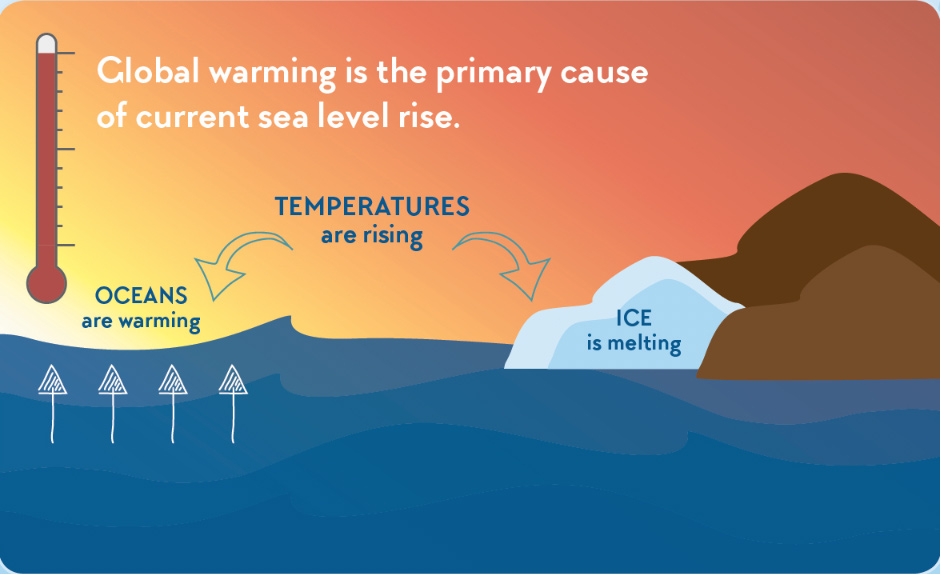
To begin with, we must understand the sources of this alarming rise. Global warming is predominantly driven by the greenhouse effect—a process whereby gases such as carbon dioxide and methane trap heat within our atmosphere. The consequences of such warming are multifaceted, but when it comes to the oceans, two main contributors stand out: thermal expansion and the melting of ice sheets.
Thermal expansion occurs when water heats up, causing it to expand. This mechanism is responsible for a substantial portion of the rise in sea levels. According to scientists, as the world’s oceans absorb heat—approximately 93% of the excess warmth generated by greenhouse gases—this expansion adds up. The sheer volume of water involved is staggering. A mere 1-degree Celsius increase in ocean temperatures can lead to noticeable sea-level rise, intricately complicating coastal ecosystems and human settlements.
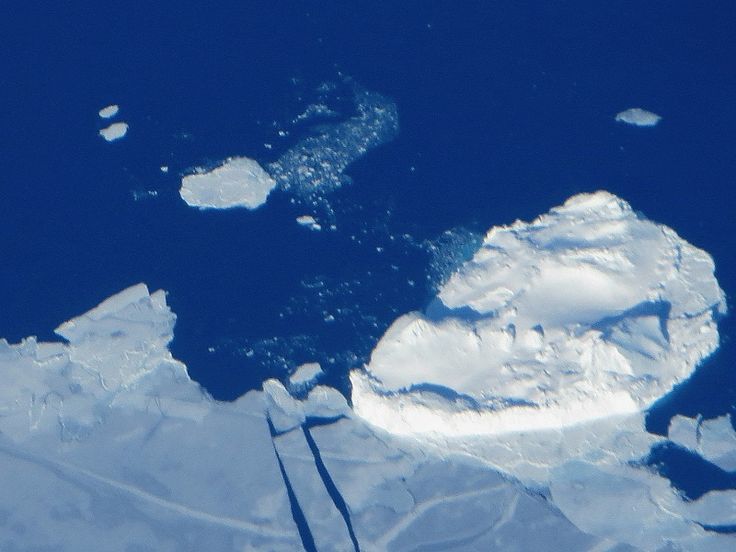
In addition to thermal expansion, significant ice mass loss from glaciers and ice sheets is another crucial factor. The polar regions have been experiencing unprecedented melting rates due to rising temperatures. The Greenland Ice Sheet and the Antarctic Ice Sheet are particularly concerning. Together, these colossal land ice masses can elevate global sea levels by several meters if they were to melt entirely. Current estimates suggest that the Greenland Ice Sheet alone has contributed over 0.7 millimeters to sea level rise annually. This may seem trivial, but the cumulative effect is anything but.
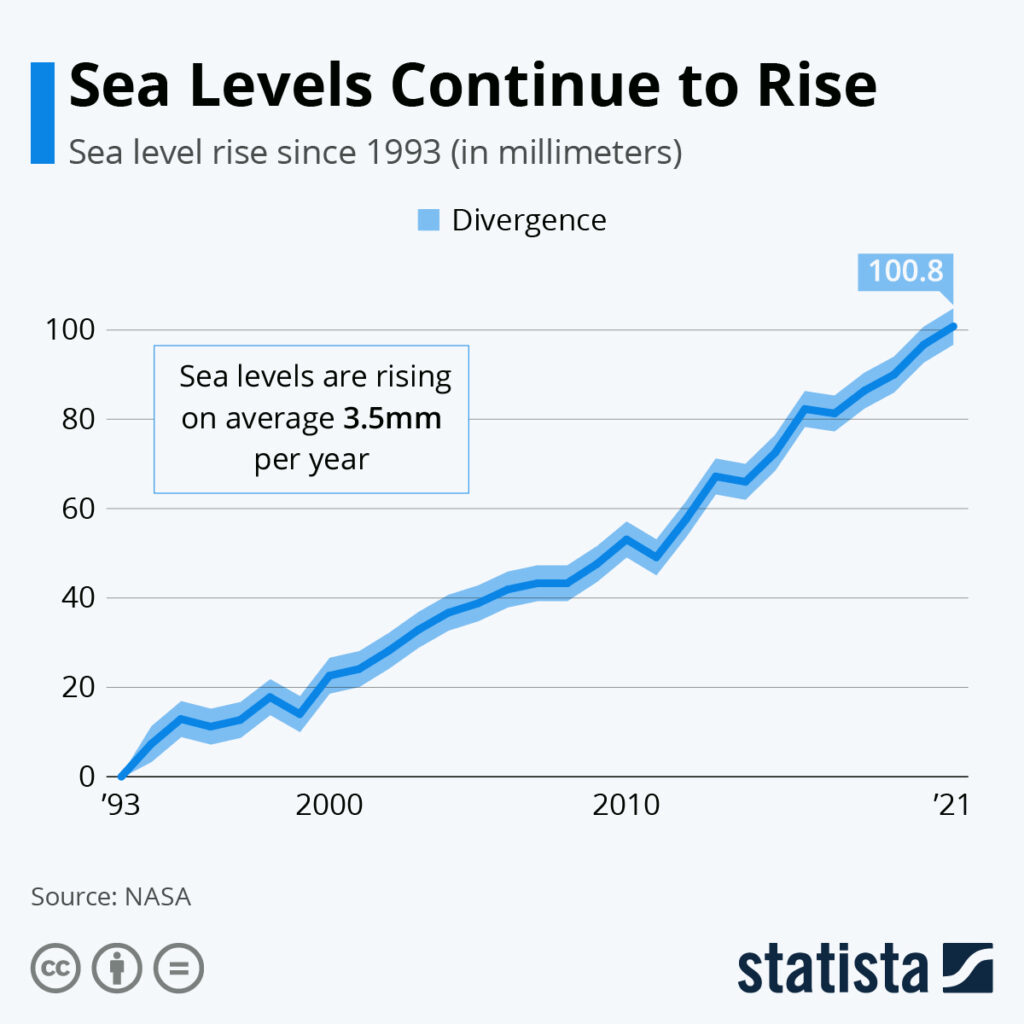
The statistics are sobering. According to numerous research studies, global sea levels have risen approximately 8 to 9 inches since 1880. Alarmingly, the rate of increase has accelerated in recent decades. Between 1993 and 2020, the annual rise averaged about 3.3 millimeters—over double the rate observed in the early 20th century. As we enter the 21st century, models predict that this rate may not only continue but also intensify, posing severe risks to coastal communities globally.
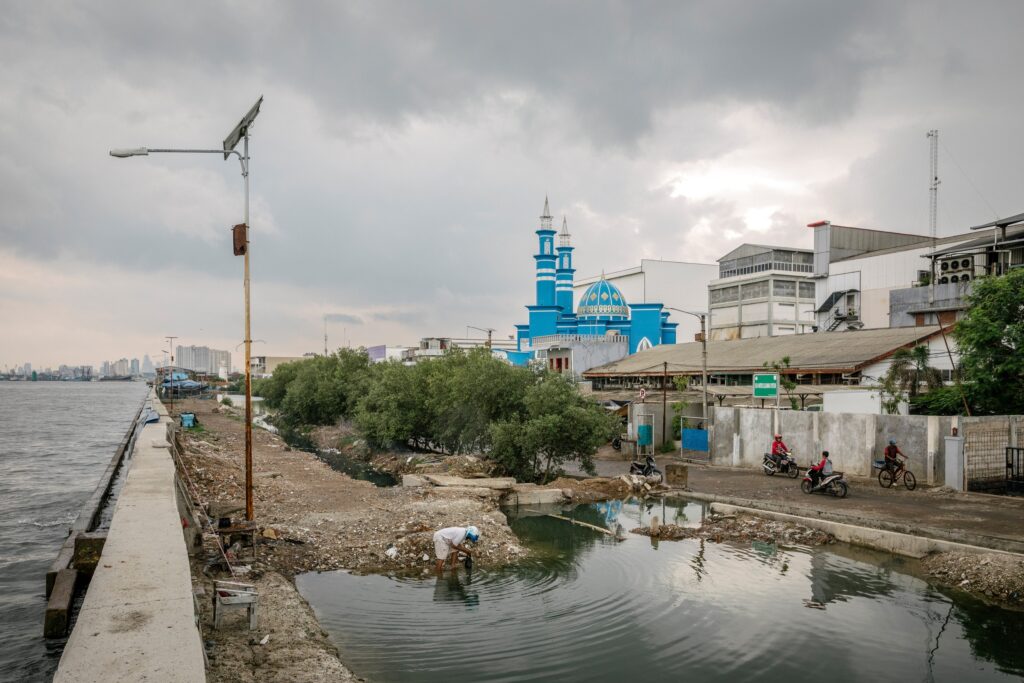
The question arises: If the oceans are indeed rising at such an alarming pace, what are the tangible consequences for humanity? Flooding is perhaps the most immediate consequence, with low-lying areas increasingly at risk. Cities such as Miami, New Orleans, and much of Southeast Asia are becoming canaries in the coal mine, evidence of what unchecked climate change could yield. An estimated 150 million people could be displaced by rising sea levels by the year 2050, creating what some researchers call “climate refugees.” The very fabric of societies could be torn apart, leading to socioeconomic strife and geopolitical tensions.
Moreover, the rise in sea levels exacerbates coastal erosion. Shorelines, which serve as natural barriers, are retreating, threatening ecosystems and wildlife habitats. Saltwater intrusion into freshwater systems further complicates matters, rendering once-fertile lands into uninhabitable zones. The delicate balance of biodiversity in these regions hangs in the balance.
What can we do about this escalating crisis? The answer lies in both mitigation and adaptation. Transitioning to renewable energy sources, reforestation, and promoting sustainable agricultural practices are pivotal steps in minimizing the output of greenhouse gases. Grassroots movements and individual actions play a significant role, yet are insufficient on their own without institutional support and policy changes.
This leads us to the adaptation strategies necessary to deal with sea level rise. Coastal resilience projects are being implemented worldwide, focusing on reinforcing shorelines, restoring mangroves, and constructing barriers against flooding. Urban planning must also adapt, incorporating climate projections into future development to avoid the pitfalls of yesterday’s decisions.
However, while we navigate through these solutions, we must ponder the societal implications. What responsibilities do we carry as a global community? The challenge lies not only in technology but in solidarity. Will affluent nations step in to assist vulnerable countries that bear the brunt of sea-level rise? Such a dilemma underscores the moral imperative to address both climate change and social equity in tandem.
The specter of rising oceans invokes both fear and urgency. Coastal cities are the frontline images of climate change, their resilience hanging by a thread. Our collective response will determine whether future generations inherit a world embroiled in conflict over resources or a society that prioritizes sustainability and collaboration. While the oceans rise, so too must our commitment to fostering a healthier planet.
In observing this enormous challenge, we find hope in innovation and collaboration, but time is not on our side. Will we rise to meet the rising tides, or will we allow the ocean’s encroachment to dictate our fate? This ongoing drama unfolds with every passing moment, urging us all to play a pivotal role in shaping the narrative of our planet’s future.






Leave a Comment