
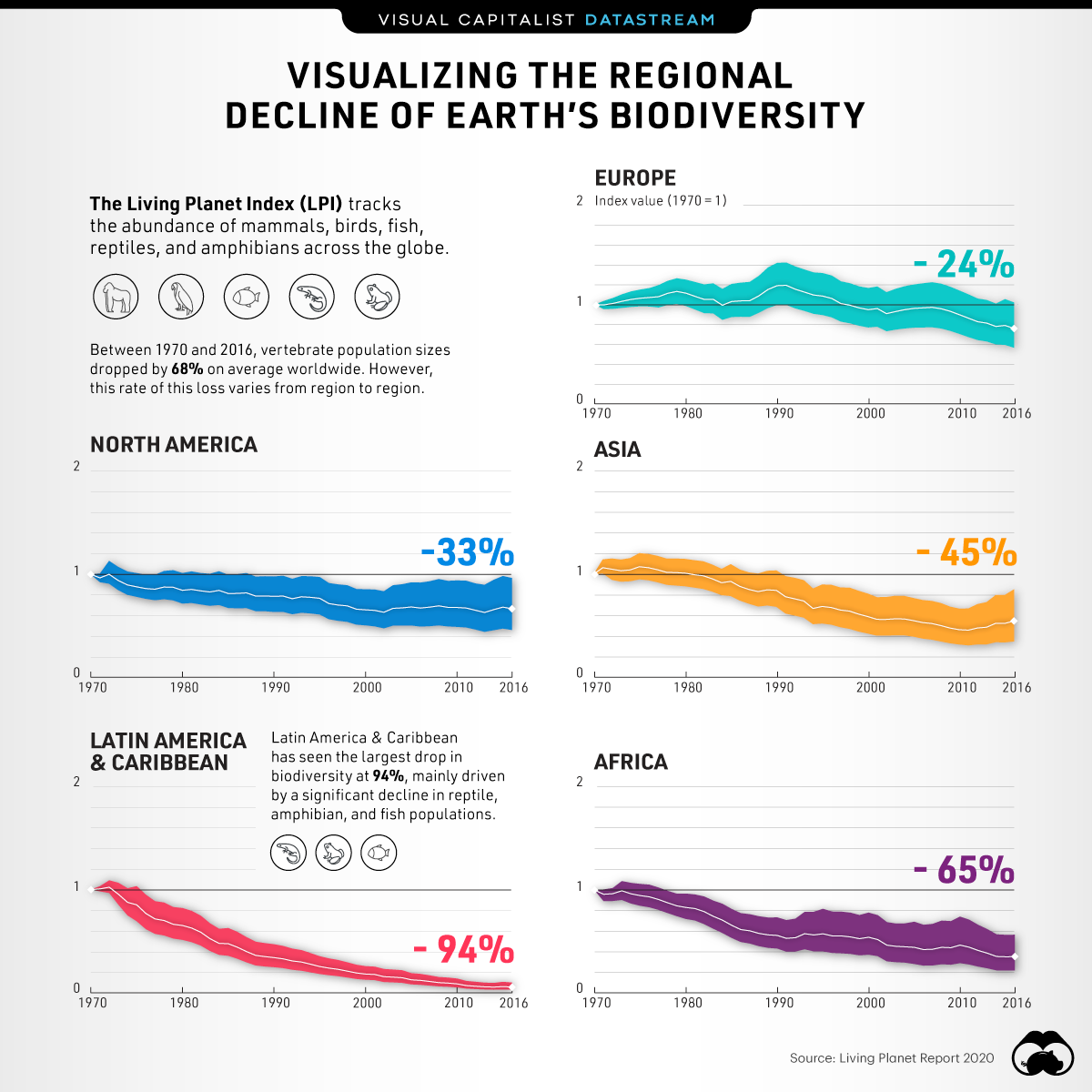
Biodiversity is declining overall, with strong evidence that habitat loss, climate change, pollution and overexploitation are driving species losses, although some local restorations show modest gains.
Quick Answer
Biodiversity—the variety of life at genetic, species and ecosystem levels—is decreasing across most of the planet. Long‑term monitoring by the Intergovernmental Science‑Policy Platform on Biodiversity and Ecosystem Services (IPBES) and the International Union for Conservation of Nature (IUCN) shows that roughly one‑million species face elevated extinction risk, and many populations have fallen by more than 50 % since the 1970s. The primary mechanisms are habitat conversion, climate change, pollution and overuse of natural resources. Consequences include weakened ecosystem services and heightened vulnerability for human societies. Some restoration projects demonstrate localized increases, but the global trend remains a decline, with moderate uncertainty about exact rates in under‑monitored regions.
Key Takeaways
- Global biodiversity is on a declining trajectory, driven mainly by habitat loss, climate change, pollution and overexploitation.
- IPBES (2019) and IUCN Red List assessments provide the strongest, cross‑taxonomic evidence of widespread species risk.
- Regional patterns vary: tropical hotspots experience the steepest losses, while some temperate and urban areas show modest gains through restoration.
- High‑confidence findings include the link between land‑use change and species declines, and the role of climate‑driven range shifts.
- Uncertainties remain for many invertebrate groups, deep‑sea ecosystems, and regions with limited long‑term monitoring.
What Is the Question of Biodiversity Trends?
Biodiversity encompasses three nested levels: genetic variation within populations, the number and abundance of species, and the array of ecosystems that support them. The term does not refer to a single metric; instead, scientists track multiple indicators such as species richness, population abundance, and ecosystem integrity. Understanding whether biodiversity is increasing or decreasing matters because ecosystems provide services—clean water, pollination, climate regulation—that underpin human well‑being.
How Does It Work?
Measuring Biodiversity
Researchers use a combination of field surveys, remote sensing, and citizen‑science databases to calculate indices like the Red List Index (RLI) and the Living Planet Index (LPI). The RLI aggregates extinction risk categories from the IUCN Red List, while the LPI tracks average population trends for thousands of vertebrate species. These metrics allow comparison over decades and across regions.
Ecological Processes Influencing Trends
- Habitat conversion: Forests, wetlands and grasslands are cleared for agriculture, urban development or infrastructure, reducing the area available for native species.
- Climate change: Rising temperatures and altered precipitation shift suitable habitats, forcing species to migrate, adapt or face local extinction.
- Pollution: Nutrient runoff, plastic debris and toxic chemicals degrade water and soil quality, impairing reproductive success.
- Overexploitation: Unsustainable fishing, hunting and timber harvest directly remove individuals and can collapse populations.
- Invasive species: Non‑native organisms often outcompete or prey on native species, especially in disturbed habitats.
What Does the Evidence Show?
Multiple independent lines of evidence converge on a picture of decline. The IPBES Global Assessment (2019) reported that 1 million species are at risk of extinction, a rate 1,000 times the background rate inferred from the fossil record. The Living Planet Report (2022) documented an average 68 % decline in vertebrate population sizes between 1970 and 2016. Forest loss data from the Global Forest Watch platform show a net loss of 3 % of global forest cover per decade since the 1990s, correlating with declines in forest‑dependent taxa. Marine protected area expansions have yielded localized recoveries, yet global fish biomass remains 10 % below 1970 levels (FAO, 2020). Together, these data indicate a net downward trend, with occasional pockets of improvement where restoration or protection has been intensive.
Main Causes or Drivers
Direct Causes
- Conversion of natural land to agriculture (accounting for ~30 % of global terrestrial habitat loss).
- Climate‑induced range shifts and extreme events.
- Industrial pollution, including nutrient eutrophication and plastic debris.
- Unsustainable harvest of wildlife and timber.
Underlying Drivers
- Growing human population and consumption patterns that increase land‑use pressure.
- Economic incentives that favour short‑term resource extraction over long‑term stewardship.
- Policy gaps and weak enforcement of environmental regulations.
Environmental and Human Impacts
Environmental Impacts
Loss of species erodes ecosystem resilience, reducing the capacity of forests to sequester carbon, wetlands to filter water, and pollinators to support crops. Declining biodiversity also accelerates the spread of invasive species and disease vectors, creating feedback loops that further destabilise ecosystems.
Human Health and Social Impacts
Reduced pollination threatens food security for billions of people, especially in low‑income regions dependent on small‑holder agriculture. Diminished water‑filtering capacity of rivers and wetlands can increase exposure to contaminants, affecting public health. Cultural identities linked to specific species or landscapes are also at risk.
Economic and Infrastructure Impacts
The World Bank estimates that ecosystem service loss could cost up to 13 % of global GDP by 2050 if trends continue. Fisheries, forestry and tourism sectors already face revenue declines linked to biodiversity loss, prompting job insecurity in coastal and rural communities.
Regional Differences
Tropical biodiversity hotspots such as the Amazon, Congo Basin and Southeast Asian rainforests experience the steepest rates of species loss, driven primarily by deforestation and illegal wildlife trade. In contrast, parts of temperate Europe and North America have seen modest gains in certain bird and plant groups due to intensive conservation measures and rewilding projects. Island ecosystems, however, remain exceptionally vulnerable; the IUCN reports that over 40 % of island‑endemic species are threatened, reflecting limited ranges and high exposure to invasive predators.
What Scientists Know With High Confidence
- Habitat loss is the single largest direct cause of species declines worldwide.
- Climate change is already causing measurable range shifts and population reductions in many taxa.
- Protected areas, when adequately managed, can halt or reverse local declines in marine and terrestrial species.
- Loss of biodiversity reduces the provision of key ecosystem services such as pollination, water purification and carbon storage.
What Remains Uncertain
Data gaps persist for many invertebrate groups, deep‑sea organisms and microorganisms, making it difficult to quantify global trends for these taxa. The effectiveness of large‑scale rewilding in restoring full ecosystem complexity is still under investigation, as is the long‑term resilience of restored habitats under future climate scenarios. Improved, standardized monitoring across under‑represented regions would reduce these uncertainties.
Common Misconceptions
Misconception: Biodiversity is uniformly declining everywhere.
Reality: While the global trend is negative, some locales—particularly those with intensive restoration or strict protection—show localized increases in species richness or population size.
Misconception: Only charismatic megafauna matter for biodiversity assessments.
Reality: Biodiversity includes microbes, insects, plants and genetic variation; many of these groups drive ecosystem processes even though they receive less public attention.
Misconception: Individual lifestyle changes can stop biodiversity loss on their own.
Reality: Personal actions (e.g., reducing meat consumption, supporting sustainable products) contribute to lower demand, but systemic policy, land‑use planning and corporate responsibility are required for large‑scale impact.
Solutions and Limitations
Effective responses combine prevention, mitigation and restoration. Protecting remaining high‑value habitats through legally binding reserves offers the most immediate benefit, yet enforcement challenges and funding shortfalls limit coverage. Climate mitigation—reducing greenhouse‑gas emissions—addresses a root driver but requires global coordination and long‑term commitment. Restoration projects (e.g., reforestation, coral‑reef nurseries) can rebuild habitat, but success depends on site selection, native species use and long‑term management. Pollution control measures such as stricter pesticide regulations improve water quality, yet trade‑offs may arise for agricultural productivity. Sustainable harvesting standards (e.g., MSC for fisheries) can maintain resource use while preserving stocks, but certification uptake varies across regions.
What Individuals, Communities, and Governments Can Do
What Individuals Can Do
- Choose certified sustainable seafood and timber products to reduce pressure on wild populations.
- Support policies and politicians that prioritize biodiversity protection.
- Participate in citizen‑science monitoring programs (e.g., eBird, iNaturalist) to improve data coverage.
What Communities and Organizations Can Do
- Develop and maintain urban green spaces that provide habitat corridors.
- Implement community‑led reforestation or native‑plant landscaping projects.
- Adopt integrated pest management to minimise chemical runoff.
What Governments Can Do
- Expand and adequately fund protected‑area networks to meet the 30 % by 2030 target.
- Integrate biodiversity considerations into land‑use planning, infrastructure development and climate‑adaptation strategies.
- Provide incentives for sustainable agriculture, such as payments for ecosystem services.
Putting It All Together
The preponderance of evidence indicates that global biodiversity is decreasing, driven chiefly by habitat loss, climate change, pollution and overexploitation. High‑confidence findings confirm that these drivers undermine ecosystem services essential for human societies. Uncertainties remain for poorly monitored taxa and the long‑term outcomes of restoration under changing climates. Solutions that blend protected‑area expansion, climate mitigation, sustainable resource use and community‑based restoration offer the greatest chance of reversing the trend, but they require coordinated action across scales. While individual choices matter, systemic policy and investment are indispensable for preserving Earth’s biological heritage.
Frequently Asked Questions
What does biodiversity include?
Biodiversity refers to the variety of life at three levels: genetic differences within species, the number and abundance of species, and the range of ecosystems that support them. It covers everything from microbes to large mammals and the habitats they occupy.
How do scientists track changes in global biodiversity?
Researchers use indicators such as the Red List Index, which aggregates IUCN extinction‑risk categories, and the Living Planet Index, which follows average population trends of thousands of vertebrate species. These metrics combine field surveys, remote sensing and citizen‑science data to reveal long‑term patterns.
Which human activities are the biggest drivers of biodiversity loss?
Habitat conversion for agriculture and urban development, climate change, pollution (including plastic and nutrient runoff), overexploitation of wildlife and timber, and the spread of invasive species are identified as the primary drivers of global biodiversity decline.
Are there places where biodiversity is still increasing?
Yes, some regions show localized improvements. For example, parts of temperate Europe and North America have seen modest gains in certain bird and plant groups due to intensive conservation and rewilding, while many marine protected areas report recovering fish stocks.
What practical actions can individuals take to help protect biodiversity?
Individuals can choose sustainably certified products, support policies that protect natural habitats, and join citizen‑science projects like eBird or iNaturalist. These steps reduce demand for harmful practices and improve data needed for effective conservation.





Leave a Comment