
Rising sea levels driven by global warming are expected to reshape the geography, infrastructure, and social fabric of coastal cities worldwide by 2050, creating both urgent challenges and opportunities for resilient adaptation.
Quick Answer
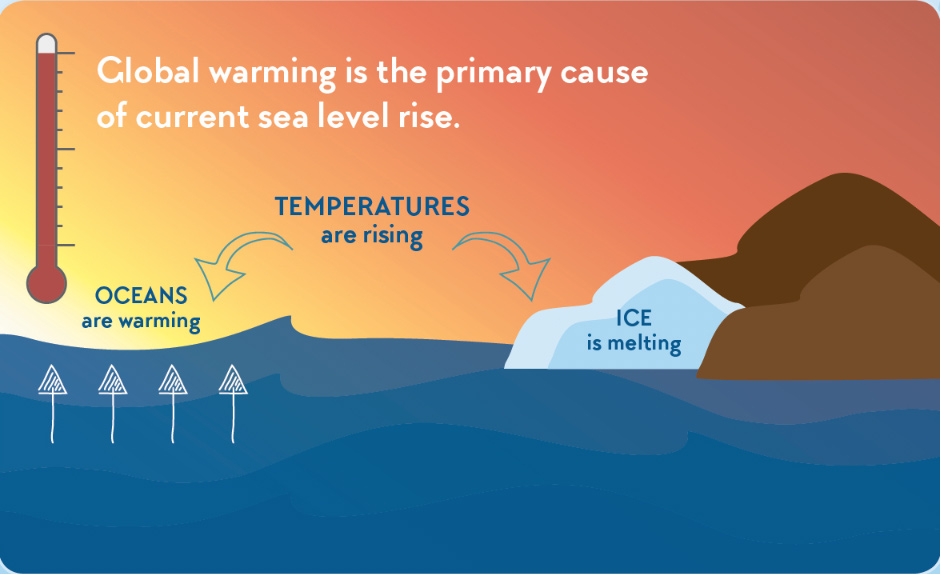
Sea‑level rise occurs because warming oceans expand and land‑based ice melts, adding water to the global ocean. The Intergovernmental Panel on Climate Change (IPCC, 2023) projects a global average increase of about 0.3 to 0.6 metres by 2050 under moderate emissions pathways. This gradual encroachment threatens low‑lying neighborhoods, critical infrastructure, and local economies, while also prompting migration, new design standards, and nature‑based defenses. Uncertainty remains around regional variations, extreme‑event amplification, and the speed of societal response.
Key Takeaways
- Global sea level is projected to rise 0.3–0.6 m by 2050, with higher rates in some regions.
- Thermal expansion of seawater and ice‑sheet melt are the primary physical drivers.
- Impacts include increased flooding, salt‑water intrusion, infrastructure strain, and population displacement.
- Adaptation options range from engineered barriers to living shorelines, each with cost and equity trade‑offs.
- High‑confidence findings are supported by decades of tide‑gauge records and satellite altimetry.
- Key uncertainties involve regional subsidence, storm‑surge interaction, and future emissions pathways.
What Is How Rising Sea Levels Could Transform Coastal Cities by 2050?
The phrase refers to the suite of physical, ecological, and socio‑economic changes that will occur in urban areas located on or near the ocean as sea level rises toward the middle of the 21st century. It encompasses the measurable increase in water height, the resulting exposure of land, and the cascade of responses—both destructive and adaptive—within city systems. Unlike short‑term storm‑surge events, sea‑level rise is a persistent, cumulative process that reshapes coastlines over decades.
How Does It Work?
Physical Mechanisms
- Thermal Expansion: As seawater warms, its volume expands. Global ocean heat content has risen by roughly 0.4 °C since pre‑industrial times, contributing about one‑third of observed sea‑level rise (NOAA, 2022).
- Glacier and Ice‑Sheet Melt: Accelerated melting of the Greenland and Antarctic ice sheets adds freshwater to the ocean. Satellite gravimetry indicates an average contribution of ~0.2 mm yr⁻¹ from Greenland between 2003 and 2020 (NASA, 2021).
- Land‑Based Water Storage Changes: Depletion of groundwater and reservoir releases can cause minor sea‑level adjustments, but these are secondary to thermal and ice‑sheet effects.
Interaction with Human Systems
- Coastal Subsidence: Many cities sit on sediments that compact or on reclaimed land that settles, amplifying relative sea‑level rise.
- Storm‑Surge Amplification: Higher baseline sea levels increase the height of storm‑driven water, making extreme flooding more frequent.
- Salt‑Water Intrusion: Rising tides push saline water into freshwater aquifers, threatening drinking water supplies.
What Does the Evidence Show?
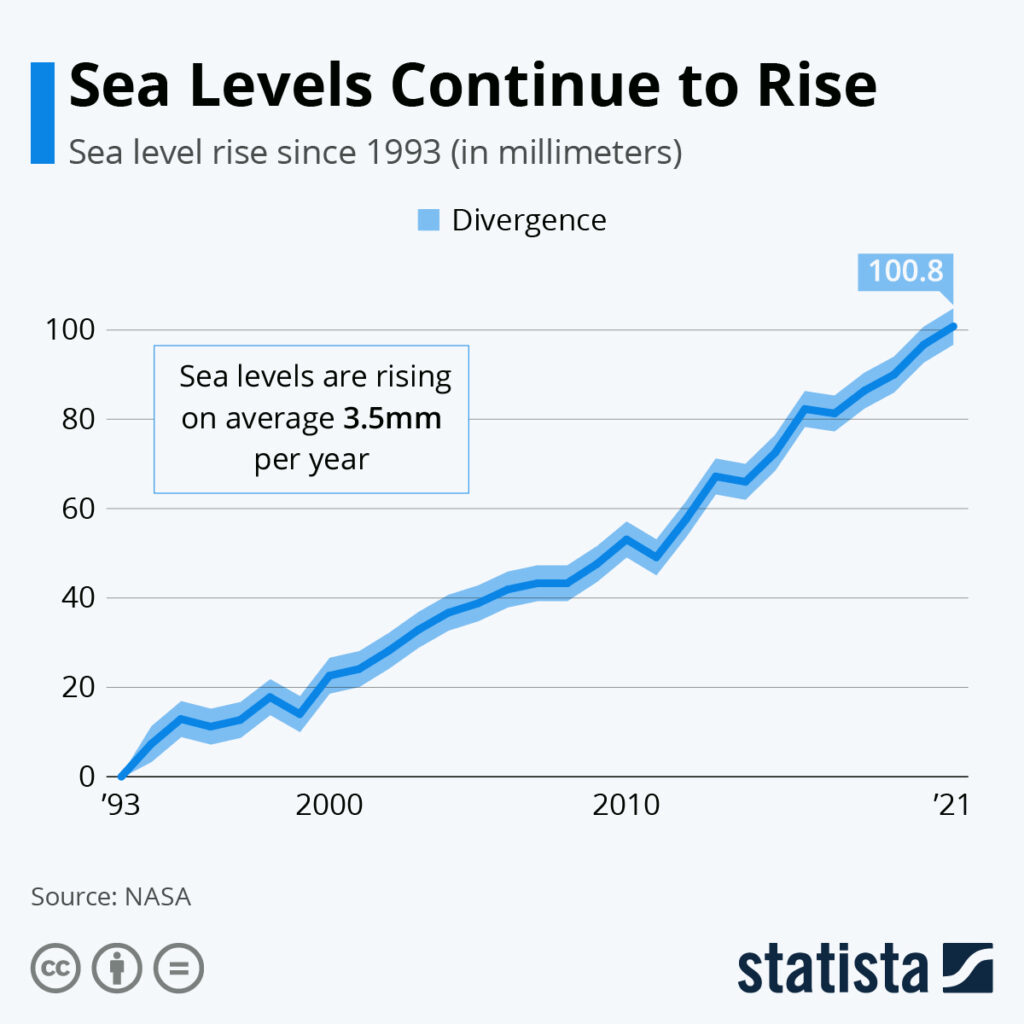
Long‑term tide‑gauge records, now spanning more than 150 years in some locations, demonstrate a global mean sea‑level rise of about 1.8 mm yr⁻¹ since 1900 (IPCC, 2023). Satellite altimetry, operational since 1993, confirms an acceleration to roughly 3.3 mm yr⁻¹ in the 2010s. Regional studies reveal that the U.S. Gulf Coast and parts of Southeast Asia experience rates up to 4–5 mm yr⁻¹ due to combined subsidence and ocean dynamics. Model ensembles used in the IPCC Sixth Assessment Report consistently project 0.3–0.6 m rise by 2050 under the SSP2‑4.5 scenario, with higher values under more aggressive emissions pathways.
Main Causes or Drivers
Direct Physical Causes
Thermal expansion and ice‑sheet melt are the two dominant contributors, accounting for roughly 70 % of the total projected rise (IPCC, 2023).
Underlying Human Drivers
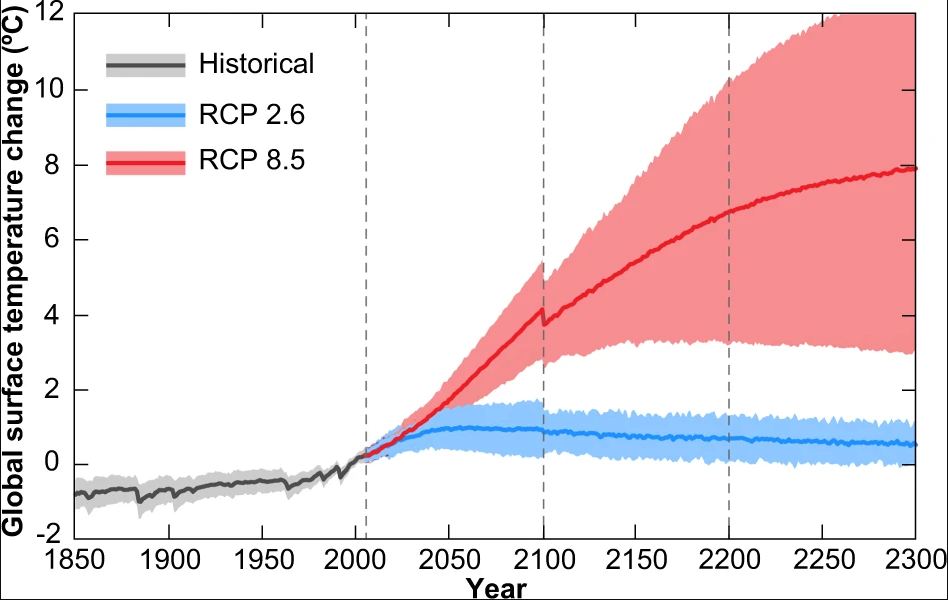
- Greenhouse‑Gas Emissions: Burning fossil fuels and deforestation raise atmospheric CO₂, driving global temperature increase.
- Coastal Development: Impermeable surfaces reduce natural drainage and increase runoff, exacerbating flood risk.
- Water Management Practices: Excessive groundwater extraction lowers land elevation, magnifying relative sea‑level rise.
Environmental and Human Impacts
Environmental Impacts
- Loss of coastal wetlands reduces habitats for fish, birds, and migratory species.
- Higher salinity stresses mangroves and salt‑marsh vegetation, weakening natural flood buffers.
- Increased erosion can alter sediment budgets, affecting downstream ecosystems.
Human Health and Social Impacts
- Frequent flooding raises exposure to water‑borne pathogens, especially in low‑income neighborhoods.
- Displacement creates climate‑related migration pressures, often concentrating vulnerable populations in inland shelters.
- Loss of cultural heritage sites—such as historic waterfront districts—can erode community identity.
Economic and Infrastructure Impacts
- Property damage from “nuisance flooding” is projected to cost billions of dollars annually in cities like Miami and New York (NOAA, 2022).
- Transportation networks (subways, roads, bridges) face chronic inundation, requiring costly retrofits or relocation.
- Utility systems (electricity, wastewater) become more prone to outages, raising maintenance expenditures.
Regional Differences
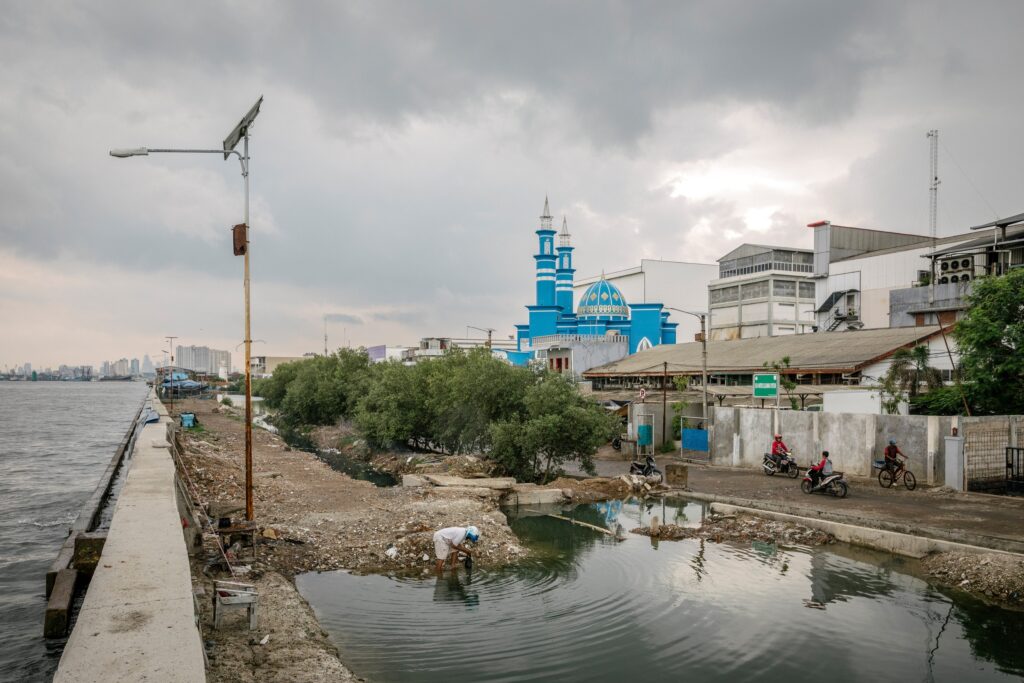
Impact severity varies with local factors. In the Gulf of Mexico, subsidence of up to 10 mm yr⁻¹ compounds sea‑level rise, making parts of New Orleans especially vulnerable. In contrast, the Pacific Northwest experiences slower rise (≈2 mm yr⁻¹) but faces amplified storm surges due to narrow fjord geometries. Tropical megacities such as Jakarta are already sinking faster than sea level rises, creating a compounded risk that may lead to partial relocation.
What Scientists Know With High Confidence
- Global average sea level has risen steadily since the late 19th century, driven primarily by thermal expansion and ice‑sheet melt.
- Future sea‑level rise will continue as long as atmospheric greenhouse‑gas concentrations remain elevated.
- Low‑lying coastal areas will experience more frequent tidal flooding, even without extreme storms.
- Nature‑based solutions, such as restored mangroves, can reduce wave energy and provide co‑benefits for biodiversity.
What Remains Uncertain
Key uncertainties include the rate of Antarctic ice‑sheet instability, which could add several centimeters to sea level but remains poorly constrained; the extent of regional land subsidence, especially in rapidly developing deltas; and how future socioeconomic pathways will influence exposure and adaptive capacity. Improved satellite gravimetry and dense GPS networks are expected to reduce these gaps over the next decade.
Common Misconceptions
Misconception: Sea‑level rise will only affect tiny islands.
Reality: While islands are highly exposed, major metropolitan areas—including New York, Shanghai, and Lagos—contain millions of residents within zones projected to flood regularly by mid‑century.
Misconception: The oceans will rise uniformly everywhere.
Reality: Ocean dynamics, wind patterns, and regional subsidence cause spatial variability; some coastlines rise faster than the global mean, others slower.
Misconception: Building higher sea walls solves the problem.
Reality: Hard infrastructure can protect specific assets but often shifts risk elsewhere, can be expensive to maintain, and may damage natural habitats that provide complementary protection.
Solutions and Limitations
Adaptation strategies fall into three broad categories:
- Engineered Defenses: Sea walls, surge barriers, and elevating buildings. Effective for high‑value assets but costly, can create “levee effect” that encourages risky development, and may be overwhelmed by extreme events.
- Nature‑Based Approaches: Restoring mangroves, oyster reefs, and wetlands. Provide flood attenuation, habitat, and carbon sequestration, yet require space and long‑term stewardship.
- Urban Planning Measures: Zoning reforms, managed retreat, and resilient building codes. Offer systemic risk reduction but face political resistance and social equity challenges.
All solutions involve trade‑offs among financial resources, land availability, and community acceptance. No single measure eliminates risk; a portfolio approach is most robust.
What Individuals, Communities, and Governments Can Do
What Individuals Can Do
- Support local flood‑risk mapping initiatives and advocate for transparent zoning decisions.
- Choose flood‑resilient home designs (elevated structures, flood‑proof utilities) when possible.
- Participate in community‑based shoreline restoration projects that enhance natural buffers.
What Communities and Organizations Can Do
- Develop and regularly update municipal climate‑action plans that integrate sea‑level projections.
- Invest in green infrastructure—rain gardens, permeable pavements—to reduce runoff and complement larger defenses.
- Facilitate equitable relocation assistance for residents in the most vulnerable neighborhoods.
What Governments Can Do
- Adopt building codes that require elevation or flood‑proofing for new construction in at‑risk zones.
- Allocate funding for large‑scale nature‑based solutions, such as coastal marsh restoration, through grant programs.
- Implement comprehensive data‑sharing platforms that combine tide‑gauge, GPS, and socioeconomic data to guide adaptive investments.
Closing Synthesis
Rising sea levels are a well‑documented, physics‑based consequence of a warming climate, and by 2050 they are expected to reshape coastal cities through more frequent flooding, infrastructure strain, and population shifts. High‑confidence evidence confirms the direction and magnitude of global rise, while uncertainties remain about regional subsidence and ice‑sheet dynamics. Effective responses will blend engineered defenses, nature‑based buffers, and forward‑looking urban policies, each with clear limitations that must be weighed against equity and cost. By understanding the science, acknowledging the unknowns, and acting collectively, societies can steer coastal transformation toward resilience rather than loss.
Frequently Asked Questions
What is the projected amount of sea‑level rise by 2050?
The IPCC (2023) projects a global average increase of about 0.3 to 0.6 metres by 2050 under moderate emissions scenarios, with some regions experiencing higher relative rise due to local subsidence.
How does sea‑level rise differ from storm‑surge flooding?
Sea‑level rise is a gradual, persistent increase in baseline water height caused by thermal expansion and ice melt, whereas storm surge is a short‑term, event‑driven spike that adds to that higher baseline.
Which adaptation measures are most effective for coastal cities?
A combination of engineered defenses (e.g., sea walls), nature‑based solutions (e.g., mangrove restoration), and proactive urban planning (e.g., zoning reforms) provides the most robust protection, though each option has cost and equity trade‑offs.
Why are some regions more vulnerable to sea‑level rise than others?
Vulnerability varies with local factors such as land subsidence, ocean dynamics, shoreline geometry, and socioeconomic conditions; for example, the Gulf Coast experiences faster relative rise due to high subsidence rates.
What role can individuals play in addressing sea‑level rise impacts?
Individuals can support community flood‑risk mapping, choose flood‑resilient home designs, and volunteer in shoreline restoration projects that strengthen natural buffers against rising waters.





Leave a Comment