
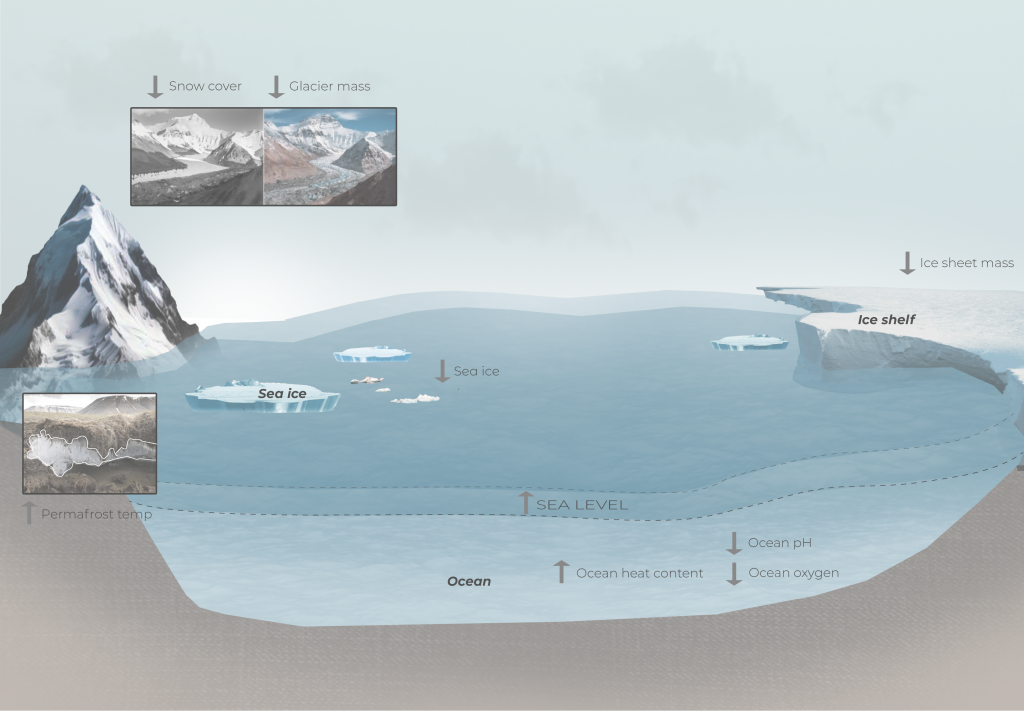
Sea level rise results from warming‑induced thermal expansion of seawater and the addition of meltwater from glaciers and ice sheets, a process confirmed by decades of observations and climate assessments.
Quick Answer
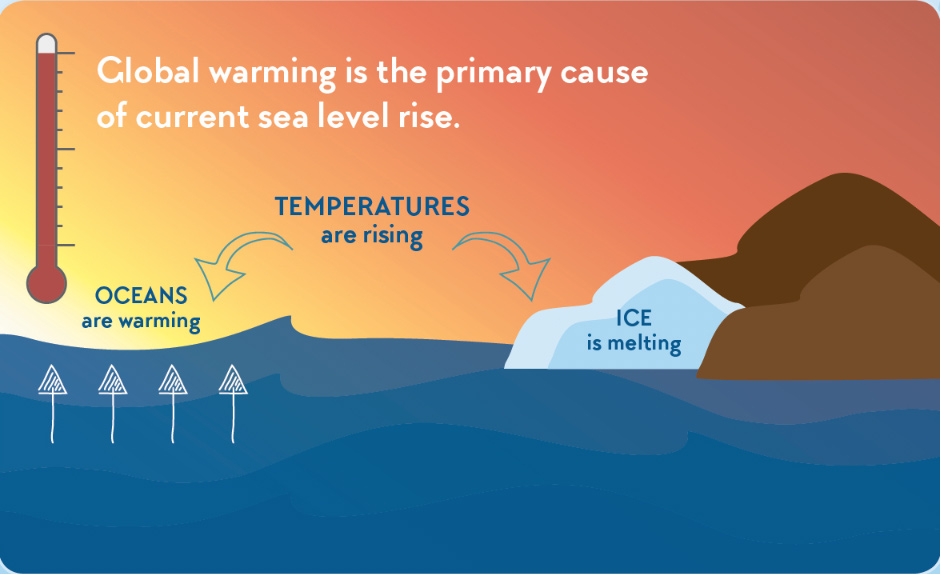
Sea levels rise when the ocean’s water volume increases. The two dominant mechanisms are thermal expansion—where warming makes water expand—and the influx of freshwater from melting glaciers, the Greenland Ice Sheet, and the Antarctic Ice Sheet. Together they have lifted global mean sea level by about 20 cm since 1900, according to the Intergovernmental Panel on Climate Change (IPCC) Sixth Assessment Report (2021). The rise threatens coastal ecosystems and human settlements, although the exact rate of future change depends on greenhouse‑gas emissions and natural variability.
Key Takeaways
- Thermal expansion accounts for roughly one‑third of observed sea‑level rise since the mid‑20th century.
- Melting of the Greenland and Antarctic ice sheets now contributes the majority of the recent increase.
- Local factors such as land subsidence, ocean currents, and gravitational effects modify sea‑level change regionally.
- High‑confidence science links human‑caused warming to accelerating sea‑level rise, but uncertainties remain about ice‑sheet dynamics.
- Adaptation measures—like protecting wetlands and improving coastal design—can reduce exposure, while mitigation limits further rise.
What Is How Do Sea Levels Rise? What’s Really Pushing the Water Up?
The phrase refers to the physical processes that increase the total volume of the world’s oceans. It encompasses both natural variability (e.g., El Niño‑driven sea‑level spikes) and the long‑term trend driven by a warming climate. Sea‑level rise is measured relative to a reference surface called the geoid, and it is distinct from short‑term storm surges or tidal fluctuations.
How Does It Work?
1. Thermal Expansion (Steric Effect)
When seawater absorbs heat from the atmosphere, its molecules move more vigorously and occupy a larger volume. This process, called thermal expansion, is strongest in the upper 700 m of the ocean where temperature changes are greatest. Satellite altimetry and in‑situ temperature records show that steric rise contributed about 6 cm to global sea‑level increase between 1993 and 2018 (IPCC, 2021).
2. Glacial and Ice‑Sheet Melt
Glaciers worldwide have been losing mass at an accelerating rate. The World Glacier Monitoring Service reports a net loss of 267 Gt yr⁻¹ (≈0.74 mm yr⁻¹) between 2000 and 2020. The Greenland Ice Sheet contributed roughly 0.8 mm yr⁻¹ and the Antarctic Ice Sheet about 0.4 mm yr⁻¹ over the same period, based on satellite gravimetry (NASA GRACE data, 2022).
3. Land‑Water Storage Changes
Human activities such as groundwater extraction, reservoir construction, and damming shift water between land and ocean. Net groundwater depletion adds about 0.2 mm yr⁻¹ to sea level, while large reservoirs have a small offsetting effect (UNESCO, 2020).
4. Regional Modifiers
Ocean dynamics (e.g., changes in currents), gravitational redistribution of water after ice loss, and vertical land motion (subsidence or uplift) cause sea‑level trends to differ by up to ±30 % across the globe.
What Does the Evidence Show?
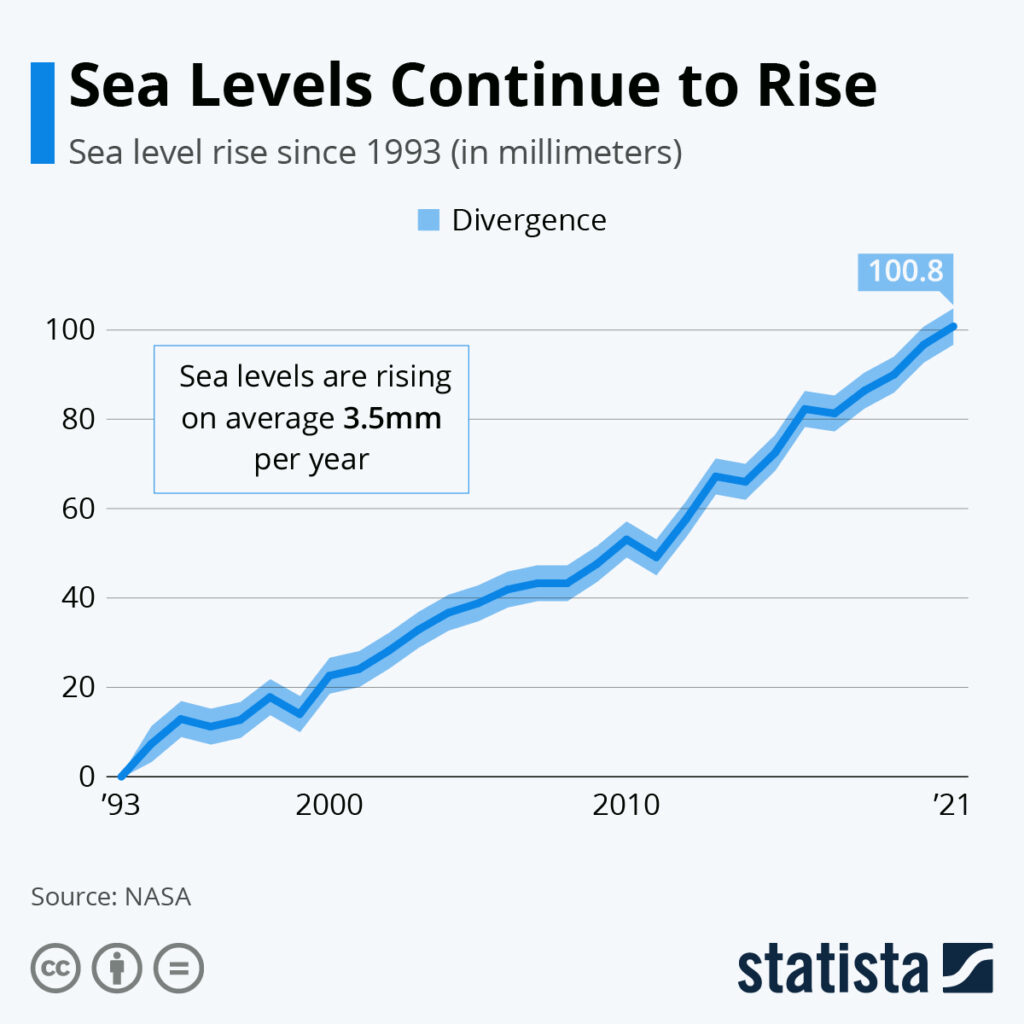
Multiple, independent lines of evidence converge on the same conclusion: the global mean sea level has risen steadily for more than a century. Tide‑gauge records, beginning in the 19th century, show a long‑term rise of about 1.7 mm yr⁻¹. Satellite altimetry, operational since 1993, provides precise global measurements confirming a rate of 3.3 mm yr⁻¹ (with a 0.4 mm yr⁻¹ uncertainty) as of 2022. Climate‑model simulations that incorporate observed greenhouse‑gas concentrations reproduce the observed trend only when both thermal expansion and ice‑sheet melt are included, indicating that human‑induced warming is the primary driver (IPCC, 2021).
Main Causes or Drivers
Direct Causes
- Ocean warming – increases water volume through thermal expansion.
- Ice‑sheet and glacier melt – adds fresh water to the ocean.
Underlying Drivers
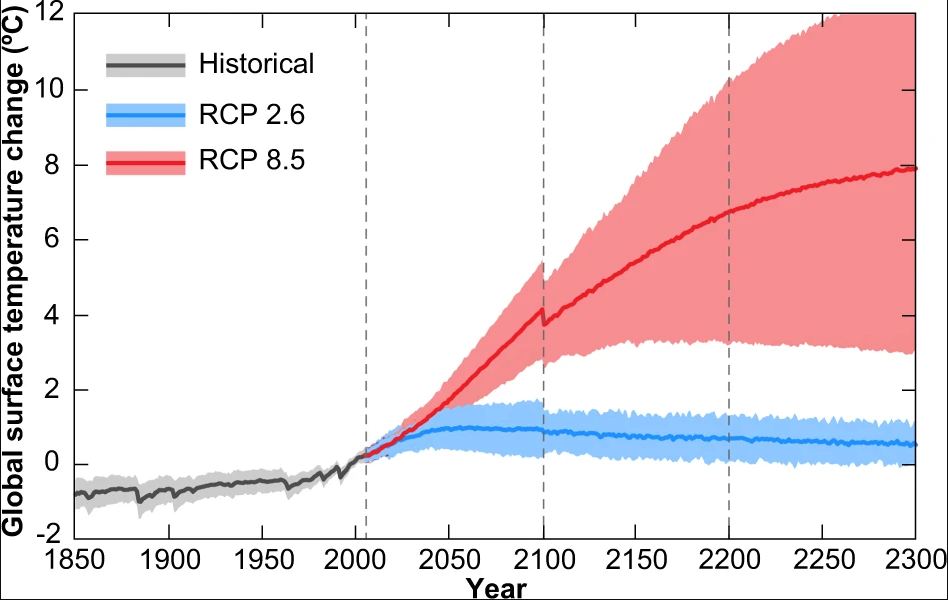
- Anthropogenic greenhouse‑gas emissions – raise global temperatures, intensifying both expansion and melt.
- Natural climate variability – El Niño, volcanic eruptions, and solar cycles modulate short‑term sea‑level fluctuations.
Amplifying Factors
- Land subsidence – sinks coastal land, making relative sea‑level rise appear larger.
- Changes in ocean circulation – can pile water against certain coastlines (e.g., the western Pacific).
Environmental and Human Impacts
Environmental Impacts
Higher sea levels erode shorelines, inundate mangroves and salt‑marshes, and increase the frequency of saltwater intrusion into freshwater aquifers. Coral reefs experience deeper water, reducing light availability and stressing symbiotic algae.
Human Health and Social Impacts
Coastal flooding raises exposure to water‑borne pathogens and can displace vulnerable populations. Low‑lying island nations face existential threats, while densely populated deltas (e.g., the Mekong, Ganges‑Brahmaputra) confront heightened flood risk.
Economic and Infrastructure Impacts
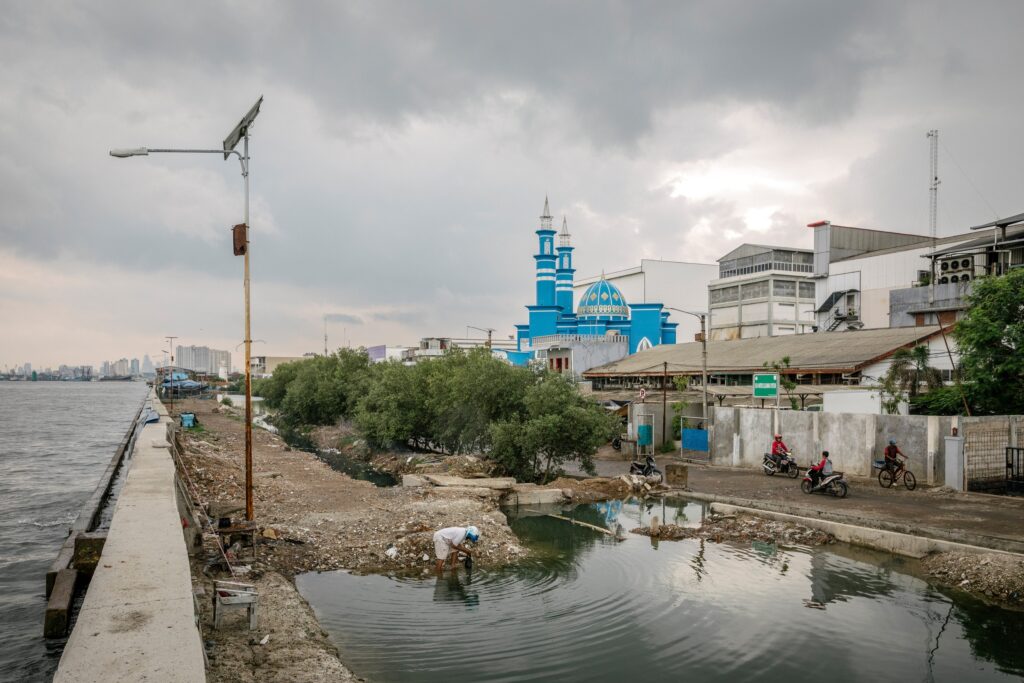
Property damage, loss of tourism revenue, and increased insurance costs are documented in regions such as Miami, New York, and Jakarta. Adaptation investments—estimated at $1–2 trillion per year globally through 2050 (World Bank, 2021)—are needed to protect critical infrastructure.
Regional Differences
Sea‑level rise is not uniform. In the western Pacific, sea level is rising up to 5 mm yr⁻¹ because of wind‑driven water pile‑up, whereas the East Coast of the United States experiences rates near 2 mm yr⁻¹ after accounting for subsidence. The Arctic sees amplified effects from permafrost melt and reduced sea‑ice cover, while the Mediterranean shows modest rise but high vulnerability due to dense coastal settlements.
What Scientists Know With High Confidence
- Global mean sea level has risen by about 20 cm since 1900, with an accelerating rate in recent decades.
- Human‑induced warming is the primary driver of the observed acceleration.
- Thermal expansion and ice‑sheet melt together explain the majority of the rise.
- Coastal regions that are subsiding experience higher relative sea‑level change than the global average.
What Remains Uncertain
Key uncertainties involve the future behavior of the Antarctic Ice Sheet, especially the potential for rapid grounding‑line retreat, and the exact contribution of iceberg calving versus surface melt. Regional projections are limited by sparse tide‑gauge networks in some low‑income coastal nations, and by the complex interaction between ocean dynamics and climate variability. Improving satellite gravimetry and expanding in‑situ observations will reduce these gaps.
Common Misconceptions
Misconception: Sea‑level rise is caused only by melting ice.
Reality: Thermal expansion accounts for roughly one‑third of the observed rise, and meltwater from glaciers and ice sheets supplies the rest.
Misconception: All coasts are rising at the same rate.
Reality: Local land motion, ocean currents, and gravitational effects cause regional variations that can be significantly higher or lower than the global average.
Misconception: Sea‑level rise will stop if emissions are reduced.
Reality: Even with aggressive mitigation, the ocean’s thermal inertia and existing ice‑sheet melt will continue to raise sea level for centuries.
Solutions and Limitations
Responses fall into two broad categories: mitigation (reducing greenhouse‑gas emissions) and adaptation (preparing for inevitable change). Mitigation directly limits future thermal expansion and melt, but its impact unfolds over decades. Adaptation measures—such as restoring mangroves, elevating infrastructure, and implementing managed retreat—can reduce immediate exposure, yet they require substantial investment, clear governance, and may displace communities. Nature‑based solutions provide co‑benefits (biodiversity, carbon storage) but are limited by space and may be vulnerable to extreme events.
What Individuals, Communities, and Governments Can Do
What Individuals Can Do
- Support policies that curb emissions (e.g., voting, advocacy).
- Reduce personal carbon footprints through energy efficiency and sustainable transportation.
- Participate in local coastal‑restoration projects or citizen‑science tide‑gauge programs.
What Communities and Organizations Can Do
- Develop and enforce zoning that discourages development in high‑risk flood zones.
- Invest in natural buffers like wetlands and reef restoration.
- Adopt resilient building standards (elevated foundations, flood‑proof utilities).
What Governments Can Do
- Implement ambitious net‑zero emissions targets aligned with the Paris Agreement.
- Fund long‑term monitoring networks (tide gauges, satellite missions) to improve projections.
- Create financing mechanisms for managed retreat and climate‑resilient infrastructure, ensuring equity for vulnerable populations.
Synthesis
Sea‑level rise is a measurable, physics‑based response to a warming climate, driven by both thermal expansion and the addition of meltwater from glaciers and ice sheets. Robust observations and climate assessments give high confidence in the trend and its human cause, while uncertainties remain about the speed of Antarctic ice‑sheet loss and regional impacts. Mitigation limits future rise, but adaptation is essential to protect ecosystems and societies already facing higher tides. Coordinated action across individuals, communities, and governments offers the most effective path to resilient coastlines.
Frequently Asked Questions
What are the two main processes that cause sea‑level rise?
Sea‑level rise is driven primarily by thermal expansion of warming seawater and the addition of meltwater from glaciers, the Greenland Ice Sheet, and the Antarctic Ice Sheet.
How much has global mean sea level risen since 1900?
According to the IPCC Sixth Assessment Report (2021), global mean sea level has risen by about 20 centimetres (8 inches) since the beginning of the 20th century.
Why do some regions experience faster sea‑level rise than others?
Regional differences arise from land subsidence, ocean‑current changes, gravitational redistribution of water after ice loss, and local climate variability, which can amplify or dampen the global average rise.
What are the biggest uncertainties in future sea‑level projections?
The most uncertain factors are the future dynamics of the Antarctic Ice Sheet, especially potential rapid grounding‑line retreat, and the limited observational coverage in many low‑income coastal regions.
What actions can governments take to address sea‑level rise?
Governments can set net‑zero emissions targets, fund long‑term sea‑level monitoring, and create financing for resilient infrastructure and managed retreat, ensuring policies are equitable for vulnerable communities.





Leave a Comment