
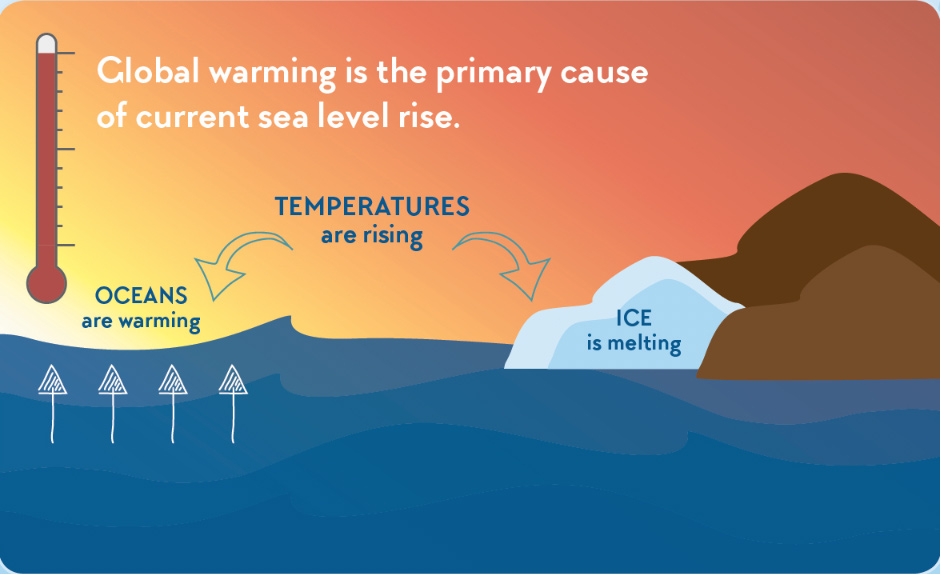
Rising global temperatures drive sea‑level rise through thermal expansion of seawater and accelerated melting of glaciers and ice sheets, reshaping coastlines and affecting ecosystems and societies worldwide.
Quick Answer
Higher atmospheric temperatures heat the ocean, causing water to expand, and melt land‑based ice such as glaciers, Greenland, and Antarctica. Together these processes add volume to the world’s oceans, raising sea level at a rate of about 3.3 mm per year since the early 1990s (IPCC 2021). The rise threatens low‑lying coastal communities, amplifies storm surge, and alters marine habitats. While the basic mechanisms are well understood, uncertainties remain regarding the future contribution of ice‑sheet dynamics under different emission pathways.
Key Takeaways
- Thermal expansion accounts for roughly half of observed sea‑level rise; the rest comes from melting ice.
- Global average sea level has risen about 20 cm since 1900, with acceleration in recent decades.
- Rising seas increase flood risk, saltwater intrusion, and ecosystem disruption, especially in densely populated coastal zones.
- High‑confidence evidence links human‑driven warming to the observed sea‑level increase.
- Future sea‑level trajectories depend on greenhouse‑gas emissions, ice‑sheet stability, and regional factors such as land subsidence.
What Is Why Rising Global Temperatures Cause Sea Levels to Rise?
The phrase describes the physical relationship between a warming climate and the observed increase in the height of the world’s oceans. It encompasses two primary processes—thermal expansion of seawater and the addition of meltwater from glaciers, ice caps, and the Greenland and Antarctic ice sheets. The term differs from “sea‑level rise due to land subsidence” or “tide‑related fluctuations,” which are separate phenomena. Understanding this link is essential because sea‑level rise directly influences coastal flooding, habitat loss, and the socioeconomic stability of billions of people.
How Does It Work?
1. Thermal Expansion
When seawater absorbs heat from the atmosphere, its temperature rises. Warmer water molecules move more vigorously and occupy a larger volume—a property known as thermal expansion. Because the oceans hold about 97 % of Earth’s excess heat, even modest temperature increases translate into measurable volume growth. The Intergovernmental Panel on Climate Change (IPCC) attributes roughly 40–50 % of the sea‑level rise observed from 1993 to 2018 to this process.
2. Melting of Land Ice
Higher temperatures also melt ice that resides on land. Glaciers worldwide have been losing mass at an average rate of 0.8 mm per year (World Glacier Monitoring Service, 2022). The Greenland Ice Sheet contributed about 0.7 mm per year, while Antarctica added roughly 0.3 mm per year over the same period. Meltwater flows into the ocean, increasing its total volume.
3. Feedbacks and Interactions
Melting ice can reduce surface albedo, causing additional warming—a positive feedback. Freshwater input also alters ocean salinity, which can modify large‑scale circulation patterns such as the Atlantic Meridional Overturning Circulation, potentially influencing regional sea‑level trends.
What Does the Evidence Show?
Multiple lines of evidence converge on the conclusion that global warming is the dominant driver of recent sea‑level rise. Satellite altimetry, beginning with TOPEX/Poseidon in 1992, provides precise global sea‑level measurements showing a mean rise of 3.3 mm yr⁻¹ (NASA 2021). Tide‑gauge records, extending back to the 19th century, corroborate this trend after accounting for vertical land motion. Attribution studies using climate models consistently reproduce observed sea‑level changes only when anthropogenic greenhouse‑gas forcing is included, confirming human influence.
Main Causes or Drivers
Direct Causes
- Absorption of excess heat by the ocean (thermal expansion).
- Mass loss from glaciers, Greenland, and Antarctic ice sheets.
Underlying Drivers
- Increased atmospheric concentrations of CO₂, CH₄, and N₂O since the industrial era.
- Land‑use changes that affect surface albedo and heat fluxes.
Amplifying Factors
- Oceanic heat uptake efficiency.
- Potential instability of marine‑based ice sheet margins.
Environmental and Human Impacts
Environmental Impacts
Higher sea levels inundate coastal wetlands, reduce habitat for mangroves and salt‑marsh birds, and shift the distribution of marine species that depend on specific depth ranges. Coral reefs may experience increased sedimentation and reduced light penetration.
Human Health and Social Impacts
Coastal flooding can contaminate drinking‑water supplies with saltwater, increasing hypertension risk in vulnerable populations. Displacement of communities can lead to mental‑health stressors and exacerbate socioeconomic inequalities.
Economic and Infrastructure Impacts
Storm surge heights rise in step with sea level, raising insurance costs and repair expenses for ports, roads, and power plants. The World Bank estimates that, without adaptation, sea‑level rise could cost coastal economies up to 0.5 % of global GDP by 2050.
Regional Differences
Sea‑level change is not uniform. Regions experiencing land subsidence, such as the Gulf Coast of the United States, see amplified relative rise, while areas with glacial rebound, like parts of Scandinavia, may experience slower apparent rise. The western Pacific islands, already low‑lying, are among the most vulnerable, whereas high‑latitude coasts may see modest changes but larger ice‑sheet contributions.
What Scientists Know With High Confidence
- Human‑induced warming is the primary driver of the observed global sea‑level rise since the mid‑20th century.
- Thermal expansion and melting of land ice together explain the majority of the rise.
- Sea level has risen about 20 cm since 1900, with an accelerating rate in the past three decades.
- Continental ice loss is increasing, with Greenland losing ~280 Gt yr⁻¹ and Antarctica ~150 Gt yr⁻¹ in the 2010s (IPCC 2021).
What Remains Uncertain
The largest uncertainties concern the future behavior of the Antarctic ice sheet, especially the West Antarctic sector, where potential rapid ice‑sheet collapse could add several meters of sea level over centuries. Model representations of ice‑shelf buttressing and ocean‑driven melting are still being refined. Additionally, regional variations in land motion and ocean dynamics introduce uncertainty into local sea‑level projections.
Common Misconceptions
Misconception: Sea‑level rise is caused only by melting ice.
Reality: Thermal expansion of warming seawater accounts for roughly half of the observed rise, making it a co‑equal driver.
Misconception: Sea‑level rise will happen uniformly everywhere.
Reality: Local factors such as land subsidence, tectonic uplift, and ocean currents cause significant regional differences.
Misconception: Current sea‑level rise is negligible for human societies.
Reality: Even a few centimeters increase raises the baseline for storm surges, leading to more frequent “sunny‑day” flooding in cities like Miami and New York.
Solutions and Limitations
Mitigation—reducing greenhouse‑gas emissions—addresses the root cause and can limit future sea‑level rise, but the benefits manifest over decades. Adaptation measures such as coastal wetlands restoration, seawall construction, and managed retreat provide immediate protection but involve high costs, potential ecological trade‑offs, and social displacement. Nature‑based solutions (e.g., mangrove planting) offer co‑benefits for biodiversity but may be insufficient where land loss is extreme.
What Individuals, Communities, and Governments Can Do
What Individuals Can Do
- Support policies that accelerate decarbonization (e.g., voting for climate‑friendly candidates).
- Reduce personal carbon footprints through energy efficiency, low‑carbon transportation, and sustainable consumption.
What Communities and Organizations Can Do
- Implement local climate‑action plans that prioritize green infrastructure and flood‑resilient zoning.
- Invest in early‑warning systems and community education on evacuation routes.
What Governments Can Do
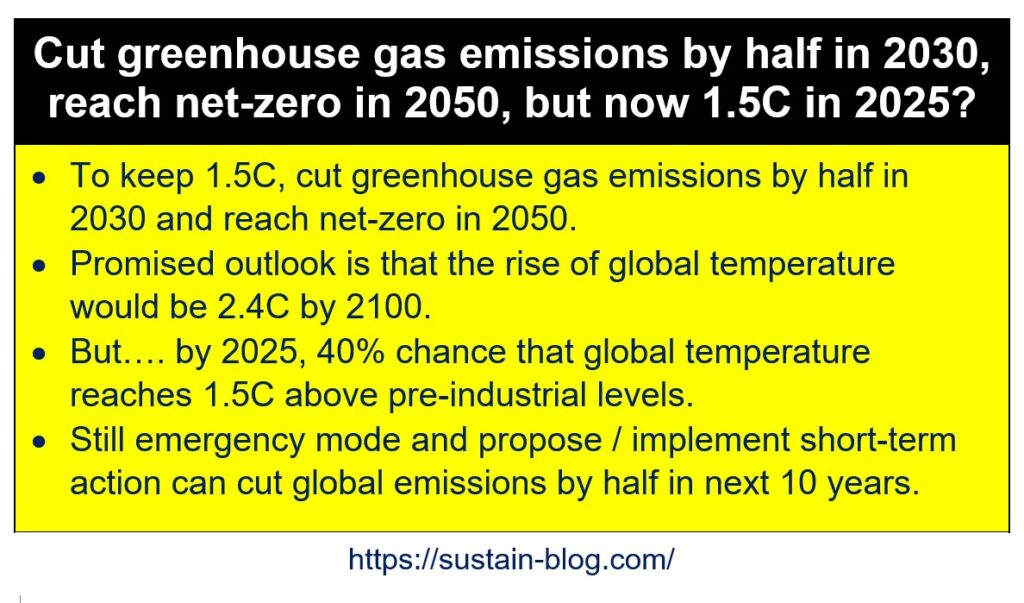
- Adopt ambitious emission‑reduction targets consistent with the Paris Agreement to limit warming to 1.5 °C.
- Fund large‑scale coastal protection projects and provide resources for climate‑migration planning.
Looking Ahead
The link between rising global temperatures and sea‑level rise is robust: warming oceans expand and melt land ice, driving a measurable increase in sea level. High‑confidence evidence confirms this mechanism, while uncertainties focus on the magnitude of future ice‑sheet contributions. Effective responses combine rapid mitigation of emissions with strategic adaptation to protect vulnerable coastlines. By understanding the science, societies can make informed decisions that balance immediate safety with long‑term sustainability.
Frequently Asked Questions
How does thermal expansion contribute to sea‑level rise?
Thermal expansion occurs when seawater absorbs heat and its volume increases; this process accounts for about 40–50 % of the observed sea‑level rise since the early 1990s.
Which ice sheets are the largest contributors to current sea‑level rise?
The Greenland Ice Sheet and the Antarctic Ice Sheet together contribute the majority of meltwater, with Greenland losing roughly 280 gigatonnes per year and Antarctica about 150 gigatonnes per year in the 2010s.
Why does sea‑level rise vary between different coastal regions?
Regional variation stems from factors like land subsidence, tectonic uplift, ocean currents, and gravitational effects of ice‑mass loss, causing some areas to experience faster relative sea‑level rise than others.
What are the main uncertainties about future sea‑level rise?
The biggest uncertainties involve how quickly the West Antarctic Ice Sheet might destabilize and how accurately models can simulate ice‑shelf dynamics and regional ocean‑heat transport.
What actions can governments take to address sea‑level rise?
Governments can set ambitious emission‑reduction targets, fund coastal protection infrastructure, develop managed‑retreat policies, and support community‑based resilience planning.







Leave a Comment