
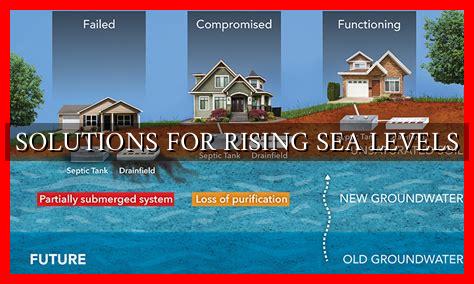
Rising sea levels, driven by warming oceans and melting ice, threaten coastlines worldwide, but evidence‑based mitigation, adaptation, and restoration strategies can meaningfully limit further rise and protect communities.
Quick Answer
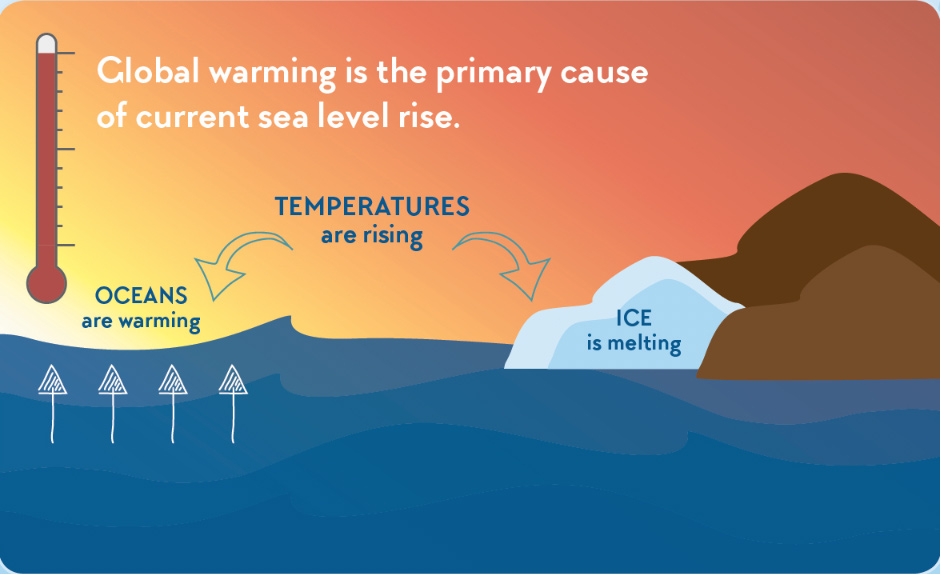
Sea‑level rise is caused mainly by thermal expansion of seawater and the loss of ice from Greenland and Antarctica. Stopping the rise entirely is not feasible, but limiting global warming to well‑below 2 °C can substantially slow both processes, reducing future rise by up to half compared with high‑emission pathways. Effective action combines rapid greenhouse‑gas reductions with nature‑based coastal protection, managed retreat, and resilient infrastructure, acknowledging uncertainties in ice‑sheet dynamics.
Key Takeaways
- Thermal expansion and ice‑sheet melt are the dominant drivers of sea‑level rise.
- Limiting warming to 1.5 °C–2 °C can cut projected rise by roughly 30‑50% by 2100.
- Nature‑based solutions such as mangrove restoration provide both carbon sequestration and shoreline protection.
- Managed retreat reduces risk where protection is economically or ecologically unsustainable.
- Policy, financing, and community engagement are essential for scaling solutions.
What Is the Question “Can We Stop Sea Levels From Rising? Solutions That Actually Work?”
The phrase asks whether humanity can halt the ongoing increase in global mean sea level and, if not, which concrete actions can meaningfully slow it and protect vulnerable areas. The scope includes physical processes that raise oceans, the scientific confidence in those processes, and the portfolio of mitigation (reducing causes) and adaptation (reducing impacts) strategies that have been evaluated in peer‑reviewed literature and major assessment reports such as the IPCC 2021 WG I.
How Does It Work?
Thermal Expansion
When seawater warms, its volume increases because water expands as temperature rises. This process accounts for roughly 30‑40% of observed sea‑level rise since 1900, according to the Intergovernmental Panel on Climate Change (IPCC) assessment of instrumental records.
Ice‑Sheet and Glacier Melt
Warmer air and ocean temperatures accelerate the flow of ice from Greenland and Antarctica into the ocean. Satellite gravimetry (e.g., GRACE) shows that ice‑sheet contribution grew from 0.8 mm yr⁻¹ in the 2010s, now representing the largest single source of rise.
Feedbacks and Thresholds
Ice‑sheet dynamics involve nonlinear feedbacks, such as basal lubrication from meltwater and marine ice‑sheet instability. These mechanisms can trigger rapid, irreversible loss if critical thresholds are crossed, adding uncertainty to long‑term projections.
What Does the Evidence Show?
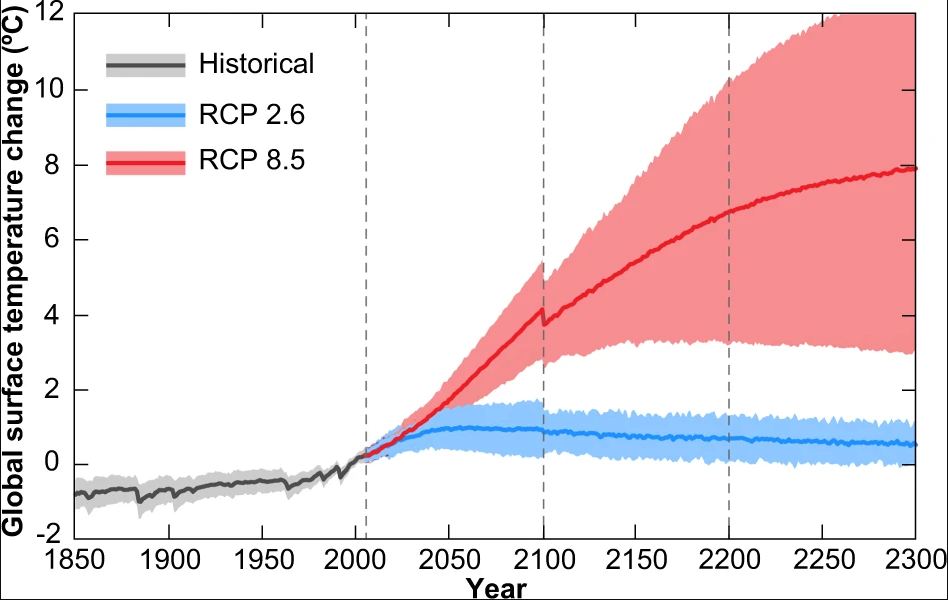
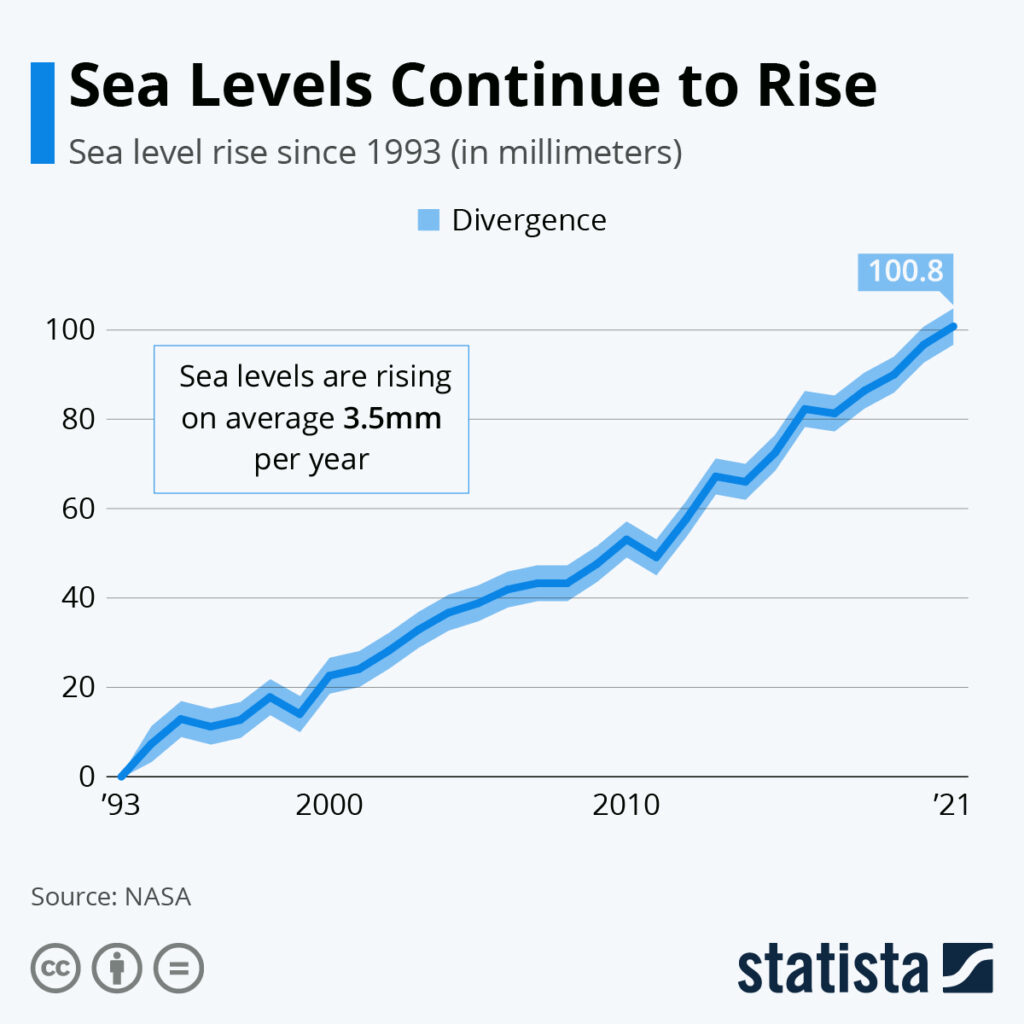
Long‑term tide‑gauge records, satellite altimetry (since 1993), and paleoclimatic reconstructions consistently demonstrate a global mean sea‑level rise of about 20 cm over the 20th century, accelerating to 3.3 mm yr⁻¹ in the past decade (NASA OSCAR, 2023). Climate‑model intercomparison projects (CMIP6) indicate that under low‑emission scenarios (SSP1‑2.6) total rise by 2100 could be 0.4‑0.6 m, whereas high‑emission pathways (SSP5‑8.5) project 0.8‑1.2 m. Peer‑reviewed meta‑analyses confirm that mitigation reduces both the magnitude and rate of rise, especially by limiting Arctic and Antarctic ice loss.
Main Causes or Drivers
Direct Physical Causes
- Thermal expansion of seawater.
- Mass loss from Greenland and Antarctic ice sheets.
- Glacier melt worldwide.
Underlying Human Drivers
- Burning of fossil fuels, leading to CO₂ concentrations of 420 ppm in 2023 (NOAA).
- Deforestation and land‑use change, which reduce carbon sinks and alter regional climate patterns.
- Industrial aerosol emissions that affect cloud formation and radiative balance.
Amplifying Natural Factors
- El Niño‑Southern‑Oscillation influences short‑term sea‑level variability.
- Long‑term orbital cycles modulate insolation but operate over millennia, not the current century.
Environmental and Human Impacts
Environmental Impacts
Coastal wetlands experience increased salinization, reducing biodiversity. Coral reefs suffer from both sea‑level rise and ocean acidification, leading to habitat loss for fish and invertebrates. Salt‑marsh migration inland is often blocked by development, causing net loss of carbon‑rich ecosystems.
Human Health and Social Impacts
Higher sea levels raise the baseline for storm surges, increasing flood frequency. Low‑lying populations face displacement, with the UN‑DP estimating that 280 million people could be exposed to chronic inundation by 2050 under a high‑emission scenario. Flood‑related waterborne diseases also rise in affected regions.
Economic and Infrastructure Impacts
Infrastructure damage from coastal flooding costs an estimated US$1 trillion annually worldwide (World Bank, 2022). Property values decline in high‑risk zones, and insurance premiums rise, affecting affordability for vulnerable households.
Regional Differences
North‑American Atlantic seaboard, the Mekong Delta, and Bangladesh experience some of the highest projected relative sea‑level rise due to subsidence combined with oceanic rise. In contrast, parts of the Pacific Islands face compounded threats from both sea‑level rise and increased cyclone intensity. Arctic coastlines experience rapid permafrost thaw, altering local sea‑level dynamics.
These variations arise from local land movement, ocean currents, and socioeconomic capacity to adapt.
What Scientists Know With High Confidence
- Global mean sea level has risen by about 20 cm since 1900 and the rate is accelerating.
- Thermal expansion and ice‑sheet melt together account for >80% of observed rise since 1990.
- Limiting warming to 1.5 °C–2 °C will substantially reduce future sea‑level rise compared with business‑as‑usual pathways.
- Nature‑based coastal buffers (e.g., mangroves, salt marshes) effectively reduce wave energy and can store carbon.
What Remains Uncertain
Key uncertainties include the exact timing and magnitude of Antarctic ice‑sheet instability, the rate of future land‑subsidence in densely populated deltas, and how socioeconomic pathways will shape emissions beyond 2030. Improved satellite gravimetry and regional monitoring are needed to narrow these gaps.
Common Misconceptions
Misconception: Sea‑level rise can be stopped completely.
Reality: Physical processes already set in motion mean some rise is inevitable; however, aggressive mitigation can markedly slow further increase.
Misconception: Only developing countries need to act.
Reality: High‑emitting nations contribute the majority of CO₂; their policies drive global temperature trajectories that affect sea level worldwide.
Misconception: Building taller seawalls solves the problem.
Reality: Hard engineering can protect specific sites but often transfers risk elsewhere, incurs high maintenance costs, and may damage coastal ecosystems.
Misconception: Sea‑level rise is only a future problem.
Reality: Many communities already experience increased flooding and saltwater intrusion, indicating present‑day impacts.
Solutions and Limitations
Effective responses fall into three categories: mitigation, adaptation, and restoration.
Mitigation (Reducing the Cause)
- Rapid decarbonisation of energy systems (renewable electricity, electrified transport). Evidence from IPCC shows this is the only pathway to limit long‑term rise.
- Carbon‑pricing mechanisms can incentivise emission cuts but require global coordination to avoid carbon leakage.
Adaptation (Reducing Exposure)
- Nature‑based solutions: mangrove replanting, salt‑marsh creation, reef restoration. These provide co‑benefits but depend on suitable space and local community support.
- Managed retreat: relocating infrastructure from high‑risk zones. Politically challenging and costly, yet cost‑benefit analyses often favor retreat over perpetual defense in vulnerable deltas.
- Green infrastructure in cities (permeable pavement, bioswales) reduces surface runoff, easing pressure on drainage during storm surges.
Restoration and Conservation
- Restoring coastal wetlands enhances carbon sequestration (blue carbon) and buffers wave energy.
- Coral‑reef restoration can protect reefs that act as natural breakwaters, though success varies with water‑quality conditions.
All solutions entail trade‑offs: land‑use conflicts, financial constraints, and potential ecological side effects must be weighed in planning.
What Individuals, Communities, and Governments Can Do
What Individuals Can Do
- Support policies that accelerate renewable energy adoption by voting, contacting representatives, or participating in climate advocacy groups.
- Reduce personal carbon footprints through energy‑efficient appliances, low‑carbon travel, and mindful consumption.
- Volunteer with local coastal‑restoration projects to help replant mangroves or create community gardens that improve storm‑water management.
What Communities and Organizations Can Do
- Develop integrated coastal‑zone management plans that combine hard engineering with nature‑based measures.
- Secure funding for managed‑retreat pilots, ensuring fair compensation and relocation assistance for affected residents.
- Implement zoning that restricts new development in high‑risk floodplains.
What Governments Can Do
- Adopt ambitious Nationally Determined Contributions (NDCs) aligned with the Paris Agreement to keep warming below 2 °C.
- Fund large‑scale coastal‑restoration programs and provide subsidies for green infrastructure.
- Enact building‑code updates that require flood‑resilient design in vulnerable regions.
- Establish transparent, science‑based sea‑level rise projections for long‑term planning (e.g., using IPCC scenarios).
Closing Synthesis
Sea‑level rise is driven by well‑understood physical processes—thermal expansion and ice‑sheet melt—that will continue for centuries. While the rise cannot be halted entirely, rapid mitigation of greenhouse‑gas emissions can halve projected increases, buying critical time for adaptation. Evidence‑based solutions such as mangrove restoration, managed retreat, and resilient infrastructure offer tangible protection but must be deployed with attention to cost, equity, and ecological trade‑offs. Coordinated action across individuals, communities, and governments remains the most reliable path to safeguard coastlines for future generations.
Frequently Asked Questions
What are the main physical processes that cause sea‑level rise?
Sea‑level rise is primarily caused by thermal expansion of warming seawater and the addition of water from melting glaciers and the Greenland and Antarctic ice sheets, which together account for over 80% of observed rise since the 1990s.
Can limiting global warming to 1.5 °C stop sea‑level rise?
Limiting warming to 1.5 °C cannot stop sea‑level rise entirely, but it can significantly slow the rate, reducing projected 2100 rise by roughly 30‑50% compared with high‑emission scenarios, according to IPCC assessments.
How do mangroves help protect coastal communities?
Mangroves act as natural buffers by absorbing wave energy, trapping sediments, and storing carbon. Restored mangrove forests can reduce storm‑surge impacts and provide habitat, offering both protection and climate‑mitigation benefits.
What is managed retreat and when is it appropriate?
Managed retreat involves relocating infrastructure and communities from high‑risk coastal zones. It is appropriate where protective measures are economically unviable or would cause severe ecological damage, and it can lower long‑term risk and costs.
What role do governments play in limiting future sea‑level rise?
Governments can set ambitious emissions targets, fund coastal‑restoration projects, update building codes for flood resilience, and provide science‑based sea‑level projections to guide long‑term planning and protect vulnerable populations.






Leave a Comment