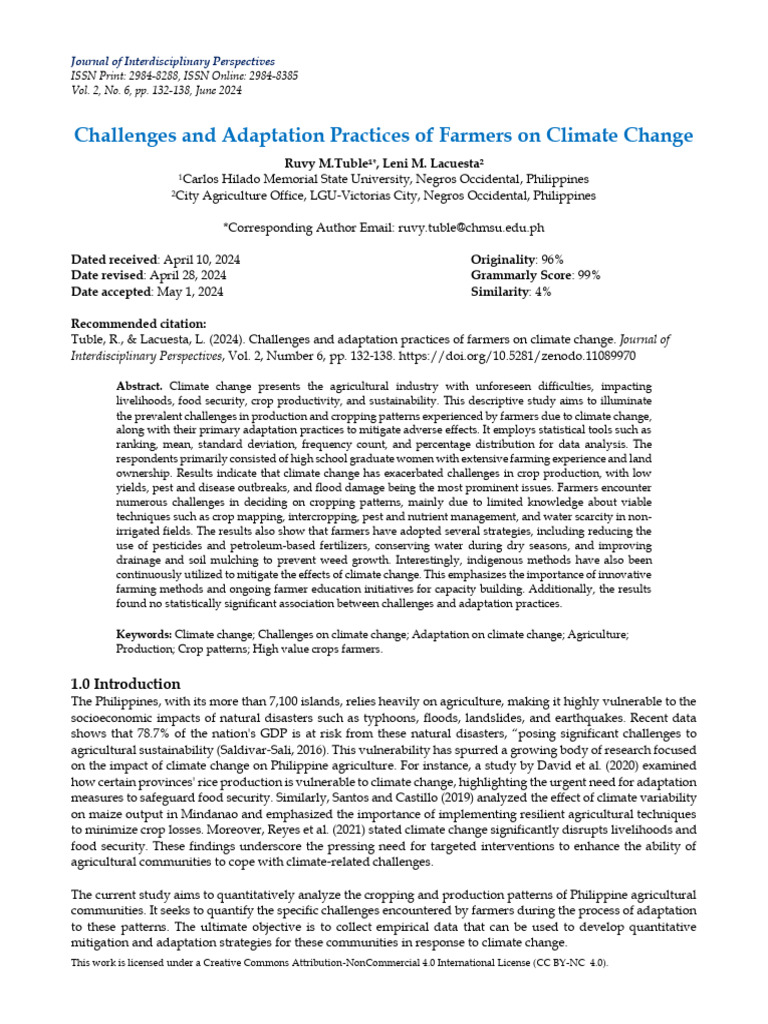
The impact of climate change on agriculture is profound and far-reaching. Farmers, the backbone of our food systems, are increasingly confronted with erratic weather patterns, prolonged droughts, and unexpected floods. In this unpredictable milieu, resilience has become paramount. Here, we explore eleven innovative and pragmatic strategies farmers are adopting to navigate the vicissitudes of climate change.
1. Diversifying Crop Selection
In the face of varying climatic conditions, one of the foremost adaptations is the diversification of crops. By planting a variety of species, farmers can mitigate the risks associated with total crop failure. This approach not only enhances food security but also fosters biodiversity. For instance, incorporating nitrogen-fixing legumes can improve soil health and reduce dependency on synthetic fertilizers.
2. Implementing Agroforestry
Agroforestry, the integration of trees and shrubs into farmland, has emerged as a powerful adaptation strategy. This method not only enhances biodiversity but also creates microclimates that can buffer crops against extreme weather. Moreover, trees can sequester carbon, contributing to climate change mitigation while providing additional income through timber and fruit production.
3. Investing in Soil Health
Healthy soil is the foundation of resilient agricultural systems. Farmers are increasingly adopting practices that enhance soil health, such as cover cropping, reduced tillage, and organic amendments. These techniques improve soil structure, enhance water retention, and promote microbial life, ultimately increasing the resilience of crops to climatic extremes.
4. Utilizing Drought-Resistant Varieties
With water scarcity becoming a critical issue, the development and use of drought-resistant crop varieties is gaining traction. These crops have been genetically selected or bred to withstand low moisture conditions, allowing farmers to maintain productivity even in arid periods. From sorghum to certain strains of wheat, these hardy cultivars represent a beacon of hope in an uncertain future.
5. Employing Precision Agriculture
The advent of technology has revolutionized farming practices. Precision agriculture utilizes data analytics and sensors to monitor crop health, soil moisture levels, and weather patterns. This allows farmers to make informed decisions on irrigation, fertilization, and pest management, optimizing resource usage while minimizing waste and environmental impact.
6. Embracing Water Conservation Techniques
Water management is crucial in the era of climate change, and farmers are embracing a plethora of conservation techniques. Drip irrigation systems, for example, deliver water directly to the plant roots, minimizing evaporation losses. Additionally, rainwater harvesting systems capture and store precipitation, providing a vital water source during dry spells, enhancing sustainability while supporting crop yields.
7. Adopting Integrated Pest Management (IPM)
As climate change influences pest populations and their distribution, Integrated Pest Management emerges as a resilient strategy. By combining biological control, habitat manipulation, and the judicious use of pesticides, farmers can manage pests sustainably and reduce dependency on chemical inputs. This approach not only protects crops but also promotes ecological balance.
8. Shifting Farming Calendars
An often-overlooked adaptation involves altering planting and harvesting schedules in response to shifting climatic patterns. By observing weather trends and adjusting crop timing, farmers can avoid the pitfalls of late frosts or early droughts. This strategic maneuver can significantly enhance crop survival and yield, ensuring a more stable food supply.
9. Utilizing Climate Forecasting Tools
In an age where technology prevails, climate forecasting tools have become invaluable. Farmers are leveraging advanced models and weather predictions to plan their agricultural activities more effectively. By understanding potential weather patterns and anomalies, they can adjust their practices and safeguard their livelihoods against adverse conditions.
10. Building Community Resilience
Farmers are recognizing the importance of collective action in mitigating climate impacts. By forming cooperatives, they can share knowledge, resources, and risk. These community-based platforms not only enhance resilience but also foster a sense of solidarity, thereby creating a robust support network that can withstand climatic shocks.
11. Engaging in Policy Advocacy
Finally, farmers are increasingly understanding the role they play in shaping policy. By advocating for sustainable agricultural practices and climate-resilient policies at local and national levels, they can influence regulations that affect their livelihoods. Engaging with policymakers helps ensure that farmers’ needs are met and that resources are allocated effectively.
As climate change continues to challenge traditional farming methods, the resilience and adaptability of farmers shine like a beacon of hope. Each of these strategies reflects a promising shift in perspective, one that prioritizes sustainability while piquing curiosity about the transformative power of innovation in agriculture. The journey of adaptation is fraught with challenges, yet it is also ripe with opportunities. In solidarity, with a shift in consciousness, the farming community is not merely surviving but thriving, demonstrating that with intelligence and determination, we can face the unpredictability of climate change head-on.











Leave a Comment