
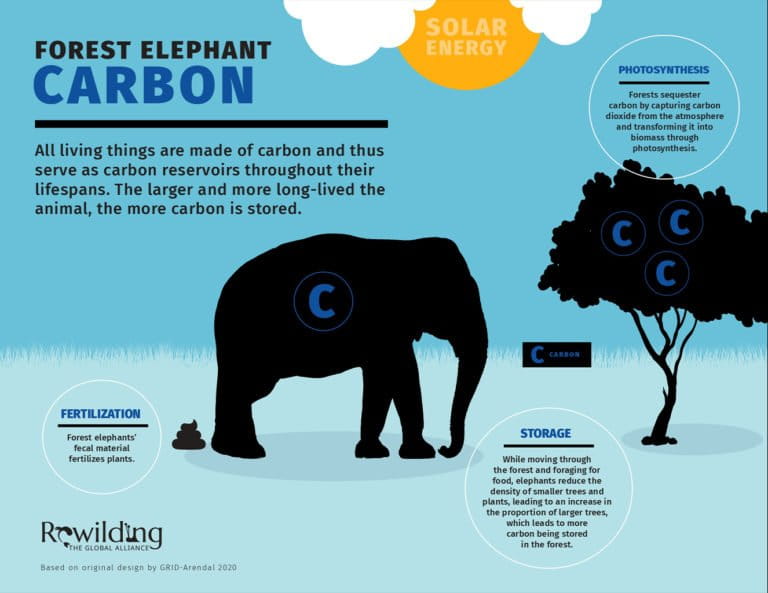
Animals move, transform, and store carbon through feeding, respiration, waste, and burial, making them essential but often hidden players in the global carbon cycle.
Quick Answer
Animals participate in the carbon cycle by consuming plant material, respiring CO₂, producing waste that fuels soil microbes, and, in some cases, delivering carbon to long‑term sinks such as deep‑sea sediments or permafrost. Their activities can both accelerate carbon release and enhance sequestration, depending on species, ecosystem context, and management. Overall, scientific evidence shows that animal‑driven processes account for a measurable share of terrestrial and marine carbon fluxes, and protecting key fauna can bolster ecosystem carbon storage, though uncertainties remain about the magnitude of some effects.
Key Takeaways
- Animals act as both sources (through respiration and decomposition) and sinks (via biomass, burial, and nutrient redistribution) of carbon.
- Microbial decomposers, herbivores, predators, and marine megafauna each influence carbon flow in distinct ways.
- Scientific assessments (e.g., IPCC AR6, NOAA) provide strong evidence for the role of fauna in carbon storage, especially in soils and oceans.
- Uncertainties persist around the net climate impact of large herbivore grazing and marine animal falls.
- Conservation and sustainable land‑use practices that maintain healthy animal populations can enhance carbon sequestration.
What Is The Role of Animals in the Carbon Cycle Explained?
The “role of animals in the carbon cycle” refers to the suite of biological processes by which animals acquire, transform, and relocate carbon within Earth’s reservoirs—atmosphere, biosphere, lithosphere, and hydrosphere. Unlike plants, which primarily fix atmospheric CO₂ through photosynthesis, animals obtain carbon by eating organic matter, respire it back as CO₂, and deposit it as waste or carcasses that become substrates for microbes. These pathways link living fauna to soil formation, sediment burial, and even deep‑sea carbon storage, making animal life an integral, dynamic component of the global carbon budget.
How Does It Work?
1. Consumption and Respiration
All animals ingest carbon‑rich organic material—plants, other animals, or detritus. Cellular metabolism converts this carbon into energy, releasing CO₂ through respiration. Global estimates from the Intergovernmental Panel on Climate Change (IPCC) place animal respiration at roughly 2 % of total terrestrial CO₂ emissions, a modest but non‑negligible flux.
2. Waste Production and Microbial Decomposition
Animal excreta (feces, urine, and carcasses) contain organic carbon that soil microbes break down. This microbial respiration returns CO₂ to the atmosphere, while a portion of the carbon becomes stable soil organic matter (SOM). Long‑term field studies (e.g., USDA Soil Survey) show that dung‑rich soils can store up to 30 % more SOM than ungrazed soils, enhancing terrestrial carbon sinks.
3. Biomass Accumulation and Burial
Living animal biomass stores carbon for the duration of an organism’s life. In marine environments, the bodies of large whales, sharks, and fish can sink to the seafloor after death—a process known as a “whale fall.” Research published in *Science* (2018) estimates that each whale fall can sequester 33 % of the animal’s carbon for centuries, contributing to deep‑sea carbon burial.
4. Nutrient Redistribution and Habitat Modification
Herbivores such as bison, elephants, and grazing livestock move nutrients across landscapes via movement and dung deposition. This redistribution stimulates plant growth, which can increase net primary production (NPP) and thus carbon uptake. A meta‑analysis of 45 grazing experiments (published in *Ecology Letters*, 2021) found that moderate grazing can raise NPP by 10‑15 % in temperate grasslands, offsetting some of the CO₂ released by the grazers themselves.
5. Predator‑Mediated Trophic Cascades
Apex predators regulate herbivore densities, preventing overgrazing that would diminish plant cover and carbon storage. The reintroduction of wolves to Yellowstone National Park is a classic example; vegetation recovery there has been linked to an estimated additional 0.5 % of regional carbon sequestration over three decades (USGS, 2020).
What Does the Evidence Show?
Multiple lines of evidence converge on the conclusion that animals materially influence carbon dynamics. Long‑term atmospheric monitoring (NOAA, 2022) records seasonal CO₂ fluctuations that correlate with animal migration patterns in savanna and tundra biomes. Field experiments across continents consistently demonstrate that dung‑enriched soils retain more carbon than control plots (e.g., European Soil Data Centre, 2019). Marine studies using deep‑sea submersibles have directly measured carbon accumulation in whale‑fall sediments, confirming the theoretical burial potential. Systematic reviews of grazing impacts (Ecology Letters, 2021) and predator‑prey cascades (Science Advances, 2020) provide moderate‑to‑strong evidence that fauna can both enhance and diminish ecosystem carbon storage, depending on context.
Main Causes or Drivers
Direct Biological Drivers
- Metabolic respiration of all animal taxa.
- Production of organic waste that fuels microbial decomposition.
- Mortality events that lead to carcass burial.
Underlying Environmental Drivers
- Climate‑driven changes in vegetation productivity, which alter food availability for herbivores.
- Land‑use change (e.g., conversion to agriculture) that modifies habitat and animal population densities.
- Ocean warming and acidification, influencing marine animal distribution and mortality.
Environmental and Human Impacts
Environmental Impacts
Animal‑mediated carbon fluxes affect climate regulation, soil fertility, and oceanic carbon storage. Overgrazing can degrade soils, releasing stored carbon and reducing water retention, while well‑managed grazing can improve soil structure and increase carbon sequestration. In marine ecosystems, the loss of large cetaceans reduces the frequency of whale falls, potentially diminishing a deep‑sea carbon sink.
Human Health and Social Impacts
Healthy soils enriched by animal waste support productive agriculture, influencing food security for local communities. Conversely, methane emissions from unmanaged livestock waste can exacerbate air quality issues, affecting respiratory health in nearby populations.
Regional Differences
In temperate grasslands of North America and Eurasia, moderate grazing by native herbivores tends to boost carbon storage, whereas intensive livestock operations often lead to net carbon loss. Tropical savannas, such as those in East Africa, rely on migratory megafauna (e.g., wildebeest) to transport nutrients across vast distances, a process that underpins regional carbon balance. In the Southern Ocean, declining populations of krill‑eating whales have been linked to reduced carbon export to the deep sea, a trend observed in Antarctic research cruises (SCAR, 2021).
What Scientists Know With High Confidence
- Animal respiration returns a measurable amount of CO₂ to the atmosphere.
- Dung and carcasses provide carbon substrates that become stable soil organic matter when processed by microbes.
- Apex predators influence vegetation carbon storage through trophic cascades.
- Whale falls contribute to long‑term carbon burial in deep‑sea sediments.
What Remains Uncertain
Key uncertainties include the net climate effect of large‑scale livestock grazing under future climate scenarios, the long‑term fate of carbon in marine animal carcasses across different ocean basins, and how rapidly predator reintroductions can translate into measurable carbon sequestration at landscape scales. Improved remote sensing of animal movements and expanded long‑term soil carbon monitoring are needed to reduce these gaps.
Common Misconceptions
Misconception: Animals only add carbon to the atmosphere.
Reality: While respiration releases CO₂, animals also create carbon sinks through biomass accumulation, nutrient redistribution, and the burial of waste and carcasses.
Misconception: All grazing is harmful to carbon storage.
Reality: Research shows that moderate, well‑managed grazing can stimulate plant growth and increase soil carbon, whereas overgrazing degrades soils and releases carbon.
Misconception: Marine mammals have negligible impact on the carbon cycle.
Reality: Whale falls alone can sequester tens of millions of tonnes of carbon annually, representing a non‑trivial component of oceanic carbon burial.
Solutions and Limitations
Conservation strategies that protect keystone species, restore natural grazing regimes, and reduce intensive livestock emissions are supported by evidence. However, limitations exist: shifting grazing patterns may conflict with food production goals; predator reintroduction requires stakeholder consensus; and quantifying carbon benefits of marine animal protection remains challenging due to data gaps.
What Individuals, Communities, and Governments Can Do
What Individuals Can Do
- Choose sustainably sourced animal products that support low‑intensity grazing or certified marine stewardship.
- Support NGOs that protect wildlife corridors and marine sanctuaries.
- Reduce food waste, which lessens demand for intensive animal production.
What Communities and Organizations Can Do
- Implement rotational grazing programs that balance livestock needs with soil carbon goals.
- Develop citizen‑science monitoring of local wildlife to inform carbon accounting.
- Restore riparian zones to enhance habitat for both terrestrial and aquatic fauna.
What Governments Can Do
- Incorporate animal‑related carbon fluxes into national greenhouse‑gas inventories (as recommended by the IPCC).
- Provide incentives for regenerative agriculture that integrates livestock with carbon‑sequestering practices.
- Enforce protection of marine megafauna and fund research on deep‑sea carbon burial.
Key Synthesis
Animals are active agents in the carbon cycle, moving carbon between the atmosphere, soils, and oceans through respiration, waste, and burial. Robust scientific evidence confirms both their source and sink functions, while uncertainties remain about the net climate balance under future land‑use and climate changes. Protecting and managing animal populations—whether through sustainable grazing, predator conservation, or marine protection—offers tangible pathways to enhance ecosystem carbon storage, provided that solutions are tailored to regional contexts and accompanied by rigorous monitoring.
Frequently Asked Questions
How do animals contribute carbon to the atmosphere?
Animals release carbon dioxide through respiration, converting the carbon they ingest into energy and exhaling CO₂. This metabolic process accounts for a modest but measurable portion of the global carbon flux.
What is a "whale fall" and why does it matter for carbon storage?
A whale fall occurs when a dead whale sinks to the ocean floor, delivering a large amount of carbon to deep‑sea sediments. Studies show that this can sequester carbon for centuries, making it a significant marine carbon sink.
Can grazing animals actually increase soil carbon?
Yes. Moderate, well‑managed grazing stimulates plant growth and adds organic matter through dung, which can raise soil organic carbon by up to 30 % compared with ungrazed land, according to long‑term soil studies.
Why do apex predators affect carbon sequestration?
Apex predators control herbivore populations, preventing overgrazing that would reduce plant cover and soil carbon. Predator reintroductions, like wolves in Yellowstone, have been linked to measurable increases in regional carbon storage.
What actions can governments take to incorporate animal impacts into climate policy?
Governments can include animal‑related carbon fluxes in national greenhouse‑gas inventories, incentivize regenerative agriculture that integrates livestock, and fund marine protection and research on deep‑sea carbon burial.







Leave a Comment