
The greenhouse effect, a term that has permeated discussions surrounding climate change, plays an undeniable and transformative role in our planetary climate system. It is essential to dissect this phenomenon, understanding its mechanisms and implications, to fully grasp the escalating threats posed by climate change. This article embarks on an analytical journey, delineating the various intricacies of the greenhouse effect and its interplay with climate change, step by step.
At its core, the greenhouse effect is a natural and vital process. It begins with solar radiation emanating from the sun. This radiant energy travels across the void of space and reaches the Earth’s surface, where it is absorbed, warming the planet. A significant portion of this energy is then re-emitted back into the atmosphere in the form of infrared radiation. Herein lies the crux of the greenhouse effect: certain gases in the atmosphere, primarily carbon dioxide (CO2), methane (CH4), and nitrous oxide (N2O), possess the unique ability to trap this outgoing infrared radiation.
The gases responsible for the greenhouse effect are often referred to as greenhouse gases (GHGs). Without these gases, Earth would be inhospitably cold, rendering the existence of life as we know it improbable. However, the balance of this natural system has been dramatically disrupted through anthropogenic activities, leading to an inexorable rise in these gases since the industrial era.
Understanding the chemical and physical properties of greenhouse gases is crucial. For instance, CO2, a byproduct of fossil fuel combustion, is remarkably durable in the atmosphere, with a lifespan that can extend for centuries. Methane, despite being present in lower concentrations, is significantly more effective at trapping heat—over 25 times more so than CO2 over a 100-year period. As such, when evaluating the greenhouse effect, the potency of these gases must be considered.
As human activity continuously injects additional GHGs into the atmosphere, we are inadvertently amplifying the natural greenhouse effect. This process is compounded by deforestation—disposing of vast forests that act as carbon sinks. It is estimated that about 25% of global carbon dioxide emissions stem from deforestation and land-use changes. Consequently, the Earth’s atmospheric composition is inexorably altered, leading to a significant increase in global temperatures.
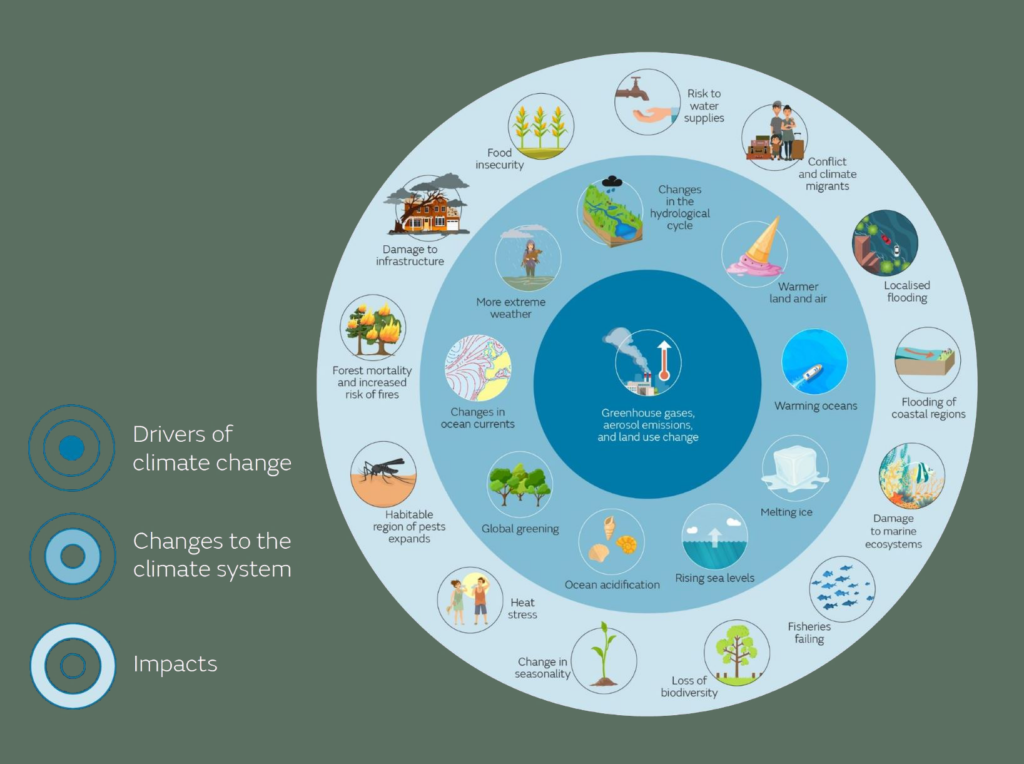
The impact of these temperature increments is profound. As global temperatures rise, a cascade of effects ensues. Warmer temperatures contribute to the melting of polar ice sheets and glaciers, resulting in rising sea levels that threaten coastal communities worldwide. The ocean, acting as a buffer to climate change, absorbs a substantial portion of excess heat. This phenomenon, however, leads to ocean warming and acidification, disrupting marine ecosystems and affecting fisheries.
A comprehensive understanding of the greenhouse effect also involves recognizing its role in extreme weather patterns. Climate change is not a linear progression; it creates an environment ripe for volatility. Increased temperatures lead to more intense and frequent heatwaves, droughts, and storms. The consequences are perilous: crop failures, food scarcity, and loss of biodiversity. Vulnerable populations, particularly in developing regions, face the brunt of these adverse effects, creating a cycle of poverty exacerbated by environmental degradation.
Moreover, the greenhouse effect intertwines with socio-economic factors, illustrating that climate change is not merely an environmental challenge but a complex socio-political one. Individuals and governments are compelled to reckon with the ramifications of their energy policies, land-use practices, and industrial regulations. The instigation of initiatives aimed at reducing greenhouse gas emissions is paramount. Governments must implement stringent regulations, investing in renewable energy technologies, energy efficiency, and sustainable agricultural practices.
International accords, such as the Paris Agreement, symbolize a unified global response to curtail greenhouse gas emissions. These agreements underscore the urgency of collaborative action, recognizing that climate change is a worldwide threat that transcends borders. Each nation’s commitment to reducing their carbon footprint is critical in addressing this planetary crisis.
Furthermore, individual actions can also contribute meaningfully to this collective effort. Individuals can rethink their lifestyles, adopting practices that minimize carbon output. Simple changes—such as utilizing public transportation, prioritizing energy-efficient appliances, and reducing waste—can collectively generate significant impacts. Individual decisions in consumption and lifestyle choices can reverberate across communities, thereby fostering a broader cultural shift towards sustainability.
In essence, the greenhouse effect, while a natural process facilitating life on Earth, has become increasingly manipulated by human endeavors. Its role in climate change is both complex and far-reaching, dictating environmental, social, and economic realms. Understanding this phenomenon provides invaluable insights into our responsibility towards the planet. As the reality of climate change unfurls, an urgent call to action resonates across the globe. It is imperative that we strive for a sustainable future, understanding that the stakes have never been higher to mitigate the adverse impacts of the greenhouse effect, ensuring that future generations inherit a viable and thriving planet.









Leave a Comment