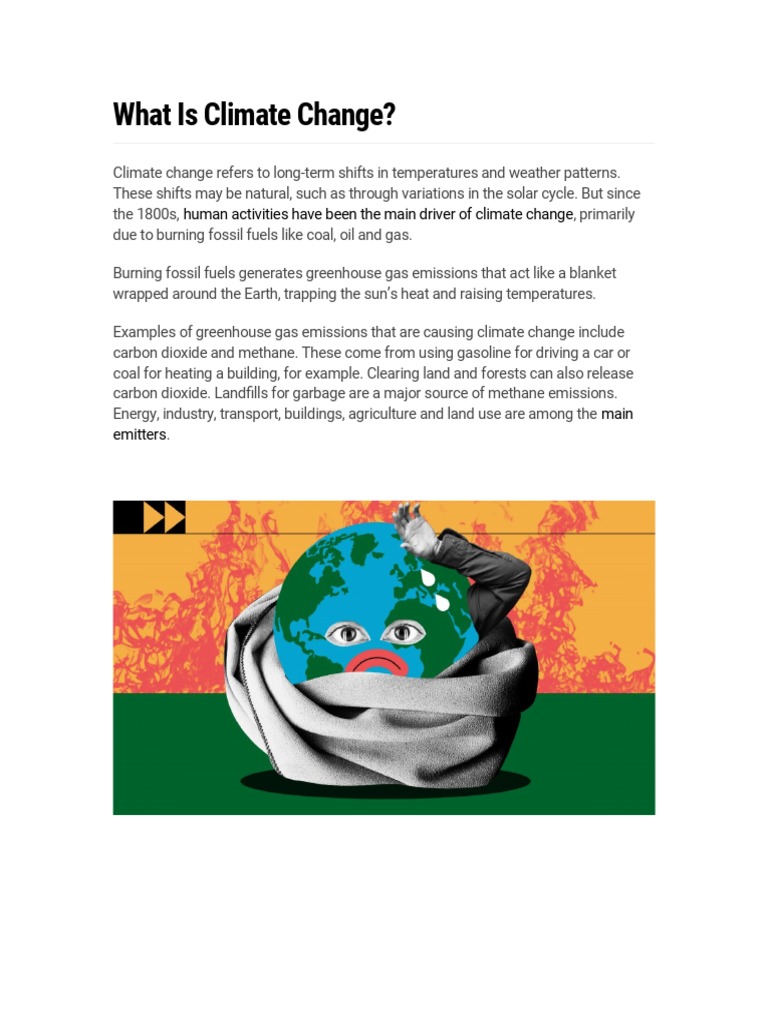
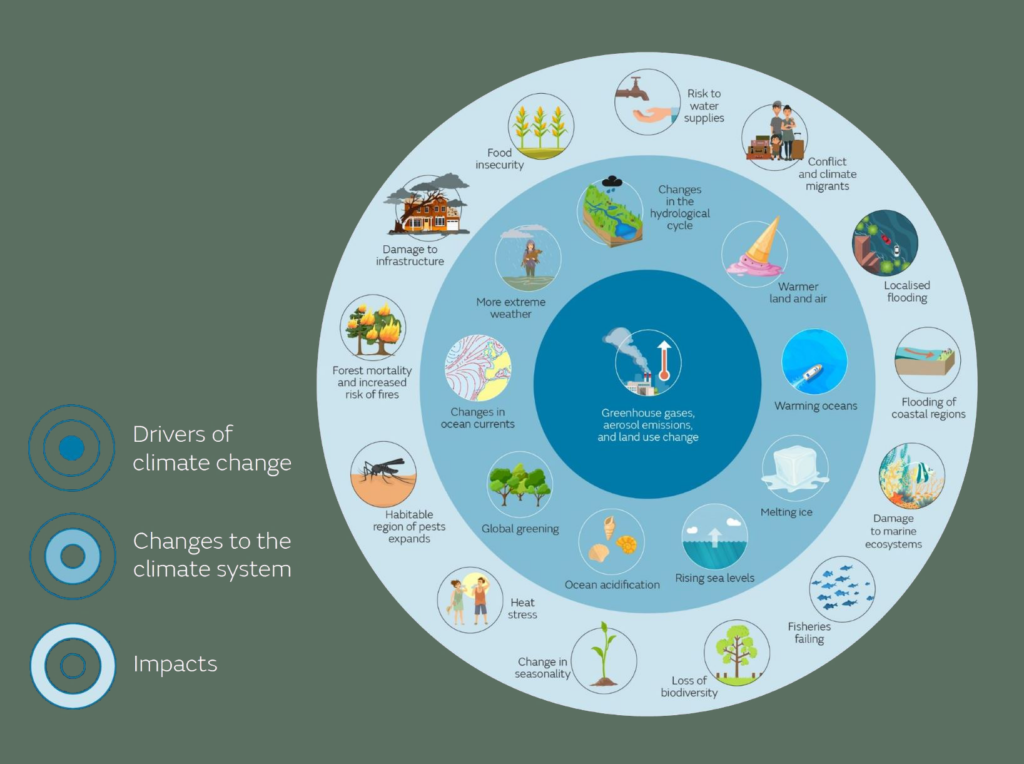
Climate change, an intricate and multifaceted phenomenon, encapsulates the profound alterations in global weather patterns predominantly instigated by anthropogenic activities. At its core lies the unrelenting increase in greenhouse gas emissions, predominantly carbon dioxide, methane, and nitrous oxide, resulting from the unabated combustion of fossil fuels, extensive deforestation, and industrial processes. These emissions engender a greenhouse effect, contributing to the warming of our planet. This warming manifests in increasingly erratic weather patterns, from the unforgiving heatwaves of summer to the relentless deluges of rain that punctuate the seasons. Coastal regions are relentlessly battered by rising sea levels, a consequence of glacial melt and thermal expansion of seawater, threatening ecosystems and communities alike. In parallel, ecosystems are under siege, as flora and fauna struggle to adapt to fluctuating climates, leading to a cascade of biodiversity loss that reverberates throughout food chains. As these phenomena coalesce, the exigencies of climate change unfold before humanity, casting a long shadow over future generations. The timeworn adage, “We do not inherit the earth from our ancestors; we borrow it from our children,” finds renewed urgency in this context, urging societies globally to reevaluate their environmental responsibilities and ethical obligations to our planet and its myriad inhabitants.
The narrative of climate change extends beyond mere statistics; it encapsulates a compelling call to action. Pioneering solutions and innovations emerge as beacons of hope amid the daunting challenges. Transitioning to renewable energy sources, such as solar, wind, and geothermal, signifies not just a shift in energy paradigms but a profound alteration in our relationship with the environment. Imagine a world where cities thrive under the gentle hum of wind turbines and rooftops glisten with solar panels, transforming urban landscapes into sustainable utopias. This vision is not merely aspirational; it is attainable through collective resolve and innovation. Furthermore, conservation efforts aimed at reforestation and habitat restoration play pivotal roles in sequestering carbon and rejuvenating biodiversity. Engaging youthful activists and local communities in these initiatives cultivates a sense of stewardship and empowerment, fostering a profound connection with the earth. Climate change, once perceived as an insurmountable adversary, is now framed as an opportunity for transformative action. Indeed, the narrative reshapes itself as humanity stands poised to script a new chapter—one characterized by resilience, innovation, and an indomitable spirit of reclamation. The call of climate change transcends mere alarmism; it implores us to investigate, engage, and ultimately inspire a global movement that champions sustainable living and prioritizes ecological integrity for the sake of all Earth’s constituents.










Leave a Comment