
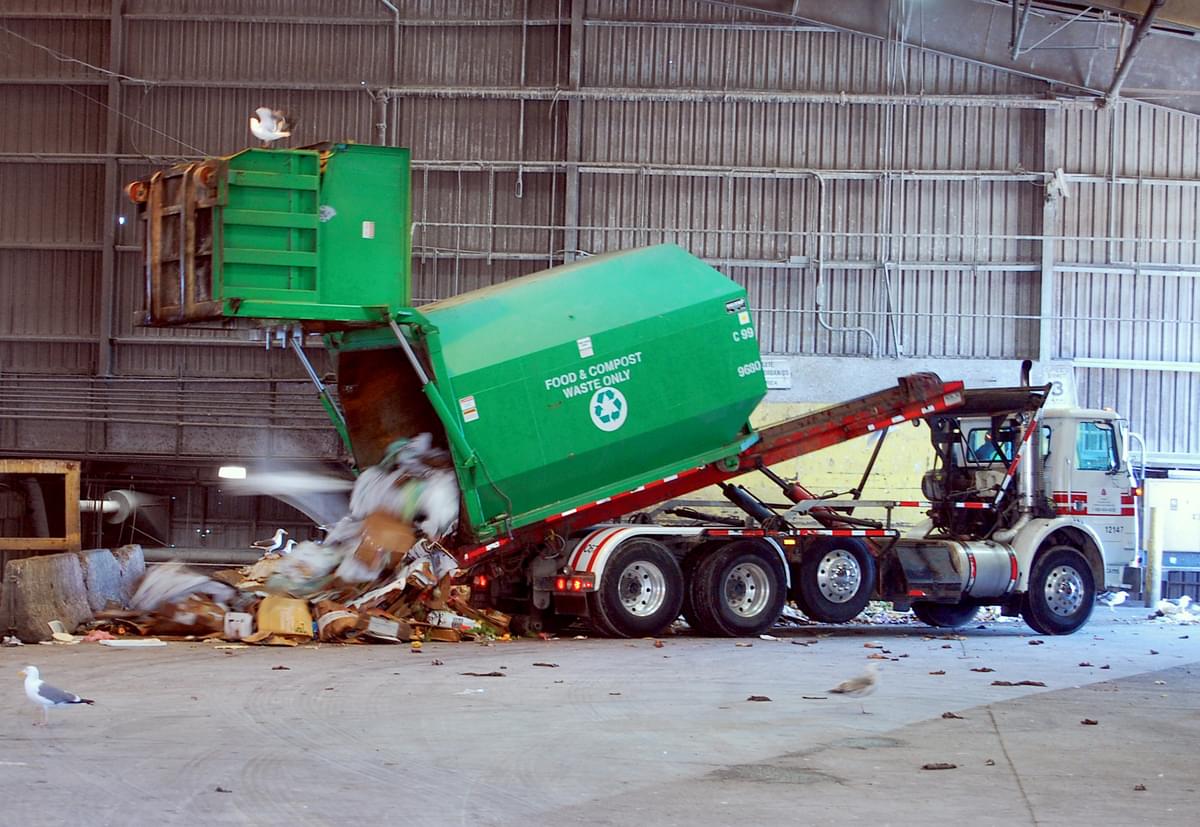
California is preparing to roll out the nation’s biggest food‑waste recycling program, a policy‑driven effort that will divert millions of tons of organic material from landfills, cut methane emissions, and create a new source of compost for agriculture and landscaping.
Quick Answer
The state‑wide program, mandated by Senate Bill 1383, requires municipalities to separate food scraps and yard waste for composting rather than landfill disposal by 2025. Composting transforms organic matter into nutrient‑rich soil amendments, reducing methane – a potent greenhouse gas – that would otherwise be released during anaerobic decay. While the rollout demands significant infrastructure upgrades and public education, early modeling by the California Air Resources Board suggests a potential reduction of up to 2 million metric tons of CO₂‑equivalent emissions annually. Uncertainty remains around participation rates and long‑term market demand for compost.
Key Takeaways
- California aims to divert >6 million tons of food waste per year from landfills by 2025.
- Composting captures carbon, reduces methane, and produces valuable soil amendments.
- The program is built on Senate Bill 1383, which sets organic‑waste reduction targets.
- Implementation requires new collection fleets, processing facilities, and extensive community outreach.
- Benefits include climate mitigation, soil health improvement, and potential economic gains from compost sales.
What Is California to Launch Largest Food Waste Recycling Program in the U.S.?
The initiative is a statewide mandate that obliges cities, counties, and special districts to provide separate collection of edible food scraps and yard trimmings for composting. It differs from generic recycling because the feedstock is organic and undergoes biological decomposition rather than material recovery. The program covers residential, commercial, and institutional sources, and it sets quantitative targets: a 75 % reduction in organic waste disposal by 2025 relative to 2014 levels.
How Does It Work?
Collection and Separation
- Households and businesses place food scraps and green waste into designated bins.
- Waste‑hauling contractors use dual‑stream trucks to keep organic material separate from recyclables and trash.
Composting Process
- Collected organics are transported to permitted composting facilities.
- Inside the facility, aerobic microbes break down the material in windrows or in‑vessel systems, releasing carbon dioxide and water while generating heat.
- After 4–12 weeks, the material matures into a stable, humus‑like product.
Distribution and Use
- Finished compost is screened, tested for pathogens, and sold to farms, nurseries, and municipal landscapers.
- Revenue from compost sales helps offset program costs.
Monitoring and Reporting
Local agencies submit annual reports to the California Department of Resources Recycling and Recovery, documenting tonnage diverted and greenhouse‑gas reductions.
What Does the Evidence Show?
Long‑term monitoring by the U.S. Environmental Protection Agency (EPA) indicates that composting organic waste can cut landfill methane emissions by 30–50 % compared with direct disposal. A 2020 systematic review of municipal composting programs across the United States found average diversion rates of 60 % when robust outreach and convenient collection were in place. California’s own greenhouse‑gas inventory (2022) attributes a 0.5 % reduction in statewide methane emissions to existing organic‑waste programs, suggesting further gains are plausible with full implementation.
Main Causes or Drivers
Direct Causes
- High per‑capita food consumption combined with limited household awareness of waste pathways.
- Legacy waste‑management contracts that favor landfill tipping fees over composting.
Underlying Drivers
- Urbanization and population growth increase the volume of disposable food.
- Economic incentives: low landfill costs historically discouraged alternative disposal.
Environmental and Human Impacts
Environmental Impacts
Diverting food waste prevents methane formation, a greenhouse gas 28–36 times more potent than CO₂ over a 100‑year horizon (Intergovernmental Panel on Climate Change, 2021). Compost applied to soils improves water retention, reduces the need for synthetic fertilizers, and can enhance carbon sequestration in the topsoil.
Human Health and Social Impacts
Reduced landfill gas lowers local air‑quality risks, particularly for communities near waste sites. Compost use can lower reliance on nitrogen‑based fertilizers, decreasing runoff that contributes to algal blooms in waterways. Moreover, the program creates jobs in collection, processing, and agronomy sectors.
Economic and Infrastructure Impacts
Initial capital costs for new trucks and composting facilities are estimated at $1.2 billion statewide (California Air Resources Board, 2023). However, projected revenue from compost sales could offset up to 20 % of operating expenses over a ten‑year horizon.
Regional Differences
Coastal counties such as Santa Barbara and San Diego already operate mature composting networks, achieving diversion rates above 70 %. In contrast, inland agricultural regions like the Central Valley face longer haul distances to processing sites, raising transportation emissions and costs. Tailoring collection frequency and locating satellite composting hubs can mitigate these disparities.
What Scientists Know With High Confidence
- Organic waste decomposes anaerobically in landfills, producing methane at rates proportional to waste volume.
- Aerobic composting converts the same material into CO₂, a less potent greenhouse gas.
- Compost improves soil organic matter, water‑holding capacity, and nutrient availability.
- Policy mechanisms that set measurable diversion targets reliably increase organic‑waste recycling rates.
What Remains Uncertain
Key uncertainties include the actual participation rate of households once the program is fully rolled out, and the market elasticity for compost—whether demand will keep pace with increased supply. Additionally, life‑cycle analyses of transportation emissions for inland communities are limited, leaving the net climate benefit in those areas less well quantified.
Common Misconceptions
Misconception: Composting eliminates all greenhouse‑gas emissions.
Reality: Composting reduces methane but still releases carbon dioxide; the net benefit depends on efficient operations and avoided fertilizer production.
Misconception: Food waste is too contaminated to be useful.
Reality: Modern in‑vessel composting tolerates mixed food scraps, including meat and dairy, provided they are pre‑screened for large contaminants.
Misconception: The program will raise waste‑collection fees for everyone.
Reality: While some jurisdictions may adjust fees to cover new services, revenue from compost sales and reduced landfill tipping can offset costs, especially over the long term.
Solutions and Limitations
Primary solutions include expanding dual‑stream collection, investing in regional composting facilities, and implementing education campaigns. Limitations involve high upfront capital, the need for consistent market demand for compost, and potential contamination that can reduce compost quality. Complementary measures—such as source‑reduction campaigns to prevent waste generation—are essential because recycling cannot address waste that is never produced.
What Individuals, Communities, and Governments Can Do
What Individuals Can Do
- Separate edible scraps and yard waste at the source using provided bins.
- Reduce food purchases to match actual consumption, minimizing waste before it reaches the bin.
What Communities and Organizations Can Do
- Host workshops on proper waste separation and compost benefits.
- Partner with local farms to create a reliable market for produced compost.
What Governments Can Do
- Allocate funding for new collection fleets and composting infrastructure.
- Set clear, enforceable diversion targets and monitor compliance annually.
- Provide subsidies or tax incentives for businesses that adopt on‑site composting.
Synthesis
California’s upcoming food‑waste recycling program leverages proven biological processes to turn a massive waste stream into a climate‑mitigating resource. Strong scientific evidence confirms that composting cuts methane emissions and improves soil health, while uncertainties center on participation rates and market dynamics. By coupling robust policy, infrastructure investment, and community engagement, the state can achieve measurable emissions reductions and generate economic value, setting a replicable model for other jurisdictions.
Frequently Asked Questions
What is the main goal of California's food waste recycling program?
The program aims to divert more than 6 million tons of food and yard waste from landfills by 2025, reducing methane emissions and creating compost for agricultural use.
How does composting reduce greenhouse‑gas emissions compared with landfilling?
In composting, organic material decomposes aerobically, releasing carbon dioxide, which has a lower global‑warming potential than methane that forms when waste decays anaerobically in landfills.
What are the biggest challenges to implementing the program?
Key challenges include funding new collection trucks and facilities, ensuring consistent participation from households and businesses, and developing stable markets for the resulting compost.
Can individuals help reduce food waste before it reaches the compost bin?
Yes, individuals can plan meals, store food properly, and only purchase what they will use, which lowers the amount of waste generated and lessens the load on the recycling system.
Will the program benefit all regions of California equally?
Coastal areas with existing composting infrastructure may see quicker benefits, while inland regions may face higher transportation costs and need additional processing sites to achieve similar impacts.







Leave a Comment