
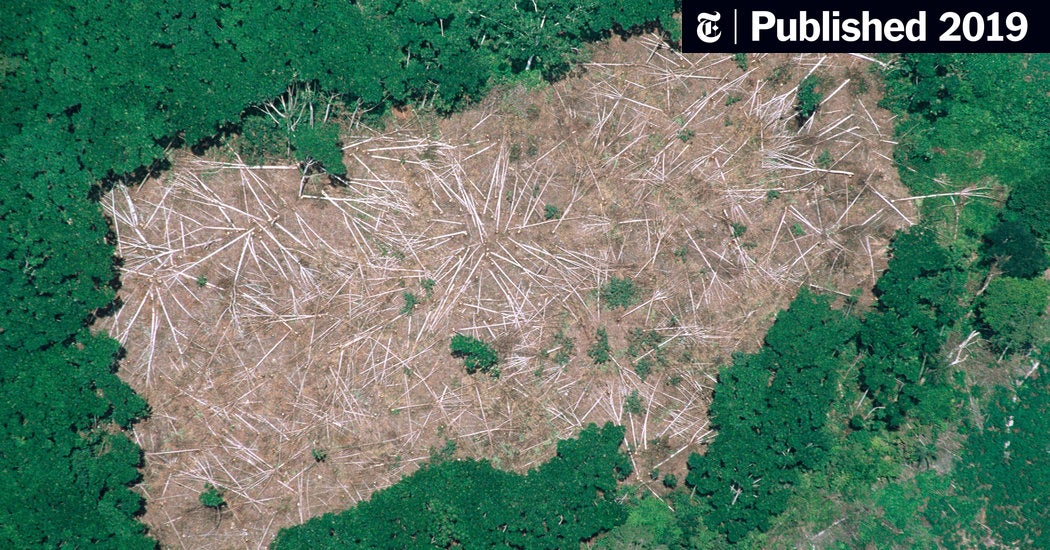
Brazilian President Jair Bolsonaro retracted a newly announced Amazon protection pledge on the very day it was unveiled, highlighting the clash between political pressures, agribusiness interests, and the scientific consensus on forest conservation.
Quick Answer
Bolsonaro’s same‑day abandonment of an Amazon protection pledge reflects a rapid policy reversal driven by strong agribusiness lobbying, nationalist rhetoric, and a history of prioritising short‑term economic growth over long‑term ecological stability. The Amazon rainforest functions as a massive carbon sink and biodiversity reservoir; undermining its protection accelerates carbon emissions, threatens species, and endangers Indigenous livelihoods. While the exact impact of the brief pledge is limited, the episode signals uncertainty for Brazil’s climate commitments, with moderate scientific confidence that continued deforestation will exacerbate global warming.
Key Takeaways
- The pledge was announced and withdrawn on the same day, exposing political volatility.
- Agribusiness pressure remains a dominant driver of deforestation policy in Brazil.
- The Amazon stores roughly 100 billion metric tons of carbon, making its protection critical for climate mitigation.
- Indigenous territories overlap with high‑biodiversity areas and are disproportionately affected by policy swings.
- Effective solutions require enforceable legal frameworks, international cooperation, and sustainable land‑use planning.
What Is Bolsonaro Abandons Amazon Protection Pledge the Same Day It’s Announced?
The phrase describes the 2023 event in which President Jair Bolsonaro publicly committed to strengthen Amazon conservation measures, only to rescind that commitment within hours. The pledge aimed to expand protected areas, increase monitoring, and curb illegal logging, but the reversal reinstated the status quo of weak enforcement. This episode matters because Brazil holds about 60 % of the Amazon basin, a forest that regulates regional climate, supports countless species, and provides ecosystem services essential to both local and global communities.
How Does It Work?
Political Decision‑Making Process
- Announcement: Government officials issue a statement outlining new conservation targets.
- Stakeholder Reaction: Domestic agribusiness groups, Indigenous organisations, and international NGOs respond.
- Policy Review: Ministries evaluate economic impacts, often consulting powerful agricultural lobbies.
- Reversal: The president issues an executive order cancelling the earlier pledge.
Ecological Mechanisms Affected by Policy Change
When protection measures are weakened, illegal clear‑cutting and fire use increase. Deforestation reduces the forest’s capacity to absorb carbon dioxide, alters evapotranspiration cycles, and fragments habitats, leading to biodiversity loss and altered rainfall patterns across South America.
What Does the Evidence Show?
Long‑term monitoring by Brazil’s National Institute for Space Research (INPE) indicates that deforestation rates rose from 5,000 km² per year in the early 2000s to over 12,000 km² per year in the late 2010s, a trend linked to weaker enforcement (INPE, 2022). The Intergovernmental Panel on Climate Change (IPCC) 2021 assessment notes that tropical forest loss contributes roughly 0.5 °C of projected warming by 2100 if not mitigated. Systematic reviews of satellite data confirm that protected areas reduce deforestation risk by 30‑40 % on average, but only when legal frameworks are robust and adequately funded (Nature Climate Change, 2020). These sources collectively suggest that policy reversals that diminish protection are likely to increase emissions and biodiversity threats.
Main Causes or Drivers
Direct Causes
- Executive decision to withdraw the pledge.
- Continued funding gaps for forest monitoring agencies.
Underlying Drivers
- Powerful agribusiness sector seeking land for cattle ranching and soy cultivation.
- Nationalist political narrative framing external environmental pressure as infringement on sovereignty.
- Economic incentives tied to commodity exports, which account for over 70 % of Brazil’s trade revenue (World Bank, 2021).
Environmental and Human Impacts
Environmental Impacts
- Carbon Emissions: Deforestation releases stored carbon; each hectare cleared can emit up to 200 t CO₂ (FAO, 2020).
- Biodiversity Loss: Species such as the jaguar (Panthera onca) and the Amazon river dolphin (Inia geoffrensis) lose habitat, increasing extinction risk.
- Hydrological Cycle: Reduced forest cover diminishes regional rainfall, affecting agriculture in downstream states.
Human Health and Social Impacts
- Indigenous communities face displacement, loss of cultural sites, and reduced access to clean water.
- Air quality deteriorates from increased fire smoke, raising respiratory illness rates in nearby towns.
- Economic dependence on extractive activities can trap low‑income families in cycles of environmental degradation.
Regional Differences
Deforestation pressure is highest in Brazil’s southern Amazon states of Pará, Mato Grosso, and Rondônia, where soy and cattle ranching dominate land‑use change. In contrast, the northern Amazon, with larger Indigenous territories, experiences lower rates of clearing but remains vulnerable to policy shifts that could open new roads or legal loopholes. Monitoring capacity also varies: satellite coverage is comprehensive nationwide, yet on‑the‑ground enforcement is stronger near urban centres than in remote frontier zones.
What Scientists Know With High Confidence
- The Amazon stores billions of tons of carbon and functions as a global climate regulator.
- Protected areas, when effectively managed, reduce deforestation risk by roughly one‑third.
- Deforestation contributes measurably to atmospheric CO₂ concentrations and global temperature rise.
- Indigenous stewardship correlates with lower rates of forest loss.
What Remains Uncertain
Key uncertainties include the exact magnitude of future emissions under different enforcement scenarios, the long‑term socio‑economic outcomes for rural communities if agricultural expansion continues, and how emerging technologies (e.g., satellite‑based real‑time monitoring) will improve compliance. Data gaps in illegal logging estimates and in the health impacts of fire smoke also limit precise quantification.
Common Misconceptions
Misconception: The Amazon is a single, uniform forest.
Reality: The Amazon comprises diverse ecosystems—from floodplain forests to upland terra firme—each with distinct species assemblages and carbon storage capacities.
Misconception: One‑day policy changes cannot affect climate.
Reality: While a single reversal does not instantly alter atmospheric CO₂, it signals policy direction that can enable or hinder large‑scale deforestation over years.
Misconception: Economic development and forest protection are mutually exclusive.
Reality: Sustainable land‑use planning, agroforestry, and payment‑for‑ecosystem‑services schemes demonstrate pathways where livelihoods and conservation coexist.
Solutions and Limitations
- Legal Enforcement: Strengthening the Forest Code can deter illegal clearing, but requires political will and adequate judicial resources.
- Payment for Ecosystem Services (PES): Programs like Brazil’s Bolsa Verde provide cash incentives to families who preserve forest land; effectiveness depends on funding continuity.
- Supply‑Chain Traceability: Certification schemes (e.g., RSPO for soy) can reduce market‑driven deforestation, yet enforcement gaps and illegal trade persist.
- International Climate Finance: Mechanisms such as the Green Climate Fund can support monitoring and reforestation, but bureaucratic delays often limit rapid deployment.
What Individuals, Communities, and Governments Can Do
What Individuals Can Do
- Support NGOs that fund Amazon monitoring and Indigenous rights.
- Choose certified sustainable products (e.g., soy, beef) that trace back to deforestation‑free supply chains.
- Engage in civic advocacy by contacting representatives about Brazil’s climate commitments.
What Communities and Organizations Can Do
- Partner with Indigenous groups to amplify land‑rights campaigns.
- Develop community‑led forest monitoring using low‑cost drones or smartphone apps.
- Promote agroforestry practices that blend crops with native trees, enhancing biodiversity and soil health.
What Governments Can Do
- Reinforce and fund the enforcement arm of the Forest Code, ensuring penalties are applied consistently.
- Expand protected area networks to cover at least 30 % of the Amazon, aligning with the UN Convention on Biological Diversity targets.
- Integrate climate‑finance mechanisms that reward states for maintaining forest cover.
- Facilitate transparent, science‑based land‑use planning that balances agricultural demand with conservation.
Closing Synthesis
The rapid withdrawal of Bolsonaro’s Amazon protection pledge underscores the fragility of policy in the face of powerful economic interests. Scientific consensus confirms that preserving the Amazon is essential for climate mitigation, biodiversity, and Indigenous wellbeing. While uncertainties remain about the scale of future emissions and the effectiveness of emerging monitoring tools, the high‑confidence findings provide a clear mandate: robust, enforceable protection measures are indispensable. Achieving lasting stewardship will require coordinated action—strong legal frameworks, sustainable economic incentives, and sustained international support—rather than reliance on fleeting political promises.
Frequently Asked Questions
What was the Amazon protection pledge announced by Bolsonaro?
The pledge promised to expand protected areas, increase satellite monitoring, and crack down on illegal logging in the Amazon, but it was withdrawn within hours.
Why did Bolsonaro abandon the pledge so quickly?
Analysts cite strong agribusiness lobbying, nationalist rhetoric, and a history of prioritising short‑term economic growth over forest conservation as key reasons for the rapid reversal.
How does deforestation affect global climate?
Deforestation releases stored carbon—up to 200 t CO₂ per hectare—reducing the Amazon’s ability to act as a carbon sink and contributing to higher atmospheric CO₂ levels, which the IPCC links to global warming.
What role do Indigenous peoples play in protecting the Amazon?
Indigenous territories often experience lower rates of forest loss, and their traditional stewardship practices help maintain biodiversity and carbon storage.
What actions can individuals take to support Amazon conservation?
Individuals can buy certified sustainable products, support NGOs that fund forest monitoring, and advocate for stronger climate policies through their elected representatives.





Leave a Comment