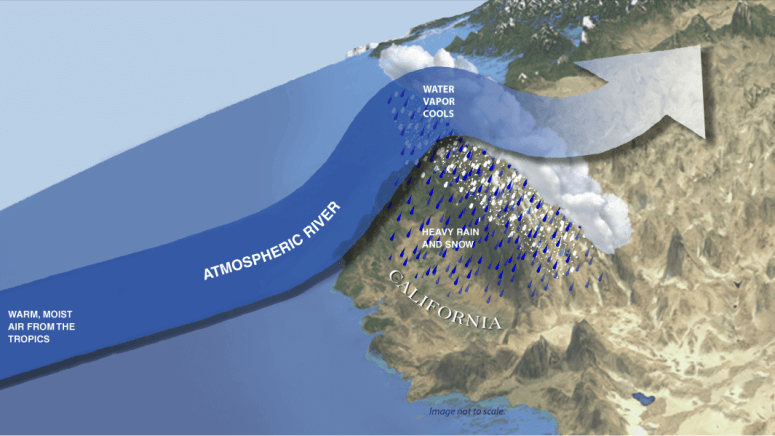
Imagine the Earth as a bustling metropolis, where vast rivers of air function much like the lifeblood coursing through the veins of a city. Among these currents, atmospheric rivers stand out as titanic torrents, transporting astounding amounts of moisture from tropical regions to more temperate zones. This celestial phenomenon remains a central player in global weather dynamics, capable of unleashing both devastating floods and nurturing rainfall.
To truly grasp the magnitude and complexity of atmospheric rivers, one must first identify what they are. These elongated bands of vapor, often hundreds of miles long and up to a few thousand kilometers wide, can carry more water than the average flow of the Mississippi River. They traverse vast distances across oceans and landmasses, driven by atmospheric pressure changes and influenced by topography. Their path can evoke the shape of a painter’s brushstroke across a canvas, deftly weaving moisture into the very fabric of our climate.
The genesis of an atmospheric river begins in the warm, humid tropical waters where warm air rises and forms clouds. As these clouds drift, they collect moisture, harnessing it from the ocean like a sponge absorbing water. The movement of these currents is propelled largely by the jet stream, which acts as a guiding force, directing the brushstrokes of water vapor toward cooler regions. As the air ascends into higher altitudes, it cools, condensing the moisture into droplets and eventually releasing it as precipitation.
Many might be surprised to learn that despite their capacity for destruction, atmospheric rivers also play a crucial role in maintaining ecosystems and replenishing freshwater supplies. They are the silent benefactors, providing farmers with the necessary irrigation and sustaining rivers that support wildlife. Thus, atmospheric rivers can be viewed as a double-edged sword; a paradox of nature that embodies the essence of life and the wrath of a storm.
However, the narrative becomes stark when one contemplates the repercussions of climate change. Rising temperatures are poised to alter the dynamics of these storm systems. As warmer air holds more moisture, atmospheric rivers will likely grow in intensity and frequency. The notion that our planet’s delicate balance could tip toward more extreme weather patterns is unsettling. As we have seen in recent years, areas previously spared from acute weather events are now grappling with unprecedented floods, the result of these intensified atmospheric rivers.
To illustrate this point, consider the impact of atmospheric rivers on the western United States. Regions such as California rely heavily on these moisture-laden currents, but the relationship is fraught with peril. While they can fill reservoirs and increase snowpack in the Sierra Nevada, they can simultaneously instigate catastrophic flooding and mudslides, transforming the landscape into a tumultuous tableau of destruction. It is this juxtaposition of benefit and calamity that highlights the intricate dance of atmospheric rivers.
The unique appeal of atmospheric rivers also lies in their regional specificity and variability. In some locales, they may manifest as nurturing rains, gently saturating the earth and invigorating life; in others, they could unleash a torrent of destruction, flooding urban areas and submerging farmland. The unpredictability serves as a reminder of nature’s capriciousness, a narrative written in the skies that underscores humanity’s precarious existence within this grand theater of life.
Moreover, atmospheric rivers are not merely a localized phenomenon but are intricately connected to global weather patterns. Their influence can extend thousands of miles; the impact felt in one region can ripple through the ecosystem elsewhere, demonstrating the interconnectedness of our planet. The disturbances caused by an atmospheric river event can set off a chain reaction, leading to droughts in some areas and excessive rainfall in others. This delicate web serves as an allegorical reminder that actions taken in one part of the world may reverberate elsewhere, a testament to our shared stewardship of the planet.
In the face of climate change, our understanding of atmospheric rivers must deepen. It is incumbent upon scientists, policymakers, and the global community to unravel the complexities of this phenomenon. Investing in research and predictive models will not only augment our grasp of expected changes in these weather patterns but also enable us to develop adaptive strategies. Harnessing advanced technology, we can elevate our forecasting capabilities, improving our preparedness for the storms that loom in the distance.
As we ponder the implications of atmospheric rivers, a narrative emerges that invites proactive engagement. Each torrential downpour reminds us of the urgent need for climate action and innovative solutions. By safeguarding natural habitats, restoring wetlands, and investing in infrastructure, we can create a buffer against the whims of these potent storms. Erecting resilient communities requires collective effort, a tapestry woven from the threads of shared responsibility and vision for a sustainable future.
Ultimately, as we traverse the uncertain terrain of climate change, one thing remains clear: atmospheric rivers offer profound insights into the complexities of our world. They serve both as a reminder of nature’s ferocity and as a testament to its nurturing capabilities. Embracing this duality—the beauty intertwined with the destructive—is crucial in elevating our understanding and fostering stewardship of our planet’s ever-changing climate.









Leave a Comment