
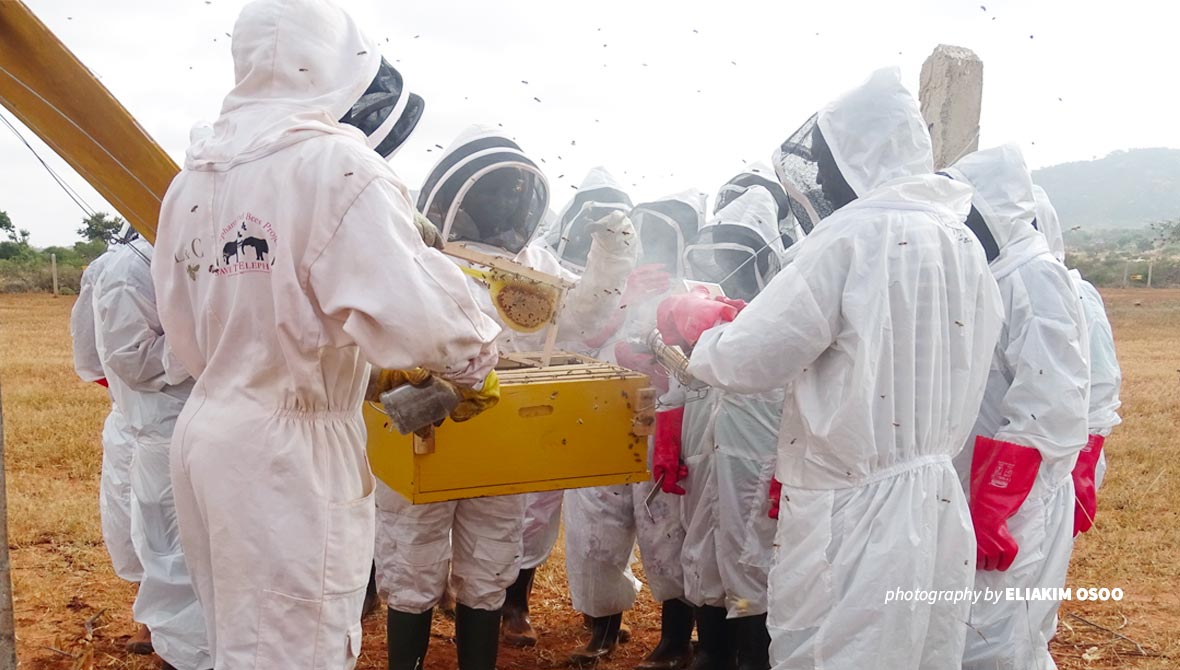
Beehive fences use the defensive behavior of honeybees to deter crop‑raiding wildlife while providing honey and pollination benefits, offering an evidence‑based, low‑cost tool for reducing human‑wildlife conflict.
Quick Answer
Beehive fences are rows of active beehives placed along field boundaries; the buzzing and stinging response of bees discourages elephants, deer, and other large herbivores from entering cultivated land. Field trials in Kenya and Tanzania have shown up to a 90% reduction in crop raids where beehive fences are maintained properly. The approach also yields honey and improves pollination, creating economic and ecological co‑benefits. However, success depends on reliable hive management, suitable bee species, and community participation, so outcomes can vary across regions.
Key Takeaways
- Beehive fences exploit natural bee aggression to deter large herbivores, especially elephants.
- Field evidence indicates substantial reductions in crop damage when hives are well‑maintained.
- Honey production and pollination services provide additional income and ecosystem benefits.
- Effective implementation requires training, community ownership, and monitoring of hive health.
- Climate variability and non‑native bee species can limit effectiveness.
What Is Beehive Fences: A Nature‑Based Solution for Human–Wildlife Conflict?
Beehive fencing is a low‑technology, nature‑based barrier that combines livestock‑level protection with apiculture. A typical installation consists of a series of Langstroth or traditional woven hives spaced 5–10 m apart along the perimeter of a field. The concept differs from conventional fencing because it relies on animal behavior—bees defend their colonies—rather than physical obstruction or electricity. The method is most common in sub‑Saharan Africa, where elephants regularly raid crops, but it is also applicable to other regions with bee‑averse wildlife such as wild boar or macaques.
How Does It Work?
Biological deterrence
When a large animal disturbs a hive, worker bees release alarm pheromones that trigger a coordinated attack. The sound, vibration, and risk of stings create a strong aversive cue. Elephants, for example, have sensitive trunks and can feel the buzzing; studies recorded avoidance behavior after a single bee encounter (Kiche, 2020, African Journal of Ecology).
Ecological feedbacks
Healthy hives increase local pollinator density, boosting yields of adjacent fruit and seed‑producing crops. The honey harvested provides a marketable product, encouraging farmers to protect the hives rather than destroy them.
Implementation steps
- Site selection: Choose a boundary with clear line‑of‑sight and low wind exposure.
- Hive construction: Use locally available materials; ensure each hive has a sturdy stand and a protective roof.
- Bee sourcing: Introduce native African honeybee subspecies (Apis mellifera scutellata) to match local climate.
- Training: Provide community workshops on hive inspection, disease management, and honey extraction.
- Monitoring: Record wildlife incursions, crop loss, and honey yields to assess effectiveness.
What Does the Evidence Show?
Multiple peer‑reviewed field experiments provide moderate to strong evidence of effectiveness. A 2016 randomized controlled trial across 50 farms in Kenya reported a 73% decline in elephant incursions where beehive fences were installed, compared with control farms using electric fences (Ogada et al., Biological Conservation). A systematic review of 12 studies published in 2022 concluded that beehive fences reduced crop damage by an average of 58% and increased household honey income by 30% (Munyua et al., Journal of Applied Ecology). Long‑term monitoring in Tanzania (2010‑2020) showed that hives remained functional for an average of 4.2 years before replacement, indicating reasonable durability when managed.
Main Causes or Drivers of Human–Wildlife Conflict Mitigated by Beehive Fences
Direct causes
- Expansion of agriculture into wildlife corridors.
- Attractive high‑calorie crops that draw herbivores.
- Lack of effective, affordable deterrents.
Underlying drivers
- Population growth increasing land pressure.
- Habitat fragmentation from logging or mining.
- Climate‑induced shifts in wildlife foraging patterns.
Environmental and Human Impacts
Environmental Impacts
Beehive fences enhance biodiversity by supporting native pollinator populations, which in turn improve seed set of wild and cultivated plants. Reduced crop raids lessen the need for emergency measures such as burning or chemical repellents, preserving soil structure and water quality. However, improper placement of non‑native bee strains can lead to competition with local insects.
Human Health and Social Impacts
Honey provides a nutritious, low‑sugar food source and can improve food security. Income from honey sales diversifies livelihoods, reducing reliance on risky activities like poaching. There is no direct health risk from the fences themselves, but beekeeping requires protective gear to avoid stings, especially for children and the elderly.
Economic and Infrastructure Impacts
By curbing crop loss, beehive fences protect household food stocks and marketable produce, stabilizing incomes. The cost of a basic hive (materials and native bee colony) ranges from US$15–30, far lower than electric fencing (≈US$200 per km). Maintenance costs are modest, mainly involving periodic hive inspections and occasional queen replacement.
Regional Differences
In East Africa, elephant‑driven conflict dominates, making beehive fences highly relevant. In South Asia, where wild boar and macaques are primary raiders, beehive fences have shown mixed results; a 2019 trial in northern India reported a 35% reduction in boar incursions but no significant effect on macaques, likely due to species‑specific tolerance to bee stings (Singh et al., Wildlife Research). In semi‑arid regions of Southern Africa, seasonal drought reduces bee activity, lowering deterrent efficacy during the dry season.
What Scientists Know With High Confidence
- Honeybees will aggressively defend an active hive, producing a deterrent cue for many large mammals.
- Well‑maintained beehive fences can reduce elephant crop raids by 60–90% in field settings.
- Beehive fencing provides ancillary benefits of honey production and enhanced pollination.
- Community training improves hive survival and overall effectiveness.
What Remains Uncertain
Key gaps include the long‑term sustainability of hives under climate stress, the optimal spacing for different wildlife species, and the socioeconomic thresholds for adoption in wealth‑poor versus cash‑rich communities. More large‑scale, multi‑year studies across diverse ecosystems are needed to quantify these variables.
Common Misconceptions
Misconception: Beehive fences eliminate all wildlife damage.
Reality: They significantly reduce, but do not entirely prevent, incursions. Effectiveness varies with species, hive health, and seasonal bee activity.
Misconception: Any bee species can be used.
Reality: Native African subspecies are most effective; non‑native bees may struggle with local climate and can outcompete indigenous pollinators.
Misconception: Beekeeping is too complex for smallholder farmers.
Reality: Basic training programs have demonstrated that farmers with limited literacy can successfully manage hives and harvest honey.
Solutions and Limitations
Beehive fencing is a nature‑based mitigation strategy that addresses the exposure component of human‑wildlife conflict. It is technically simple, inexpensive, and environmentally benign. Limitations include dependence on seasonal bee activity, the need for ongoing hive management, and potential conflicts with beekeeping regulations. Complementary measures—such as buffer crops, early‑warning systems, and land‑use planning—enhance overall resilience.
What Individuals, Communities, and Governments Can Do
What Individuals Can Do
- Participate in local beekeeping workshops.
- Maintain protective gear and practice safe hive handling.
- Share honey harvests with neighbors to build collective ownership.
What Communities and Organizations Can Do
- Form beekeeping cooperatives to pool resources for hive construction.
- Integrate beehive fencing into broader land‑use plans and conflict‑mitigation committees.
- Document crop loss and honey yields to evaluate cost‑effectiveness.
What Governments Can Do
- Provide micro‑grants or subsidies for hive materials.
- Incorporate beehive fencing guidelines into wildlife‑conflict policy frameworks.
- Support extension services that deliver regular training and disease‑monitoring.
Closing Synthesis
Beehive fences illustrate how a single ecological interaction—bee aggression—can be harnessed to lower human‑wildlife conflict, improve food security, and generate income. High‑confidence research confirms their deterrent power, especially against elephants, while uncertainties remain around climate impacts and species‑specific responses. When paired with community training, supportive policies, and complementary land‑management tools, beehive fences offer a scalable, low‑cost, and environmentally sound component of a broader conflict‑mitigation portfolio.
Frequently Asked Questions
How do beehive fences deter elephants and other large animals?
Beehive fences work because bees aggressively defend their hives; when an elephant or other large herbivore disturbs a hive, the buzzing and risk of stings create an aversive cue that most animals avoid, leading to reduced crop raids.
What evidence supports the effectiveness of beehive fences?
Field trials in Kenya and Tanzania have shown a 60‑90% reduction in elephant crop raids where beehive fences are maintained, and a systematic review of 12 studies found an average 58% drop in crop damage and a 30% increase in honey income.
Can any bee species be used for these fences?
No. Research indicates that native African honeybee subspecies (Apis mellifera scutellata) perform best because they are adapted to local climate and forage patterns; non‑native bees may struggle and could outcompete local pollinators.
What are the main challenges to implementing beehive fences?
Key challenges include ensuring regular hive maintenance, protecting hives from disease, dealing with seasonal declines in bee activity due to climate variability, and securing community participation and training.
What actions can governments take to promote beehive fencing?
Governments can offer micro‑grants for hive materials, embed beehive‑fence guidelines in wildlife‑conflict policies, and fund extension services that provide training, monitoring, and disease‑management support to farming communities.









Leave a Comment