
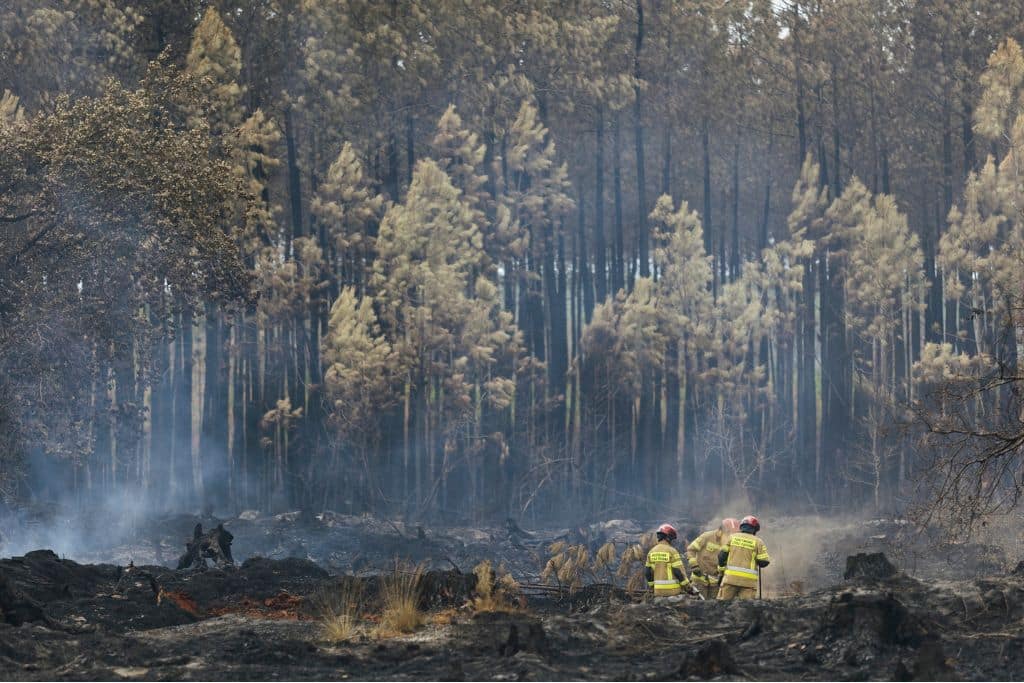
Climate change is amplifying the frequency and severity of wildfires across Spain and Portugal, threatening ecosystems, public health, and regional economies.
Quick Answer
Climate‑change‑driven wildfires in the Iberian Peninsula are large‑scale fires whose probability and intensity have risen because rising temperatures, longer droughts, and erratic precipitation create drier vegetation that ignites more easily. The scientific consensus, reflected in the IPCC Sixth Assessment Report (2021), links these climate trends to higher fire‑season length and larger burned areas. The most immediate impact is the loss of forest cover, which in turn increases soil erosion, degrades air quality, and endangers communities. Uncertainty remains around the exact contribution of land‑use change versus climate forcing in any single fire event.
Key Takeaways
- Average summer temperatures in the Iberian Peninsula have risen about 1.5 °C since the mid‑20th century (IPCC, 2021).
- Longer, hotter drought periods increase fuel dryness, making fires more likely and more intense.
- Wildfires disrupt biodiversity, accelerate soil erosion, and threaten water quality in both coastal and inland watersheds.
- Human health impacts include acute respiratory problems from smoke inhalation and long‑term cardiovascular risks.
- Effective responses combine forest management, early‑warning systems, and climate‑adaptation policies, but each has trade‑offs.
What Is Climate Change Fueled Devastating Wildfires in the Iberian Peninsula?
The term refers to wildfires that occur in Spain and Portugal whose likelihood and severity are measurably increased by anthropogenic climate change. These fires differ from historical, climate‑neutral fires because they are driven by a combination of higher temperatures, reduced summer precipitation, and more frequent heat‑waves that desiccate vegetation across Mediterranean‑type ecosystems. The phenomenon matters because the Iberian Peninsula hosts a mosaic of forests, shrublands, and agricultural lands that provide essential ecosystem services, cultural heritage, and livelihoods.
How Does It Work?
1. Climate warming raises ambient temperatures
Warmer air holds more moisture, but in the Iberian summer the increase translates into higher evapotranspiration rates, drying soils and plant material. The European Environment Agency reports a 20 % rise in the number of days above 30 °C in the region between 1971‑2000 and 2001‑2020.
2. Drought lengthens and deepens
Reduced winter and spring rainfall, combined with higher temperatures, extend the period during which vegetation remains moisture‑deficient. The IPCC notes that Mediterranean basins are projected to experience a 30‑40 % decrease in summer precipitation by 2050 under a high‑emissions scenario.
3. Fuel loads become more flammable
Dry grasses, shrubs, and pine needles accumulate as fine fuels. Laboratory studies (e.g., a 2020 review in *Fire Ecology*) show that fuel moisture below 10 % dramatically increases flame spread rates.
4. Ignition sources meet ready fuel
Human activities—agricultural burns, discarded cigarettes, power‑line faults—provide the spark. When combined with the above conditions, fires can transition from surface burns to crown fires that consume entire forest stands.
5. Feedback loops amplify risk
Severe fires release large amounts of carbon dioxide, contributing to further warming, while also reducing canopy cover that would otherwise shade and retain soil moisture, creating a positive feedback cycle.
What Does the Evidence Show?
Long‑term monitoring by Spain’s Ministry of the Environment indicates that the total area burned each summer has more than doubled from the 1980s to the 2010s. Attribution studies using climate‑model ensembles (e.g., a 2022 paper in *Nature Climate Change*) estimate that up to 60 % of the observed increase in fire risk is attributable to anthropogenic warming, with the remainder linked to land‑use changes such as forest expansion and fire‑suppression policies.
Remote‑sensing analyses from the European Copernicus program reveal that the frequency of fire‑weather days—days meeting a heat‑dryness threshold—has risen by roughly 25 % over the past three decades. Peer‑reviewed meta‑analyses confirm that Mediterranean ecosystems, including those of the Iberian Peninsula, are among the most fire‑prone biomes under climate change.
Main Causes or Drivers
Direct climatic drivers
- Rising mean summer temperature (+1.5 °C since 1960).
- Increased frequency of heat‑waves (e.g., the 2021 “Calima” event).
- Reduced summer precipitation and higher evapotranspiration.
Underlying socio‑economic drivers
- Expansion of pine monocultures for timber, which provide continuous, resin‑rich fuels.
- Fire‑suppression policies that have led to fuel accumulation over decades.
- Rural depopulation, resulting in abandoned lands that are less actively managed.
Immediate ignition sources
- Illegal or accidental agricultural burns.
- Electrical infrastructure failures during heat‑waves.
- Tourist activities and discarded cigarettes in high‑traffic areas.
Environmental and Human Impacts
Environmental Impacts
Wildfires destroy mature forest structures, reducing biodiversity and habitat complexity. Species such as the Iberian lynx (*Lynx pardinus*) and the Spanish imperial eagle (*Aquila adalberti*) lose nesting sites. Soil organic matter is combusted, leading to a 10‑30 % loss of topsoil nutrients and heightened erosion, which in turn increases sediment loads in rivers like the Duero and Tagus.
Human Health and Social Impacts
Smoke plumes contain fine particulate matter (PM2.5) that exceed World Health Organization guidelines for several days, triggering asthma attacks and cardiovascular events. The 2017 wildfire season in Portugal resulted in an estimated 1,300 excess hospital admissions for respiratory conditions (Portuguese National Health Service report, 2018).
Economic and Infrastructure Impacts
Fire‑damage to timber, vineyards, and tourism infrastructure incurs direct costs estimated at €2.3 billion across Spain and Portugal between 2000‑2020 (European Commission, 2021). Rebuilding power lines and road networks after large fires also strains municipal budgets.
Regional Differences
North‑western Spain (Galicia) experiences higher precipitation, so fires are less frequent but can be severe when droughts occur. In contrast, southern Portugal and the Andalusian region face chronic water scarcity, making them hotspots for annual megafires. Coastal zones near the Algarve see rapid fire spread due to steep slopes and wind corridors, while interior plateaus (e.g., the Meseta Central) experience longer fire seasons because of prolonged heat‑waves.
What Scientists Know With High Confidence
- Anthropogenic greenhouse‑gas emissions have raised regional summer temperatures, directly increasing fire‑weather days.
- Fuel moisture below 10 % is a strong predictor of rapid fire spread.
- Fire‑suppression policies without concurrent fuel‑management lead to higher long‑term fire risk.
- Smoke exposure from wildfires elevates short‑term respiratory and cardiovascular morbidity.
What Remains Uncertain
Key uncertainties include the relative contribution of future land‑use changes versus climate change to fire risk, the precise thresholds at which Mediterranean vegetation shifts from fire‑resistant to fire‑prone states, and the long‑term effectiveness of large‑scale reforestation with mixed‑species stands under changing climate conditions. Improved high‑resolution climate‑vegetation models and expanded ground‑based monitoring are needed to reduce these gaps.
Common Misconceptions
Misconception: Wildfires are purely natural events.
Reality: While fire has long been part of Mediterranean ecosystems, the current increase in frequency and intensity is strongly linked to human‑driven climate change and land‑use practices.
Misconception: Only hot, dry days cause fires.
Reality: Fire risk also depends on fuel load, vegetation type, and ignition sources; a humid day can still spark a fire if fuel is extremely dry.
Misconception: Planting any trees will solve the problem.
Reality: Monoculture pine plantations can increase fire risk; diverse, fire‑adapted species and strategic spacing are required for effective mitigation.
Misconception: Individual actions have little impact.
Reality: Community‑level actions—such as creating defensible space around homes and supporting local fire‑management programs—can substantially reduce ignition probability and fire spread.
Solutions and Limitations
Prevention
Fuel‑reduction techniques (controlled burns, mechanical thinning) lower available combustible material. Evidence from the European Forest Fire Information System shows a 15‑20 % reduction in fire size where such measures are regularly applied. Limitations include air‑quality concerns during prescribed burns and the need for trained personnel.
Mitigation
Reducing greenhouse‑gas emissions at national and EU levels addresses the root climate driver. Transitioning to renewable energy is essential but requires long‑term policy stability and substantial investment.
Adaptation
Early‑warning systems that integrate satellite fire‑weather indices improve evacuation times. However, technology alone cannot compensate for insufficient funding in rural firefighting brigades.
Restoration
Post‑fire reforestation with mixed, fire‑resistant species enhances ecosystem resilience. Trade‑offs involve higher costs and longer establishment periods compared with fast‑growing monocultures.
What Individuals, Communities, and Governments Can Do
What Individuals Can Do
- Create a defensible space of at least 30 m around homes by removing dead wood and leaf litter.
- Use fire‑safe gardening practices—planting low‑flame‑risk species and maintaining irrigation during drought.
- Report illegal burns or faulty power lines to local authorities.
What Communities and Organizations Can Do
- Develop local fire‑risk maps that incorporate climate projections.
- Support volunteer fire brigades with training and equipment.
- Promote land‑use planning that limits new construction in high‑risk zones.
What Governments Can Do
- Integrate climate‑adaptation targets into national forest‑management plans.
- Fund research on Mediterranean fire ecology and climate‑vegetation interactions.
- Enforce stricter building codes for fire‑resistant materials in vulnerable municipalities.
Closing Synthesis
Climate change is reshaping the fire regime of the Iberian Peninsula by creating hotter, drier conditions that turn forests and shrublands into tinderboxes. Robust evidence links rising temperatures and prolonged droughts to larger, more destructive fires, while uncertainties remain about the interplay of land‑use change and future climate pathways. Solutions must combine emission reductions, strategic fuel management, early‑warning technology, and community‑based resilience building—each with its own set of trade‑offs. By aligning scientific knowledge with practical action, the region can protect its biodiversity, cultural heritage, and the health of its people for generations to come.
Frequently Asked Questions
What defines a climate‑change‑driven wildfire in the Iberian Peninsula?
A climate‑change‑driven wildfire is a fire whose likelihood or intensity is measurably increased by higher temperatures, longer droughts, and altered precipitation patterns caused by anthropogenic climate change. In the Iberian Peninsula, this means fires occur more often during extended summer heat‑waves and spread faster because vegetation is drier than under historic climate conditions.
How does rising temperature increase wildfire risk in Spain and Portugal?
Higher temperatures raise evapotranspiration, drying soils and plant material. When fuel moisture falls below about 10 %, flames can spread rapidly. Climate data show a 1.5 °C rise in average summer temperature since the 1960s, which lengthens the fire‑season and creates more days that meet fire‑weather criteria, thereby elevating both the probability and severity of wildfires.
Which ecosystems in the Iberian Peninsula are most vulnerable to these fires?
Mediterranean pine forests, shrub‑dominated maquis, and oak–holm oak woodlands are especially vulnerable because they contain fine, resin‑rich fuels that ignite easily when dry. These habitats also support species such as the Iberian lynx and Spanish imperial eagle, which lose nesting sites when large fires destroy mature forest structure.
What mitigation strategies have proven effective in Spain and Portugal?
Evidence from the European Forest Fire Information System shows that regular fuel‑reduction measures—controlled burns and mechanical thinning—can cut fire size by 15‑20 %. Early‑warning systems that combine satellite fire‑weather indices with local alerts improve evacuation times, while stricter building codes for fire‑resistant materials reduce property loss.
How can individuals help reduce wildfire risk in their communities?
People can create a defensible space around homes by clearing dead vegetation, use fire‑safe landscaping, maintain irrigation during droughts, and promptly report illegal burns or faulty power lines. Community participation in volunteer fire brigades and supporting local fire‑risk mapping also strengthens collective preparedness.




Leave a Comment