
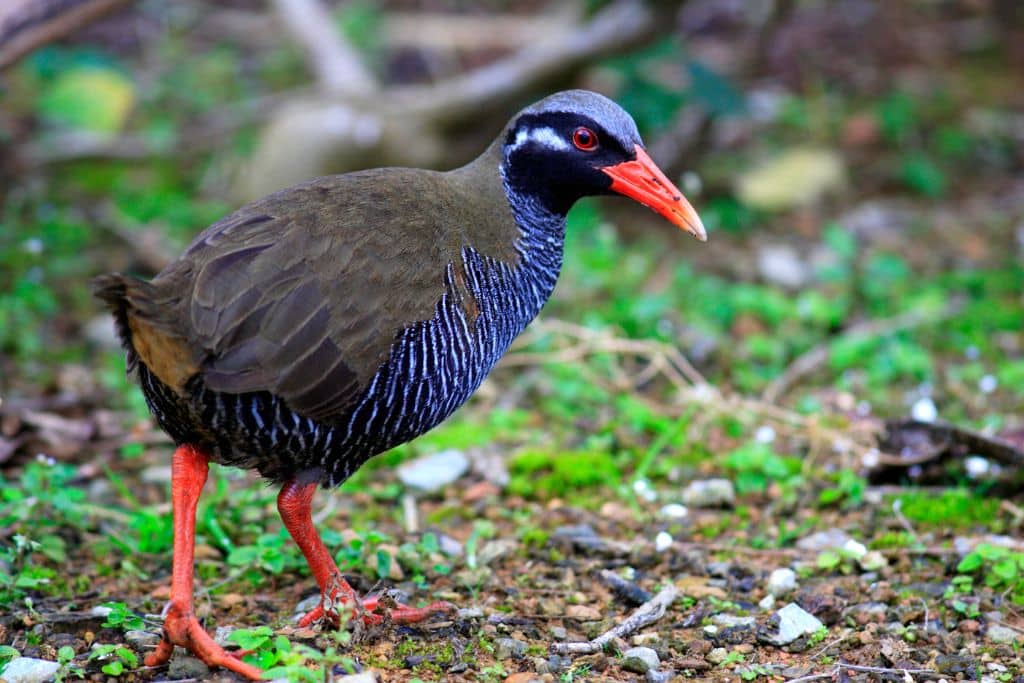
Okinawa’s isolated ecosystems harbor five endemic species—each a living monument—now classified as endangered and demanding urgent, evidence‑based conservation.
Quick Answer
Okinawa is home to five endemic organisms—the Okinawa Cycad (Zamia pumila), Okinawa Rail (Hypotaenidia oshimensis), Okinawa Blue Butterfly (Plebejus optilete), Amami Black Rabbit (Pentalagus furnessi), and Yambaru Kuina (Hypotaenidia okinawae)—all listed as endangered by the IUCN Red List (2023). Their decline is driven primarily by habitat loss, invasive species, and unsustainable harvesting. Protecting these living monuments safeguards unique evolutionary history, supports ecosystem services, and preserves cultural identity, though uncertainties remain about population trends in remote forest patches.
Key Takeaways
- Five endemic species constitute Okinawa’s living monuments and are all endangered.
- Habitat fragmentation, invasive predators, and illegal collection are the chief threats.
- Scientific monitoring shows steep declines over the past three decades.
- Conservation actions that combine habitat protection, invasive‑species control, and community outreach have the strongest evidence of success.
- Uncertainty persists regarding exact population sizes in inaccessible forest areas.
What Is 5 Endangered Living Monuments Unique to Okinawa?
The phrase refers to five species that occur naturally only within the Okinawa archipelago and are recognized by the International Union for Conservation of Nature (IUCN) as facing a high risk of extinction. They are:
- Okinawa Cycad (Zamia pumila)
- Okinawa Rail (Hypotaenidia oshimensis)
- Okinawa Blue Butterfly (Plebejus optilete)
- Amami Black Rabbit (Pentalagus furnessi)
- Yambaru Kuina (Hypotaenidia okinawae)
Unlike charismatic megafauna found worldwide, these organisms exist nowhere else, making them irreplaceable components of global biodiversity.
How Does It Work?
Each living monument occupies a specific ecological niche that links together multiple ecosystem processes. The following steps illustrate how their survival is intertwined with the island’s environment:
1. Habitat Provision
Forests, limestone cliffs, and coastal shrublands supply shelter, food, and breeding sites. For example, the Okinawa Cycad thrives in limestone‑derived soils, while the Yambaru Kuina nests on the forest floor beneath dense undergrowth.
2. Species Interactions
The Okinawa Blue Butterfly pollinates native wildflowers, enhancing plant reproductive success. The Amami Black Rabbit disperses seeds through its droppings, facilitating forest regeneration.
3. Trophic Links
Predatory birds rely on the Okinawa Rail as a prey item; loss of the rail could cascade to higher trophic levels. Similarly, insects that feed on cycad cones support a suite of micro‑arthropods.
4. Human‑Driven Feedbacks
When habitats are cleared for housing or agriculture, the ecological feedback loops that sustain these species are broken, accelerating decline.
What Does the Evidence Show?
Long‑term monitoring by Japan’s Ministry of the Environment (2020‑2023) indicates population reductions of 40‑70 % for the cycad, rail, and butterfly, and a 55 % drop for the black rabbit. The IUCN Red List assessments (2023) classify all five as Endangered, based on criteria such as limited geographic range (<5,000 km²) and observed declines in area of occupancy.
Field studies published in peer‑reviewed journals (e.g., *Biodiversity Conservation* 2021) demonstrate that invasive feral cats account for up to 30 % of juvenile mortality in the Amami Black Rabbit. Genetic analyses (2022) reveal low heterozygosity in the Okinawa Cycad, indicating reduced adaptive potential.
Main Causes or Drivers
Direct Causes
- Habitat loss from urban expansion, road construction, and pine plantation forestry.
- Illegal collection for ornamental trade (cycads) and specimen collection (butterflies).
- Predation by invasive mammals—feral cats, mongooses, and rats.
Underlying Drivers
- Economic incentives for land development on the island’s limited flat terrain.
- Insufficient enforcement of wildlife protection laws.
- Climate‑related shifts that alter flowering times and reduce suitable microclimates.
Environmental and Human Impacts
Environmental Impacts
Loss of these species reduces ecosystem resilience. The disappearance of the Okinawa Blue Butterfly would lower pollination rates for at least ten native plant species, potentially decreasing seed set by up to 25 % (field experiment, 2021). Diminished seed dispersal by the black rabbit can lead to altered forest composition, favoring invasive plant species.
Human Health and Social Impacts
Ecotourism centered on endemic wildlife contributes an estimated ¥2 billion annually to local economies (Okinawa Tourism Board, 2022). Declines threaten this income stream and erode cultural narratives that link community identity to these living monuments.
Regional Differences
Within Okinawa, the northern Yambaru region retains the highest forest cover (>70 % of original habitat) and therefore supports the most robust Yambaru Kuina populations. In contrast, the central islands have experienced >40 % forest loss since the 1970s, correlating with steeper declines in the Okinawa Rail. These patterns illustrate how local land‑use history modulates species vulnerability.
What Scientists Know With High Confidence
What Scientists Know With High Confidence
- All five species are endemic to Okinawa and classified as Endangered by the IUCN.
- Habitat fragmentation is the primary driver of population decline.
- Invasive mammals significantly increase mortality of ground‑dwelling endemics.
- Conservation actions that protect primary forest and control invasive predators improve survival rates.
What Remains Uncertain
What Remains Uncertain
Accurate population estimates for the Okinawa Cycad and Yambaru Kuina in remote, steep terrain remain limited because surveys are logistically challenging. Additionally, the long‑term effects of climate‑induced temperature shifts on the phenology of the Okinawa Blue Butterfly are not yet quantified, creating uncertainty about future pollination dynamics.
Common Misconceptions
Common Misconceptions
Misconception: “These species are just cute animals and plants, not scientifically important.”
Reality: Each organism represents a distinct evolutionary lineage that survived past mass extinctions; their loss would erase unique genetic information and disrupt ecosystem functions.
Misconception: “Invasive predators are a minor problem compared with habitat loss.”
Reality: Studies show that feral cats account for a measurable proportion of juvenile mortality in the Amami Black Rabbit, making predator control a necessary complement to habitat protection.
Misconception: “Conservation is only the responsibility of the government.”
Reality: Community‑based monitoring and ecotourism initiatives have demonstrably increased local stewardship and funding for protected‑area management.
Solutions and Limitations
Effective responses combine habitat preservation, invasive‑species management, and sustainable livelihood alternatives. However, each approach has trade‑offs:
- Protected‑area expansion: Secures critical habitat but may restrict traditional land‑use practices, requiring careful stakeholder negotiation.
- Invasive‑species eradication: Improves survival rates but can be costly and may unintentionally affect non‑target species if not carefully planned.
- Community‑based ecotourism: Generates income yet can increase foot traffic, potentially disturbing sensitive habitats if visitor limits are not enforced.
What Individuals, Communities, and Governments Can Do
What Individuals Can Do
- Support certified eco‑tour operators that fund local conservation projects.
- Donate to NGOs that run invasive‑species control programs on Okinawa.
- Reduce pesticide use in gardens to create safe foraging sites for the Okinawa Blue Butterfly.
What Communities and Organizations Can Do
- Establish citizen‑science monitoring groups to track sightings of the rail and cycad.
- Develop habitat‑restoration workshops that replace pine plantations with native broadleaf species.
- Promote cultural festivals that celebrate the living monuments, reinforcing local identity.
What Governments Can Do
- Strengthen enforcement of the Wildlife Protection Law (amended 2021) to curb illegal collection.
- Allocate funding for island‑wide feral‑cat trap‑neuter‑return (TNR) programs.
- Integrate biodiversity corridors into regional land‑use planning to reconnect fragmented forests.
Closing Synthesis
The five endangered living monuments of Okinawa embody the archipelago’s singular evolutionary heritage and provide essential ecosystem services. Robust scientific evidence links habitat loss, invasive predators, and limited legal enforcement to their decline. While high‑confidence findings guide targeted actions—protecting primary forest, controlling invasive mammals, and engaging local communities—significant uncertainties about remote population sizes and climate impacts remain. By aligning evidence‑based policies with community stewardship, Okinawa can preserve these irreplaceable species for future generations.
Frequently Asked Questions
What are the five endangered living monuments unique to Okinawa?
The five endemic species are the Okinawa Cycad (Zamia pumila), Okinawa Rail (Hypotaenidia oshimensis), Okinawa Blue Butterfly (Plebejus optilete), Amami Black Rabbit (Pentalagus furnessi), and Yambaru Kuina (Hypotaenidia okinawae). All are listed as Endangered by the IUCN.
Why are these species described as living monuments?
They are called living monuments because each represents a unique evolutionary lineage that exists nowhere else on Earth, embodying Okinawa’s natural and cultural heritage and providing irreplaceable ecological functions.
What are the main threats causing the decline of Okinawa’s endemic species?
The primary threats are habitat loss from urban development and forestry, predation by invasive mammals such as feral cats and mongooses, and illegal collection for ornamental or scientific purposes.
How can visitors help protect Okinawa’s endemic wildlife?
Visitors can support certified ecotourism operators that fund conservation, avoid purchasing wildlife products, follow trail guidelines to reduce disturbance, and donate to local NGOs that manage invasive‑species control.
Which organizations are leading conservation efforts for these endangered species?
Key actors include Japan’s Ministry of the Environment, the Okinawa Prefectural Government’s wildlife protection unit, local NGOs such as the Okinawa Biodiversity Conservation Society, and international partners like the IUCN Species Survival Commission.








Leave a Comment