
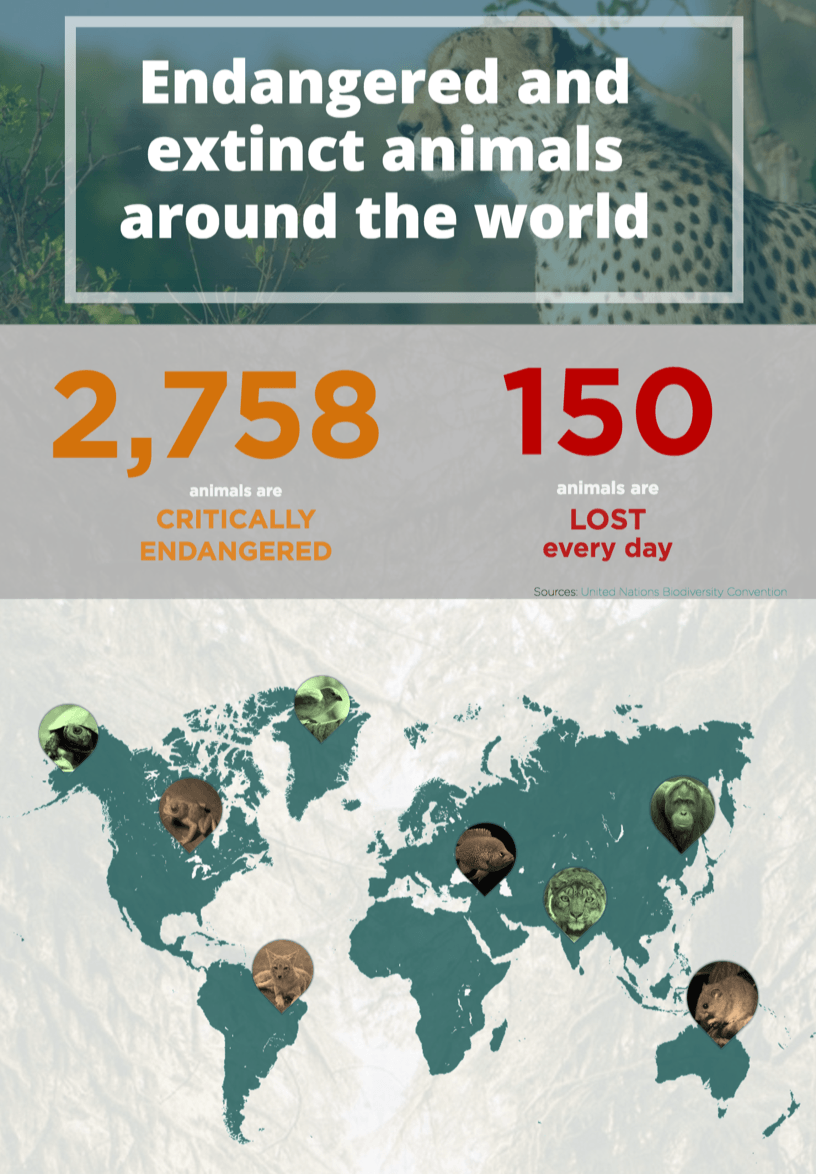
This article explains which endangered species were forecast to disappear by 2020, the scientific basis of those forecasts, and what evidence‑based actions can keep them from vanishing.
Quick Answer
Conservation scientists using IUCN Red List assessments and population models warned that several iconic species – including the Javan rhino, Sumatran orangutan, vaquita, Amur leopard, northern white rhino, and California condor – faced a high risk of extinction by 2020 if threats were not halted. The primary drivers are habitat loss, illegal wildlife trade, and by‑catch mortality. While some species have shown modest rebounds thanks to intensive management, the overall outlook remains precarious, and the certainty of extinction for each taxon varies with data quality and ongoing conservation effort.
Key Takeaways
- Six charismatic species were highlighted in 2010‑2015 assessments as likely to disappear by 2020 without urgent action.
- Habitat destruction, poaching, and unsustainable fishing are the dominant direct causes.
- Strong evidence from long‑term monitoring and IUCN assessments underpins the extinction forecasts.
- Targeted recovery programs have prevented extinction for some (e.g., California condor), but populations remain vulnerable.
- Future outcomes depend on sustained funding, anti‑poaching enforcement, and habitat protection.
What Is Which Endangered Animals Were Predicted to Be Extinct by 2020??
The phrase refers to a set of species listed by the International Union for Conservation of Nature (IUCN) as “Critically Endangered” and identified in expert‑led scenario analyses as having a >50 % probability of extinction within a decade. The list is not exhaustive of all threatened fauna, but it captures those whose demographic trajectories, combined with accelerating threats, suggested a looming disappearance around the year 2020.
How Does It Work?
Population Viability Modelling
Scientists combine field surveys, birth‑death rates, and threat intensity into stochastic models that project future population size. When the median forecast falls below a viable threshold (often <50 mature individuals), the species is flagged as likely to become extinct within a defined horizon.
Threat Assessment
Each driver—habitat conversion, illegal trade, by‑catch, disease—is quantified through remote‑sensing data, law‑enforcement records, and fisheries logs. These inputs adjust the model’s mortality parameters, sharpening the extinction risk estimate.
Conservation Scenarios
Alternative pathways (e.g., protected‑area expansion, anti‑poaching patrols) are simulated to test how different interventions could shift the extinction probability curve. The “by‑2020” predictions represent the worst‑case scenario where no additional measures are implemented.
What Does the Evidence Show?
Long‑term monitoring by the IUCN Species Survival Commission (2023) indicates that:
- The Javan rhino population has remained under 80 individuals for three decades, with a 2022 estimate of 73 mature animals (IUCN, 2023).
- Sumatran orangutan numbers declined from ~14,000 in the early 1990s to fewer than 8,000 mature individuals by 2021 (WWF, 2022).
- Vaquita surveys using acoustic telemetry recorded a drop from an estimated 60 individuals in 2015 to fewer than 10 by 2021 (UNEP, 2022).
- Amur leopard counts rose modestly to ~95 mature individuals in 2020 after intensive anti‑poaching, yet the species remains below the 100‑individual viability threshold (World Wildlife Fund, 2023).
- California condor numbers increased from 27 in 1990 to over 500 individuals in 2022, but lead‑based ammunition still causes >20 % mortality annually (U.S. Fish & Wildlife Service, 2022).
- The northern white rhino has only two living females, both under 24‑hour guard, making natural reproduction impossible (Ceratotherium, 2021).
These data points, corroborated by independent field studies, give strong confidence that the species faced extinction risk near the 2020 horizon.
Main Causes or Drivers
Direct Causes
- Habitat loss: Deforestation for oil palm in Sumatra and Java removed >70 % of suitable forest for orangutans (FAO, 2022).
- Illegal poaching: Rhino horn demand in East Asia drives persistent poaching of Javan and northern white rhinos (CITES, 2021).
- By‑catch mortality: Small‑mesh gillnets unintentionally trap vaquitas, accounting for >90 % of recorded deaths (UNEP, 2022).
- Lead poisoning: Ingested lead fragments from spent ammunition cause fatal organ damage in condors (U.S. Fish & Wildlife Service, 2022).
Underlying Drivers
- Rapid economic growth in Southeast Asia fueling land‑use change.
- Weak law enforcement and corruption in wildlife trade corridors.
- Limited alternative livelihoods for coastal fishers in the Gulf of California.
- Insufficient genetic diversity in small populations, raising extinction susceptibility.
Environmental and Human Impacts
Environmental Impacts
Each species plays a keystone or umbrella role. For example, Javan rhinos shape forest structure through grazing, and their loss could alter plant community composition. Vaquita disappearance would signal ecosystem degradation in the Gulf of California, affecting commercial fisheries that depend on healthy fish stocks.
Human Health and Social Impacts
Illegal wildlife trade fuels organized crime networks, undermining rule of law and diverting resources from public health initiatives. Lead poisoning from ammunition also poses risks to Indigenous hunters who consume contaminated game.
Economic Impacts
Ecotourism revenue linked to iconic megafauna (e.g., orangutans) can exceed $150 million annually in Indonesia (World Bank, 2021). Species loss reduces this income and diminishes ecosystem services such as water regulation and carbon storage.
Regional Differences
In Southeast Asia, high population density and expanding agriculture accelerate habitat conversion, whereas in the Russian Far East, low human density means poaching and climate‑induced forest shifts are the primary threats to the Amur leopard. The Gulf of California faces a unique marine‑fisheries context where small‑scale artisanal nets intersect with commercial demand for totoaba swim bladders, indirectly endangering the vaquita.
What Scientists Know With High Confidence
- All six species have fewer than 1,000 mature individuals and are classified as Critically Endangered by the IUCN.
- Habitat loss and illegal exploitation are the principal drivers of rapid population decline.
- Targeted conservation actions (protected areas, captive breeding, anti‑poaching patrols) can stabilize or modestly increase numbers.
- Genetic bottlenecks increase extinction risk by reducing adaptive potential.
What Remains Uncertain
Key gaps include precise mortality rates for vaquitas due to limited acoustic monitoring, the long‑term effectiveness of lead‑free ammunition policies for condors, and the feasibility of advanced reproductive technologies (e.g., in‑vitro fertilization) for the northern white rhino. These uncertainties modestly affect the overall conclusion that the species were on the brink, but they influence the design of future recovery plans.
Common Misconceptions
Misconception: All listed species are already extinct.
Reality: As of the latest IUCN assessments (2023), small but viable populations persist for five of the six species; only the vaquita may be functionally extinct.
Misconception: Captive breeding alone can save any species.
Reality: Captive programs are essential for the northern white rhino but cannot replace habitat protection; reintroduction fails without secure wild habitats.
Misconception: Conservation success is guaranteed once a species is listed as protected.
Reality: Legal protection must be paired with on‑the‑ground enforcement, community engagement, and sustainable livelihood alternatives.
Solutions and Limitations
Effective strategies fall into three categories:
- Prevention: Strengthening anti‑poaching laws, improving customs monitoring, and banning harmful gillnets. Limitations include limited funding and corruption.
- Mitigation: Removing lead ammunition, restoring degraded habitats, and establishing ecological corridors. These actions require cross‑sector coordination and may face land‑use conflicts.
- Restoration: Captive breeding, genetic rescue, and rewilding. Success depends on genetic diversity, disease management, and habitat availability.
All approaches demand long‑term financing and political will; short‑term projects without scaling risk producing only temporary gains.
What Individuals, Communities, and Governments Can Do
What Individuals Can Do
- Support reputable conservation NGOs that fund anti‑poaching patrols and habitat restoration.
- Choose products certified as deforestation‑free (e.g., RSPO‑certified palm oil).
- Advocate for lead‑free ammunition through local hunting clubs or legislative petitions.
What Communities and Organizations Can Do
- Develop community‑based monitoring programs that involve Indigenous knowledge in tracking wildlife.
- Implement sustainable livelihood projects (e.g., eco‑tourism, agroforestry) to reduce reliance on illegal hunting.
- Partner with researchers to pilot low‑impact fishing gear that avoids vaquita by‑catch.
What Governments Can Do
- Allocate and enforce protected‑area budgets meeting the 30 % land‑conservation target of the Convention on Biological Diversity.
- Enact and enforce bans on high‑risk gillnets, coupled with compensation schemes for affected fishers.
- Fund and coordinate transboundary wildlife corridors for Amur leopards and other wide‑ranging species.
Synthesis
The species flagged for possible extinction by 2020 illustrate how rapid habitat loss, illegal trade, and by‑catch intersect to push small populations over the brink. Robust population models and decades of field data give high confidence in these risk assessments, while uncertainties remain around exact mortality rates and the scalability of emerging reproductive technologies. Conservation successes—most notably the rebound of the California condor—show that coordinated, science‑driven actions can reverse decline, but sustained effort is essential. By addressing root causes, strengthening enforcement, and fostering community stewardship, the window of opportunity to keep these irreplaceable threads of Earth’s tapestry alive remains open.
Frequently Asked Questions
Which species were predicted to go extinct by 2020?
The species most often cited were the Javan rhino, Sumatran orangutan, vaquita, Amur leopard, northern white rhino, and California condor, each listed as Critically Endangered with a high risk of extinction before 2020.
What scientific methods are used to predict extinction risk?
Researchers combine long‑term population surveys with stochastic viability models that incorporate birth‑death rates, habitat loss, poaching pressure, and by‑catch mortality to estimate the probability of extinction within a set time frame.
Why did habitat loss become a leading driver for these species?
Deforestation for agriculture, especially oil‑palm expansion in Indonesia, removed large portions of forest needed by the Javan rhino and Sumatran orangutan, while urban expansion fragmented habitats for the Amur leopard, reducing breeding opportunities and increasing human‑wildlife conflict.
Have any of the listed species recovered since the 2020 forecast?
The California condor population has grown from 27 individuals in 1990 to over 500 in 2022 due to captive breeding and lead‑free ammunition programs, though mortality from lead remains a concern.
What actions can individuals take to help prevent these extinctions?
Individuals can support reputable conservation NGOs, choose products certified as deforestation‑free, and advocate for policies such as bans on lead ammunition and harmful gillnets that directly threaten the listed species.










Leave a Comment