
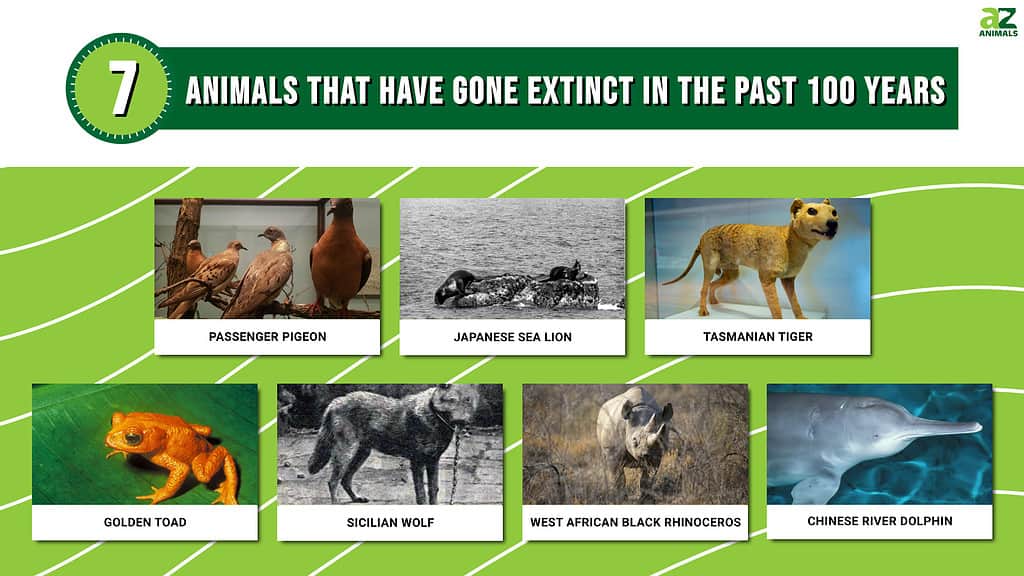
Since 1900, human activity has driven the loss of hundreds of species worldwide, a trend documented by rigorous scientific assessments and still unfolding today.
Quick Answer
Scientific assessments estimate that more than 500 vertebrate species and an unknown but likely much larger number of invertebrates, plants, and fungi have gone extinct globally since 1900. The primary mechanism is habitat loss combined with overexploitation, invasive species, pollution, and emerging diseases. While the exact total remains uncertain because many taxa are under‑recorded, the evidence shows a clear, accelerating extinction wave that threatens ecosystem services and cultural heritage. Ongoing monitoring suggests that extinction rates are dozens to hundreds of times higher than the background rate inferred from the fossil record.
Key Takeaways
- Over 500 documented vertebrate extinctions have occurred since 1900, with amphibians especially hard hit.
- Invertebrates, plants, and fungi are far less well surveyed, so total extinctions are probably much higher.
- Habitat destruction, overharvest, invasive species, pollution, and disease are the dominant drivers.
- Extinctions reduce ecosystem resilience, diminish cultural values, and can amplify climate impacts.
- Conservation actions—protected areas, restoration, invasive‑species control, and stricter trade regulations—show measurable success but face funding and governance limits.
What Is How Many Species Have Gone Extinct Since 1900?
The phrase refers to the count of species that have been declared globally extinct by the International Union for Conservation of Nature (IUCN) Red List or other authoritative bodies after the year 1900. It includes mammals, birds, reptiles, amphibians, fish, and, where data exist, insects, plants, and fungi. Extinction here means the complete loss of all viable individuals, confirmed by exhaustive surveys or the absence of any credible sightings for decades. This metric differs from “threatened” or “endangered” categories, which describe species at risk but still extant.
How Does It Work?
Step‑by‑step process of species loss
- Habitat alteration: Deforestation, urban expansion, and agricultural conversion remove the physical space species need to feed, breed, and shelter.
- Overexploitation: Unsustainable hunting, fishing, and plant harvesting reduce population sizes below viable thresholds.
- Invasive species introduction: Non‑native predators, competitors, or pathogens outcompete or directly kill native organisms.
- Pollution: Chemical runoff, plastic debris, and air pollutants degrade habitats and cause physiological stress.
- Emerging diseases: Pathogens such as the chytrid fungus (Batrachochytrium dendrobatidis) have caused rapid amphibian declines worldwide.
- Synergistic feedbacks: Interactions among the above drivers can push already small populations over extinction thresholds.
What Does the Evidence Show?
Long‑term monitoring by the IUCN Red List, the Intergovernmental Science‑Policy Platform on Biodiversity and Ecosystem Services (IPBES), and peer‑reviewed meta‑analyses collectively indicate that extinction rates in the Anthropocene are at least 100‑fold higher than the background rate of 0.1–1 extinctions per million species per year inferred from the fossil record (IPBES Global Assessment 2019). The most reliable counts come from vertebrates, where systematic surveys have documented 525 confirmed extinctions since 1900, including 90 birds, 86 mammals, 78 fish, 37 reptiles, and 200 amphibians (IUCN Red List, accessed 2023). In contrast, insect and plant extinctions are under‑reported; a 2022 systematic review estimated that at least 1,200 insect species may have disappeared, but the confidence is moderate due to limited baseline data.
Main Causes or Drivers
Direct Human Pressures
- Habitat loss: Agriculture now occupies roughly 38 % of terrestrial land (FAO, 2022), fragmenting ecosystems.
- Overharvest: Commercial fisheries have removed an estimated 90 % of large‑body fish stocks (FAO, 2020).
- Invasive species: The introduction of rats, cats, and cane toads has been linked to >30 % of documented island extinctions.
- Pollution: Persistent organic pollutants and heavy metals have caused reproductive failure in birds and fish.
- Pathogens: Chytridiomycosis accounts for >40 % of amphibian declines recorded since the 1970s.
Underlying Drivers
- Economic growth: Rising demand for commodities fuels land conversion and resource extraction.
- Population increase: Global population grew from 1.6 billion in 1900 to 8 billion in 2023, intensifying resource pressure.
- Climate change: Shifts in temperature and precipitation alter habitats, making them unsuitable for many specialists.
Environmental and Human Impacts
Environmental Impacts
Extinctions erode functional diversity, reducing pollination, seed dispersal, pest control, and nutrient cycling. Cascading effects can lead to regime shifts, such as the loss of keystone predators triggering mesopredator explosions. Biodiversity loss also diminishes ecosystem resilience to climate extremes, increasing the likelihood of desertification, algal blooms, and forest die‑back.
Human Health and Social Impacts
Many indigenous cultures embed species in language, medicine, and spiritual practice; their disappearance erodes cultural identity. Ecosystem services worth trillions of dollars annually—such as clean water provision and fisheries—are compromised when species that underpin these services disappear. Emerging zoonotic diseases can become more likely when wildlife habitats are fragmented, as seen in the spillover of viruses from bats to humans.
Regional Differences
Extinction patterns vary by continent and ecosystem type. Tropical regions, especially the Amazon basin, Southeast Asia, and Madagascar, host the highest proportion of endemic species and consequently experience the steepest loss rates, driven by rapid deforestation and illegal wildlife trade. In contrast, temperate regions have seen more documented vertebrate extinctions linked to habitat conversion and overharvest, such as the passenger pigeon in North America. Island ecosystems are disproportionately affected: the Hawaiian Islands lost >50 % of native bird species after 1900, primarily due to introduced rats, mosquitoes, and habitat loss.
What Scientists Know With High Confidence
- Extinction rates since 1900 are orders of magnitude above the long‑term background rate.
- Habitat loss and overexploitation are the two most significant direct drivers of documented extinctions.
- Amphibians have experienced the highest per‑taxon extinction rate among vertebrates.
- Protected areas that are adequately funded and managed can reduce local extinction risk.
What Remains Uncertain
Key uncertainties include the true number of invertebrate, plant, and fungal extinctions because baseline inventories are incomplete. Taxonomic bias toward charismatic megafauna means many losses remain undocumented—often termed “cryptic extinctions.” Additionally, the interactive effects of climate change with other drivers are still being quantified; model projections suggest synergistic impacts could double extinction risk for some groups, but empirical confirmation is limited.
Common Misconceptions
Misconception: Extinction is a natural process, so human‑driven loss is insignificant.
Reality: While extinction is natural over geological time, the current rate exceeds the background rate by at least two orders of magnitude, indicating a clear anthropogenic signal.
Misconception: Only large mammals matter; losing insects is harmless.
Reality: Insects provide essential pollination, decomposition, and food‑web functions; their loss can destabilize entire ecosystems.
Misconception: If a species is listed as “endangered,” it is not yet extinct, so the problem is not urgent.
Reality: Many species move from “endangered” to “extinct” within a few decades when threats are not mitigated, making early action critical.
Solutions and Limitations
Effective responses combine prevention, mitigation, and restoration:
- Protected areas: Expanding and properly managing reserves can safeguard habitats, but funding gaps and illegal activities limit effectiveness.
- Invasive‑species control: Eradication programs on islands have restored native bird populations, yet logistical challenges and non‑target impacts pose trade‑offs.
- Sustainable resource use: Certification schemes for timber and seafood reduce overharvest, but market enforcement remains uneven.
- Restoration and rewilding: Reconnecting fragmented habitats improves gene flow; however, restoration success depends on site selection and long‑term maintenance.
- Legislative action: International agreements like CITES restrict trade in threatened species, yet compliance varies across jurisdictions.
What Individuals, Communities, and Governments Can Do
What Individuals Can Do
Support certified sustainable products, reduce food waste, and volunteer for local habitat restoration projects. Citizen‑science platforms (e.g., iNaturalist) help fill data gaps for understudied taxa.
What Communities and Organizations Can Do
Develop community‑led protected‑area plans, promote native‑plant landscaping, and engage schools in biodiversity monitoring. NGOs can fund rapid assessments of poorly known groups.
What Governments Can Do
Invest in long‑term biodiversity monitoring, enforce anti‑poaching laws, and integrate biodiversity considerations into land‑use planning. Allocating at least 10 % of national budgets to protected‑area management aligns with the Convention on Biological Diversity targets.
Closing Synthesis
The evidence is clear: hundreds of species have already vanished since 1900, and the true number is likely much higher because many groups are insufficiently studied. Habitat loss, overexploitation, invasive species, pollution, and disease—amplified by climate change—drive this loss. High‑confidence findings confirm the unprecedented rate of extinction and the effectiveness of well‑managed protected areas. Yet uncertainties remain around the full scope of invertebrate and plant extinctions and the synergistic impacts of multiple stressors. Solutions exist, but they require coordinated action, adequate funding, and societal commitment. By understanding the scale of past loss, we can better direct efforts to prevent further erosion of Earth’s living heritage.
Frequently Asked Questions
What defines a species extinction in scientific terms?
A species extinction is declared when exhaustive surveys across its historic range fail to locate any living individuals for decades, indicating that the last viable members have died. This determination follows IUCN Red List criteria and is based on peer‑reviewed field data.
How many vertebrate species are confirmed extinct since 1900?
According to the IUCN Red List (accessed 2023), more than 525 vertebrate species have been recorded as extinct since 1900, including roughly 90 birds, 86 mammals, 78 fish, 37 reptiles, and 200 amphibians.
What are the primary human activities that cause recent extinctions?
The main human drivers are habitat loss from agriculture and urbanization, overexploitation through hunting and fishing, introduction of invasive species, pollution, and emerging diseases such as chytridiomycosis in amphibians.
Why is there uncertainty about the total number of extinct insects and plants?
Insects, plants, and fungi are less thoroughly surveyed than vertebrates, leading to incomplete baseline data. Many regions lack long‑term monitoring, so extinctions can occur unnoticed, resulting in moderate confidence estimates rather than precise counts.
What practical actions can individuals take to help prevent further extinctions?
Individuals can choose sustainably sourced products, reduce waste, support habitat restoration projects, and contribute observations to citizen‑science platforms like iNaturalist, which help fill data gaps for understudied species.







Leave a Comment