

Greenhouse gases are essential for life because they keep Earth warm, yet excessive concentrations from human activities intensify the greenhouse effect, driving climate change and associated risks.
Quick Answer
Greenhouse gases (GHGs) such as carbon dioxide, methane, nitrous oxide and fluorinated gases naturally trap infrared radiation, creating a temperature‑raising “greenhouse effect” that makes the planet habitable. In modest concentrations this effect is beneficial; however, industrial‑scale emissions since the 19th century have raised atmospheric GHG levels far beyond natural variability, leading to a measurable increase in global average temperature and related climate impacts. Scientists are highly confident that the warming trend is largely driven by anthropogenic GHGs, while uncertainties remain in the magnitude of regional changes and feedbacks.
Key Takeaways
- GHGs are a natural and necessary component of Earth’s climate system.
- Human activities have more than doubled pre‑industrial CO₂ concentrations, pushing the climate beyond historic stability.
- Carbon dioxide persists for centuries, whereas methane has a stronger but shorter‑lived warming effect.
- Mitigation requires rapid emission cuts, renewable energy, and protection of natural carbon sinks.
- Individual actions matter, but systemic policy and technological change drive the largest reductions.
What Is Are Greenhouse Gases Good or Bad? The Balanced Answer?
Greenhouse gases are atmospheric constituents that absorb and re‑emit infrared radiation, thereby retaining heat near the surface. The principal GHGs affecting climate are carbon dioxide (CO₂), methane (CH₄), nitrous oxide (N₂O) and a group of synthetic fluorinated gases (e.g., HFCs, PFCs). These gases differ in chemical structure, atmospheric lifetime, and warming potential, but all contribute to the overall greenhouse effect. The term “good or bad” oversimplifies a complex reality: the gases themselves are chemically neutral; their impact depends on concentration, source, and interaction with Earth’s energy balance.
How Does It Work?
The greenhouse effect operates through a series of physical processes:
- Solar radiation reaches Earth. Most of the short‑wave energy passes through the transparent atmosphere and is absorbed by the surface.
- Surface warms and emits infrared radiation. The warmed ground radiates long‑wave energy upward.
- GHGs absorb infrared photons. Molecules such as CO₂ and CH₄ have vibrational modes that capture this energy, preventing it from escaping directly to space.
- Re‑emission in all directions. Absorbed energy is re‑emitted isotropically; a portion returns to the surface, adding to warming, while the rest escapes.
- Energy balance adjusts. The atmosphere reaches a new equilibrium where incoming solar energy equals outgoing infrared energy, but at a higher average temperature.
Feedback Loops
Higher temperatures can trigger feedbacks that amplify or dampen warming. For example, melting permafrost releases additional CH₄, while increased plant growth in some regions can draw down CO₂. The net effect of feedbacks is currently assessed as positive, meaning they reinforce the initial warming.
What Does the Evidence Show?
Multiple lines of evidence converge on a consistent picture.
- Long‑term atmospheric records. Direct measurements at Mauna Loa show CO₂ rising from ~315 ppm in 1958 to over 420 ppm in 2023 (NOAA, 2024).
- Ice‑core reconstructions. Antarctic ice cores reveal that pre‑industrial CO₂ varied between 180–300 ppm over the past 800,000 years (IPCC AR6, 2021).
- Attribution studies. Model simulations that include only natural forcings cannot reproduce the observed warming; adding anthropogenic GHG emissions matches the temperature record (IPCC, 2021).
- Observed impacts. Global average surface temperature has increased by about 1.1 °C since 1850, sea level has risen ~20 cm, and extreme heat events have become more frequent (NASA GISS, 2023).
These observations are classified as strong evidence, providing high confidence that human‑derived GHGs are the dominant driver of recent climate change.
Main Causes or Drivers
Direct Human Sources
- Fossil‑fuel combustion for electricity, transport and industry (≈ 75 % of CO₂ emissions).
- Land‑use change, especially deforestation, which reduces carbon uptake.
- Agricultural practices that emit CH₄ (enteric fermentation) and N₂O (synthetic fertilizers).
- Industrial processes that release fluorinated gases with high global warming potentials.
Underlying Drivers
Economic growth, population increase, and energy demand create the systemic pressures that expand GHG emissions. Policy frameworks, technology adoption rates, and cultural consumption patterns shape how quickly societies can decarbonize.
Environmental and Human Impacts
Environmental Impacts
- Rising temperatures shift species ranges, contributing to biodiversity loss.
- Ocean warming and acidification stress coral reefs and marine food webs.
- Accelerated glacial melt and reduced snowpack affect freshwater availability.
- Increased frequency of heatwaves, droughts, and intense precipitation events.
Human Health and Social Impacts
- Heat‑related mortality rises, especially among the elderly and outdoor workers.
- Air‑quality degradation from ground‑level ozone and particulate matter worsens respiratory conditions.
- Food security is threatened by crop yield variability and pest expansions.
- Vulnerable communities in low‑lying coastal zones face displacement risks.
Economic and Infrastructure Impacts
- Damage to infrastructure from storms and flooding imposes growing repair costs.
- Insurance premiums rise in high‑risk regions, affecting housing affordability.
- Transition costs for energy‑intensive industries can be offset by new green‑technology jobs.
Regional Differences
Impact intensity varies with geography.
- Arctic and sub‑Arctic regions: Experience warming up to three times the global average, leading to permafrost thaw.
- Tropical low‑lying islands: Face sea‑level rise and storm surge despite modest temperature increases.
- Temperate agricultural zones: May see longer growing seasons but also increased heat stress.
- Developing nations: Often have higher exposure and lower adaptive capacity, magnifying health and livelihood effects.
What Scientists Know With High Confidence
What Scientists Know With High Confidence
- The greenhouse effect is a fundamental physical principle confirmed by laboratory and atmospheric observations.
- Atmospheric concentrations of CO₂, CH₄ and N₂O have risen sharply since the mid‑19th century.
- Human activities are the dominant cause of observed global warming since 1950.
- Continued GHG emissions will lead to further temperature rise, sea‑level rise, and increased extreme weather frequency.
What Remains Uncertain
What Remains Uncertain
Key uncertainties involve the magnitude of climate feedbacks, such as permafrost carbon release and cloud‑cover responses, which could amplify or moderate warming. Regional precipitation patterns, especially in the tropics, remain difficult to project with high precision. Improved monitoring and model development are needed to narrow these gaps.
Common Misconceptions
Common Misconceptions
Misconception: All greenhouse gases are harmful.
Reality: In natural concentrations, GHGs are essential for a temperate climate; the problem arises when concentrations exceed the range that Earth’s climate system can balance.
Misconception: Reducing methane is unimportant because CO₂ is more abundant.
Reality: Methane’s warming potential is > 25 times that of CO₂ over a 100‑year horizon, and its short atmospheric lifetime means that rapid methane cuts can quickly lower warming rates.
Misconception: Individual lifestyle changes alone can stop climate change.
Reality: Personal actions (e.g., energy efficiency, diet shifts) contribute to demand reduction, but systemic policy, infrastructure, and industry transformation are required for the scale of emission cuts needed.
Solutions and Limitations
Effective responses combine mitigation, adaptation, and restoration.
- Renewable energy transition: Wind, solar and geothermal power can displace fossil fuels, but intermittency requires storage solutions and grid upgrades.
- Energy efficiency: Improving building envelopes and industrial processes reduces demand, yet retrofitting costs can be high for existing stock.
- Carbon pricing: Carbon taxes or cap‑and‑trade create economic incentives, but political acceptance varies across jurisdictions.
- Nature‑based solutions: Reforestation, wetland restoration and soil carbon management enhance natural sinks, though land‑competition and permanence concerns limit their sole reliance.
- Methane capture: Fixing leaks in oil‑gas infrastructure and capturing livestock emissions can deliver fast climate benefits, yet require monitoring and investment.
What Individuals, Communities, and Governments Can Do
What Individuals Can Do
- Choose low‑carbon transportation (public transit, cycling, electric vehicles).
- Reduce food‑system footprints by limiting meat consumption and minimizing food waste.
- Improve home energy efficiency (insulation, LED lighting, smart thermostats).
- Support policies and companies that commit to science‑based emission targets.
What Communities and Organizations Can Do
- Develop local renewable projects (community solar, wind cooperatives).
- Implement green‑infrastructure (urban trees, permeable surfaces) to sequester carbon and reduce heat islands.
- Adopt climate‑smart land‑use planning that protects forests and wetlands.
What Governments Can Do
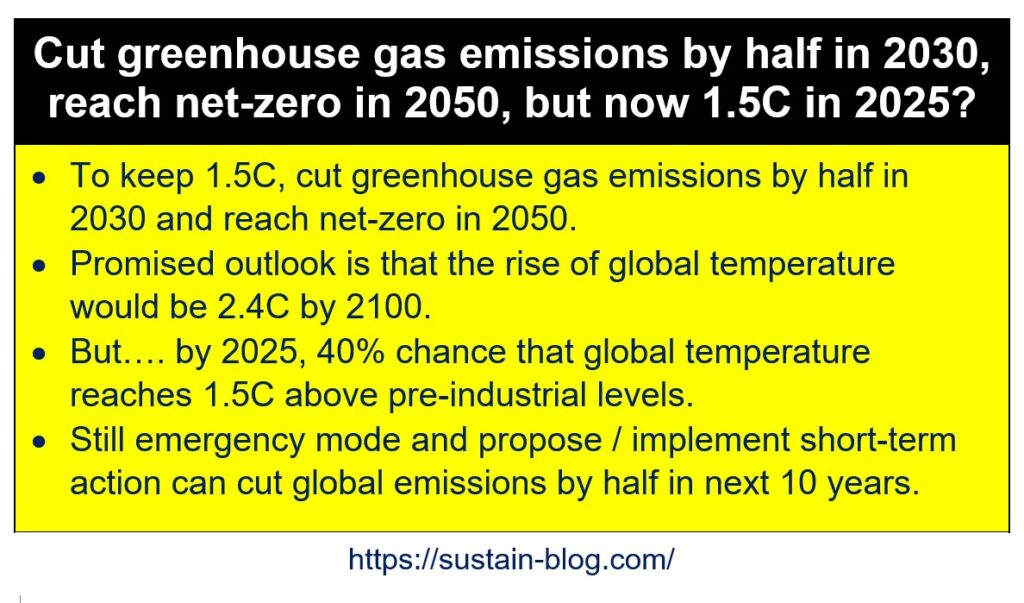
- Set ambitious, legally binding net‑zero targets aligned with the IPCC 1.5 °C pathway.
- Invest in public transit, grid modernization and research on low‑carbon technologies.
- Provide subsidies or tax incentives for renewable energy and energy‑efficiency retrofits.
- Enforce regulations that limit methane leaks and protect carbon sinks.
- Facilitate climate finance to support mitigation and adaptation in vulnerable developing nations.
Synthesis
Greenhouse gases are neither inherently good nor bad; they are neutral gases whose climate influence depends on concentration. Natural levels sustain a livable climate, while anthropogenic excess drives warming that threatens ecosystems and human societies. The scientific community has high confidence in the causal link between human‑generated GHGs and recent climate change, though uncertainties remain in feedback strength and regional outcomes. Mitigation strategies—especially rapid decarbonization, methane reduction and protection of natural sinks—offer the most effective route to rebalance the atmosphere. Collective action across individuals, communities, industry and governments is essential to achieve the emission reductions needed for a stable climate future.
Frequently Asked Questions
What are the main greenhouse gases that affect Earth’s climate?
The primary greenhouse gases are carbon dioxide (CO₂), methane (CH₄), nitrous oxide (N₂O) and synthetic fluorinated gases such as hydrofluorocarbons. Each traps infrared radiation, contributing to the overall greenhouse effect.
Why are greenhouse gases considered both beneficial and harmful?
In natural concentrations, greenhouse gases create a warming effect that makes Earth’s surface temperate, enabling life. When concentrations rise far above natural levels due to human activities, they amplify warming, leading to climate change impacts.
How does methane differ from carbon dioxide in terms of climate impact?
Methane has a warming potential more than 25 times that of CO₂ over a 100‑year period but remains in the atmosphere for about 12 years, whereas CO₂ persists for centuries. This means methane can cause strong short‑term warming, while CO₂ drives long‑term climate change.
What are the most effective actions governments can take to curb greenhouse‑gas emissions?
Governments can set legally binding net‑zero targets, invest in renewable energy and grid upgrades, implement carbon pricing, enforce methane‑leak regulations, and provide incentives for energy‑efficiency and nature‑based carbon sinks.
Can individual lifestyle changes make a difference in addressing climate change?
Individual actions such as using low‑carbon transport, reducing meat consumption, improving home energy efficiency, and supporting climate‑friendly policies help lower demand and signal market shifts, but large‑scale emission reductions depend mainly on systemic policy and industry changes.







Leave a Comment