
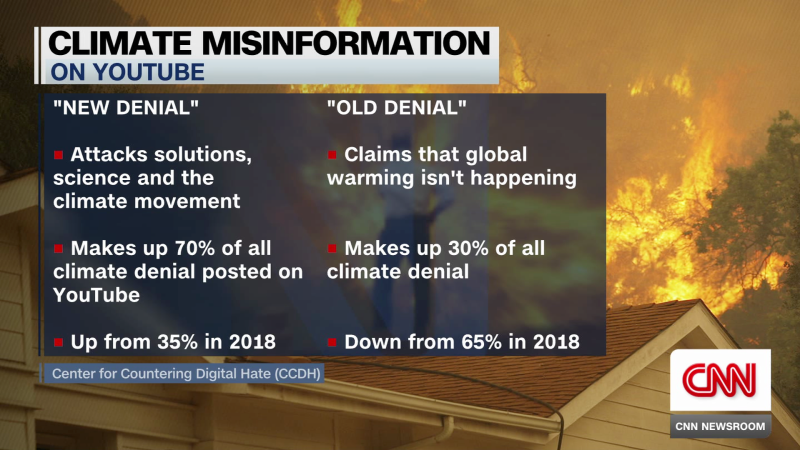
Understanding why climate‑change denial persists requires examining identity, ideology, misinformation, and economic interests, even as scientific consensus confirms human‑driven warming.
Quick Answer
Climate‑change denial endures because the issue intertwines with personal identity, political ideology, and powerful economic incentives, while digital media amplifies misinformation and creates echo chambers. The Intergovernmental Panel on Climate Change (IPCC) reports provide high‑confidence evidence that human activities dominate recent warming. Denial hampers collective mitigation and adaptation, increasing exposure to climate‑related risks, although uncertainties remain about the precise timing of some regional impacts.
Key Takeaways
- Denial is driven by identity, ideology, and vested economic interests, not by a lack of scientific evidence.
- Social media algorithms and selective exposure create echo chambers that magnify false narratives.
- High‑confidence findings confirm human‑driven warming and its broad environmental impacts.
- Uncertainties focus on regional climate projections and the speed of societal response.
- Effective solutions combine accurate communication, policy incentives, and community‑level actions.
What Is Why Some Still Believe Climate Change Isn’t Real?
The phrase refers to the persistence of climate‑change skepticism despite a robust scientific consensus that the planet is warming due to greenhouse‑gas emissions. It spans a spectrum from questioning specific data sets to outright denial of anthropogenic warming. Unlike healthy scientific doubt, denial often serves to protect existing worldviews, political affiliations, or financial interests, making it a sociopolitical phenomenon as much as an informational one.
How Does It Work?
Identity and Tribalism
People tend to align their climate views with the groups they belong to—political parties, religious communities, or occupational sectors. When a group adopts a skeptical stance, members experience social pressure to conform, reinforcing belief through shared language and values.
Misinformation Amplification
Digital platforms enable rapid sharing of false or misleading content. Algorithms prioritize engagement, often promoting sensationalist claims over nuanced explanations. Users thus encounter a skewed information diet that confirms pre‑existing biases, a process described by cognitive‑dissonance theory.
Economic Incentives
Fossil‑fuel companies and related industries have historically funded think‑tanks and lobbying groups that cast doubt on climate science. By framing regulation as a threat to jobs or economic growth, they create a narrative that denial protects livelihoods.
Psychological Mechanisms
Belief perseverance keeps initial notions intact even after contradictory evidence appears. The threat of climate change also elicits anxiety; some individuals cope by rejecting the premise altogether, preferring a comforting falsehood to an unsettling reality.
What Does the Evidence Show?
Multiple independent lines of evidence converge on the conclusion that Earth’s average surface temperature has risen about 1.1 °C since the pre‑industrial era (IPCC Sixth Assessment Report, 2021). Long‑term instrumental records, satellite observations, and proxy data such as ice cores all indicate a consistent warming trend across continents and oceans.
Attribution studies using climate‑model simulations attribute over 95 % of the observed warming since 1950 to human‑generated greenhouse gases, especially carbon dioxide and methane. Observed changes—including a global sea‑level rise of roughly 3.3 mm yr⁻¹ since 1993 and increased frequency of extreme heat events—match model projections. The convergence of observational data, experimental results, and model simulations provides strong evidence for anthropogenic climate change.
Main Causes or Drivers
Direct Human Drivers
- Burning of fossil fuels for energy, transport, and industry releases large quantities of CO₂.
- Agricultural practices emit methane from livestock and nitrous oxide from synthetic fertilizers.
- Deforestation reduces the biosphere’s capacity to sequester carbon.
Underlying Socio‑Economic Drivers
- Economic systems that prioritize short‑term profit over long‑term sustainability.
- Political structures that frame climate policies as ideological threats.
- Media ecosystems that reward sensationalism, allowing misinformation to spread.
Environmental and Human Impacts
Environmental Impacts
- Accelerated glacier melt contributes to sea‑level rise.
- Shifts in species’ geographic ranges increase extinction risk for temperature‑sensitive organisms.
- Ocean acidification weakens coral reefs and disrupts marine food webs.
Human Health and Social Impacts
- Heat‑related mortality rises, especially among older adults and outdoor workers.
- Expanded ranges of vector‑borne diseases such as dengue and Lyme disease.
- Food‑security threats from reduced crop yields in heat‑stressed regions.
Economic and Infrastructure Impacts
- Higher costs for flood defense and disaster recovery.
- Disruption of energy supply chains, particularly in regions reliant on hydropower.
- Potential loss of tourism revenue in areas affected by coral bleaching.
Regional Differences
Impact intensity varies by geography. Low‑lying island nations face imminent sea‑level threats, while Arctic regions experience permafrost thaw and amplified warming—up to three times the global average. Tropical monsoon areas see heightened rainfall variability, increasing flood risk, whereas arid regions such as the Sahel confront more severe droughts. These patterns reflect differences in baseline climate, socioeconomic vulnerability, and adaptive capacity.
What Scientists Know With High Confidence
- Human activities are the dominant cause of global warming since the mid‑20th century.
- Greenhouse gases trap infrared radiation, raising surface temperatures.
- Observed warming aligns with model projections that include anthropogenic emissions.
- Sea level is rising due to thermal expansion of seawater and loss of land‑based ice.
What Remains Uncertain
Key uncertainties involve the magnitude of regional climate responses, especially precipitation changes in complex terrain, and the rate at which feedbacks such as permafrost carbon release will accelerate warming. Socio‑economic pathways—how societies will emit gases in the future—add further variability to long‑term projections. These gaps do not undermine the core conclusion of human‑driven climate change but affect precise impact forecasts.
Common Misconceptions
Misconception: “Climate has always changed, so current warming is natural.”
Reality: While Earth’s climate has varied over geological time, the rapid rate of warming in the past century exceeds natural variability and coincides with unprecedented greenhouse‑gas concentrations, as documented by ice‑core records and the IPCC.
Misconception: “There is no scientific consensus.”
Reality: Over 97 % of actively publishing climate scientists endorse the consensus that humans are the primary driver of recent warming, a figure supported by multiple surveys and meta‑analyses.
Misconception: “Extreme weather events are isolated incidents, not climate signals.”
Reality: Attribution studies link increased frequency and intensity of heatwaves, heavy rainfall, and some droughts to anthropogenic warming, indicating a clear statistical connection.
Solutions and Limitations
Effective responses combine mitigation—reducing greenhouse‑gas emissions—and adaptation—building resilience to unavoidable impacts.
Mitigation Strategies
- Rapid decarbonisation of electricity through renewable energy and phase‑out of coal. Evidence from the International Energy Agency shows emissions can fall sharply when policy incentives align, but transition costs and entrenched industry interests pose barriers.
- Energy efficiency measures in buildings and industry. These are technically feasible and cost‑effective, yet adoption often stalls without robust regulations.
- Reforestation and avoided deforestation. Forest restoration sequesters carbon, but land‑use conflicts and long‑term permanence concerns limit scalability.
Adaptation Measures
- Investing in flood‑defense infrastructure and heat‑action plans. Such measures reduce exposure but cannot replace emission cuts and may require substantial public funding.
- Climate‑smart agriculture that improves water use efficiency and crop diversity. Evidence shows yield benefits under stress, yet implementation depends on farmer access to resources and knowledge.
- Urban planning that expands green space and improves cooling. Benefits are localized and equity‑focused, but require coordinated municipal policies.
Each strategy carries trade‑offs: renewable energy projects can affect land use; large‑scale bioenergy may compete with food production; adaptation can create maladaptation if poorly designed. No single measure solves the problem; a portfolio approach is essential.
What Individuals, Communities, and Governments Can Do
What Individuals Can Do
- Support policies that price carbon or fund renewable‑energy research.
- Reduce personal carbon footprints through energy‑efficient appliances, modest travel choices, and mindful consumption.
- Engage in local climate‑education initiatives to counter misinformation.
What Communities and Organizations Can Do
- Develop community‑scale renewable projects such as solar cooperatives.
- Implement climate‑resilient land‑use planning that preserves natural buffers like wetlands.
- Partner with trusted local leaders to disseminate accurate climate information.
What Governments Can Do
- Enact and enforce stringent emissions standards for industry and transport.
- Invest in public transit, grid modernization, and research on low‑carbon technologies.
- Provide equitable adaptation funding to vulnerable communities, ensuring climate justice.
Closing Synthesis
Climate‑change denial persists because the issue intersects with identity, politics, and profit, amplified by modern information flows. Nonetheless, the scientific record—anchored in multiple high‑confidence lines of evidence—demonstrates unequivocally that human activities are warming the planet. Recognising the psychological and structural roots of denial helps tailor communication and policy strategies that respect values while presenting clear, evidence‑based facts. While uncertainties remain about regional details, decisive mitigation and adaptation actions are essential to limit adverse outcomes and protect ecosystems and societies worldwide.
Frequently Asked Questions
What is climate‑change denial?
Climate‑change denial refers to the rejection or minimisation of the scientific consensus that human activities are causing global warming, often driven by identity, ideology, or economic interests rather than a lack of evidence.
Why does climate‑change denial still exist despite strong scientific evidence?
Denial persists because climate issues are tied to personal identity, political affiliation, and powerful economic incentives, while social‑media algorithms amplify misinformation, creating echo chambers that reinforce skeptical views.
What are the most trusted sources confirming human‑driven warming?
The Intergovernmental Panel on Climate Change (IPCC) assessments, NASA temperature records, and NOAA monitoring data provide high‑confidence evidence that greenhouse‑gas emissions are the dominant driver of recent warming.
How can communities help reduce climate‑change misinformation?
Communities can partner with trusted local leaders, run climate‑education programs, and develop community‑scale renewable projects, which together counter false narratives and demonstrate practical climate solutions.
What actions can governments take to address climate‑change denial?
Governments can enact strict emissions standards, invest in clean‑energy infrastructure, fund equitable adaptation programs for vulnerable populations, and support transparent communication strategies that address misinformation.








Leave a Comment