
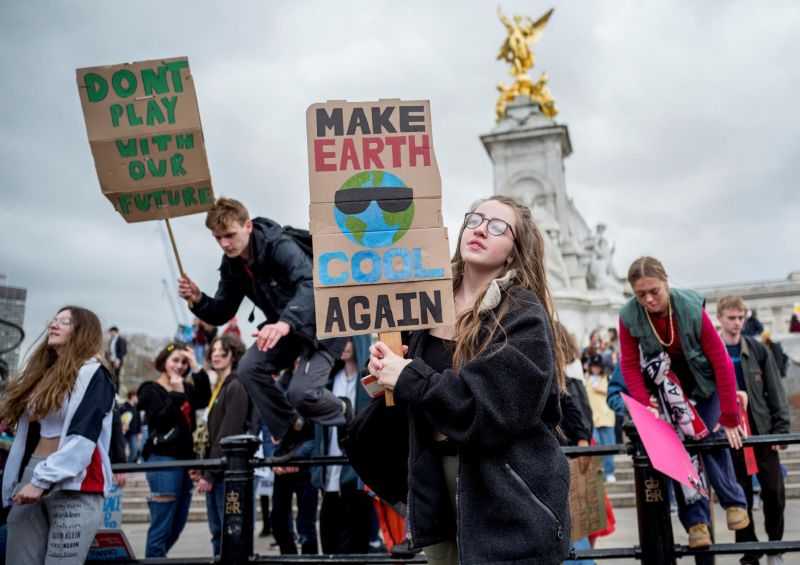
Understanding whether climate change will still demand urgent attention by the year 2100 helps societies prioritize mitigation, adaptation, and equity strategies today.
Quick Answer
Yes, scientists with high confidence expect that, without deep and sustained reductions in greenhouse‑gas emissions, global average temperatures will rise between 2 °C and 4 °C by 2100, intensifying sea‑level rise, extreme weather, and ecosystem disruption. The core mechanism is the accumulation of carbon dioxide and other long‑lived gases in the atmosphere, which trap infrared radiation and shift Earth’s energy balance. While technology and policy can moderate some outcomes, uncertainties about regional impacts and societal responses mean the risk remains significant, so continued concern is warranted.
Key Takeaways
- Projected warming of 2‑4 °C by 2100 would exceed the threshold for many irreversible impacts.
- Sea‑level rise, heat extremes, and water‑stress are the most robustly projected hazards.
- Equity matters: low‑income and coastal communities face the highest exposure and lowest adaptive capacity.
- Mitigation, adaptation, and systemic policy reforms together offer the greatest chance to limit harm.
- Scientific confidence is high for the direction of change; uncertainties remain in precise regional outcomes and tipping‑point timing.
What Is Should We Still Worry About Climate Change in 2100?
The question asks whether climate change will remain a pressing risk as the century closes. It does not refer to a specific event but to the aggregate of physical, ecological, and social changes driven by anthropogenic greenhouse‑gas emissions. The scope includes global temperature trajectories, sea‑level trends, extreme‑weather frequency, and the cascading effects on ecosystems, economies, and human health. Distinguishing this forward‑looking concern from short‑term weather variability is essential because climate reflects long‑term averages and systemic shifts.
How Does It Work?
1. Greenhouse‑Gas Accumulation
Fossil‑fuel combustion, deforestation, and industrial processes release carbon dioxide (CO₂), methane (CH₄), nitrous oxide (N₂O) and other gases. These gases absorb outgoing infrared radiation, creating a positive radiative forcing that warms the planet. The atmospheric lifetime of CO₂ spans centuries, meaning emissions today influence climate for generations.
2. Energy‑Balance Shift
Increased forcing raises the global mean surface temperature. The Intergovernmental Panel on Climate Change (IPCC) Sixth Assessment Report (2021) quantifies the relationship as roughly 0.8 °C of warming per 1 W m⁻² of net forcing.
3. Feedback Loops
- Ice‑albedo feedback: Melting ice reduces surface reflectivity, absorbing more solar energy.
- Water‑vapour feedback: Warmer air holds more moisture, a potent greenhouse gas, amplifying warming.
- Permafrost carbon release: Thawing soils can emit additional CO₂ and CH₄, further accelerating warming.
4. Sea‑Level Rise and Ocean Changes
Thermal expansion of seawater and loss of land‑based ice contribute to sea‑level rise. The IPCC projects 0.3–1.1 m increase by 2100 under low‑to‑high emission pathways.
5. Societal Exposure
Human systems interact with the physical climate through agriculture, water supply, infrastructure, and health services. Exposure intensifies when adaptive capacity—financial resources, technology, governance—is limited.
What Does the Evidence Show?
Multiple lines of evidence converge on the conclusion that warming will continue throughout the 21st century unless emissions are sharply curtailed.
- Long‑term observations: Instrumental records since the late 19th century show a 1.1 °C increase in global mean surface temperature up to 2020 (NOAA, 2023).
- Paleoclimate reconstructions: Ice‑core and sediment data reveal that current CO₂ levels (~420 ppm in 2023) exceed any value in the past 800,000 years (World Meteorological Organization, 2022).
- Attribution studies: Detection‑and‑attribution analyses attribute more than 95 % of observed warming since 1950 to human activities (IPCC AR6, 2021).
- Model ensembles: Coupled climate‑model simulations under Representative Concentration Pathway (RCP) 8.5 consistently produce 3‑4 °C warming by 2100, while RCP2.6 yields about 1.5 °C (IPCC, 2021).
- Impact assessments: Systematic reviews link higher temperatures to increased heat‑related mortality, reduced crop yields in tropical regions, and accelerated coral bleaching (World Health Organization, 2022; Food and Agriculture Organization, 2021).
Main Causes or Drivers
Direct Causes
Annual global CO₂ emissions from energy and industry reached 36.3 Gt in 2022 (International Energy Agency, 2023). Methane emissions from agriculture and fossil‑fuel extraction added 0.39 Gt CH₄‑CO₂‑equivalent.
Underlying Drivers
- Economic growth reliant on fossil fuels: Energy demand in emerging economies continues to rise faster than renewable penetration.
- Land‑use change: Deforestation in the Amazon and Southeast Asia reduces carbon sinks.
- Policy inertia: Delays in implementing carbon‑pricing or renewable‑energy standards keep emissions on a high trajectory.
Amplifying Factors
Urban heat islands, reduced albedo from snow loss, and feedbacks from permafrost thaw act as amplifiers, making regional impacts larger than the global average.
Environmental and Human Impacts
Environmental Impacts
- Accelerated glacier retreat reduces freshwater storage for downstream communities.
- Ocean acidification—pH decline of ~0.1 units since pre‑industrial times—weakens calcifying organisms, threatening marine food webs.
- Shifts in species ranges drive biodiversity loss, with the Intergovernmental Science‑Policy Platform on Biodiversity and Ecosystem Services (IPBES, 2020) estimating up to 1 million species at risk of extinction under high‑warming scenarios.
Human Health and Social Impacts
- Heatwaves increase mortality risk, especially for the elderly; a 2022 WHO analysis links each 1 °C rise to ~3 % higher heat‑related deaths.
- Vector‑borne diseases (e.g., malaria, dengue) expand poleward as temperatures rise.
- Food security faces pressure from reduced yields for staple crops such as wheat and maize in tropical and subtropical zones.
Economic and Infrastructure Impacts
- Coastal flooding threatens assets worth trillions of dollars; the World Bank estimates $1 trillion in cumulative damages by 2050 under high‑emission pathways.
- Supply‑chain disruptions from extreme weather increase commodity price volatility.
Regional Differences
Impact magnitude varies with geography, climate zone, and socioeconomic conditions.
- Low‑lying island nations: Sea‑level rise of 0.5–1 m could render large portions uninhabitable, prompting migration pressures.
- Sub‑Saharan Africa: Projected temperature increases of 2–3 °C combined with declining precipitation exacerbate water stress and crop failures.
- Northern Europe: Warming may lengthen growing seasons, but increased flood risk from intensified precipitation offsets benefits.
- Arctic: Temperatures are rising twice the global average, leading to permafrost thaw and infrastructure instability.
What Scientists Know With High Confidence
- Human activities are the dominant cause of observed warming since the mid‑20th century.
- Global average surface temperature will continue to rise as long as atmospheric greenhouse‑gas concentrations increase.
- Sea level will rise due to thermal expansion and ice‑mass loss, with a minimum of 0.3 m by 2100 under all plausible scenarios.
- Extreme heat events and heavy precipitation are becoming more frequent and intense.
What Remains Uncertain
Key uncertainties involve the timing and magnitude of climate “tipping points,” such as large‑scale ice‑sheet collapse in Antarctica or abrupt changes in the Atlantic Meridional Overturning Circulation. Model representations of cloud feedbacks also vary, contributing to a spread of 1 °C in projected warming for a given emission pathway. Socio‑economic trajectories—future energy demand, policy choices, and technology diffusion—remain the largest source of range in climate outcomes, influencing how severe impacts will be by 2100.
Common Misconceptions
Misconception: “If we wait until 2100, climate change will solve itself.”
Reality: The climate system has inertia; CO₂ emitted today persists for centuries, so delayed action only locks in higher temperatures and larger impacts.
Misconception: “A few degrees of warming are harmless.”
Reality: Even 2 °C of warming exceeds the threshold many ecosystems can tolerate, leading to coral reef loss, increased heat‑related mortality, and agricultural stress.
Misconception: “Only coastal areas need to worry about sea‑level rise.”
Reality: Inland river basins experience higher flood risk from sea‑level‑induced storm surges, and groundwater salinization can affect inland agriculture.
Solutions and Limitations
Effective responses combine mitigation (reducing emissions), adaptation (preparing for impacts), and restoration (enhancing natural resilience).
- Renewable‑energy transition: Solar and wind now cost less than new coal in many regions, yet grid integration and storage remain technical and financial challenges.
- Energy efficiency: Building retrofits can cut demand by 30 % but require upfront capital and policy incentives.
- Carbon pricing: Carbon taxes or cap‑and‑trade create market signals, yet political resistance can limit coverage and price levels.
- Nature‑based solutions: Restoring mangroves protects coastlines and sequesters carbon, but land‑use conflicts can restrict scale.
- Climate‑resilient agriculture: Drought‑tolerant crops and agroforestry improve food security, yet adoption depends on farmer access to seeds and knowledge.
- Infrastructure upgrades: Elevating buildings and redesigning drainage reduces flood damage, but costs are high for low‑income regions.
What Individuals, Communities, and Governments Can Do
What Individuals Can Do
- Reduce personal carbon footprints by prioritizing public transit, efficient appliances, and plant‑rich diets.
- Support policies and candidates that advocate for strong climate legislation.
- Engage in local climate action groups that promote community renewable projects or tree planting.
What Communities and Organizations Can Do
- Develop climate‑action plans that map local vulnerabilities and set measurable emission‑reduction targets.
- Invest in decentralized renewable energy (e.g., community solar) to increase energy equity.
- Implement green infrastructure—rain gardens, permeable pavement—to manage stormwater.
What Governments Can Do
- Set nationally determined contributions (NDCs) aligned with the Paris Agreement’s 1.5 °C pathway and implement legally binding carbon‑pricing mechanisms.
- Allocate financing for climate‑resilient infrastructure in vulnerable regions, prioritizing low‑income communities.
- Mandate climate‑risk disclosure for major industries and integrate climate considerations into land‑use planning.
What Businesses and Industries Can Do
- Adopt science‑based targets to align corporate emissions with IPCC pathways.
- Transition supply chains toward low‑carbon materials and circular‑economy practices.
- Invest in research and deployment of carbon‑removal technologies while acknowledging current scalability limits.
Synthesis
Climate change will almost certainly remain a critical global challenge by 2100, driven by the long‑lived nature of greenhouse gases and the momentum built into Earth’s climate system. High‑confidence findings confirm continued warming, sea‑level rise, and intensifying extremes, while uncertainties center on regional tipping points and future societal choices. Mitigation, adaptation, and equitable policy interventions together offer the best chance to limit harm. Maintaining vigilance, investing in resilient systems, and ensuring that vulnerable populations are protected are essential steps toward a sustainable future.
Frequently Asked Questions
What does it mean to worry about climate change in 2100?
Worrying about climate change in 2100 means recognizing that the physical and societal risks—such as higher temperatures, sea‑level rise, and extreme weather—are projected to persist or worsen unless deep emissions cuts are achieved. The concern drives planning for mitigation, adaptation, and equitable policies to protect ecosystems and vulnerable peoples.
What are the main drivers of future warming?
The primary drivers are continued emissions of carbon dioxide from energy production and industry, methane from agriculture and fossil‑fuel extraction, and land‑use changes like deforestation. Underlying economic growth reliant on fossil fuels, policy inertia, and feedbacks such as permafrost thaw amplify these direct causes.
How confident are scientists about projected sea‑level rise by 2100?
Scientists have high confidence that global sea level will rise at least 0.3 m by 2100 under all plausible emission pathways, with a range up to about 1.1 m for high‑emission scenarios. This conclusion is based on multiple lines of evidence, including satellite altimetry, tide‑gauge records, and climate‑model simulations.
Which regions are most vulnerable to climate impacts by the end of the century?
Low‑lying island nations, coastal megacities, Sub‑Saharan Africa, and the Arctic are among the most vulnerable. Island states face inundation from sea‑level rise, while Sub‑Saharan Africa confronts heat stress and water scarcity. The Arctic experiences rapid warming that threatens permafrost infrastructure and ecosystems.
What actions can governments take to reduce climate risks by 2100?
Governments can set ambitious nationally determined contributions aligned with the 1.5 °C goal, implement carbon‑pricing mechanisms, finance climate‑resilient infrastructure, mandate climate‑risk disclosures for major sectors, and prioritize equity by directing resources to low‑income and high‑risk communities.







Leave a Comment