

Scientific evidence shows climate change poses serious, but not inevitable, threats to human life; the outcome depends on how quickly societies reduce emissions and adapt to warming.
Quick Answer
Climate change, driven primarily by the accumulation of greenhouse gases such as carbon dioxide and methane from fossil‑fuel use, deforestation, and industrial activity, is raising global temperatures and intensifying extreme weather. The scientific consensus is that without rapid mitigation, many regions will face heightened risks to health, food, water, and infrastructure, potentially leading to increased mortality. However, the notion that climate change will inevitably “kill us all” is not supported; outcomes hinge on the scale of mitigation, adaptation, and equitable policy responses, and uncertainties remain about the timing of worst‑case scenarios.
Key Takeaways
- Global average temperatures have risen about 1.1°C since pre‑industrial times, largely due to human emissions.
- High‑confidence findings include sea‑level rise, more frequent heatwaves, and expanding zones of disease‑carrying vectors.
- Potential tipping points—such as permafrost thaw and Amazon forest loss—could accelerate warming but their precise thresholds are uncertain.
- Impacts are uneven: low‑income, coastal, and heat‑vulnerable populations face the greatest risks.
- Effective responses combine rapid greenhouse‑gas reductions, resilient infrastructure, and equitable adaptation measures.
What Is Will Climate Change Kill Us All? What Science Actually Says?
The question asks whether the physical process of anthropogenic climate change could directly cause mass human mortality. It encompasses the scientific mechanisms of warming, the cascade of environmental changes, and the societal capacity to respond. The phrase differs from related concepts such as “climate disaster” or “climate emergency” because it focuses on the ultimate existential risk rather than isolated events.
How Does It Work?
1. Greenhouse‑gas accumulation
Burning coal, oil, and gas releases carbon dioxide (CO2) and other gases that trap infrared radiation. Deforestation reduces the biosphere’s ability to absorb CO2, while agriculture adds methane (CH4) and nitrous oxide (N2O). Since 1750, atmospheric CO2 has exceeded 420 parts per million (ppm) according to the World Meteorological Organization (2023).
2. Global temperature rise
Radiative forcing from higher greenhouse‑gas concentrations raises the Earth’s energy balance, leading to a mean surface temperature increase of roughly 0.2°C per decade over the past four decades.
3. Climate system feedbacks
Warming triggers feedbacks: melting ice reduces albedo (reflectivity), releasing dark ocean water that absorbs more heat; thawing permafrost releases CH4, a potent greenhouse gas; and forest die‑back reduces carbon uptake.
4. Extreme‑event amplification
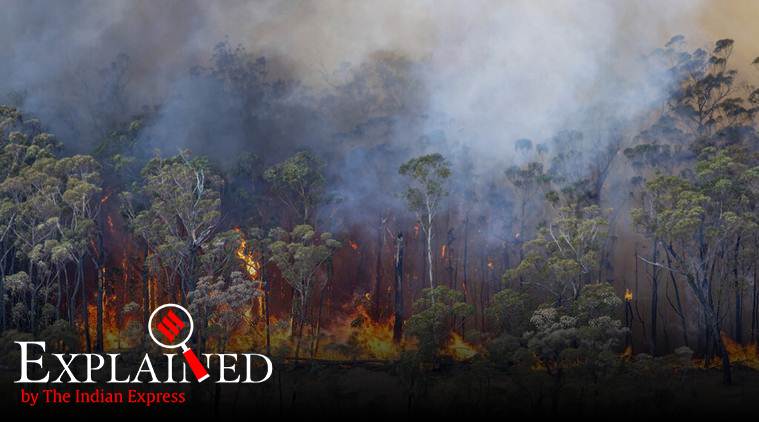
Higher temperatures increase atmospheric moisture, intensifying precipitation extremes, while altered jet streams foster more persistent heatwaves and droughts.
What Does the Evidence Show?
Multiple lines of evidence converge on a consistent picture. Long‑term instrumental records from NOAA show a clear upward trend in global mean temperature since 1880. Satellite observations confirm rising sea surface temperatures and expanding ocean heat content. The Intergovernmental Panel on Climate Change (IPCC) Sixth Assessment Report (2021) synthesises peer‑reviewed studies indicating that heat‑related mortality has already risen in regions experiencing frequent heatwaves, and that vector‑borne diseases such as malaria are moving into higher latitudes.
Attribution studies using climate models attribute the majority of observed warming since 1950 to human activities with a probability exceeding 95 % (IPCC, 2021). Systematic reviews of epidemiological data link heat exposure to increased cardiovascular and respiratory deaths, especially among older adults.
Main Causes or Drivers
Direct causes
- Fossil‑fuel combustion (energy production, transport, industry).
- Land‑use change (deforestation, urban expansion).
- Agricultural emissions (livestock, rice paddies).
Underlying drivers
- Population growth and rising per‑capita energy demand.
- Economic systems that incentivise carbon‑intensive production.
- Policy gaps and insufficient carbon pricing.
Environmental and Human Impacts
Environmental Impacts
Warming drives glacier retreat, sea‑level rise (average 3.3 mm per year from 1993‑2022, satellite data), and ocean acidification (average pH drop of 0.1 since pre‑industrial times). These changes threaten coral reefs, fisheries, and coastal ecosystems.
Human Health and Social Impacts
Heat stress leads to heat‑stroke and exacerbates chronic illnesses. The World Health Organization estimates that between 2030 and 2050, climate‑related malnutrition, malaria, diarrheal disease, and heat exposure could cause an additional 250,000 deaths per year if no adaptation occurs.
Economic and Infrastructure Impacts
Extreme weather events cause direct damages to buildings, roads, and utilities. The Global Commission on Adaptation (2022) estimates that at current emission trajectories, cumulative global economic losses could exceed US$2 trillion per year by 2050.
Regional Differences
Vulnerability varies with geography and development level. Low‑lying island nations face imminent sea‑level threats, while Sub‑Saharan Africa confronts worsening droughts that jeopardise agriculture. In contrast, high‑latitude regions experience faster warming rates, leading to permafrost thaw and infrastructure instability. Wealthier nations often have greater adaptive capacity, but also higher emissions per capita.
What Scientists Know With High Confidence
- Human activities are the dominant cause of observed global warming since the mid‑20th century.
- Global average temperature has risen about 1.1°C above pre‑industrial levels.
- Sea levels are rising due to thermal expansion and ice melt.
- Extreme heat events are becoming more frequent and intense worldwide.
- The risk of climate‑related health impacts is increasing, especially for vulnerable populations.
What Remains Uncertain
Key uncertainties include the exact timing and magnitude of tipping points such as Atlantic Meridional Overturning Circulation slowdown, the total carbon released from permafrost, and regional climate sensitivity to greenhouse‑gas concentrations. These gaps stem from limited observational networks in remote areas, model resolution constraints, and unknown future socioeconomic pathways. While uncertainties affect precise projections, they do not overturn the overarching conclusion that unchecked warming will raise severe risks.
Common Misconceptions
Misconception: Climate change will cause immediate global extinction.
Reality: Current evidence indicates that climate change will cause widespread stress to ecosystems and increase extinction risk for many species, but total human extinction is not a scientifically supported outcome.
Misconception: Only coastal areas are at risk.
Reality: While sea‑level rise threatens coastlines, inland regions experience heatwaves, droughts, and wildfire risk that can be equally deadly.
Misconception: Individual lifestyle changes alone can stop climate change.
Reality: Personal actions reduce personal footprints, but systemic emission cuts from energy, transport, and industry are required to keep warming below 1.5°C.
Misconception: Climate models are unreliable.
Reality: Models have successfully reproduced past climate trends and are essential tools for projecting future conditions; uncertainties are quantified and communicated transparently.
Solutions and Limitations
Effective responses combine mitigation (reducing greenhouse‑gas emissions) and adaptation (building resilience). Mitigation strategies include rapid deployment of renewable electricity, energy efficiency, and phasing out coal. Limitations involve high upfront costs, grid integration challenges, and unequal access to technology.
Adaptation measures—such as climate‑smart agriculture, flood‑defensible infrastructure, and early‑warning systems—reduce exposure but cannot reverse existing changes. Nature‑based solutions like restoring mangroves provide co‑benefits for biodiversity but require sufficient space and long‑term maintenance.
What Individuals, Communities, and Governments Can Do
What Individuals Can Do
- Choose low‑carbon transportation (public transit, cycling, electric vehicles where feasible).
- Improve home energy efficiency (insulation, efficient appliances).
- Support policies and candidates that prioritize climate action.
- Engage in community resilience projects, such as local tree planting or emergency preparedness drills.
What Communities and Organizations Can Do
- Develop local climate adaptation plans that address heat, flood, and water security.
- Invest in green infrastructure—urban trees, permeable pavements, rain gardens.
- Adopt renewable energy procurement for municipal operations.
- Facilitate public education on climate health risks.
What Governments Can Do
- Implement carbon pricing mechanisms that reflect the social cost of emissions.
- Set and enforce ambitious renewable‑energy targets, aiming for net‑zero emissions by mid‑century.
- Allocate financing for climate‑resilient infrastructure in vulnerable regions.
- Strengthen health systems to respond to heat‑related illnesses and vector‑borne diseases.
Closing Synthesis
Climate change is a scientifically robust phenomenon driven by human greenhouse‑gas emissions. Evidence confirms rising temperatures, sea‑level rise, and amplified extreme events, all of which increase mortality risk, especially for the most vulnerable. High‑confidence findings give us a clear target: limit warming to well below 2°C. Uncertainties about exact tipping‑point thresholds do not diminish the urgency of rapid mitigation and equitable adaptation. By aligning policy, technology, and community action, societies can avert the worst outcomes and safeguard human health for future generations.
Frequently Asked Questions
What does the phrase “climate change will kill us all” actually mean?
It refers to the concern that unchecked warming could create conditions—such as extreme heat, food shortages, and disease spread—that dramatically increase human mortality, especially for vulnerable groups.
How does the greenhouse effect drive global warming?
Greenhouse gases like CO2 and methane trap infrared radiation emitted by Earth, preventing heat from escaping to space. This raises the planet’s average temperature, leading to the cascade of climate impacts described in the article.
Which regions are most vulnerable to climate‑related health impacts?
Low‑income coastal areas, Sub‑Saharan Africa, and regions experiencing frequent heatwaves are most at risk. These populations often lack resources for heat‑related healthcare, safe drinking water, and resilient infrastructure.
What are the most credible scientific findings about climate tipping points?
High‑confidence research identifies permafrost thaw, Amazon forest die‑back, and rapid Arctic sea‑ice loss as potential tipping elements that could release large amounts of greenhouse gases, accelerating warming beyond current projections.
What actions can individuals take that meaningfully reduce climate risk?
Individuals can lower personal carbon footprints by using public transit, improving home energy efficiency, supporting clean‑energy policies, and participating in community resilience projects such as local tree planting.







Leave a Comment