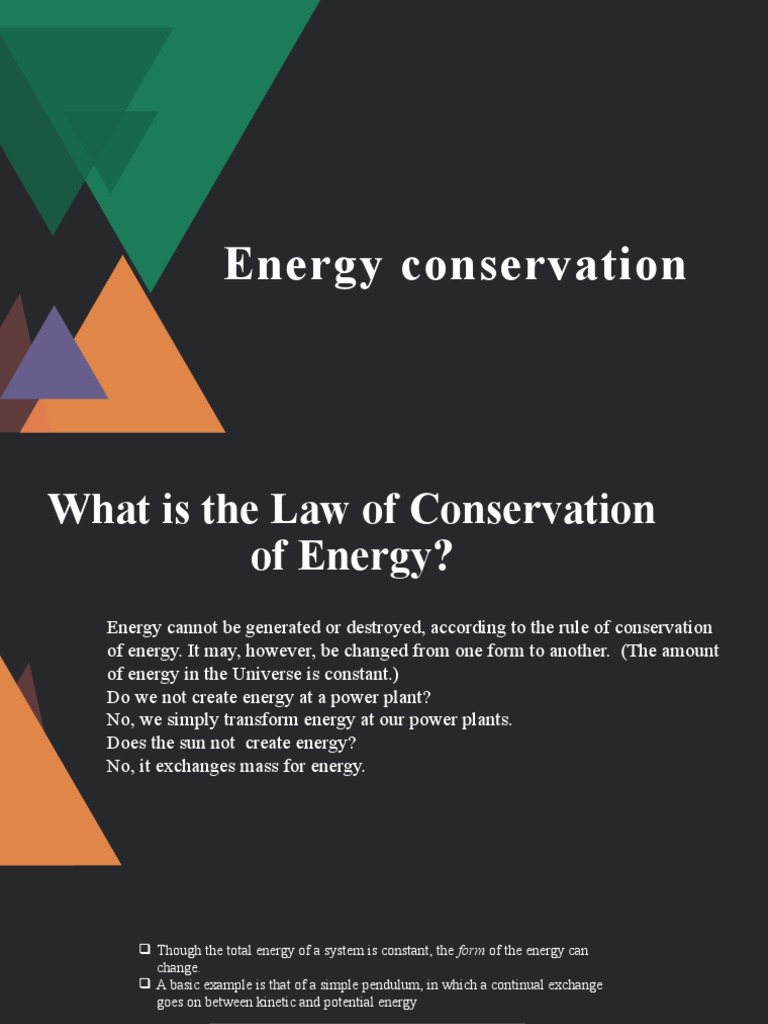
The principle of conservation of energy is one of the foundational tenets of physics, permeating countless aspects of our daily lives and the broader environmental system. It posits that energy cannot be created or destroyed; rather, it can only be transformed from one form to another. Understanding the contexts in which this principle applies is crucial for both scientific inquiry and environmental stewardship. This discussion delineates the multifaceted applications of energy conservation, spanning various realms including natural phenomena, technological innovation, and societal practices.
1. Natural Systems: The Infinite Cycle
Energy conservation undeniably finds its most profound expression in the realm of natural ecosystems. In a forest, for instance, sunlight is absorbed by leaves through photosynthesis, converting solar energy into chemical energy stored within plant tissues. Herbivores then consume these plants, embodying a transformation of energy from one organism to another. This intricate network exemplifies the unending cycle of energy transfer and transformation, with each level of the food chain relying upon the energy harnessed by its predecessors.
Moreover, even in the absence of sunlight, ecosystems illustrate energy conservation through the decomposition process. Microorganisms break down organic matter, releasing energy stored within. This energy then supports the microbial community, illustrating a closed-loop system where energy persists through transformations rather than being lost. This natural balance underscores the importance of conserving ecosystems themselves, as disruptions can diminish their ability to sustain energy flows effectively.
2. Mechanical Systems: The Engineering Phenomenon
In mechanical systems, the conservation of energy manifests explicitly in machines and devices. Consider the pendulum swinging in a clock; it showcases the cyclical transformation between kinetic energy and potential energy. As the pendulum ascends, kinetic energy is converted into potential energy, only to revert back into kinetic energy when descending. This elegant ballet of energy illustrates not only the beauty of physics but also its practical applications in designing efficient machines and mechanisms.
Additionally, in engineering realms such as civil, mechanical, and aerospace, understanding energy conservation principles is paramount. Engineers strive to maximize energy efficiency in their designs—be it generating electricity through wind turbines or designing vehicles that minimize fuel consumption. Sophisticated modeling techniques enable engineers to simulate energy transformations in their projects, providing insight into optimizing designs for sustainability and efficacy.
3. Electrical Systems: A Modern Conundrum
Electricity serves as a critical vector for energy distribution in modern society. The conservation of energy applies significantly within electrical systems, as energy is transformed from mechanical, thermal, or chemical sources into electrical energy for widespread use. Energy production industries, such as fossil fuels, nuclear, and renewable technologies, must consider conservation principles to produce energy efficiently and sustainably.
For instance, modern hydroelectric plants utilize gravitational potential energy from elevated water to generate electricity. As water descends, its potential energy is conserved as it is converted to kinetic energy, ultimately yielding electrical energy. Challenges arise, however, when integrating renewable energy sources into existing grids, necessitating sophisticated storage solutions like batteries to conserve energy for later use. Continual advancements in energy storage technology are vital for addressing the intermittency of renewable sources such as wind and solar.
4. Human Practices: A Societal Imperative
In an era characterized by escalating environmental challenges, human practices concerning energy conservation have never been more critical. The buildings we inhabit, the vehicles we drive, and the appliances we employ all represent arenas ripe for the application of energy conservation principles. By embracing energy-efficient technologies, individuals and communities can significantly reduce their energy consumption and carbon footprint.
Implementing smart home technologies provides a notable example. Automated systems can optimize heating, cooling, and lighting based on occupancy and time of day—maximizing comfort while minimizing wasted energy. Furthermore, adopting sustainable transportation modalities, such as cycling or public transit, exemplifies the societal commitment to conserving energy, fostering environmental benefits in the process.
5. Education and Awareness: The Catalyst for Change
Critical to advancing the conservation of energy is the role of education and public awareness campaigns. Informing individuals and communities about the significance of energy conservation—alongside practical strategies for implementation—can engender a widespread cultural shift towards sustainability. Schools, non-profits, and local governments can collaborate to propagate knowledge regarding energy use, efficiency, and conservation practices amidst the populace.
Additionally, educational institutions play a pivotal role in cultivating the next generation of environmental stewards by integrating sustainability principles into curricula. Encouraging students to engage in projects that promote energy conservation can instill a sense of responsibility and advocacy that transcends mere academic knowledge.
Conclusion: A Collective Commitment
In summation, the conservation of energy pervades an array of domains, from the natural world to human ingenuity and societal practices. Recognizing when and where this principle applies empowers individuals and institutions alike to foster a more sustainable future. As stewards of the planet, we bear the responsibility to consciously apply these concepts in our lives, ensuring that the energy we utilize today lays the groundwork for a vibrant and sustainable tomorrow. This imperative is not merely a scientific notion but a call to collective action for the good of our planet and future generations.








Leave a Comment