
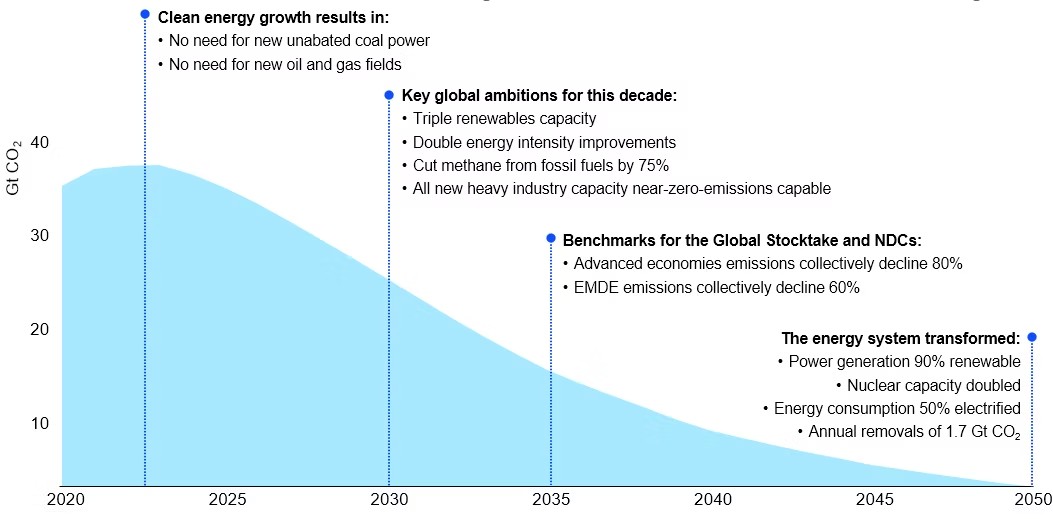
India aims to achieve net‑zero greenhouse‑gas emissions by 2070 through a large‑scale shift to renewable power, grid modernization, and inclusive policies that balance development with climate goals.
Quick Answer
India’s roadmap to net zero is a government‑led strategy that targets a 500 GW non‑fossil electricity capacity by 2030 and carbon‑neutral economy by 2070, relying on rapid deployment of solar, wind, and storage technologies, reforms to coal‑dependent sectors, and a just‑transition framework for workers. The plan is grounded in climate‑science assessments, but its success depends on financing, mineral supply chains, and regional implementation capacity, introducing moderate uncertainty.
Key Takeaways
- India targets 500 GW of renewable capacity by 2030, a five‑fold increase from 2020 levels.
- Decarbonisation hinges on solar and wind expansion, grid upgrades, battery storage, and emerging carbon‑capture technologies.
- Socio‑economic equity is central: job‑training, community ownership, and support for displaced coal workers are embedded in the plan.
- Critical mineral supply (lithium, cobalt, copper) and financing remain the largest external constraints.
- High‑confidence findings show that renewable growth will cut air‑pollution deaths and improve energy security.
What Is India’s Roadmap to Net Zero: What the Energy Transition Will Take?
The roadmap is a comprehensive policy framework announced by the Indian government that outlines how the country will limit its net greenhouse‑gas (GHG) emissions to zero by the year 2070. It encompasses electricity generation, industry, transport, and agriculture, with a primary focus on transforming the power sector from coal‑dominant to renewable‑dominant. Unlike a simple emissions‑reduction target, the roadmap defines specific capacity goals, financing mechanisms, and social safeguards, reflecting India’s dual priorities of climate mitigation and economic development.
How Does It Work?
1. Expand Renewable Generation
Solar and wind farms are built on utility‑scale and distributed sites. The National Solar Mission aims for 280 GW of solar capacity by 2030, while wind targets 140 GW. These installations feed electricity into the national grid, displacing coal‑fired power.
2. Modernise the Grid
Smart‑grid technologies, high‑voltage direct‑current (HVDC) lines, and real‑time demand‑response platforms enable the integration of variable renewable output. Battery storage—projected to reach 30 GW by 2030—smooths intermittency and provides ancillary services.
3. Decarbonise Hard‑to‑Abate Sectors
Industrial processes adopt carbon‑capture, utilisation, and storage (CCUS) pilots, while transport shifts to electric vehicles (EVs) supported by charging infrastructure. Bio‑energy with carbon capture (BECCS) is explored for negative‑emission potential.
4. Implement a Just‑Transition Framework
Skills‑training programs, reskilling funds, and community‑owned renewable projects aim to protect livelihoods of coal workers and rural populations dependent on fossil‑fuel economies.
5. Secure Critical Minerals
Domestic mining policies and international partnerships are pursued to obtain lithium, cobalt, and copper needed for batteries and wind turbines, while adhering to environmental and ethical standards.
What Does the Evidence Show?
Long‑term monitoring by the International Energy Agency (IEA) indicates that renewable electricity share in India rose from 9 % in 2015 to 27 % in 2022, a trend consistent with the IPCC’s assessment that rapid renewable deployment can halve global CO₂ emissions by mid‑century. Scenario modelling in the IEA World Energy Outlook (2023) projects that achieving 500 GW of non‑fossil capacity would reduce India’s CO₂ emissions by roughly 1.5 Gt CO₂e per year, equivalent to a 30 % cut from 2020 levels. Field studies in Gujarat and Tamil Nadu demonstrate that solar farms lower local particulate matter concentrations, yielding measurable health benefits.
Main Causes or Drivers
Direct Causes
- High reliance on coal for electricity (≈70 % of generation in 2022).
- Rapid economic growth driving energy demand, projected to increase 3.5 % annually through 2030.
Underlying Drivers
- Population growth reaching 1.42 billion (2023) and urbanisation that raises per‑capita electricity use.
- International climate commitments, including the Paris Agreement and the IPCC’s 1.5 °C pathway.
Amplifying Factors
- Declining costs of solar PV (≈‑80 % since 2010) and wind turbines, making renewables cost‑competitive.
- Policy incentives such as accelerated depreciation, feed‑in tariffs, and green hydrogen subsidies.
Environmental and Human Impacts
Environmental Impacts
Replacing coal with renewables reduces CO₂ emissions, methane leaks, and air pollutants (SO₂, NOₓ, PM₂.5). The IPCC notes that a 1 °C warming limit requires near‑zero emissions from the power sector by 2050. Additionally, lower water consumption from solar PV eases stress on river basins.
Human Health and Social Impacts
Cleaner air translates into fewer respiratory illnesses; a World Health Organization (WHO) estimate links a 10 µg/m³ reduction in PM₂.5 to 2‑3 % lower mortality. The just‑transition component seeks to safeguard employment for an estimated 1.2 million coal workers through reskilling schemes.
Economic and Infrastructure Impacts
Renewable projects attract private investment—foreign direct investment in Indian clean energy reached US$12 billion in 2022 (UNCTAD). Grid upgrades require capital of US$150 billion by 2030, creating construction jobs and enhancing energy security.
Regional Differences
India’s climatic zones influence renewable potential. The arid western states (Rajasthan, Gujarat) receive high solar irradiance, supporting large‑scale solar parks, while the coastal belt (Tamil Nadu, Odisha) offers strong wind resources. Conversely, the Himalayan region faces challenges of terrain and limited grid connectivity, necessitating micro‑grids and hybrid renewable systems.
What Scientists Know With High Confidence
- Renewable energy costs have fallen dramatically, making solar and wind competitive with new coal plants (IEA, 2023).
- Air‑quality improvements from reduced coal combustion lower premature mortality (WHO, 2021).
- Without deep decarbonisation, India’s projected emissions will exceed the 2 °C warming threshold (IPCC, 2021).
What Remains Uncertain
Common Misconceptions
Misconception: India can reach net zero without any fossil fuel use.
Reality: The roadmap envisions residual emissions that are offset by carbon removal and CCUS; complete elimination of fossil fuels is not claimed.
Misconception: Renewable energy alone will solve India’s energy shortage.
Reality: While renewables reduce supply gaps, complementary measures—grid storage, demand‑side management, and efficient cooking solutions—are required for reliability.
Misconception: All coal workers will lose their jobs.
Reality: The just‑transition policy allocates funds for reskilling and promotes community‑owned renewable projects to create new employment opportunities.
Misconception: The net‑zero goal is a political slogan with no measurable milestones.
Reality: Specific capacity targets (500 GW non‑fossil by 2030) and interim emissions‑intensity reductions are embedded in the plan, providing clear checkpoints.
Solutions and Limitations
Key strategies include:
- Renewable expansion: Scalable and cost‑effective, but limited by land availability, transmission bottlenecks, and intermittency.
- Battery storage: Mitigates intermittency; however, mineral resource constraints and recycling challenges remain.
- CCUS: Offers a pathway for hard‑to‑abate sectors; currently high cost and limited commercial deployment.
- Policy reforms: Carbon pricing and stricter efficiency standards drive emissions cuts, yet political acceptance varies across states.
- Community ownership: Increases local acceptance, but requires capacity‑building and financing mechanisms.
Each solution must be evaluated for economic viability, environmental trade‑offs (e.g., land use for solar farms), and social equity.
What Individuals, Communities, and Governments Can Do
What Individuals Can Do
- Adopt energy‑efficient appliances and LED lighting to reduce household demand.
- Install rooftop solar where feasible, supported by net‑metering policies.
- Choose public transport, electric two‑wheelers, or car‑pooling to lower transport emissions.
What Communities and Organizations Can Do
- Form renewable energy cooperatives that invest in local solar or wind projects.
- Participate in skill‑development workshops for emerging green jobs.
- Advocate for transparent reporting of local air‑quality data.
What Governments Can Do
- Maintain and expand fiscal incentives for renewable investment and phase out subsidies for coal.
- Accelerate grid‑modernisation projects, prioritising regions with high renewable potential.
- Implement a national carbon‑price mechanism to internalise emissions costs.
- Secure sustainable supply chains for critical minerals through transparent procurement and recycling programs.
Looking Ahead
India’s net‑zero roadmap blends ambitious renewable targets, technological innovation, and equity‑focused policies. High‑confidence evidence confirms that rapid renewable growth will cut emissions and improve public health, while uncertainties around mineral supply and CCUS scale introduce risk. By aligning economic development with climate mitigation, India can set a replicable model for other emerging economies.
Frequently Asked Questions
What is the main goal of India’s net‑zero roadmap?
India’s net‑zero roadmap aims to bring the country’s total greenhouse‑gas emissions to net zero by 2070, with an interim target of 500 GW of non‑fossil electricity capacity by 2030.
Which renewable technologies are prioritized in the plan?
The plan prioritises solar photovoltaics, on‑shore wind, and battery storage, supported by the National Solar Mission and wind‑capacity targets that together aim for 420 GW of renewable power by 2030.
How does the roadmap address workers currently employed in the coal sector?
A just‑transition framework provides reskilling funds, community‑owned renewable projects, and social support schemes to help coal workers move into emerging green‑energy jobs.
What are the biggest uncertainties that could affect India’s net‑zero target?
Key uncertainties include the availability of critical minerals for batteries, the commercial scalability of carbon‑capture technologies, and the political willingness of coal‑dependent regions to phase out fossil fuels.
What actions can individuals take to support India’s energy transition?
Individuals can improve household energy efficiency, install rooftop solar where possible, choose electric or shared transport options, and support community renewable initiatives.







Leave a Comment