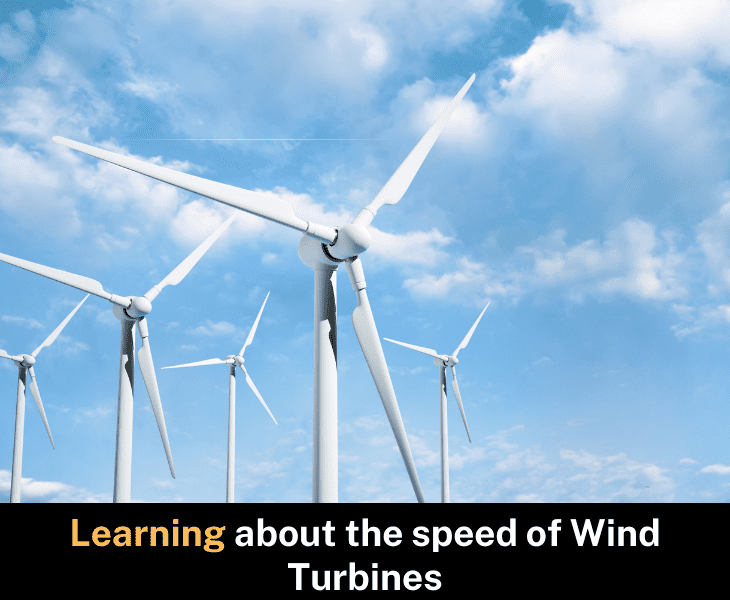
Wind energy has emerged as a formidable ally in the relentless battle against climate change. As society confronts the specter of dwindling fossil fuels, it becomes essential to deepen our understanding of the mechanisms that harness nature’s elements, particularly the majestic wind. One of the most captivating questions surrounding wind turbine technology is: How fast do these towering structures spin in miles per hour? To comprehensively dissect this inquiry, one must consider the deluge of variables that influence turbine rotation and the profound implications for energy generation.
At the heart of the discussion lies the fundamental architecture of wind turbines. A standard large-scale turbine typically boasts a rotor diameter that can exceed 100 feet to maximize its energy capture capabilities. The sweeping blades of these turbines are ingeniously designed to create a lift force, much like an airplane wing, allowing them to convert kinetic energy from wind into mechanical energy efficiently. However, the speed at which these blades rotate is not a singular figure; rather, it is subject to a multitude of considerations.
Generally speaking, the rotational speed of wind turbine blades is expressed in terms of revolutions per minute (RPM). Depending on their design and efficiency, many modern turbines operate at speeds ranging from 10 to 20 RPM. Thus, understanding how to translate these figures into miles per hour requires a deeper examination of the rotor’s diameter. For instance, a turbine with a rotor measuring 100 feet in diameter will cover significant ground when factoring in rotational speed.
To embark on this calculation, some rudimentary math is needed. Considering that the circumference of a circle can be determined using the formula C = πd, where d is the diameter, we find that a 100-foot rotor has a circumference of approximately 314 feet. At 15 RPM, the blades would complete 15 revolutions in a minute, traveling roughly 4,710 feet per minute. Converting feet to miles yields an astonishing figure: 1 mile equals 5,280 feet, which means the blades would traverse approximately 0.89 miles every minute. Thus, the rotational speed translates to a breathtaking average of 53.4 miles per hour. A remarkable feat of engineering, indeed!
However, this figure represents an idealized scenario. The real world introduces elements of complexity that can dramatically influence the turbine’s performance. Wind speed is perhaps the most critical variable. Wind turbines are designed to operate effectively within a specific range of wind speeds, known as the cut-in wind speed and the cut-out wind speed. The cut-in speed is the minimum wind velocity required for the turbine to begin generating power, typically around 8 to 10 miles per hour. Conversely, the cut-out wind speed, at around 25 miles per hour, marks the threshold where turbines automatically shut down to prevent damage from excessive forces.
As the wind picks up speed, the blades move increasingly faster, generating more energy. Yet, this phenomenon does not create a linear relationship in energy output. When wind speeds soar, the aerodynamic lift produced by the turbine blades reaches a zenith. Consequently, the generator output escalates exponentially, propelling the wind turbine’s efficiency to unprecedented levels. However, once the winds exceed that cut-out threshold, the turbine spins down, a protective mechanism ensuring its viability against the natural elements’ wrath.
Another pivotal component intricately tied to the speed of wind turbine rotation is the gearing system, which can amplify the RPM of the rotor to aid the generator in producing a consistent output. While the rotor may turn at lower RPMs, advanced gearbox technology allows the generator to operate at much higher speeds, enhancing energy production. Herein lies a fascinating equilibrium; blades that rotate slowly but effectively can still generate significant power, while the gearbox reconciles that rotational speed with the electrical demands of the grid.
The environmental footprint of this spinning marvel elicits further scrutiny. The symbiotic relationship between wind speeds, turbine efficiency, and vast landscapes suggests an ecosystemic interplay that merits ongoing investigation. Transitioning to wind energy represents a promise of sustainability, yet it is enveloped in complexity; the outcome is contingent not merely upon technology but the environment in which it operates. Each turbine beckons with untapped potential, demanding careful consideration in terms of location and design.
Furthermore, advancements in turbine technology continually shift our understanding. Innovations in blade design, materials, and energy storage are revolutionizing the industry. Innovations such as vertical-axis wind turbines embody the curiosity that fuels progress. With enhanced adaptability, such designs challenge conventions and promise even greater efficiency and performance across varying wind profiles.
The journey of wind turbines extends beyond mere rotation metrics. It is a narrative embroidered with ingenuity, sustainability, and profound impacts on our climate. Wind energy promises a brighter future, one that thrives on the harmonious interaction of human innovation and natural forces. The question, “How fast do wind turbines spin in MPH?” serves as an entry point into an expansive dialogue on energy, technology, and our responsibility towards the planet. As we contemplate these spinning giants, it is crucial to remember that their true significance lies not solely in the numbers they produce, but in the transformative potential they embody for a sustainable world.






Leave a Comment