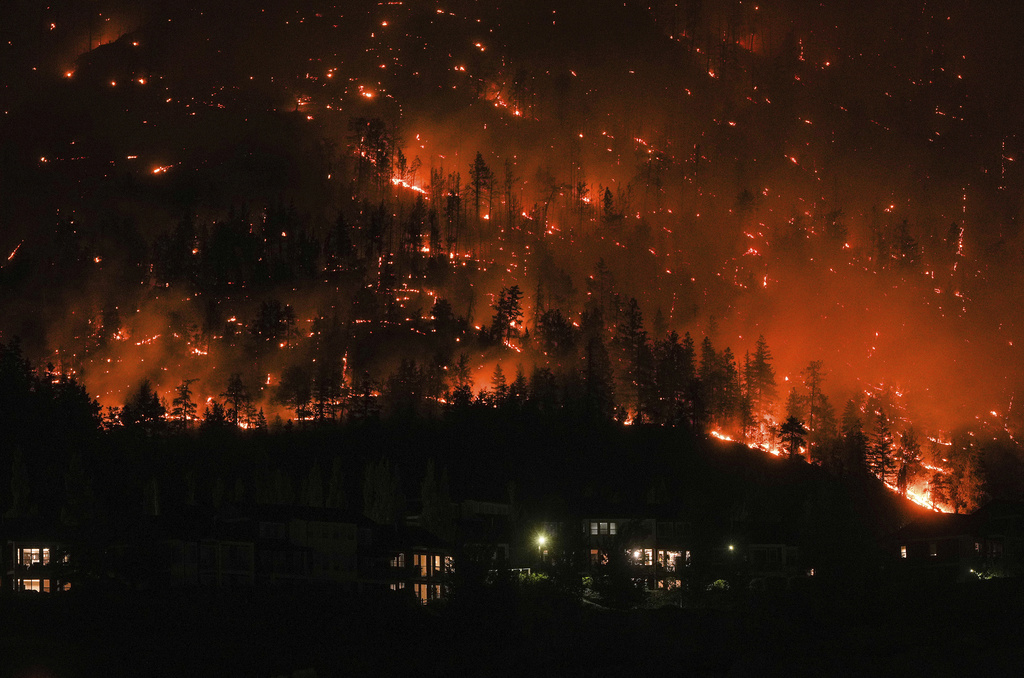
May 2023 emerged as a calamitous month for British Columbia, as wildfires ravaged vast expanses of this Canadian province, setting new records for emissions that raised alarm bells across environmental circles. What if these overwhelming flames serve as a proverbial canary in the coal mine? A playful question indeed, but one that brings forward an urgent challenge we must confront: How do we reconcile the escalating devastation of wildfires with our growing desire for sustainability and ecological integrity?
Before delving into this pressing concern, it is essential to understand the context in which these wildfires unfolded. The province had already experienced an unusually warm spring, creating an environment ripe for conflagration. Drought conditions—buoyed by a dearth of precipitation—combined with rising temperatures, established a perfect storm for wildfires to erupt. The atmospheric conditions were so conducive to fire activity that regions previously considered relatively safe found themselves engulfed in smoke and flames.
In May of 2023, more than 300 wildfires were reported across British Columbia, an unprecedented figure that can only be described as alarming. Each blaze not only threatened ecosystems, wildlife, and property but also unleashed significant greenhouse gas emissions into the atmosphere. Scientists calculated that the total emissions from these fires surpassed those of the previous year’s entire wildfire season, presenting stark evidence of the escalation of climate-change consequences. Here lies the question: How does one effectively combat nature’s fury while acknowledging the undeniable impact of anthropogenic climate change?
Central to understanding this growing crisis is the interplay between climate change and wildfire behavior. Increased temperatures and prolonged dry periods have altered fire regimes, making them more frequent, severe, and devastating. Our forests, once revered as carbon sinks, are transforming into carbon sources as the fires release stored carbon dioxide. This creates a cyclical problem; the more emissions produced, the faster the climate warms, facilitating further wildfires. As we ponder this challenge, we must also consider our role—as stewards of the land, as individuals, and as a society. Are we prepared to engage in proactive measures?
Addressing the escalating menace posed by wildfires necessitates a multifaceted approach. On a governmental level, implementing robust land management strategies—such as controlled burns—can mitigate the risk of catastrophic wildfires. Increasing funding for fire management and research into fire-resistant vegetation may also serve as strategic investments. Yet, the efficacy of these measures relies heavily on community engagement and cooperation. Are we collectively equipped to support changes that may disrupt the status quo?
Empowering local communities through education on wildfire preparedness and response is another critical avenue. Integrating local indigenous knowledge, which offers insights into fire ecology and sustainable land stewardship, can enrich our strategies. This confluence of traditional wisdom and modern science can lead to innovative practices functional in today’s climate-constrained world. The question we must ask ourselves, though, is whether we are genuinely ready to listen and learn from such invaluable experiences.
Furthermore, we cannot overlook the significance of advancing technology in managing wildfires. Innovations in satellite monitoring, predictive modeling, and Artificial Intelligence provide tools for early detection and more strategic responses. However, the chasm that exists between technological advancement and its application in wildfire management also demands our attention. How do we ensure that these technologies reach the communities that need them most? This is a challenge requiring collaboration among stakeholders across multiple sectors.
Beyond immediate action, one must also consider the role of policy reform. Climate resilience plans, emissions reduction targets, and renewable energy transitions can no longer be relegated to future discussions. The ramifications of neglecting these dimensions amongst rising temperatures are crystal clear: a future plagued by the relentless encroachment of wildfires. Are we, as a society, prepared to harness the urgency of the moment to effect meaningful policy changes that prioritize environmental health?
The consequences of inaction extend beyond local landscapes. The smoke billowing from the wildfires creates health risks not only for those living in proximity but also for distant populations, as air quality deteriorates across vast geographic areas. Moreover, the long-term ecological impacts lead to loss of biodiversity and altered habitats, pushing some species to the brink of extinction. Hence, the question arises: What collective actions can we undertake to address this complex web of environmental challenges while promoting community resilience?
While the tragic events of May 2023 in British Columbia have unveiled the undeniable urgency of addressing wildfire emissions, they also present an opportunity for introspection and grassroots activism. Engaging citizens in vulnerable communities to take part in local decision-making regarding land use and fire management can create a robust framework for resilience. Support for community-led projects aimed at reforesting burned areas or creating firebreaks can harness local investment in ecosystem health.
Ultimately, the question we must confront is not merely about the devastating emissions caused by wildfires, but rather, are we willing to embark on this challenging yet essential journey toward collective and sustainable action? For the sake of future generations, the time for debate is over; we must act with urgency, commitment, and creativity to address the undeniable reality of fire in British Columbia.
As we face the threats posed by functional ecosystems under fire, the remaining question beckons—what legacy will we leave behind amidst the flames? Only through collaboration, innovation, and a renewed commitment to environmental stewardship can we hope to safeguard our planet from falling prey to such overwhelming infernos.







Leave a Comment