
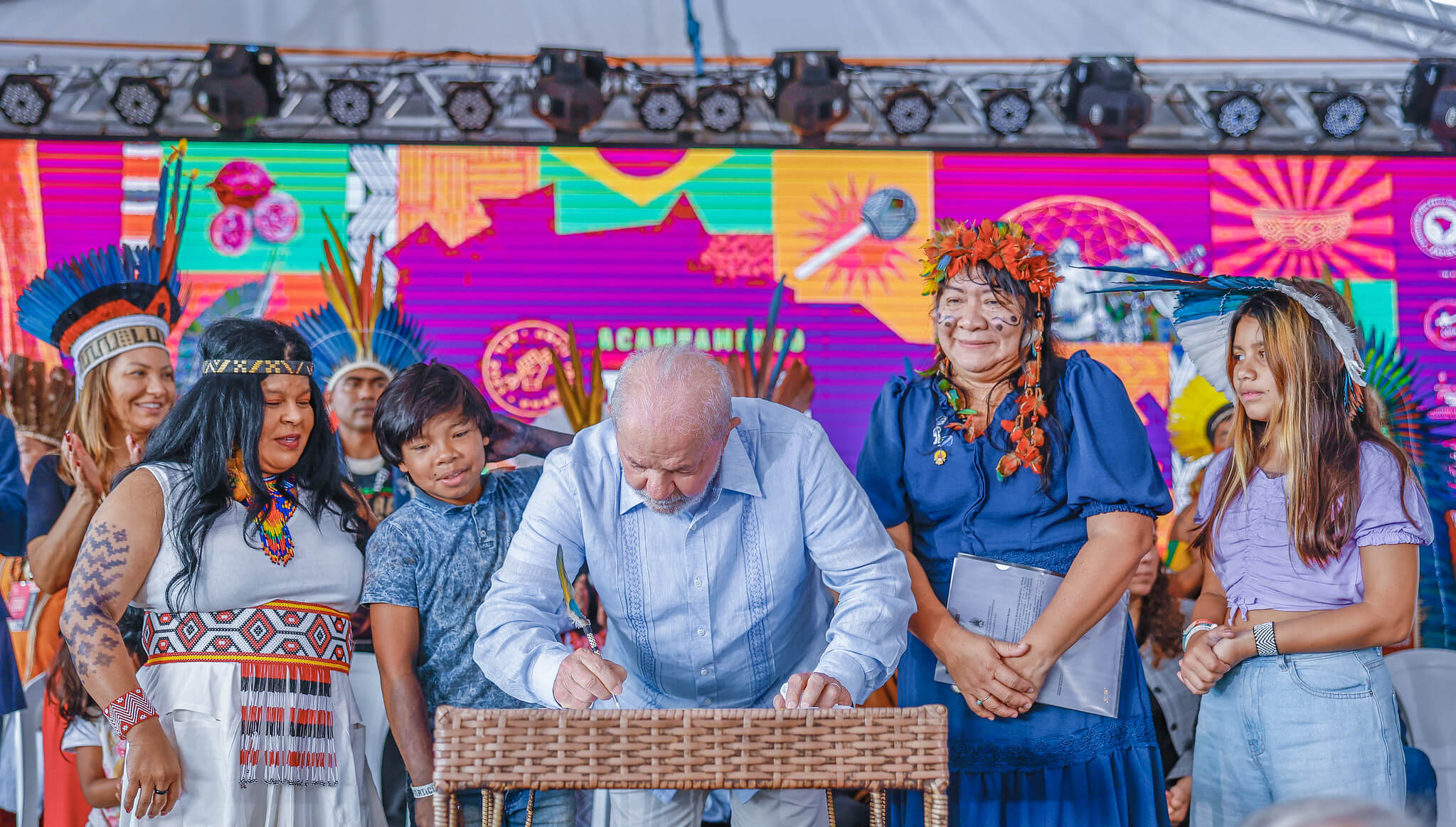
Brazil’s 2024 ordinance recognizing ten Indigenous lands strengthens constitutional rights, safeguards biodiversity, and offers a model for integrating Indigenous stewardship into national environmental policy.\
Quick Answer
The Brazilian government issued ordinances in 2024 that legally recognize ten Indigenous territories, granting communities formal title under the 1988 Constitution. This action restores land tenure, enables Indigenous peoples to manage forest resources, and contributes to climate mitigation by protecting carbon‑rich ecosystems. While the legal step is clear, effective on‑the‑ground protection depends on enforcement, monitoring, and resolving conflicts with agribusiness interests.\
Key Takeaways
- Recognition provides constitutional land titles to ten Indigenous groups, reinforcing legal rights that were previously uncertain.
- Indigenous stewardship is linked to lower deforestation rates and higher biodiversity compared with adjacent non‑Indigenous lands.
- These lands cover an estimated 13% of Brazil’s Amazon basin, representing a significant carbon sink.
- Implementation challenges include pressure from agriculture, mining, and infrastructure projects.
- Successful protection can serve as a template for other countries seeking to align Indigenous rights with climate goals.
What Is Brazil Recognizes 10 Indigenous Lands in New Government Ordinances?
The 2024 ordinances are formal legal instruments issued by Brazil’s executive branch that grant official title to ten distinct Indigenous territories. Title means the land is registered in the federal land‑registry system (CAR) as belonging to the respective Indigenous peoples, in accordance with Article 231 of the 1988 Constitution. The territories span the Amazon rainforest, the Cerrado savanna, and parts of the Atlantic Forest, each home to distinct languages, cultural practices, and traditional ecological knowledge. Recognizing these lands differs from earlier provisional demarcations because it provides enforceable legal status, allowing communities to sue for violations and to negotiate resource‑use agreements.
How Does It Work?
The recognition process follows several interconnected steps:
- Mapping and Documentation: Indigenous groups submit ethnographic and cartographic evidence to the National Indian Foundation (FUNAI). Independent technical teams verify the boundaries using satellite imagery and field surveys.
- Legal Review: The Ministry of Justice evaluates the submission against constitutional criteria, ensuring that the claimed area is traditionally occupied and that there are no overlapping private claims.
- Ordinance Publication: Once approved, the President signs an ordinance that is published in the Official Gazette, granting formal title.
- Registration: The territory is entered into the federal land‑registry (CAR), which makes the title publicly searchable and legally binding.
- Management Rights: Indigenous peoples obtain the right to practice traditional agriculture, extract forest products, and enforce conservation measures, often through community‑based management plans.
These steps create a feedback loop: secure title encourages sustainable land‑use, which in turn reinforces legal protection by demonstrating effective stewardship.
What Does the Evidence Show?
Multiple lines of peer‑reviewed research indicate that Indigenous‑managed forests in the Amazon experience deforestation rates up to 70% lower than adjacent non‑Indigenous areas (Science Advances, 2020). Long‑term monitoring by the Brazilian Institute of Geography and Statistics (IBGE) shows that territories with recognized title retain higher tree density and greater species richness. Moreover, a systematic review by the Intergovernmental Panel on Climate Change (IPCC) notes that Indigenous lands store an estimated 30% of the region’s above‑ground carbon, highlighting their climate‑mitigation value.
Main Causes or Drivers
Direct Drivers of Land Loss
Prior to recognition, illegal logging, cattle ranching, and soy expansion were the primary proximate causes of forest conversion within Indigenous territories. Satellite analyses from 2015‑2020 attribute roughly 45% of forest loss in the Amazon to these activities.
Underlying Structural Drivers
Economic incentives for commodity agriculture, weak enforcement of environmental regulations, and historical marginalization of Indigenous peoples created a context where land tenure insecurity facilitated exploitation. The new ordinances aim to address the structural driver of insecure land rights.
Environmental and Human Impacts
Environmental Impacts
Secure Indigenous title supports biodiversity conservation by preserving habitats for endemic species such as the jaguar (Panthera onca) and the pink river dolphin (Inia geoffrensis). Forest carbon stocks remain intact, contributing to Brazil’s Nationally Determined Contribution under the Paris Agreement.
Human Health and Social Impacts
Land security improves food sovereignty, as communities can continue traditional agroforestry systems that provide diverse, nutrient‑rich diets. It also reduces exposure to occupational hazards associated with illegal logging, such as injuries and respiratory problems from smoke.
Economic and Infrastructure Impacts
Recognition may limit the expansion of large‑scale agribusiness projects in the designated areas, potentially reducing short‑term revenue for those sectors. However, it opens opportunities for payment‑for‑ecosystem‑services schemes and sustainable tourism that generate income while preserving cultural heritage.
Regional Differences
In the Amazon basin, the ten recognized territories protect low‑lying floodplain forests that are especially carbon‑dense. In the Cerrado, Indigenous lands safeguard savanna‑type ecosystems that host unique grassland species and serve as water‑regulation zones for major river basins. The Atlantic Forest patches, though smaller, protect high‑altitude cloud forests that are biodiversity hotspots. These regional variations mean that the ecological benefits of recognition differ in magnitude and type across Brazil’s biomes.
What Scientists Know With High Confidence
- Indigenous stewardship correlates with lower deforestation and higher biodiversity compared with non‑Indigenous lands.
- The 1988 Constitution guarantees Indigenous land rights, providing a legal basis for title recognition.
- Forests under Indigenous management store significant amounts of carbon, contributing to climate mitigation.
- Secure land tenure improves community health outcomes by reducing exposure to illegal extractive activities.
What Remains Uncertain
Key uncertainties include the speed and consistency of enforcement across remote regions, the extent to which recognized title will deter future illegal incursions, and how market pressures may shift if national agricultural policies change. Long‑term monitoring is needed to quantify carbon‑sequestration benefits specific to each newly recognized territory.
Common Misconceptions
Misconception: Recognizing Indigenous lands automatically stops all deforestation.
Reality: Legal title reduces the likelihood of forest loss, but enforcement, funding, and political will remain essential to prevent illegal activities.
Misconception: Indigenous peoples oppose all forms of development.
Reality: Many communities negotiate sustainable-use agreements that allow limited, culturally appropriate economic activities while preserving ecological integrity.
Misconception: Indigenous lands are only important for cultural reasons.
Reality: These territories provide measurable ecosystem services, including carbon storage, water regulation, and biodiversity conservation, which have global climate relevance.
Solutions and Limitations
Effective protection combines legal, economic, and community‑based strategies:
- Legal Enforcement: Strengthening federal and state monitoring units can deter illegal logging, but limited budgets may restrict coverage.
- Payments for Ecosystem Services (PES): Programs such as Brazil’s Bolsa Verde provide financial incentives for forest conservation, yet scaling these schemes requires sustained political commitment.
- Community‑Managed Conservation: Indigenous knowledge improves fire‑break design and sustainable harvest, but success depends on capacity‑building and equitable benefit sharing.
- International Climate Finance: Accessing REDD+ funds can support stewardship, yet complex verification standards can delay disbursement.
What Individuals, Communities, and Governments Can Do
What Individuals Can Do
Support NGOs that fund Indigenous land‑rights projects, choose products certified as sourced without deforestation, and advocate for policies that protect Indigenous territories.
What Communities and Organizations Can Do
Partner with Indigenous groups to co‑manage conservation areas, provide technical assistance for land‑registry processes, and raise public awareness about the ecological value of Indigenous stewardship.
What Governments Can Do
Allocate budget for rapid demarcation and monitoring, enforce existing environmental laws, integrate Indigenous land data into national climate strategies, and ensure that infrastructure planning respects legally recognized territories.
Synthesis of Findings
The 2024 recognition of ten Indigenous lands in Brazil marks a pivotal step toward aligning constitutional rights with environmental stewardship. Strong evidence shows that Indigenous management reduces deforestation and safeguards biodiversity, offering a natural climate solution. Yet the durability of these gains hinges on effective enforcement and the ability to balance economic pressures with conservation goals. Continued research, transparent monitoring, and inclusive governance are essential to translate legal recognition into lasting ecological and social benefits.
Frequently Asked Questions
What legal basis does Brazil use to recognize Indigenous lands?
Brazil relies on Article 231 of its 1988 Constitution, which guarantees Indigenous peoples the right to the lands they traditionally occupy, to grant formal title through federal ordinances.
How does Indigenous land stewardship affect deforestation rates?
Research shows that forests under Indigenous management experience deforestation rates up to 70% lower than nearby non‑Indigenous areas, reflecting the effectiveness of traditional conservation practices.
What are the main challenges to enforcing the new land titles?
Enforcement faces obstacles such as limited monitoring resources, pressure from agribusiness, and occasional conflicts over illegal logging or mining activities within the recognized territories.
Can the recognition of Indigenous lands contribute to Brazil's climate goals?
Yes; Indigenous territories store a large share of the Amazon’s carbon, and protecting them helps Brazil meet its Nationally Determined Contribution under the Paris Agreement.
What actions can ordinary citizens take to support these Indigenous territories?
Individuals can support NGOs that work with Indigenous communities, choose responsibly sourced products, and advocate for policies that protect Indigenous land rights and forest conservation.







Leave a Comment