

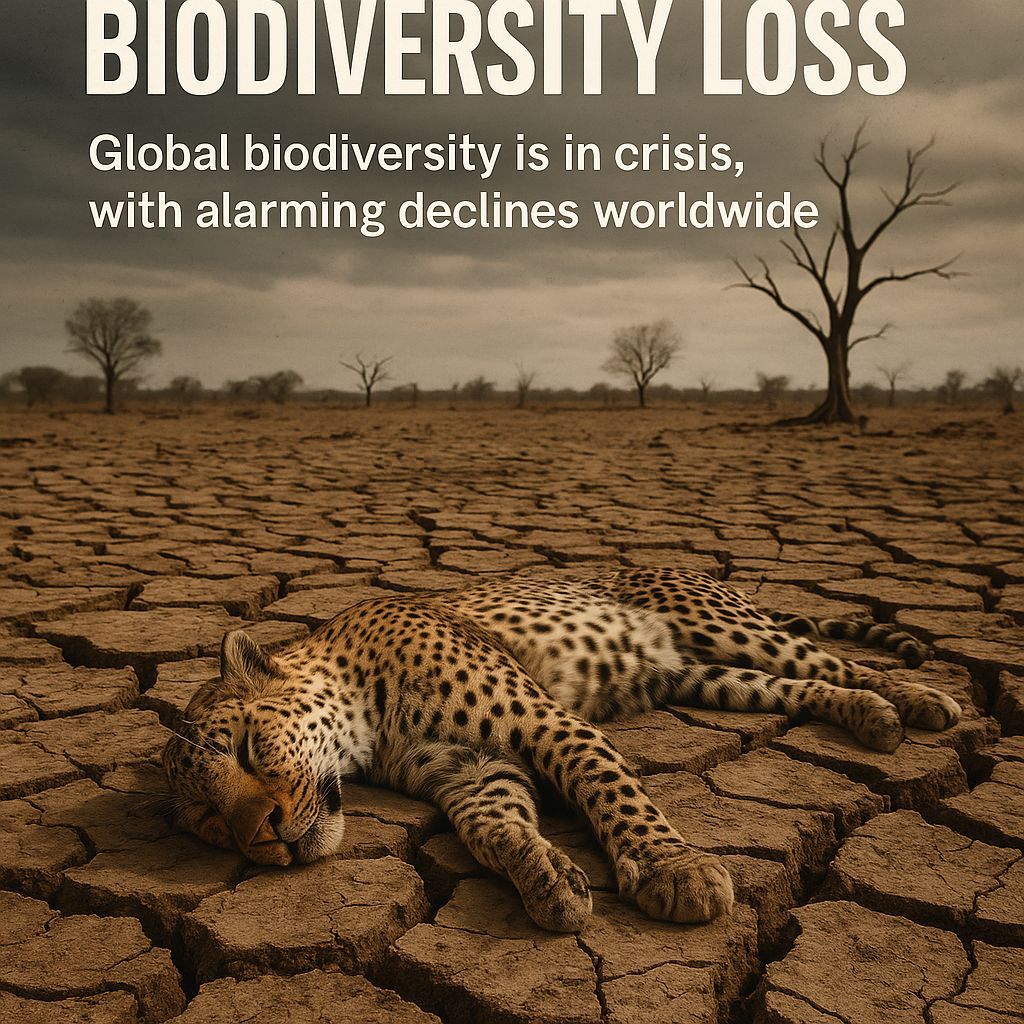
Biodiversity loss is the decline in the variety of life—from genes to ecosystems—driven by human activities, and it threatens ecosystem services, human well‑being, and the planet’s resilience.
Quick Answer
Biodiversity loss refers to the measurable reduction in the number of species, genetic variation within species, and the range of ecosystems on Earth. It occurs when human‑driven pressures such as habitat conversion, pollution, overexploitation, and climate change outpace the ability of natural systems to recover. The most robust scientific consensus, expressed in the IPBES Global Assessment (2019), shows that around 1 million species are at risk of extinction, which undermines pollination, water purification, and carbon storage. While the direction of change is clear, uncertainties remain about the exact timing of thresholds for many ecosystems.
Key Takeaways
- Three levels—genetic, species, and ecosystem diversity—define biodiversity; loss can occur at any level.
- Habitat destruction, pollution, overexploitation, and climate change are the principal drivers.
- Loss of biodiversity reduces ecosystem services that underpin food, medicine, and climate regulation.
- High‑confidence evidence shows accelerating species declines worldwide, but regional data gaps persist.
- Effective responses combine protected areas, sustainable resource use, pollution control, and climate mitigation, each with trade‑offs.
What Is Biodiversity Loss Explained: Definition Causes and Real‑World Examples?
Biodiversity encompasses the variety of life at three nested scales: genetic differences within populations, the number and abundance of species, and the range of ecosystems that host them. When the total amount of this variety declines, scientists describe the phenomenon as biodiversity loss. It differs from short‑term population fluctuations because it reflects a persistent, directional reduction that erodes the functional capacity of ecosystems. Understanding loss matters because ecosystems supply food, clean water, disease regulation, and cultural values that humans depend on.
How Does It Work?
Step‑by‑step ecological cascade
- Habitat alteration: Land‑use change removes or fragments the physical space organisms need for shelter, feeding, and reproduction.
- Population decline: Smaller, isolated populations suffer reduced genetic diversity, making them less resilient to disease and environmental stress.
- Species interactions break down: Loss of pollinators, seed dispersers, or predators disrupts food webs, leading to secondary extinctions.
- Ecosystem function diminishes: Processes such as nutrient cycling, carbon sequestration, and water filtration weaken, affecting human well‑being.
What Does the Evidence Show?
Long‑term monitoring programmes, such as the Living Planet Index (World Wildlife Fund, 2022), reveal an average 68% decline in vertebrate population sizes since 1970. The IPBES (2019) assessment, synthesising peer‑reviewed studies, estimates that 25% of assessed species are threatened with extinction. Satellite‑derived forest loss maps show that between 1990 and 2020, roughly 10 million km² of forest—about 7% of the global total—was cleared, directly reducing habitat for countless taxa. Experimental removal of keystone species in grassland studies consistently leads to lower productivity, confirming the causal link between species loss and ecosystem services.
Main Causes or Drivers
Direct human pressures
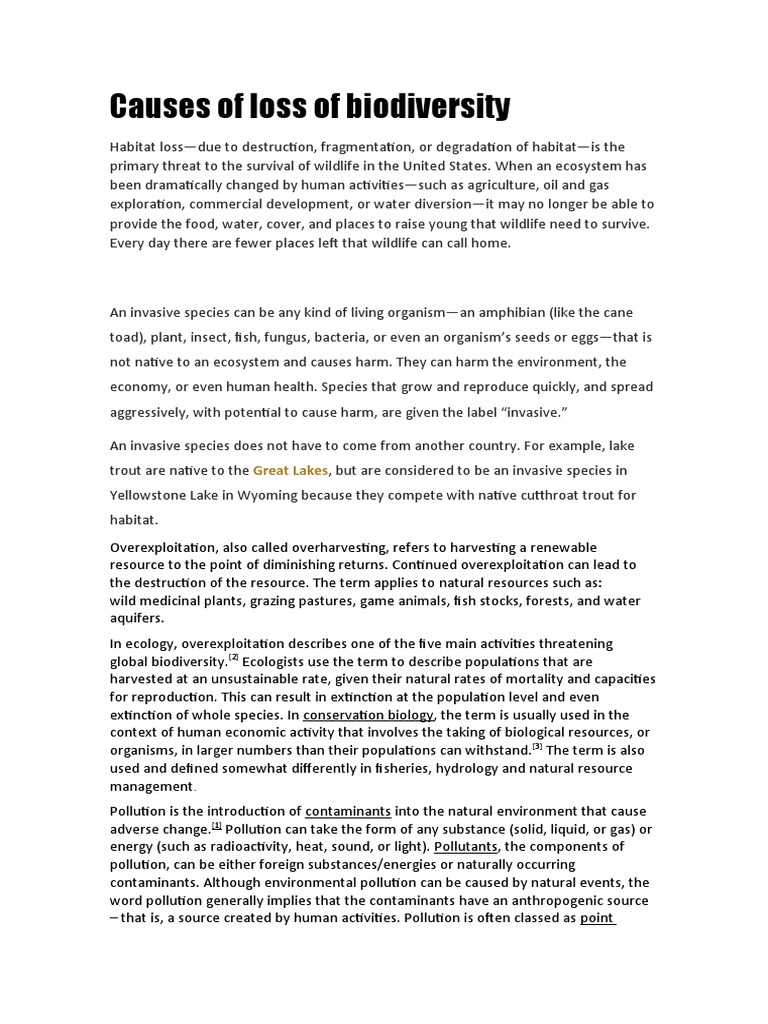
- Habitat destruction: Agricultural expansion, urban sprawl, and infrastructure development convert natural lands into monocultures or built environments.
- Pollution: Nutrient runoff creates dead zones in waterways; plastic debris harms marine fauna; chemical contaminants disrupt endocrine systems.
- Overexploitation: Unsustainable fishing, logging, and wildlife trade deplete populations faster than they can reproduce.
- Invasive species: Non‑native organisms outcompete or prey on native species, especially on islands.
Underlying global drivers
- Economic growth models: Prioritising short‑term production over long‑term stewardship fuels land‑use change.
- Climate change: Rising temperatures and altered precipitation shift species’ suitable ranges, amplifying other stressors.
- Population pressure: Growing human populations increase demand for food, water, and space.
Environmental and Human Impacts
Environmental Impacts
Loss of pollinator diversity reduces crop yields, with the Intergovernmental Panel on Climate Change noting that pollination services contribute up to 35% of global food production. Deforestation diminishes carbon storage, accounting for roughly 10% of anthropogenic CO₂ emissions. Coral reef degradation, driven by warming seas and acidification, eliminates habitat for an estimated 25% of marine species.
Human Health and Social Impacts
Reduced biodiversity can increase disease transmission; research published in Nature (2015) links lower mammalian diversity to higher incidence of zoonotic diseases. Many Indigenous communities rely on specific species for cultural practices and livelihood; their loss threatens food security and cultural identity.
Economic and Infrastructure Impacts
The World Bank estimates that ecosystem service losses linked to biodiversity decline could cost up to $2.5 trillion per year by 2050, affecting agriculture, fisheries, and tourism sectors worldwide.
Regional Differences
Temperate regions such as Europe show slower rates of species extinction but experience high habitat fragmentation, whereas tropical hotspots like the Amazon and Southeast Asia face rapid deforestation and the highest proportion of endemic species at risk. In the Arctic, climate‑induced habitat loss is the dominant driver, while in many low‑income island nations, invasive species and sea‑level rise pose the greatest threats.
What Scientists Know With High Confidence
- Global species extinction risk has risen sharply; over 28,000 species are listed as threatened by the IUCN (2023).
- Habitat loss is the leading direct cause of species declines, supported by multiple long‑term studies.
- Ecosystem services depend on biodiversity; reductions in species richness reduce pollination, water regulation, and carbon storage.
- Climate change interacts synergistically with other drivers, accelerating loss in many biomes.
What Remains Uncertain
Key uncertainties include the precise timing of ecosystem tipping points, the full extent of cryptic species loss (species not yet described), and the magnitude of future climate‑driven range shifts for many taxa. Data gaps are especially acute in tropical marine environments and in the biodiversity of soil microbes, limiting our ability to predict cascading effects.
Common Misconceptions
Misconception: Biodiversity loss only affects exotic or charismatic species.
Reality: Even less‑known organisms—soil microbes, insects, and plankton—provide essential services such as nutrient cycling and carbon sequestration. Their decline can undermine food production and climate regulation.
Misconception: Protected areas alone will stop biodiversity loss.
Reality: While protected areas are crucial, they cover only about 15% of terrestrial land and 7% of oceans. Effective conservation also requires sustainable land‑use practices outside reserves and climate mitigation.
Misconception: Climate change is the sole cause of species extinctions.
Reality: Climate change interacts with habitat loss, overexploitation, and pollution. In many cases, it acts as a stress multiplier rather than the primary driver.
Solutions and Limitations
Conservation strategies fall into several categories:
- Prevention: Land‑use planning that integrates biodiversity corridors can reduce fragmentation, but requires cross‑sector coordination and may conflict with short‑term economic goals.
- Mitigation: Reducing greenhouse‑gas emissions slows climate‑related pressures; however, mitigation alone cannot restore already lost habitats.
- Adaptation: Assisted migration of vulnerable species may buy time, yet it carries risks of creating invasive populations.
- Restoration: Reforestation and wetland rehabilitation rebuild habitats, but success depends on native species selection and long‑term management.
- Regulation and Monitoring: Strong enforcement of anti‑poaching laws and transparent biodiversity reporting improve outcomes, though they demand political will and adequate funding.
What Individuals, Communities, and Governments Can Do
What Individuals Can Do
Choose certified sustainable products, reduce food waste, and support organizations that protect habitats. Engaging in citizen‑science projects—such as bird counts or water quality monitoring—helps fill data gaps.
What Communities and Organizations Can Do
Implement community‑based forest management, develop local markets for non‑timber forest products, and integrate traditional ecological knowledge into conservation planning.
What Governments Can Do
Expand and adequately fund protected‑area networks, enforce sustainable fisheries quotas, mainstream biodiversity impact assessments into all major development projects, and meet the post‑2020 Global Biodiversity Framework targets.
Closing Synthesis
Biodiversity loss is a measurable, human‑driven decline in the variety of life that underpins essential ecosystem services. Robust evidence links habitat destruction, pollution, overexploitation, and climate change to accelerating species declines worldwide. While high‑confidence findings affirm the severity of the crisis, uncertainties about tipping points and undocumented species remain. Solutions that combine protection, sustainable resource use, climate mitigation, and restoration—tailored to regional contexts—offer the most viable path forward. Collective action across individuals, communities, and policymakers is required to preserve the planet’s living tapestry for future generations.
Frequently Asked Questions
What is biodiversity loss?
Biodiversity loss is the long‑term decline in the variety of life, including genetic differences, species numbers, and ecosystem types, caused mainly by human activities.
How does habitat destruction lead to species decline?
When natural habitats are cleared or fragmented, organisms lose the space they need for feeding, breeding, and shelter, which reduces population sizes and can trigger local or global extinctions.
Which regions are experiencing the fastest biodiversity loss?
Tropical regions such as the Amazon basin, Southeast Asian forests, and coral‑rich marine areas show the highest rates of species decline due to rapid deforestation, overfishing, and climate stress.
What are the most effective actions to curb biodiversity loss?
Expanding well‑managed protected areas, adopting sustainable land‑use practices, reducing greenhouse‑gas emissions, and restoring degraded habitats together provide the strongest evidence for slowing biodiversity loss.
How certain is the link between climate change and increased extinctions?
Scientists are highly confident that climate change accelerates extinctions by shifting species’ suitable habitats and intensifying other stressors, though exact timing for many species remains uncertain.





Leave a Comment